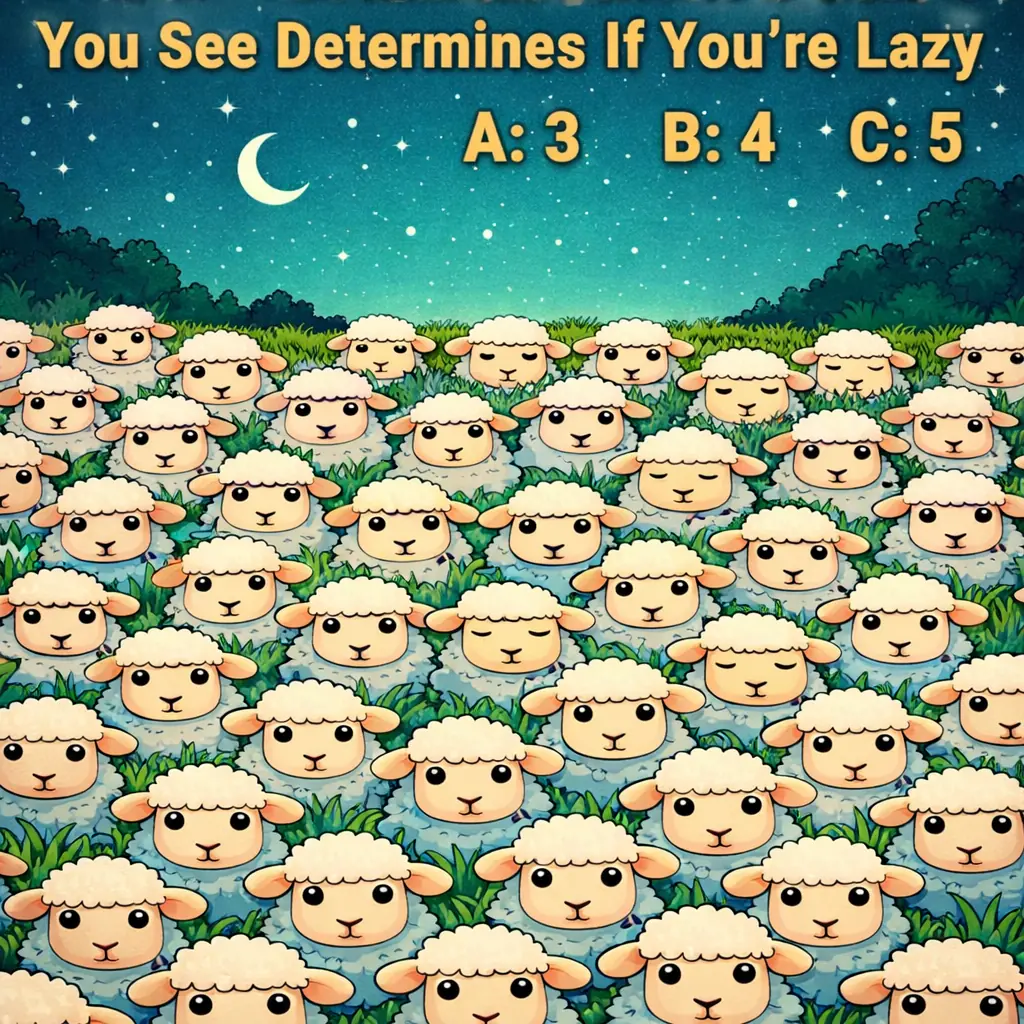
What You Notice First in This Sleeping Sheep Illusion Reveals Your Personality
Tips 09/04/2026 21:16

Many people believe that breast size reflects a woman’s health, hormones, or even fertility—but science tells a very different story. In reality, breast size is shaped by a combination of genetics, hormones, body composition, and life stages. And most importantly, it has little to no direct connection to overall health or hormonal balance.
Let’s break down what research actually shows 👇
Your breast size is largely influenced by your DNA—just like your height or eye color. Studies suggest that breast size is significantly hereditary, meaning it often runs in families.
However, genetics doesn’t determine an exact size—it simply sets a range or potential. That’s why even siblings can have noticeably different body shapes.
👉 In short:
You can’t “choose” your breast size—it’s mostly written in your genes.
Hormones are the key drivers behind breast growth and fluctuations throughout life.
This is why breasts may feel fuller or more sensitive at certain times of the month.
👉 Important:
Hormones affect how breasts change—but they don’t determine long-term size alone.
Breasts are made up largely of fatty tissue, not just glands. That means:
This is one of the biggest reasons breast size varies widely—even among people with similar genetics.
👉 Key takeaway:
Body composition often influences size more than appearance alone.
Breasts are not static—they evolve over time:
Many women notice changes in size or firmness as they age—and this is completely normal.
One of the biggest myths is that breast size reflects health or hormone levels.
👉 Research shows:
This means two people with completely different breast sizes can have identical health profiles.
In a world influenced by beauty standards and social media, it’s easy to assume that size equals value—but biologically, that’s not true.
Breasts differ because bodies differ. And those differences are shaped by:
—not by “health superiority.”
👉 The reality:
There is no “perfect” size—only natural variation.
Breast size is not a health score, a hormone test, or a measure of femininity—it’s simply a result of biology.
What truly matters is:
Because in the end, health is defined by function—not appearance.