After many years of being away from home
Life stories 14/06/2026 17:42
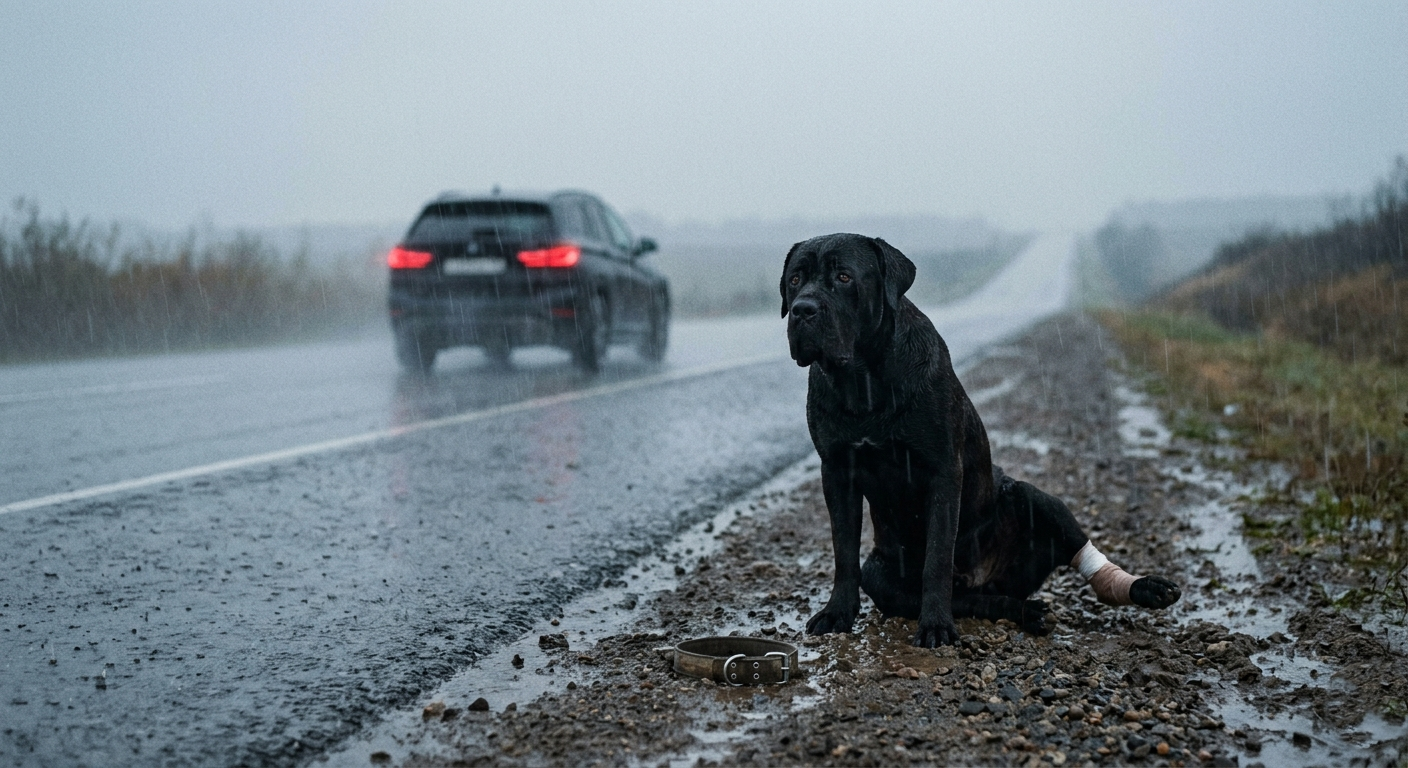
The wipers couldn’t keep up with the rain.
Chloe had both hands on the wheel of her Lexus, jaw tight, eyes forward — refusing to look in the rearview mirror at the massive black dog bleeding through his bandage onto her cream leather seat.
“You need to stop whimpering,” she said. “You’re stressing me out.”
Ace pressed his nose against the back of her headrest. Warm. Gentle. She yanked her shoulder away.
Three days earlier, he had been perfect. A barrel-chested Cane Corso who photographed beautifully against any backdrop — beach umbrellas, cobblestone streets, rooftop pools. He had seventeen thousand Instagram appearances. Her followers called him “the most majestic dog alive.”
Then he jumped a rusted fence upstate and tore open his hind leg down to the bone.
The vet had printed the estimate and placed it face-up on the exam table. Chloe stared at the number until it lost meaning.
“Honestly,” her boyfriend Marcus said, scrolling his phone in the waiting room, “you could get two purebreds and a weekend in the Hamptons for that number. A gimpy dog doesn’t really fit the penthouse vibe.”
She had told herself she was being practical.
Now, on a desolate stretch of Route 9, she pulled onto the muddy shoulder.
Cut the engine.
Sat in the sudden silence, listening to the rain hammer the roof.
“Get out,” she whispered.
Ace didn’t move. He just leaned forward and pressed that warm nose to her shoulder again — trusting, patient, completely unaware that she was ending his life.
She opened the back door. The cold poured in.
“Out.”
He climbed down onto the wet asphalt, immediately tucking his shredded leg inward. The rain soaked his coat black within seconds. He sat down, looked up at her, and wagged his tail once.
That was the part she would never be able to forget. Not the whimper. Not the fall. The wag.
She unclipped his collar. Got back in. Locked the doors.
In the rearview mirror, she watched him scramble up on three legs and run after the car. He stumbled. Got up. Stumbled again. By the time she hit forty miles per hour, he had vanished into the grey curtain of the storm.
“It’s for the best,” she told herself.
She turned up the radio. She had a Tulum trip to pack for.
Toby hated the walk home.
It wasn’t the distance — it was the quiet. Since his dad left, the trailer sat empty until his mom got off her second shift, and empty houses have a sound. A specific, hollow sound.
He took the long route through the overgrown woods along Route 9 because at least the woods had birds.
That afternoon, the birds were gone. Just rain.
Then he heard it. Not an animal sound, exactly — more like the sound a person makes when they’ve stopped hoping.
He pushed through the wet briars.
The dog was enormous, and he looked like he was made of rags. Ribs mapped beneath his skin. Fur plastered to his body with mud and dried blood. His back leg wrapped in something that had once been a towel. He couldn’t even lift his head. He just thumped his tail once against the leaves.
Once. Like an apology for still being alive.
“Hey,” Toby said. He wasn’t afraid. He didn’t know enough about the world yet to be afraid of something that broken. He dropped to his knees in the mud, unzipped his backpack, and held out his lunch — a turkey sandwich that had been sitting under his math textbook since morning.
The dog ate it in slow, exhausted bites.
“Okay,” Toby said. “My mom’s gonna freak out. But she’s not gonna say no. I promise.”
He ran to the highway and stood on the shoulder in the pouring rain with both arms in the air until a battered Ford F-150 stopped. The contractor behind the wheel took one look at the crying kid and the dying dog and just said, “Where do we need to go?”
Sarah arrived at the shelter still wearing her diner apron.
She saw her son sitting on the floor next to a dog that looked like it had been dragged from a battlefield, and she felt her stomach drop. They had forty-three dollars in savings. Rent was due Friday. She already worked fifty hours a week.
Toby looked up at her with eyes that were red from crying but completely steady.
“Mom. I need you to say yes.”
She looked at the dog. The dog looked at her. The vet standing nearby quietly said, “The leg can still be saved. The shelter has a grant program that covers sixty percent. We just need a family to commit.”
Sarah closed her eyes for a long moment.
“We don’t leave anyone behind,” she said. “Let’s do it.”
They named him Coal. For his coat.
He walked with a limp for the rest of his life — the left hind leg never fully right again, tissue damage too deep to erase. But that limp became something else in Toby’s eyes. Not a flaw. Not a wound. A history.
Every scar Coal carried was a fact of his survival. Every step he took was an argument against everyone who had given up on him.
They grew up together, the boy and the dog. Toby got taller. Coal got stronger. Sarah got promoted — from diner waitress to vet practice receptionist to practice manager — and the family moved to a house with a fenced yard where Coal could run in long, loping arcs, that back leg swinging wide but sure.
By the time Toby was sixteen, Coal weighed a hundred and forty pounds and had the wise, patient face of an animal who understood more about the world than he let on. He waited at the door every afternoon for Toby to come home. He slept at the foot of the bed every night. He watched Toby with the constant, anchored attention of something that had once been nearly lost and knew — in whatever way a dog knows things — exactly what it had been saved from.
Chloe’s life came apart slowly, then all at once.
First, Marcus left. He traded up for a younger influencer with a cleaner brand aesthetic, and on his way out the door he reminded her that her name was on most of the leases. The credit card bills were hers. The penthouse debt was hers. The Lexus loan was hers.
The liquidation took four months.
She lost the car first. Then the apartment. Then the Hamptons trips and the brand deals and the follower count that had always made her feel like she was made of something solid. Turned out the whole architecture had been Marcus and money. Without either, there wasn’t much left.
She ended up in a basement apartment in a neighborhood she’d never photographed, riding the subway to show cheap studio rentals to clients who treated her like furniture. She wore the same coat three days in a row and told herself it was a temporary situation.
But the thing about Ace — about Coal — was that she couldn’t stop thinking about him. Not with guilt, exactly. More with dread. Like she had broken something fundamental that night on Route 9. Like the universe had a ledger, and her page was deep in the red.
She never told anyone. What would she even say?
The November fog came in thick that evening.
Chloe had just lost a showing — the client had been rude, her manager had been ruder, and her bank account had nineteen dollars left. She was cutting through Millbrook Park on the way to the bus stop, head down, collar up.
She heard them before she saw them.
Three teenagers. Loud. Crowding the path.
She tried to angle around them. They shifted to block her.
“Hey, lady.” The one in front was grinning. “Where you going so fast?”
“Please,” Chloe said. “I don’t want any trouble.”
“Nobody ever does.” He stepped closer. “Let’s see what’s in the bag.”
She tried to back up. The second one grabbed her shoulder and shoved her hard. Her feet went sideways on the damp asphalt and she went down — hip first, then elbow — her purse flying, her phone skidding across the pavement.
“Help!” she screamed. “Somebody help me!”
The park was dead. Fog rolling between the trees. No one.
The third one reached down toward her wallet.
Then the fog moved.
Not the wind. Something moving through the fog.
A sound came out of the mist that Chloe had never heard from an animal before — not a bark, not a growl, something lower and older, a sound from the bottom of a chest that seemed to say: this is your one warning.
Coal came through the fog like a freight train, all hundred and forty pounds of him, hackles raised in a solid ridge from his shoulders to his tail, teeth out, eyes locked. He planted himself between Chloe and the three teenagers like he’d been put on this earth for exactly this moment.
The guy reaching for the wallet straightened up instantly.
“Toby, hold him back, man—”
“Coal, hold!” Toby’s voice came out of the fog. He ran up behind the dog, hand on his collar, but Coal wasn’t lunging. He didn’t need to. He just stood there, entirely still, radiating the specific violence of an animal that has calculated the odds and found them acceptable.
The teenagers looked at each other.
“Nah,” one of them said. “Nah, man.”
They ran. Footsteps fading fast, swallowed by the dark.
Chloe lay on the cold asphalt, chest heaving.
Her eyes found the dog.
He was turning toward her now. The snarl settling. The hackles slowly dropping. He stepped closer, heavy breath misting in the cold air, and she saw his face clearly for the first time.
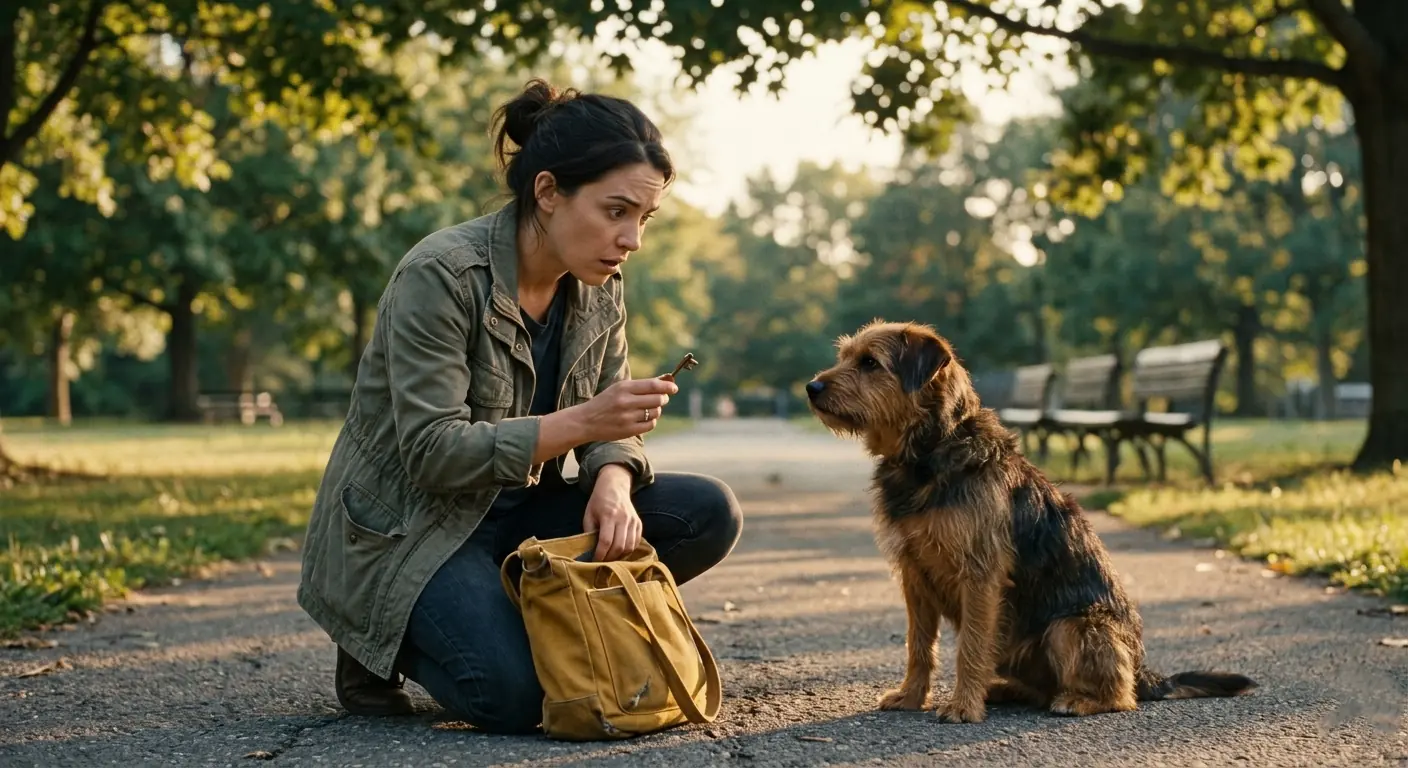
Those eyes. That brown, almond-shaped gaze that saw straight through her. The white patch on his chest shaped like a torn leaf. And the leg — the hind leg swinging wide and careful with every step, the specific limp of an animal that had nearly bled out in the mud on a rainy highway six years ago.
“Ace?” The word came out of her like something falling.
Coal went still.
He looked at her. Recognition moved through his face — she could see it, a flicker, a processing — and then something else happened. Something she had not expected and could not argue with.
His expression emptied.
Not aggression. Not grief. Not the forgiving wag she had been imagining in her dreams for six years. Just — nothing. The blank, polite regard of a well-loved dog encountering a stranger who had fallen down. He looked at her the way he would look at anyone. She was no one. She was a woman on the ground. She was a situation that had been resolved.
He turned and leaned his head against Toby’s knee.
“Are you okay?” Toby was crouching beside her, hand extended. “Did they hurt you? Can you stand?”
Chloe looked at the boy. Sixteen, broad-shouldered, steady. His voice had the easy warmth of someone who had never learned to be suspicious of people in need.
She took his hand. Got to her feet. Brushed the gravel off her coat with shaking hands.
“I’m okay,” she managed. “Your dog — he came out of nowhere.”
“He’s got a good nose for trouble,” Toby said, scratching Coal behind the ears. The dog’s tail swept back and forth in that slow, satisfied rhythm. “We do this route every evening. He gets restless if we don’t.”
“What’s his name?”
“Coal.” Toby said it the way you say a word that means more than itself. “Found him six years ago. Someone left him bleeding out on Route 9 in a storm. Can you imagine?” He shook his head. “He was basically dead when we got to him. Leg was destroyed. He limps now, but honestly?” He looked at the dog with something that was past pride. “I think it suits him.”
Chloe’s throat closed.
“He saved my life,” she said quietly. The words had two meanings and she knew it and Toby didn’t and that was exactly right.
“Yeah,” Toby said. “That’s kind of his thing.”
Coal looked at her one more time — that even, impersonal gaze — and then looked back at Toby.
Done. Filed. Already forgotten.
“Take good care of him,” Chloe whispered.
“Every single day,” Toby said. He zipped his jacket against the cold. “You sure you’re all right getting home? I can wait with you for the bus.”
“I’m fine.” She picked up her broken purse. Pressed her cracked phone against her palm. “You go ahead. And — thank you.”
“Don’t thank me. Thank Coal.”
He grinned. The dog turned and they walked off together into the rolling fog — the tall boy and the big black dog, shoulder to shoulder, that hind leg swinging wide with every step, proud and unhurried and completely whole.
Chloe stood under the dim park lamp until they were gone.
Then she sat down on a bench in the dark and let herself cry — really cry, the kind that doesn’t care about mascara or composure or who might be watching. She cried for the dog she had left in the rain. She cried for the woman she had thought she was building and the rubble that turned out to be. She cried because the worst part wasn’t the poverty or the fog or the cold asphalt under her hips.
The worst part was this: he had saved her.
He had come out of the dark, put his body between her and harm, and protected her life. And then he had looked at her with those soulful, ancient eyes — and felt absolutely nothing.
Not hatred. Not resentment.
Nothing.
Because she hadn’t earned anything else.
Six years ago, on a rainy highway, she had looked into those eyes and driven away. And in doing so, she had permanently written herself out of his story.
He had rewritten his own. He had found a ten-year-old boy with a smashed turkey sandwich and a stubborn belief that nobody got left behind. He had built something real.
She had spent six years dismantling everything she had.
Somewhere in the fog, she could still hear Coal’s nails on the pavement — that uneven rhythm, four beats with a hesitation, four beats with a hesitation — fading into the dark.
Chloe wiped her face with the back of her wrist.
She sat alone in the park for a long time.
When she finally stood up and walked to the bus stop, her steps were different. Quieter. The arrogance had been ground out of them somewhere on a stretch of rainy highway six years ago, and it had just taken her this long to notice the shape of what was left.
She didn’t know what she would do next. But she knew what she wouldn’t do.
She would never again look into an animal’s eyes — or any eyes — and calculate whether they were worth keeping.
That, at least, Coal had given back to her.
Even from the far side of the distance she had placed between them.



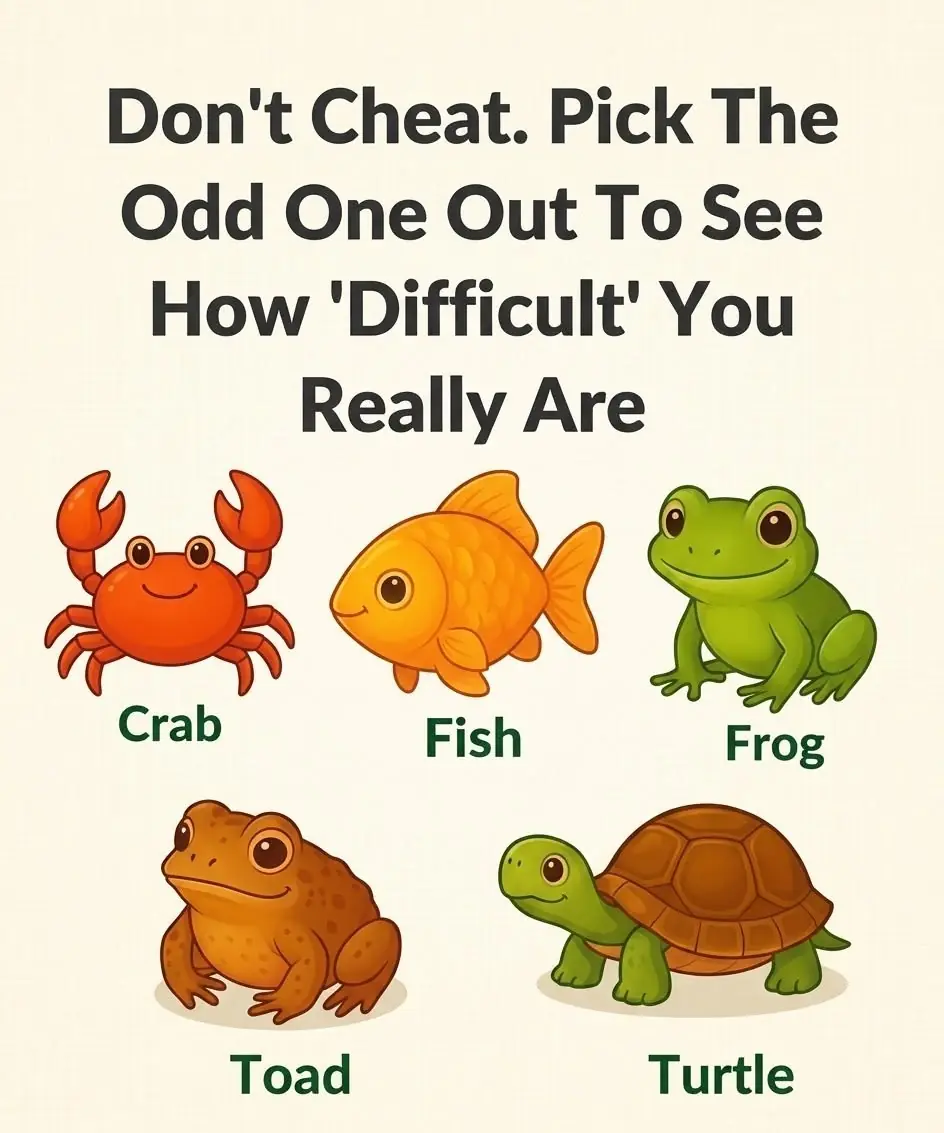
Which Animal Doesn’t Belong
How Many Rabbits Can You Spot
Signs Your Deceased Loved Ones May Be Reaching Out to You
Start Your Morning with This Simple Drink