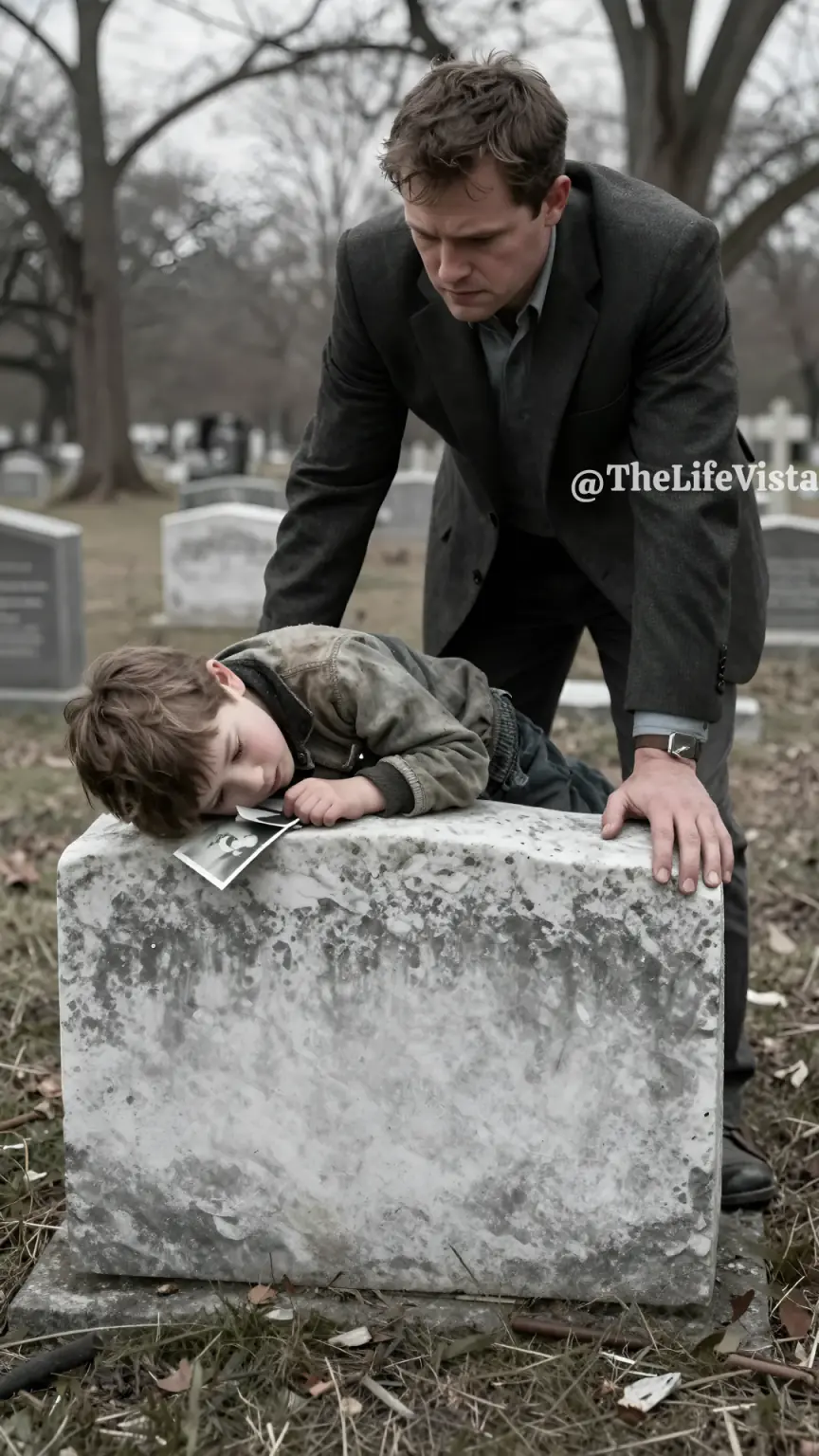
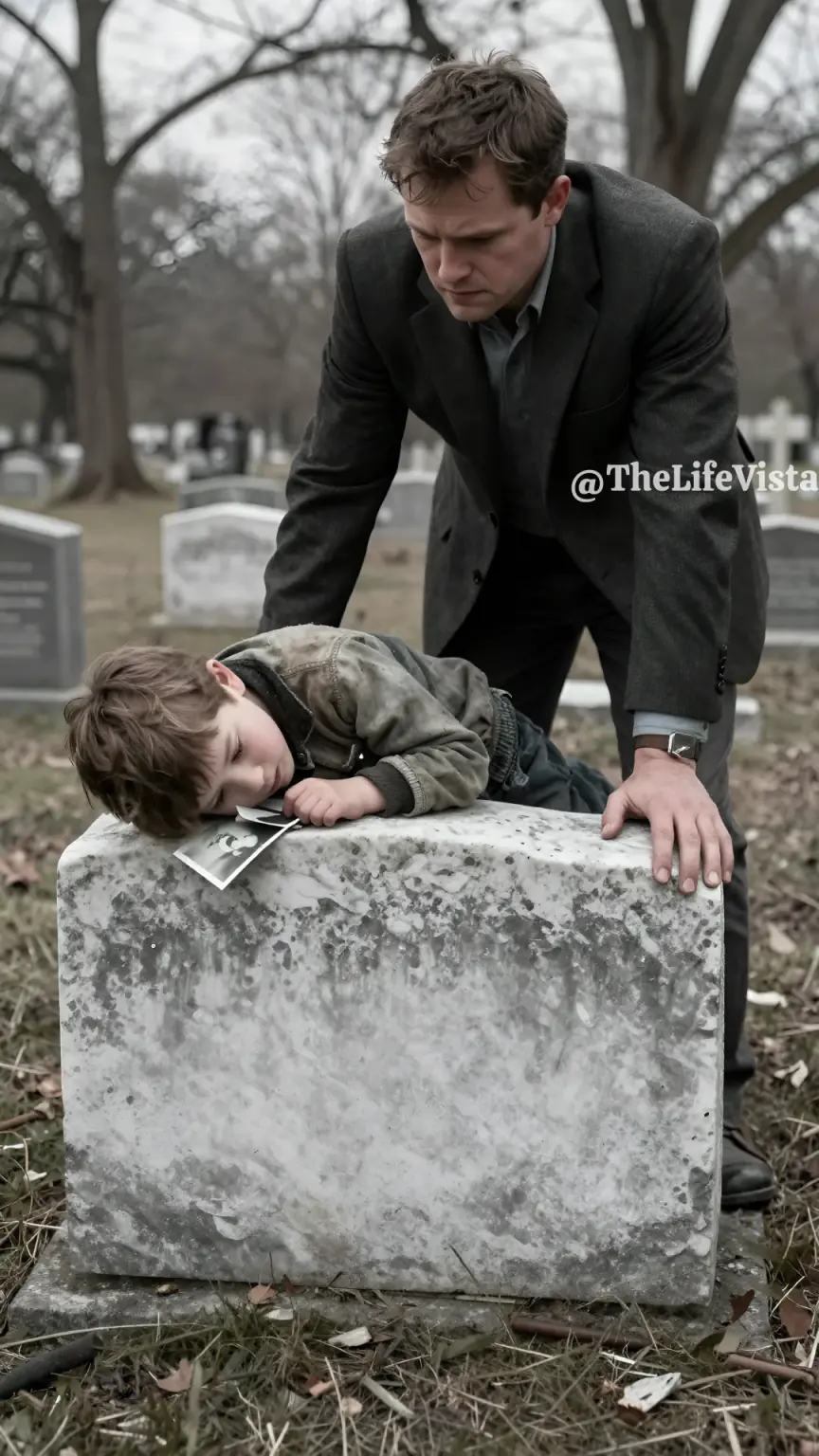
After her husband's death, Melissa begins to understand just how fragile kindness can feel in a world that keeps moving forward. One quiet decision outside her apartment building changes everything, pulling her grief, her children, and memories of her husband into sharper focus than she expected. When unexpected consequences arrive days later, she must confront the quiet truth about what love leaves behind — and how small acts of compassion can ripple farther than we ever imagine.
The email sat in my inbox for nearly an hour before I opened it.
Not because I hadn’t noticed it.
Because I had.
The subject line read:
“Regarding the incident outside the grocery store.”
I stared at the words longer than necessary, letting them sit heavily in my chest.
Micah’s sneakers were still by the door, scuffed and half-untied the way he always left them after rushing inside. Nova’s backpack leaned against the wall nearby, one strap twisted and folded as if she had dropped it in a hurry before running to show me something.
Everything in the apartment looked ordinary.
Calm.
Familiar.
But that subject line made the air feel slightly tighter.
An incident? What incident?
I read the subject line again before finally clicking the email open—then closing it again before reading the rest.
Something about it made my stomach uneasy.
A week earlier, I had done something small.
Something that now felt as if it had quietly stretched beyond me.
After Nathan died, practicality began to mean something different.
Life stopped being about what felt best and started being about what worked.
I moved through my days carefully and deliberately, not because I felt strong, but because there were two children watching everything I did.
Micah was ten—old enough to notice what I avoided saying and the way I sometimes paused before answering questions about his father.
Nova was eight—sensitive in ways that often surprised me. She could feel when a room changed emotionally, even when no one had spoken.
The apartment above the grocery store wasn’t beautiful.
But it kept the kids close to their school and kept me close to work.
That mattered more than appearances.
My mother liked to call it temporary.
I called it survival.
“You deserve somewhere peaceful, Melissa,” she told me once. “You’re a widow and a single mother. You shouldn’t have to live above a grocery store.”
“Peace looks different now, Mom,” I replied.
Though at the time, I wasn’t entirely sure I believed my own words.
Nathan’s jacket still hung on the coat rack in our hallway.
It had stayed there from the day he stopped wearing it.
Heavy wool.
Dark gray.
Warm enough to hold back the sharp bite of winter.
Micah sometimes slipped his arms into it when he thought I wasn’t looking.
One afternoon he caught me watching.
“Does it smell like Dad?” he asked quietly.
“A little,” I said gently. “Why?”
He shrugged.
“I just wanted to check.”
Nova had her own way of visiting the memory.
Sometimes she pressed her face into the sleeve and breathed in slowly, like she was trying to pull something back from the past.
I never told either of them to stop.
Grief moves differently through children.
And sometimes the smallest rituals are the ones that help them keep going.
The day everything shifted began like any other weekday.
“Mom, I can’t find my blue folder!” Micah called from the living room, frustration already creeping into his voice.
“It’s probably under the couch,” I answered while rinsing breakfast dishes.
Nova hovered near the door with her jacket half-zipped.
“Grandma is picking me up today, right?”
“Yes, baby. She’ll be here in about ten minutes.”
True to form, my mother arrived exactly on time.
She kissed my cheek, crouched down to Nova’s height, and gave Micah her usual lecture.
“You’re a growing boy. You need real food. Eggs. Vegetables. Not just sugary cereal.”
“Yes, Gran,” he said with a sheepish grin.
Soon the apartment was quiet again.
I grabbed my reusable shopping bag and headed downstairs to the grocery store.
That was when I saw him.
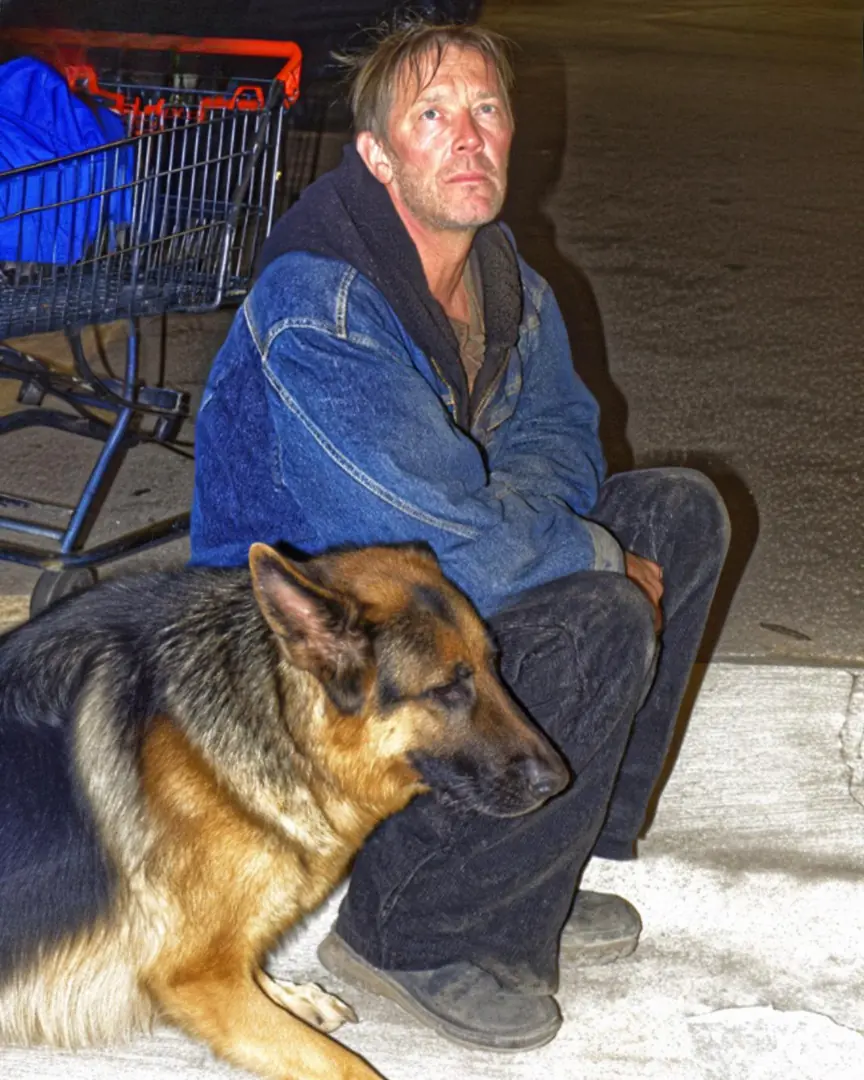
He sat against the brick wall near the entrance, positioned carefully so he wasn’t blocking the door.
His shoulders were hunched forward against the cold.
A small cardboard sign rested against his knee.
“Veteran. Anything helps. Please.”
Despite the cold, he wasn’t wearing a jacket.
Just a thin sweater.
No hat.
No gloves.
Nothing that could really protect him from the wind.
I slowed without meaning to.
The man looked up.
His eyes were alert but tired, like someone used to watching people walk past.
“Ma’am,” he said quietly.
“I’m sorry to bother you, but it’s colder than I expected today. Do you have any change?”
I hesitated.
Moments like these always left me uncertain.
“I’m a veteran,” he added gently, nodding toward the sign. “Just trying to get through the week.”
Part of me told myself to keep walking.
Dinner needed planning.
Homework would need checking later.
Life didn’t pause just because someone else was struggling.
Then I saw his hands.
Red.
Bare.
Shaking slightly.
And suddenly I remembered Nathan talking about cold nights during deployment—how the cold could settle deep into your bones.
“You should have a coat,” I said before I could stop myself.
The man laughed softly.
“I know.”
“Wait here,” I said.
Before he could respond, I turned and headed upstairs.
Inside the apartment, the silence felt heavier than usual.
The hum of the grocery store below seemed distant.
I stood in the hallway staring at the coat rack.
Nathan’s jacket hung exactly where it always had.
The sleeves curved slightly as if they still remembered his arms.
For a moment, I imagined him standing behind me, watching me overthink the decision.
You always think too much, he would’ve said.
I thought of Micah slipping into it when he missed his father.
I thought of Nova breathing in the sleeve on sleepless nights.
“It smells like Dad,” she always said.
I took the jacket down.
When I returned outside, the man looked surprised to see me.
Even more surprised when he saw what I was holding.
“It’s clean,” I said. “And warm.”
“I can’t take that,” he said quickly. “It looks like it belongs to someone.”
“What’s your name?” I asked.
“Paul.”
“Well, Paul, it used to belong to someone. But it’s not doing much good hanging in a hallway.”
“I don’t want to cause trouble.”
“You won’t.”
After a moment of hesitation, he slipped his arms into the sleeves.
The jacket fit him better than I expected.
“Thank you,” he said quietly.
“I won’t forget this.”
Inside the store I bought hot soup, bread, and tea.
When I handed them to him, he nodded silently.
I walked upstairs without looking back.
That night Micah noticed the empty hook.
“Where’s Dad’s jacket?”
“I loaned it to someone who needed it,” I said gently.
He thought about that.
Then nodded.
“That sounds like something Dad would do.”
Nova didn’t say anything.
But before bed she hugged me longer than usual.
Her arms wrapped tightly around my waist, as if she understood more than she could explain.
The email waited patiently in my inbox.
Avoiding it didn’t make it disappear.
When I finally opened it, the language was formal and stiff.
Dear Melissa C.,
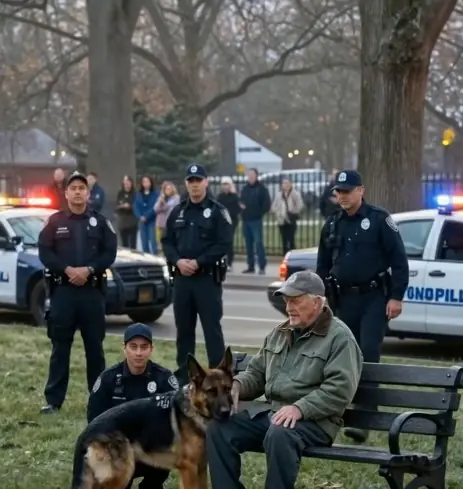
This message concerns an incident reported outside the grocery store located beneath your residence.
Building policy prohibits residents from engaging in unauthorized interactions that may affect tenant safety.
During a welfare check, the individual referenced receiving personal property from a resident.
Please contact Facilities Management to clarify your involvement.
I read it three times.
Nathan used to tease me for doing that.
“You always expect the worst first, Mel.”
“Clarification,” I muttered to the empty kitchen.
“That never sounds good.”
I called my mother.
“Did you break a rule?” she asked after listening.
“I don’t think so. I just gave someone a jacket.”
“And now kindness requires paperwork?”
“Apparently.”
When I called the number from the email, a woman answered politely.
“We just need to document the interaction,” she explained. “The individual was questioned. No charges. No issues.”
“Is he okay?” I asked before I could stop myself.
“Yes.”
She paused.
“He asked us to pass along his thanks.”
“For the jacket.”
Then she added something unexpected.
“He also mentioned your husband by name.”
My grip tightened on the phone.
“My husband?”
“Yes. Nathan. He said they served together.”
I closed my eyes.
Nathan had always left pieces of himself scattered through the world.
Sometimes in places I never knew about.
Paul came back the next afternoon.
He stood near the building entrance with the jacket folded neatly over his arm.
“I wanted to return this,” he said.
“You didn’t have to.”
“I know.”
He shifted slightly.
“I’m not staying out here anymore. The VA shelter took me in. They’re helping me figure out what comes next.”
“That’s good, Paul.”
Then he spoke quietly.
“Your husband helped me once. A long time ago.”
He pointed to the inside sleeve.
“His name is stitched here. That’s how I knew.”
After leaving the service, Paul explained, life had been difficult.
Nathan had checked in on him occasionally.
Nothing dramatic.
Just small things.
Meals.
Conversations.
Making sure he didn’t disappear completely.
“They wouldn’t have listened to me at the shelter,” Paul said.
“But when they saw the jacket… when they saw who it belonged to… they treated me like I mattered.”
Nathan would have shrugged that off as nothing.
But hearing it made my chest ache in a different way.
“He would’ve liked what you did,” Paul added.
“He believed people should look out for each other.”
I watched him walk away.
His posture looked lighter than before.
Upstairs, Micah noticed the jacket in my hands.
“It’s back,” he said.
“Yes.”
Nova immediately wrapped her arms around it.
That night when I hung it on the rack again, I looked at it differently.
I didn’t wonder anymore whether kindness needed permission.
Some things are meant to move from one person to another.
Passed along.
Like warmth.
Like memory.
Like love.
And sometimes the smallest act—giving away a coat—can carry someone’s legacy farther than you ever expected.
If this happened to you, what would you do?
We’d love to hear your thoughts in the comments.
And if you enjoyed this story, there’s another waiting for you: When Delilah discovers a mysterious note hidden in her husband’s shirt pocket, the life she thought she knew begins to shift in unexpected ways. What follows is a journey through memory, betrayal, and the quiet grief of truths that remained unspoken. As the past slowly reveals itself, Delilah must decide whether love can survive what it once hid.