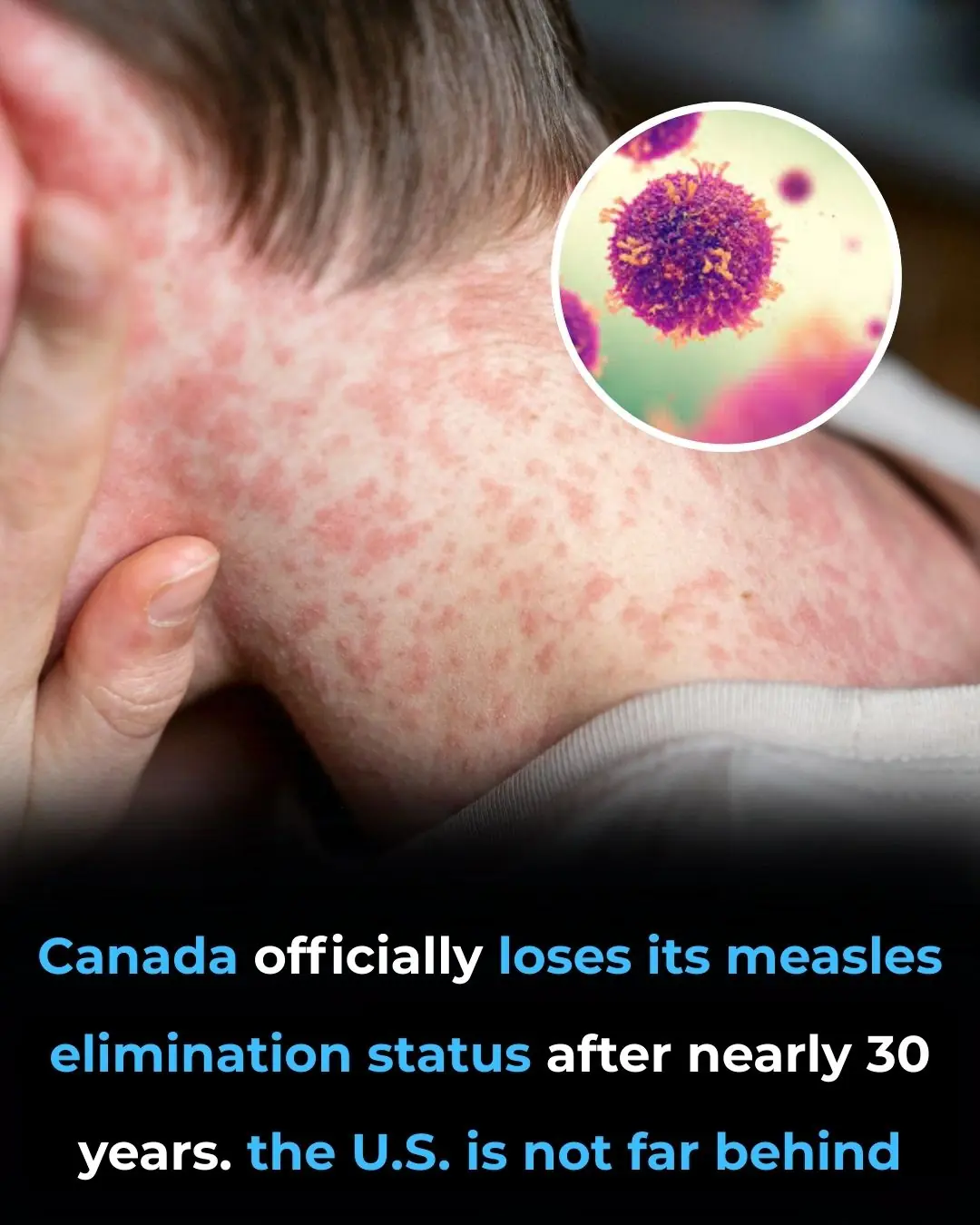
Canada Loses Measles-Free Status After Nearly 30 Years as the U.S. Faces Growing Risk
Health 01/12/2025 15:58

For most people, the COVID-19 pandemic now feels like a distant memory. Life has resumed its familiar rhythms, and the global focus has shifted elsewhere. Yet doctors and researchers are increasingly recognizing an unsettling aftershock—one that is far less visible than the original virus. Beyond the fatigue and lingering symptoms associated with Long COVID, a rare and aggressive condition called MIP-C has emerged. It represents a troubling twist in how human immunity responds to SARS-CoV-2: a scenario in which the immune system, meant to protect us, becomes dangerously confused and turns on the body itself.
MIP-C, short for MDA5-autoimmunity and Interstitial Pneumonitis Contemporaneous with COVID-19, is a newly recognized autoimmune syndrome linked to previous SARS-CoV-2 infection. Unlike Long COVID, which often causes persistent fatigue, cognitive impairment, and autonomic dysfunction, MIP-C is fast-moving, severe, and potentially fatal. Its core issue is not leftover viral activity but a misdirected immune response that continues long after the infection ends.
At the center of the disorder is MDA5, a protein that normally identifies viral RNA inside cells and activates antiviral defenses. In MIP-C, however, this system becomes dysregulated. Even after the virus disappears, the immune system keeps firing. The body mistakenly begins producing anti-MDA5 antibodies, targeting its own tissues. This causes widespread inflammation, especially in the skin and the lungs, where it can rapidly lead to interstitial lung disease (ILD) and life-altering scarring.
What makes the condition particularly alarming is that it can develop even after mild or moderate COVID-19, often appearing weeks later. Shortness of breath, sudden rashes on the hands, and rapid drops in lung function can be misinterpreted as post-viral fatigue or Long COVID—delaying the intensive treatments needed to prevent permanent lung damage.
Researchers now view MIP-C as an example of how COVID-19 may act as a biological trigger rather than the direct cause of disease. In genetically predisposed individuals, the immune system seems to “overlearn” the viral threat and then misfires, generating a self-sustaining and harmful autoimmune cascade.
A breakthrough observation came from Yorkshire in the United Kingdom, where physicians noticed a dramatic and unusual trend during the first two years of the pandemic. A condition that had been exceedingly rare suddenly became far more common.
In 2019, anti-MDA5–positive dermatomyositis appeared in about 0.4% of tested patients.
In 2020, the rate rose to 2.1%.
By 2021, it had reached 4.8%.
Between 2020 and 2022, doctors documented 60 confirmed cases, closely mirroring major COVID-19 waves.
What stood out was the specificity of this increase. Other autoimmune markers remained stable; only anti-MDA5 antibodies spiked. If generalized immune stress were the cause, multiple markers would have increased. Instead, this pointed to a targeted biological mechanism likely activated by COVID-19.
Historically, anti-MDA5 autoimmunity has been observed mainly in Asian populations, where it is known for causing severe lung disease. Seeing a rise in a predominantly Caucasian population suggested that SARS-CoV-2 may be capable of triggering pathways previously dormant in certain genetic backgrounds. Moreover, the Yorkshire cases didn’t follow the classical Asian presentation, supporting the view that genetic variability shapes how this autoimmune process unfolds.
For clinicians, the Yorkshire pattern became the first clear signal that new respiratory symptoms and unusual rashes following COVID-19 should not be dismissed as typical recovery issues.
The internal mechanism of MIP-C begins with a normal immune response. During active infection, MDA5 detects viral RNA and triggers Type I interferon production—an essential defense against viruses. Under typical conditions, this response winds down once the infection is resolved.
In MIP-C, however, damaged cells release fragments of MDA5 into the spaces outside the cell. These fragments may still contain traces of viral RNA or structural similarities to SARS-CoV-2. Because certain parts of the virus resemble parts of the MDA5 protein, the immune system becomes confused—a phenomenon known as molecular mimicry.
The body then begins producing antibodies against MDA5, believing it is still fighting the infection. This creates a destructive loop:
Interferon signaling remains stuck in “high alert.”
Immune cells attack tissues expressing MDA5.
The skin and lungs—rich in MDA5-related pathways—suffer the most damage.
Lung scarring can form within weeks, not months.
This rapid progression is what sets MIP-C apart from ordinary post-viral conditions. While Long COVID symptoms may fluctuate or improve slowly, MIP-C typically causes sudden and measurable respiratory decline.
Symptoms of MIP-C usually appear within several weeks after COVID-19, even in people who initially recovered well. Key warning signs include:
New or rapidly worsening shortness of breath
A quickly intensifying dry cough
Distinctive rashes or scaly bumps on the finger joints or knuckles
Significant fatigue or sudden muscle weakness, especially in shoulders and hips
The pattern differs from Long COVID, which does not typically cause rapid-onset lung disease.
MIP-C cannot be diagnosed with basic bloodwork. Accurate assessment requires:
Anti-MDA5 antibody testing
High-resolution CT (HRCT) scans—often showing ground-glass opacities
Evaluation by both rheumatology and pulmonology specialists
Standard markers like creatine kinase may remain normal, meaning typical muscle tests cannot rule out the condition. It is the combination of timing, symptoms, imaging findings, and anti-MDA5 positivity that confirms MIP-C.
Because the disease can progress quickly, treatment must begin as soon as MIP-C is suspected. Physicians typically use an aggressive three-drug protocol:
High-dose glucocorticoids – to rapidly suppress inflammation
Calcineurin inhibitors (such as tacrolimus) – to reduce T-cell overactivity
Cyclophosphamide – to blunt the immune response driving lung damage
This combination therapy has better outcomes than slower, step-by-step approaches.
For patients who don’t respond, more targeted therapies may follow:
JAK inhibitors – to interrupt the overactive interferon signaling
Rituximab – to reduce the B cells producing anti-MDA5 antibodies
Patients often require close monitoring, oxygen support, and frequent imaging. Lung decline may be subtle at first, making follow-up essential even when symptoms feel stable.
The window for preventing permanent damage is narrow. Once fibrosis forms, the affected tissue cannot return to normal—making early detection the most important factor in recovery.
Most people will never experience MIP-C, but simple awareness during the weeks following infection can make a life-saving difference.
Monitor your breathing: If everyday tasks suddenly feel harder, do not ignore it.
Check your hands and skin: Red, scaly bumps on the knuckles or unusual rashes warrant medical attention.
Keep a brief symptom log: Even a few notes can help doctors identify worrying trends.
Trust your instincts: If your recovery feels wrong—especially if it worsens instead of improves—ask for further evaluation.
These steps are not about fear. They are about practical vigilance.
MIP-C is rare but instructive. It shows that the immune system can behave unpredictably after COVID-19, and that rapid changes in breathing, new skin findings, or sudden declines in stamina should not be dismissed as ordinary recovery issues.
Seeking medical advice early is not overreacting—it is responsible self-care. Asking whether imaging, autoimmune testing, or specialist evaluation is appropriate could be the difference between reversible inflammation and permanent lung damage.
In a world learning to coexist with COVID-19, awareness—not anxiety—is our strongest tool.