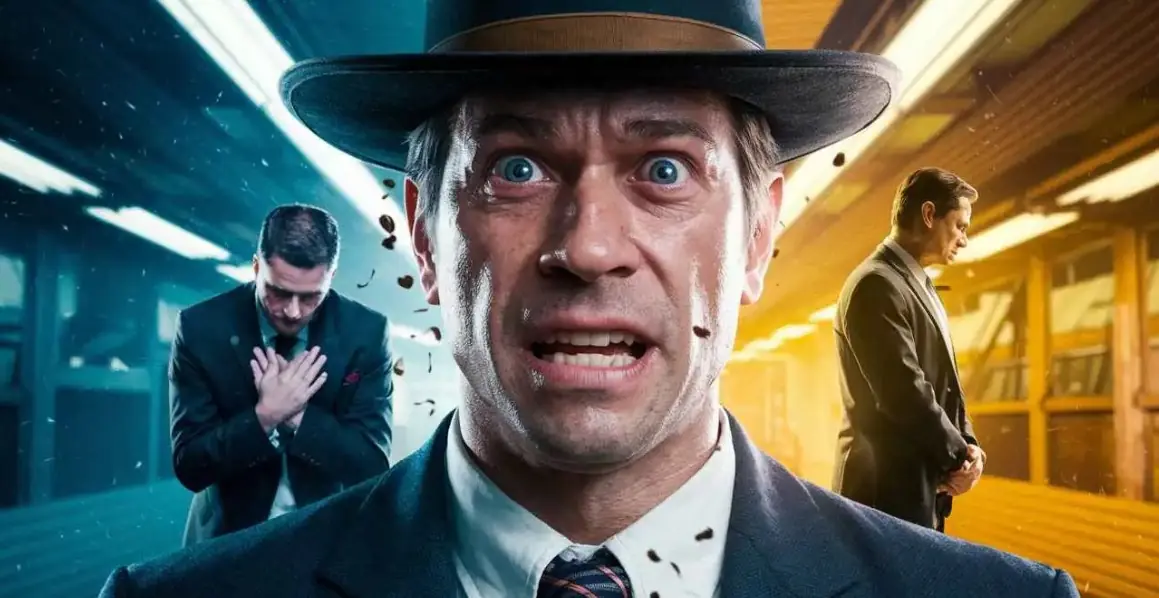
The first thing people noticed was the old man’s hands.
They shook. Not dramatically. Not for attention. Just the quiet tremble of someone whose body had been tired longer than his voice knew how to explain.
It was a regular afternoon on a busy American street. Traffic moved. People walked past with headphones on, eyes down, lives elsewhere.
And it would have stayed that way.
If he hadn’t spoken.
“This isn’t right,” he said softly. “I didn’t do anything wrong.”
The uniformed official didn’t answer at first.
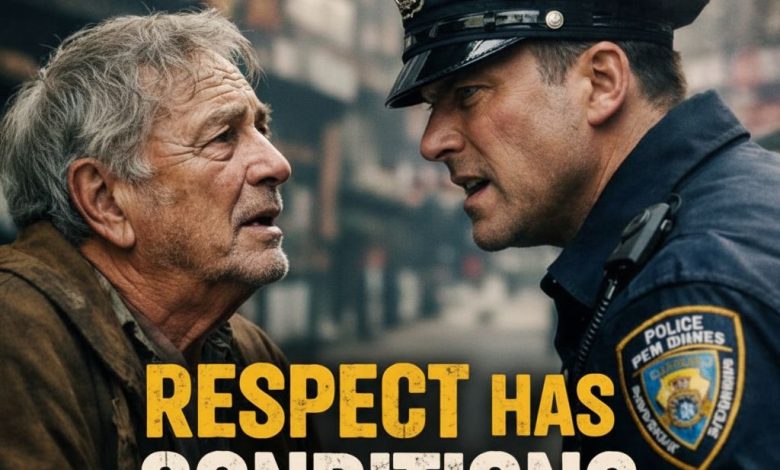
He stood taller, younger, confident in a way that comes from knowing the system is on your side. Paper in hand. Authority in posture.
“What did you say?” he replied sharply.
The old man swallowed. His eyes filled, not with anger, but with humiliation.
“I said… I didn’t do anything wrong.”
A few people slowed down. Not enough to help. Just enough to watch.
The official stepped closer, voice louder now, public.
“You should know your place.”
The words landed heavier than a shove.
Something changed in the old man’s expression. Not defiance. Not rage. Something quieter. Something final.
“I worked my whole life,” he said. “I paid my dues. I raised my family here. I’m not asking for trouble. I’m asking you to listen.”
A short laugh came back. Dismissive.
Someone across the street stopped walking. Another person lifted a phone, unsure.
The official raised his voice again.
“Hands where I can see them.”
The old man obeyed. Of course he did. His hands rose slowly, shaking more now.
“I don’t understand,” he whispered. “Why are you treating me like this?”
Because age makes people invisible.
Until it makes them inconvenient.
That’s when the footsteps came.
Measured. Confident. Unrushed.
A man stepped into the space beside the old man. Well-dressed. Calm. Not loud. Not aggressive. Just present.
“What seems to be the problem?” he asked evenly.
The official turned, annoyed. “This doesn’t concern you.”
The man met his eyes. “It does now.”
There was no threat in his voice. No performance. Just certainty.
The official tried to hold his ground, but something faltered. A pause. A recalculation.
The man leaned in slightly and spoke quietly. Not for the crowd.
The shift was instant.
The official’s posture changed. His tone softened. His confidence thinned.
“A misunderstanding,” he said quickly. “You’re free to go.”
The old man didn’t move at first.
Then the man beside him placed a gentle hand on his shoulder. “Let’s go,” he said.
As they walked away, the old man spoke once more. Not loudly. Not for attention.
“You didn’t have to humiliate me,” he said. “I was already old.”
The words lingered.
People stared. Some filmed. Some whispered. Some looked away.
And the truth settled quietly into the street.
Respect isn’t automatic.
It’s enforced.
And too often, it only appears when someone important is watching.
The real question wasn’t what happened that day.
It was how often it didn’t.