The Last Secret
Life stories 07/05/2026 17:18
STOP IT!”
“Don’t touch that!”
“STOP IT! No one can fix that!”
The command tore through the cold air of the hangar.
But something had already gone wrong before those words were spoken.
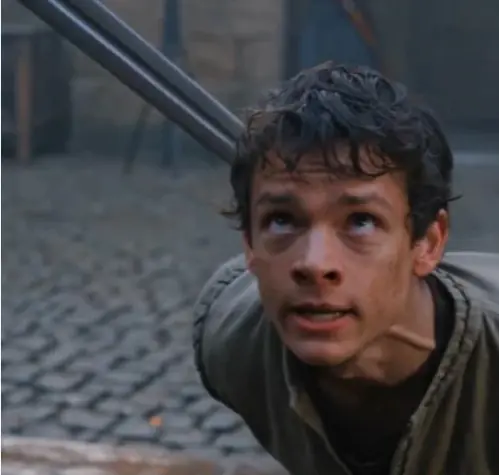
People didn’t notice the boy’s face first.
They noticed the grease.
Thick black streaks coated his hands, crawled up his arms, and smeared across his cheeks like war paint.
His clothes were torn, stiff with oil, hanging loose on his small frame as if they didn’t belong to him.
Everything about him felt out of place.
He didn’t belong here.
The hangar was not a place for children like that.
It was a controlled environment.
Cold. Precise. Untouchable.
Glass walls stretched high, reflecting soft white light across polished steel and a floor so clean it mirrored everything above it.
Every surface gleamed. Every edge aligned. Every movement measured.
Around twenty-five elite mechanics and engineers worked in near silence, their motions deliberate, efficient, almost mechanical.
No wasted gestures. No unnecessary words.
This was not a workshop.
This was a system.
And at the center of that system—
was the one thing that had broken it.
The helicopter.
A multi-million dollar machine rested motionless on a hydraulic platform, its dark body swallowing light instead of reflecting it.
The open engine bay exposed a dense, intricate network of wiring and components—systems that had been dismantled and rebuilt more times than anyone cared to admit.
They had tried everything.
Aerospace engineers.
Specialized technicians.
Consultants flown in from across the world.
Each one had studied it.
Each one had failed.
Diagnostics returned nothing.
No clear fault.
No visible damage.
No explanation.
And that was the problem.
Because if nothing was wrong—
then nothing could be fixed.
The conclusion had been reached days ago.
Dead.
Unrecoverable.
Marcus Hale had accepted it.
From the glass office above, he watched everything.
He always did.
His presence didn’t need to be announced.
It was built into the structure itself—into the order, the discipline, the silence.
He stood behind the glass, hands resting lightly at his sides, his reflection faintly visible against the controlled chaos below.
A perfectly tailored dark suit.
A watch on his wrist that caught the light just enough to remind anyone looking that time—like everything else here—belonged to him.
He hated losing.
But he hated wasting money more.
The helicopter would be stripped for parts before the night ended.
That decision had already been made.
It was final.
Until—
the boy appeared.
No one saw him enter.
No one opened a door.
No security alert sounded.
One moment, the hangar was exactly as it had always been.
The next—
something had changed.
“Hey… who let that kid in?”
The voice came from somewhere near the platform.
Heads turned, one after another, like a ripple moving through still water.
And there he was.
Already there.
Already working.
The boy sat on a low stool, leaning deep into the exposed engine, his hands moving with quiet certainty.
Not fast in a frantic way.
Not slow in hesitation.
Just… precise.
As if he had done this before.
“Where did he come from?”
“No idea.”
A mechanic took a step forward—then stopped.
His expression shifted.
Recognition.
“…He’s touching the Hale aircraft.”
The words spread without being repeated.
The effect was immediate.
Something tightened in the room.
No one shouted.
No one rushed him.
But the air itself changed.
The system had been interrupted.
Above them, Marcus saw it happen.
He didn’t hear every word.
He didn’t need to.
He saw the formation break.
He saw attention shift.
He saw control slip—just slightly.
And that was enough.
The glass door behind him slid open with a quiet hiss.
He stepped out.
Calm at first.
Then faster.
Each step down the metal stairs echoed, sharp and controlled, drawing attention before he even reached the floor.
People moved without being told, clearing a path instinctively.
“Move.”
His voice cut through the space—low, controlled, absolute.
By the time he reached the platform, the anger was already there.
Not explosive.
Worse.
Focused.
“STOP IT! No one can fix that!”
Silence hit instantly.
Every sound collapsed inward.
The faint hum of machinery.
The shuffle of movement.
Even breathing seemed to hesitate.
But the boy—
didn’t flinch.
Marcus stopped just short of him.
Close enough to see the grease.
Close enough to see how wrong he looked in this place.
“Who are you?” Marcus snapped.
No answer.
“Who let you in here?”
A mechanic spoke from behind, voice tight with disbelief.
“That machine will never run again.”
Still—
the boy didn’t react.
He didn’t rush.
He didn’t argue.
He simply continued what he was doing.
One final adjustment.
A small movement of his wrist.
A tightening motion—precise, deliberate, finished.
Only then did he pull his hands back.
He wiped them slowly against his already ruined shirt, leaving darker streaks across the fabric.
Then—
he looked up.
His eyes were calm.
Too calm.
There was no fear in them.
No apology.
No uncertainty.
Just a quiet stillness—
and something else.
Something that didn’t belong in a boy like him.
A faint smirk touched the corner of his mouth.
Not mocking.
Not nervous.
Certain.
“Start it.”
The words landed softly.
But they didn’t disappear.
They stayed.
Hung in the air.
Marcus stared at him.
For a moment, no one moved.
Then a mechanic let out a short, bitter laugh.
“Kid… it’s dead.”
The boy didn’t even look at him.
“Start it.”
This time, there was no room for interpretation.
Something in his voice shifted the space again.
Not louder.
Not sharper.
Just—
final.
Marcus hesitated.
It was brief.
Barely noticeable.
But it was there.
Then he turned.
Moved toward the cockpit.
Each step felt heavier than it should have.
He reached inside.
His hand hovered for half a second—
then pressed the ignition.
Click.
Nothing.
One second.
Two.
The silence stretched—
tight—
fragile—
ready to snap.
“It’s dead,” the engineer repeated quietly.
And then—
the world broke.
The engine ignited with a violent surge.
A deep, thunderous roar exploded through the hangar, shaking the air itself.
The rotor blades jerked—then spun—faster, faster, until the force of it tore through the space like a storm.
Wind blasted outward in every direction.
Tools clattered across the floor.
Papers flew.
People stumbled back, arms raised instinctively against the sudden violence of motion.
The machine—
the impossible machine—
was alive.
Marcus froze.
His hand still resting on the controls.
His mind trying to catch up to what his eyes were already seeing.
Slowly—
he turned.
Back toward the boy.
The child stood exactly where he had been.
Unmoved.
Unaffected.
As if nothing had happened.
As if everything had gone exactly the way he expected.
Marcus’s voice came out lower than before.
Not controlled.
Not certain.
“How…?”
And for the first time—
no one in the room had an answer.
For several seconds, the only thing anyone could hear was the helicopter breathing like a living animal.
The rotor blades slowed gradually, their thunder settling into a heavy mechanical rhythm that rolled through the hangar and into every stunned face.
Marcus did not move.
Neither did the boy.
Then one of the engineers whispered, “Run diagnostics.”
The words broke the spell.
People scrambled.
Screens lit up.
Cables were connected.
Panels flashed.
Numbers streamed across monitors faster than anyone could read them.
A senior technician leaned over the main console, his face pale beneath the glow.
“That’s not possible,” he muttered.
Marcus turned sharply. “What?”
The technician swallowed.
“The system is stable.”
Nobody spoke.
He checked again, as if the machine itself had betrayed him.
“Fuel flow corrected. Rotor response normal. Flight controls responding. Navigation online.” His voice thinned. “The failure cascade is gone.”
Marcus looked back at the boy.
The boy had already stepped down from the stool.
He was shorter than Marcus expected.
Smaller.
Under all the grease and torn fabric, he was just a child.
But he did not look like one.
Not in that moment.
Marcus took one step toward him. “What did you do?”
The boy picked up a small metal panel from the floor and placed it back on the work tray.
“You missed the bypass.”
One engineer stiffened.
“There is no bypass in that system.”
The boy finally looked at him.
“There is if someone built one.”
The hangar went quiet again.
Marcus’s eyes narrowed.
“What did you just say?”
The boy’s smirk disappeared.
For the first time, something flickered in his face.
Not fear.
Pain.
He looked toward the helicopter, then toward the glass office above.
“You really don’t remember it, do you?”
Marcus felt the question hit somewhere deeper than it should have.
“What am I supposed to remember?”
The boy reached into the pocket of his oil-stained pants and pulled out something small wrapped in a dirty cloth.
Security moved instantly.
Marcus raised one hand.
“Wait.”
The boy unfolded the cloth.
Inside was an old metal key.
Not a modern access card.
Not a digital chip.
A physical key.
Small. Worn. Scratched.
On its head was engraved a symbol Marcus had not seen in years.
A hawk.
His company’s first logo.
Before Hale Aerospace became polished.
Before the glass walls.
Before private contracts.
Before the world learned his name.
Marcus stared.
His face changed so subtly that only the people closest to him noticed.
The boy held the key out.
“My mother said you would recognize this.”
Marcus did not take it.
His voice lowered.
“Who is your mother?”
The boy’s jaw tightened.
“Elena Voss.”
The name struck the hangar harder than the engine roar.
Several older engineers looked away.
One of them closed his eyes.
Marcus went completely still.
Elena Voss had not been spoken of inside that building for ten years.
Not officially.
Not in meetings.
Not in reports.
Not in front of Marcus.
She had been erased with the quiet efficiency of rich men and legal teams.
But machines remembered what people tried to bury.
So did children.
Marcus’s voice came out rougher than before.
“Elena is dead.”
The boy’s eyes hardened.
“No.”
A murmur moved through the engineers.
Marcus took another step forward.
“That’s impossible.”
The boy gave a short, humorless laugh.
“You keep saying that.”
Marcus flinched.
For the first time all night, he looked less like the owner of the room and more like a man standing inside a memory he had locked away.
The boy looked past him.
At the helicopter.
“My mother built that emergency bypass after the first prototype failure. She told them the official system had a flaw. Nobody listened.”
Marcus turned slowly toward the engineers.
No one met his eyes.
The boy continued.
“She said the aircraft would pass every diagnostic because the problem was not broken hardware. It was a hidden conflict between the safety lock and the startup sequence.”
The senior technician’s face drained.
Marcus noticed.
“You knew?”
The technician opened his mouth.
No words came out.
Marcus stepped closer, his voice low.
“Daniel. Did you know?”
Daniel Reeves, head engineer, looked older in that instant.
The pride he had worn all evening collapsed into something small and frightened.
“I suspected.”
Marcus’s jaw tightened.
“You suspected.”
Daniel forced himself to speak.
“Elena’s notes were sealed after the lawsuit. We were told not to use them. We were told the design belonged to Hale Aerospace after her departure.”
The boy snapped, “She didn’t depart.”
Daniel looked at him.
The boy’s voice shook for the first time.
“She was pushed out.”
That was when Marcus finally understood there were two stories in the room.
The one he had been told.
And the one that had been waiting inside the machine.
Marcus looked down at the key again.
“What is your name?”
The boy hesitated.
For a moment, the calm vanished, and the child beneath it appeared.
Small. Tired. Angry.
“Leo.”
Marcus’s eyes softened almost against his will.
“Leo Voss?”
The boy nodded once.
A sound escaped one of the older mechanics.
Marcus looked around.
“Someone explain. Now.”
No one wanted to be first.
Then an elderly mechanic named Warren stepped forward.
His hands trembled slightly.
He had worked for Hale before the company had towers, before Marcus wore suits, before the hangar became a monument to money.
“Mr. Hale,” Warren said quietly, “you were told Elena sabotaged the program.”
Marcus’s expression hardened.
“She did.”
Warren shook his head.
“No, sir.”
The two words landed like betrayal.
Marcus stared at him.
Warren looked terrified, but he kept going.
“She found the flaw. She tried to delay the launch. Investors were already threatening to pull funding. Daniel and the board needed the prototype approved.”
Daniel whispered, “Warren…”
Warren turned on him.
“No. Not anymore.”
The hangar froze.
Warren pointed toward the helicopter.
“That aircraft is still alive because of Elena’s backup design. The same design they buried. The same design her son just used.”
Marcus’s face went pale.
“That cannot be true.”
Leo stepped closer.
“It is.”
He reached into his pocket again and pulled out a folded piece of paper, stained with oil and worn soft at the creases.
He handed it to Marcus.
This time, Marcus took it.
His fingers unfolded it carefully.
At first, he saw diagrams.
Handwritten notes.
Circuit routing.
Startup timing.
Then, at the bottom, he saw a line written in a hand he remembered.
A hand from years before everything became contracts and glass.
Marcus won’t believe me until he sees it run.
Marcus stopped breathing.
The room blurred at the edges.
Elena.
He remembered her standing across from him in the old workshop, hair tied back, sleeves rolled, arguing with him over impossible designs.
He remembered her laughing at him when he called something impractical.
He remembered trusting her mind more than his own.
And then he remembered the report.
The accusation.
The signature.
The evidence delivered by Daniel.
His own anger.
His own pride.
The way he had never called her after the board removed her.
He had mistaken silence for guilt because guilt was easier than doubt.
Marcus looked up slowly.
“Where is she?”
Leo’s mouth tightened.
“She’s alive.”
Marcus closed his eyes for a fraction of a second.
The relief was sharp enough to hurt.
Then Leo added, “But not well.”
The relief cracked.
“She’s been fixing farm equipment in a town nobody cares about,” Leo said. “Taking jobs nobody pays enough for. Raising me. Hiding from your lawyers.”
Marcus turned toward Daniel.
“My lawyers?”
Daniel’s face had gone gray.
“It was standard legal protection.”
Marcus’s voice dropped.
“Protection from what?”
Daniel said nothing.
Leo answered.
“From the truth.”
The boy looked toward the helicopter again.
“My mom didn’t send me here to prove she was right.”
Marcus looked at him.
“Then why did she send you?”
Leo swallowed.
“She didn’t.”
That answer confused everyone.
Leo looked down at his hands.
“She told me never to come here. She said this place had already taken enough from her.”
His voice grew quieter.
“But three weeks ago, she collapsed in the workshop. Hospital said she needed surgery. We don’t have the money.”
Marcus’s expression changed.
Leo kept going, each word harder than the last.
“I found her old notebooks. I saw the drawings. I recognized the aircraft from a photo online. Then I saw the notice that Hale Aerospace was stripping it tonight.”
He looked Marcus dead in the eye.
“So I came before they destroyed the only proof she had left.”
The hangar was silent.
Not controlled silence.
Ashamed silence.
Marcus looked at the paper in his hand.
Then at Daniel.
“You knew the notes existed.”
Daniel’s lips parted.
“You knew the design worked.”
Daniel’s eyes darted toward the engineers.
Marcus stepped closer.
“Answer me.”
Daniel exhaled.
“Yes.”
The word was barely audible.
But it was enough.
Marcus’s face hardened into something colder than anger.
“Why?”
Daniel’s composure broke.
“Because she was going to replace all of us.”
Warren stared at him.
Daniel’s voice rose, desperate now.
“She was brilliant. Too brilliant. The board listened to her. Investors loved her. Marcus trusted her. And she knew the program better than anyone.”
He pointed at the helicopter.
“That machine was going to make her untouchable.”
Marcus’s eyes darkened.
“So you framed her.”
Daniel swallowed.
“I protected the company.”
“No,” Marcus said. “You protected yourself.”
Daniel looked away.
Then came the second reveal.
Warren stepped forward again.
His face was wet now.
“I helped seal the files.”
Marcus turned slowly.
Warren could barely look at him.
“I didn’t frame her. But I knew something was wrong. I knew Daniel’s report didn’t match the tests. I stayed quiet because I had a sick wife and a mortgage and Daniel promised I’d keep my job.”
His voice broke.
“I told myself Elena would fight back. I told myself the truth would come out without me.”
Leo stared at him.
Warren looked at the boy, shame folding his face.
“It didn’t.”
Two men had protected themselves, and one woman had paid for all of it.
Marcus stood between them, surrounded by machines worth millions, and felt poorer than he had ever felt in his life.
Leo took the key back from Marcus’s hand.
“My mom kept this because she said one day the right person might need it.”
Marcus looked at him carefully.
“And you thought I was the right person?”
Leo’s answer came softly.
“No.”
Marcus absorbed that.
Leo glanced at the helicopter.
“I thought the machine was.”
The words hit harder than anger.
Because Marcus knew exactly what he meant.
People lied.
Machines didn’t.
The helicopter had become the witness.
The proof.
The voice Elena never got to use.
Marcus turned to the senior security officer.
“Seal the hangar.”
Daniel’s head snapped up.
“Marcus—”
“Now.”
Security moved.
Doors locked.
Phones were collected from the engineering bay.
Daniel stepped backward.
“You can’t do this.”
Marcus looked at him.
“I can.”
Daniel’s fear turned to anger.
“You think this fixes anything? You signed the removal order. You believed me. You threw her out.”
The words landed.
Marcus did not deny them.
That made the room even quieter.
He looked at Leo.
The boy was watching him with the hard eyes of someone too young to have learned disappointment so well.
Marcus said, “He’s right.”
Leo’s face changed slightly.
Marcus continued.
“I did believe him. I chose the convenient truth because it protected what I wanted to build.”
He looked down at Elena’s notes.
“And because admitting I might have been wrong would have cost me too much.”
His voice lowered.
“It cost her everything instead.”
Leo looked away.
For a moment, the boy seemed very tired.
Marcus turned back to Daniel.
“You’re done.”
Daniel laughed once, sharp and ugly.
“You think the board will let you reopen this? Do you know what happens if this becomes public?”
Marcus’s eyes lifted.
“Yes.”
Daniel stared.
Marcus said, “It becomes public.”
Daniel’s face emptied.
Marcus looked to Warren.
“Pull every archived file connected to Elena Voss. Every test log. Every email. Every board memo. Send copies to my legal team and to an outside investigator.”
Warren nodded, tears still on his face.
“Yes, sir.”
Marcus turned to another engineer.
“Get a medical transport ready.”
Leo stiffened.
“For who?”
Marcus looked at him.
“For your mother.”
Leo’s expression immediately closed.
“No.”
Marcus blinked.
“No?”
“You don’t get to fly in like a hero now.”
The words sliced through the hangar.
Marcus said nothing.
Leo’s voice shook with anger.
“She cried over this place. Do you know that? Not every day. She was too strong for that. But sometimes, when she thought I was asleep, I heard her.”
Marcus’s face tightened.
“She told me you were not evil. That was the worst part.”
Leo looked at him with wet eyes now.
“She said you were proud. She said proud men can destroy people while thinking they’re just protecting their dreams.”
No one moved.
Marcus looked at the floor.
For once, he had no command ready.
No money that could erase the moment.
No machine to control.
“You’re right,” he said.
Leo seemed startled by that.
Marcus looked up.
“I don’t get to be the hero.”
He folded Elena’s note carefully.
“But I can be useful.”
That disarmed the boy more than any apology could have.
Marcus took out his phone and placed it on the workbench, screen open.
“No lawyers. No conditions. No press. I’ll pay for her surgery tonight. If she refuses to see me, I’ll leave. If she wants to sue me, I’ll help her win. If she wants the company to admit what happened, I’ll say it myself.”
Leo stared at him.
Marcus added, “And if she wants nothing from me except the money to survive, she’ll get that too.”
The boy’s lips parted, but no words came.
For the first time, he looked uncertain.
Not because he lacked confidence.
Because hope was more dangerous than anger.
Warren stepped closer, slowly, like approaching a wounded animal.
“Leo,” he said, voice trembling, “your mother saved my wife once.”
Leo looked at him.
Warren nodded, tears falling openly now.
“When we couldn’t afford the equipment after her surgery, Elena repaired it herself. Wouldn’t take money.”
He pressed a hand to his chest.
“I owed her the truth. I failed her. But let me help now.”
Leo’s face twisted.
He fought it.
Hard.
The room waited.
Finally, he whispered, “She hates hospitals.”
Marcus said softly, “Then we make it quiet.”
Leo looked at him.
“No cameras.”
“No cameras.”
“No reporters.”
“No reporters.”
“And Daniel doesn’t come anywhere near her.”
Marcus looked at security.
Daniel was already being escorted away.
“He won’t.”
Daniel shouted from across the hangar, panic breaking through his last layer of dignity.
“Marcus, listen to me! You’ll destroy the company!”
Marcus did not turn.
“No,” he said. “I’m finding out what’s left of it.”
The doors closed behind Daniel.
The sound echoed.
Not loud.
Final.
Hours later, the helicopter no longer sat like a dead monument.
It rested quiet, powered down, but changed.
Everyone saw it differently now.
Not as a failed investment.
Not as an impossible machine.
As evidence.
As a grave marker.
As a beginning.
Leo sat on a bench near the platform, wrapped in a clean jacket someone had brought him.
He had refused food twice before accepting half a sandwich and a bottle of water.
He ate like someone trying not to look hungry.
Marcus sat several feet away.
Not too close.
He had learned, at least, not to invade the boy’s space.
Warren stood near the office, speaking quietly with investigators over the phone.
Engineers moved carefully around the aircraft, documenting every restored system, every corrected flaw, every hidden pathway Elena had built.
The room no longer felt cold.
It felt awake.
Marcus looked at Leo.
“Did she teach you all of that?”
Leo stared at the floor.
“Some.”
“Only some?”
A faint shadow of pride crossed the boy’s face.
“I taught myself the rest.”
Marcus nodded.
“I believe that.”
Leo did not smile.
But his shoulders loosened slightly.
A phone rang.
Marcus answered immediately.
He listened.
His face changed.
Then he held the phone out to Leo.
“It’s the hospital.”
Leo grabbed it with both hands.
“Mom?”
His voice broke on the word.
Marcus looked away, giving him privacy he had not earned but could still offer.
Leo listened.
His eyes filled.
“She’s awake?”
A pause.
“No, I’m okay. I’m okay, Mom.”
Another pause.
He looked at Marcus, then quickly away.
“I fixed it.”
His voice became smaller.
“The helicopter.”
The silence on the other end seemed to last forever.
Then Leo pressed the phone closer to his ear.
“I know you told me not to.”
His face crumpled.
“I’m sorry.”
Marcus closed his eyes.
The boy listened again.
Whatever Elena said made him laugh once through tears.
A tiny sound.
Fragile.
Human.
Then Leo held the phone toward Marcus.
“She wants to talk to you.”
Marcus stared at it.
For the first time that night, he looked afraid.
Slowly, he took the phone.
“Elena.”
He said her name like an apology already too late.
The line was quiet.
Then a woman’s voice, weak but clear, came through.
“Marcus.”
He swallowed.
“I was wrong.”
“No,” she said.
Marcus closed his eyes.
But Elena continued.
“You were afraid. There’s a difference.”
His jaw tightened.
“Not enough of one.”
A tired breath came through the phone.
“No. Not enough.”
The honesty hurt.
It was supposed to.
Marcus looked at the helicopter.
“Your son saved the aircraft.”
“He has a bad habit of touching things people tell him not to.”
Despite everything, Marcus almost smiled.
“He gets that from you.”
A pause.
Then Elena said, “No. He gets that from the life we had to live after you stopped asking questions.”
Marcus bowed his head.
“Yes.”
No defense.
No explanation.
Just yes.
Elena’s voice softened, but only slightly.
“I don’t want your guilt, Marcus.”
“You won’t have it.”
“What do you think I want?”
Marcus looked at Leo.
The boy was watching him, scared of the answer.
“The truth,” Marcus said. “And time.”
Elena was silent.
Then she said, “Truth first.”
Marcus nodded though she could not see it.
“Truth first.”
By morning, Hale Aerospace released a statement no one expected.
Not polished.
Not evasive.
Marcus Hale personally admitted that Elena Voss had been wrongly removed, that internal misconduct had buried her design, and that the aircraft now functioning was built on her undocumented emergency system.
Daniel Reeves was arrested three days later.
Warren testified voluntarily.
The board tried to contain the damage.
Marcus did not let them.
It did not fix everything.
It did not return ten years.
It did not erase the nights Elena spent choosing between medicine and rent.
It did not give Leo back the childhood he had spent under broken machines, learning how to repair things adults had ruined.
But it opened a door.
Elena’s surgery happened quietly, without cameras.
Marcus paid, but never announced it.
She refused flowers from him.
Accepted the medical support.
Rejected his first apology.
Accepted the second only as “a beginning.”
Months later, Elena Voss returned to the hangar.
Not through the service entrance.
Not as a visitor.
As chief engineer.
She walked slowly with a cane, thinner than Marcus remembered, her face marked by illness and years, but her eyes unchanged.
Sharp.
Unforgiving.
Alive.
The engineers stood when she entered.
Some out of respect.
Some out of shame.
Leo walked beside her, cleaned up now, though a streak of grease still marked one cheek because he had insisted on checking something before they left.
Elena noticed the helicopter on the platform.
Her hand tightened around the cane.
Marcus approached, then stopped several feet away.
He did not offer a handshake.
He did not assume he deserved one.
“Elena,” he said.
She studied him.
Then the hangar.
Then the aircraft.
“You kept it.”
Marcus nodded.
“You saved it.”
She looked at Leo.
“No,” she said.
“He did.”
Leo looked embarrassed.
Marcus said, “Both of you did.”
Elena’s eyes returned to him.
For a long moment, neither spoke.
Then she said, “I’m not here to forgive you today.”
Marcus nodded.
“I know.”
“I’m here because my design deserves to fly.”
His throat tightened.
“Yes.”
“And because my son deserves to see a room full of powerful people admit he was right.”
Marcus looked at Leo.
Then at everyone in the hangar.
“He was right,” Marcus said clearly.
The words echoed softly across polished steel and glass.
Leo lowered his eyes, but he could not hide the smile.
Small.
Brief.
Earned.
Elena touched his shoulder.
The helicopter was powered up again.
This time, no one shouted.
No one tried to stop the boy.
Leo stood beside his mother as the engine came alive, not violently now, but smoothly, almost gracefully.
The rotor blades turned above them, slow at first, then steady.
Wind moved through the hangar.
It lifted Elena’s hair.
It tugged at Leo’s jacket.
It passed over Marcus like judgment and mercy at the same time.
He looked at the machine he had once decided was dead.
Then at the woman he had once decided was guilty.
Then at the boy who had refused to let either lie remain buried.
Some things were not impossible.
They were only waiting for the right person to believe the truth.
Elena reached down and took Leo’s grease-stained hand.
He leaned against her, just slightly.
Not enough for the room to notice.
But Marcus noticed.
And this time, he said nothing.
He simply stepped back.
The helicopter kept running.
And in the quiet space beneath its thunder, a mother and son stood together, finally seen.
The world went silent.
Not quiet.
Not calm.
Silent in the way something breaks inside your head and everything after echoes.
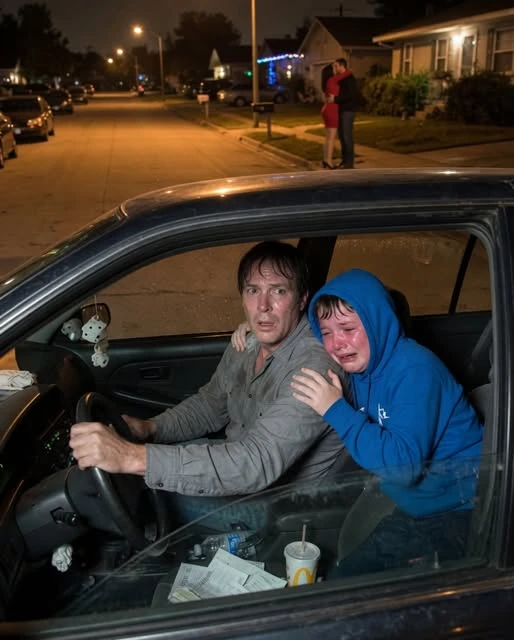
I stared at him.
At my son—my youngest—my Emiliano.
Eight years old.
Small hands still gripping my arm like I might disappear if he le