THE TEST OF HONESTY
By ten o’clock on a July morning, the Beverly Hills sun had already turned the sidewalks white with glare.
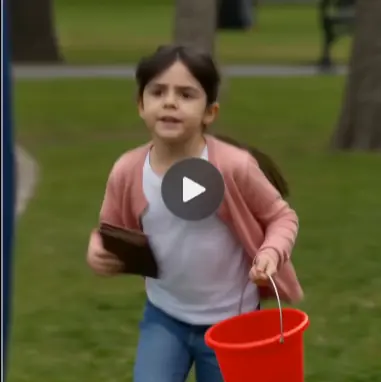
Lucas Ramirez squinted against the brightness and kept moving, dragging a mesh sack stuffed with flattened cardboard and aluminum cans along the curb. He was nine years old, small for his age, and better than most adults at spotting value in what other people threw away. A crushed sparkling-water can under a hedge. A delivery box left beside a garage. Bottles tucked into decorative planters by gardeners too rushed to notice them.
Summer vacation meant other kids were sleeping late, riding bikes, or begging for pool money.
Lucas was working.
He tried not to stare at the houses on the street. “Houses” wasn’t really the right word anyway. These were estates—limestone walls, black iron gates, trimmed hedges cut so perfectly they looked artificial. Behind those gates lived a kind of quiet Lucas knew only by contrast: cold air, full refrigerators, and people who never had to lower their voices over bills after midnight.
He was reaching for a flattened produce box near the curb when he saw her.
Mrs. Eleanor Hayes stepped out through a side gate two properties down and moved along the sidewalk with calm, unhurried precision. She wore a pale blue suit, low heels, and the sort of composure that made everything around her seem slightly less important than wherever she was headed. Her silver hair was pinned neatly at her neck. A structured leather handbag hung from one arm.
She passed Lucas without looking at him.
Then the wallet slipped from her bag.
It hit the pavement with a soft, heavy sound.
Lucas stopped cold.
The wallet had fallen open just enough for him to see what was inside.
Cash.
Not a few bills folded behind credit cards. Thick currency. More money than he had ever held in his life, maybe more than his family saw at one time even when things were good—which they hadn’t been in a long while.
For one dangerous second, his thoughts betrayed him.
He saw the pink final notice from the electric company tucked beneath a magnet on the refrigerator. He saw his father, Miguel, trying to stand from the kitchen chair without showing how badly his knee still hurt. He saw his mother, Sofia, taking off her bakery apron after midnight and pretending she wasn’t hungry so Lucas could finish the last yogurt in the fridge.
That money could change the week.
Maybe the month.
Maybe just enough to let everyone in their apartment sleep one night without doing math in their heads.
Then the thought passed.
“Ma’am!” Lucas shouted.
He snatched up the wallet and ran after her. “Ma’am, you dropped this!”
She didn’t turn. Maybe she didn’t hear him. Maybe the street was too bright and empty and strange in the way expensive streets often were—silent enough to make your own voice sound small.
By the time Lucas reached the gate of her property, she was already walking up the long front path toward the house.
The gate clicked shut.
Lucas pressed the intercom button with one hand and kept the wallet clutched in the other.
A buzz sounded. The gate opened just wide enough for a man in a black suit to step outside.
He was broad-shouldered, clean-shaven, and wearing the blank, watchful expression of someone paid to decide who belonged near the property and who didn’t. An earpiece curled behind one ear. A small metal tag on his jacket read TRENT.
His eyes swept over Lucas, the sack, the scuffed sneakers, the sweat-damp T-shirt.
“What do you want?” he asked.
Lucas lifted the wallet. “The lady who just went inside dropped this.”
For a moment Trent’s face didn’t change.
Then it did.
Not much. Just enough.
His attention sharpened. His hand came out too fast. His fingers closed too tightly around the leather before Lucas had fully let go.
“I’ll take it,” Trent said.
Lucas hesitated. “Could you tell her I brought it back?”
“I said I’ll take it.”
He slipped the wallet inside his suit jacket.
Not toward the house.
Toward himself.
It was a small movement, but Lucas knew what he had seen. He had grown up around people who looked at something valuable and stopped acting like themselves. He’d seen it in the landlord’s eyes when rent was late, in men at the recycling center who shaved pounds off the scale, in strangers who smiled until money was involved.
Greed had a look.
And Trent had it.
Lucas swallowed. “You are going to give it to her, right?”
Trent took one step closer.
“You got a problem, kid?”
Lucas backed up automatically.
“No, sir.”
“Then move along.”
The gate shut with a heavy metallic clang.
Lucas stood there another second, staring through the bars toward the enormous front door. He had done the right thing. He knew he had.
So why did it feel like he had handed the wallet to the wrong person and let something bad happen anyway?
He walked away with the sack bumping against his leg and an uneasy knot in his stomach.
By noon the heat had deepened, flattening the air over the street. Lucas had worked two more blocks and barely found enough to make the morning worth it. Hunger sat under his ribs like a stone. He was kneeling beside a recycling bin outside a walled property when a black Mercedes glided to the curb beside him.
The rear window lowered.
Mrs. Eleanor Hayes sat inside.
Lucas stood so fast he nearly dropped the sack.
This time she looked directly at him.
“Lucas Ramirez?” she said.
He stared. “How do you know my name?”
“The owner of the corner market knows everyone’s name,” she replied. “Would you come up to the house, please? The driver will take us through the gate. You may bring your bag.”
Lucas didn’t move.
Mrs. Hayes seemed to understand immediately.
“You may sit in the front if you prefer,” she said. “Or we can walk. The house is less than a minute away. I’m asking because the man at my gate lied to me, and you did not.”
That got his attention.
He climbed into the front seat with the sack at his feet, still unsure whether he was making a smart decision or a terrible one.
The drive took less than a minute, but it felt like crossing a border.
Up close, the property looked even more unreal than it had from the sidewalk—white stone, clipped hedges, fountains that seemed to waste water on purpose, doors tall enough to belong on a cathedral. Lucas followed Mrs. Hayes through the entry hall and into a quiet study lined with books and pale afternoon light.
The room smelled faintly of paper and lemon polish.
Mrs. Hayes closed the door behind them, crossed to her desk, and pressed a button on a remote.
A wall-mounted screen came to life.
Security footage filled it.
Lucas saw himself on the sidewalk, small and sunburned, scooping up the wallet. He saw himself running after Mrs. Hayes. He saw himself at the gate. Trent stepped outside, took the wallet, slid it into his jacket, and looked over his shoulder before disappearing back through the gate.
Mrs. Hayes paused the image on Trent’s hand inside the jacket.
Lucas looked from the screen to her face.
“You dropped it on purpose,” he said.
“I did.”
He stared a second longer, trying to sort out what he felt first.
Relief, because he hadn’t imagined Trent’s greed.
Anger, because she had known exactly what temptation looked like for someone like him.
Embarrassment, because part of her had expected him to fail.
“You tested me?”
Mrs. Hayes met his gaze without flinching. “Yes.”
“That’s not fair.”
“No,” she said quietly. “It wasn’t.”
The answer took some of the heat out of him.
She gestured toward a chair. Lucas sat, though stiffly.
“I had already begun to suspect Trent,” she said. “Cash missing from my desk. Jewelry disappearing one piece at a time. Small things. Too small to accuse without proof. This morning I decided to stop guessing.”
“By using me.”
“Yes.” She folded her hands. “And I won’t insult you by pretending it was noble. It was calculated. But I wanted the truth.”
Lucas looked down at his scraped hands. “You could’ve just asked me to bring it back.”
“That would have told me nothing,” she said. “People behave well when they know they are being watched. Character shows itself when they believe no one important is paying attention.”
The room went still.
Then she added, in a different tone, “I’ve seen you on this street for weeks. Collecting cans. Cardboard. Scrap metal. I asked around. The grocer on Canon said you are respectful. The porter next door said you work harder than boys twice your age. No one had anything bad to say except that you should be in school, not in the sun.”
“It’s summer,” Lucas said. “School’s out.”
“And when school is in session?”
“I go.”
“Every day?”
He hesitated, then nodded. “Mostly.”
Something in her eyes softened, but not into pity. Lucas was grateful for that. He hated being looked at like a sad fact.
“What’s your full name?” she asked.
“Lucas Ramirez.”
“And how old are you, Lucas Ramirez?”
“Nine.”
She exhaled slowly. “Nine is too young to understand that much about money.”
Lucas shrugged. “You understand when your family needs it.”
She studied him for a moment. “Tell me about your family.”
So he did.
Not elegantly. Not all at once. The truth came out in pieces.
His father had worked construction until a fall from scaffolding shredded the ligaments in his knee. The surgery fixed some of it, but not enough for steady heavy labor. His mother cleaned houses in the mornings and worked evening shifts at a bakery three nights a week. Lucas collected recyclables on weekends and during summer because the extra cash mattered. Not for extras. For groceries. Bus fare. Detergent. The kind of things families stopped buying only when they had absolutely no choice.
Mrs. Hayes listened without interrupting.
When he finished, she was silent for a long moment.
Then she stood, came around the desk, and rested a light hand on the back of the chair opposite him.
“Go home and bring your parents back here for dinner,” she said.
Lucas blinked. “Dinner?”
“Yes.”
He gave a short, disbelieving laugh. “Why?”
“Because I prefer important conversations in person,” she said. “And because after this morning, I owe you and your family more than an apology.”
By six o’clock, Lucas sat rigidly on the edge of a cream-colored sofa in the same study while his parents tried not to look overwhelmed.
His mother had changed into her best blouse, the one she wore to church on Easter. His father had put on the only dress shirt he owned, ironed so carefully that the sleeves still held sharp creases. Miguel Ramirez had the broad hands of a builder and the guarded expression of a man who had spent too many months being offered false hope.
Mrs. Hayes told them everything.
The wallet. The camera footage. Trent. The thefts she had suspected and the proof Lucas had unknowingly helped her obtain.
Miguel’s jaw tightened. “So my son did the right thing, and your guard tried to steal from you in the middle of it.”
“Yes,” Mrs. Hayes said. “And your son is the reason I know exactly what kind of man I employed.”
Sofia glanced at Lucas, then back at Mrs. Hayes. Her eyes were wary more than grateful. “Thank you for telling us,” she said. “But I need to say this plainly—we are not looking for charity.”
Mrs. Hayes nodded once, as though she had expected no less.
“Good,” she said. “Neither am I.”
She turned to Miguel.
“I own three properties,” she said. “The person who coordinates outside repairs, vendors, inspections, and grounds projects is retiring in August. The position is salaried. It includes benefits, regular hours, and housing in the guest cottage at the back of this estate. It requires judgment, reliability, and enough construction experience to know when someone is cutting corners. It does not require climbing ladders with a bad knee.”
Miguel stared at her.
Mrs. Hayes continued. “The market manager at Bristol Farms told me you were once one of the best foremen on your crew. My attorney confirmed there is nothing in your background that would make you a liability. If you’re interested, the job is yours.”
Miguel opened his mouth, closed it, and glanced at Sofia as though he needed another witness to prove he wasn’t imagining the conversation.
Then Mrs. Hayes looked at Lucas.
“And you,” she said, “should not spend your childhood dragging a sack through Beverly Hills in triple-digit heat.”
Lucas shifted in his seat. “I’m helping.”
“I know you are.” Her voice was gentle, but firm. “And I am telling you that helping your family should not cost you your education.”
She turned back to his parents.
“I will establish an educational trust through the Hayes Foundation,” she said. “Tuition, school supplies, tutoring if needed, enrichment programs, college later—provided Lucas does his part and takes the opportunity seriously. I am not offering indulgence. I am offering structure, support, and a fair chance.”
Sofia’s eyes filled so quickly she looked angry about it.
Miguel rubbed a hand over his mouth and tried to speak before his voice was ready. “Mrs. Hayes…”
“Eleanor is fine,” she said.
He shook his head once. “I don’t know how to answer something like this.”
“Try honesty,” she said. “It seems to run in the family.”
That broke the tension just enough for everyone to breathe.
Lucas had been quiet through most of it, listening as though the conversation were happening around him rather than because of him.
Finally he asked the only question that mattered to him.
“Why us?”
Mrs. Hayes leaned back in her chair, the lamplight soft against the silver in her hair.
“Because your son did the right thing when doing the wrong thing would have been easier,” she said to his parents, then looked directly at Lucas. “Because he exposed a thief in my house without trying to profit from it. Because I have spent too many years watching people with every advantage in the world fail very simple tests of character. And because a boy with your instincts should not be left to grow or shrink according to luck.”
No one spoke for a moment.
Then Sofia reached for Lucas’s hand.
That dinner did not solve everything overnight.
Life rarely changes that neatly.
But within a month, Miguel had started work on the Hayes estate, learning schedules, invoices, contractors, irrigation systems, and the thousand quiet responsibilities that came with keeping a property that size running without chaos. The guest cottage included with the position sat at the far end of the grounds beneath a jacaranda tree and beside a lemon tree that perfumed the air after sunset. It was small, but clean, bright, and private. The first time Sofia opened the refrigerator and found it full enough that she did not need to plan the week around absence, she stood with one hand over her mouth and cried.
Lucas went back to being a full-time student.
Not overnight in his head, even if it happened on paper.
Kids who spend enough time worrying about money do not become carefree just because adults finally tell them it is safe. But the change came. Slowly. Quietly. Then all at once.
Mrs. Hayes insisted he come to the main house every Sunday afternoon.
At first Lucas thought the visits were a formality—thank-you notes, polite conversation, the sort of thing rich people expected. But before long the study became one of the most important rooms in his life. Mrs. Hayes helped him with vocabulary words and reading assignments. She made him summarize books instead of merely finishing them. She taught him how to shake hands properly, how to sit through a difficult conversation without shrinking, how to write a note that sounded sincere instead of rehearsed.
“Never apologize for taking up space,” she told him once when he stood in the doorway instead of entering a room. “Apologize only when you have done something wrong.”
He never forgot it.
She was at his fifth-grade awards assembly in a navy suit and pearls, clapping harder than anyone when his name was called. She sat through his middle-school science fair and asked better questions about his solar-powered water purifier than the judges did. When he was fourteen and failed an algebra exam for the first time in his life, she did not comfort him by pretending it didn’t matter. She hired a tutor and told him, “Disappointment is information. Use it.”
By the time he was sixteen, the relationship had become something deeper than gratitude and harder to name. She was not his grandmother, though at times she sounded like one. She was not merely his benefactor, though no honest telling of his life could leave out what she had given him.
She had become family through the slow, undeniable accumulation of presence.
Lucas worked hard because hard work was familiar, but also because now effort led somewhere. He graduated near the top of his class. He earned admission to a top university, majored in biology, then fought his way into medical school with the same stubborn discipline that had once taught him how to sort cans by weight and metal value in the back lot of a recycling center.
He never forgot the sidewalk.
Never forgot the weight of that wallet in his hand.
Never forgot how clearly he had understood what that money could have done for his family and how, even then, something inside him had refused to keep what was not his.
Years later, on the afternoon he graduated from medical school, he did not go to the celebratory lunch first.
He drove straight to the Hayes estate.
The black iron gates opened before he reached them. The property looked much the same as it had when he was nine—white stone, trimmed hedges, fountains catching sunlight—but it no longer felt like a different world. It felt like the place where his life had turned.
Mrs. Hayes was in the garden beneath a striped umbrella, a light blanket over her knees despite the warmth. Age had narrowed her. Her hands were thinner now, the bones more visible, her face finer in its lines. But her eyes were still alert, still unmistakably hers.
Lucas crossed the lawn with his diploma case in one hand.
She looked up.
For a second, neither of them spoke.
Then her face changed.
There it was—the full history of him reflected back at once. The nine-year-old with the recycling sack. The middle-school student with ink on his fingers. The college freshman who had called her after his first anatomy lab sounding shaken and exhilarated at the same time. The young man standing before her now, exhausted, accomplished, and trying not to cry before he’d even said hello.
“Mrs. Hayes,” he said, and his voice broke anyway. “I made it.”
Her expression softened into something close to wonder.
“I know,” she said.
He laughed through the tears he hadn’t managed to stop and knelt beside her chair. She put her arms around him, and for one long moment he let himself be held the way only a few people in life ever truly hold us—with memory, pride, and no conditions attached.
When she leaned back, she touched his cheek with cool, papery fingers.
“You kept your promise,” she said.
Lucas smiled shakily. “You made me possible.”
“No,” she said. “I gave you an opening. You did the hard part.”
They sat together for a while, letting the afternoon settle around them.
He told her about the ceremony, the professors, the residency he had matched into. She complained, with dry irritation, that aging was inefficient and doctors were universally too pleased with bland food and impossible schedules. He told her his parents still talked about the guest cottage as if it were a miracle with plumbing.
Before he stood to leave, she reached into the pocket of the blanket over her knees and held something out to him.
A wallet.
The same one.
The leather was softer now, the edges more worn, but Lucas knew it immediately.
He looked at her in surprise. “You kept it?”
“I did,” she said. “Sentimental, perhaps. But I have reached an age where I am no longer embarrassed by sentiment.”
He opened it.
Inside was no cash, only a folded note written in her elegant hand.
He unfolded it.
The doors that matter most in life do not open because someone is rich. They open because someone can be trusted.
Lucas stared at the words until they blurred.
When he looked up, Mrs. Hayes was watching him with that familiar, unsparing tenderness.
“You changed my life with this,” he said quietly.
She shook her head.
“You changed it on the sidewalk,” she replied. “The rest was simply the world catching up to what you had already shown yourself to be.”
He sat with the wallet in his hands and felt, all at once, the full distance between the boy he had been and the man he had become.
There had been enough money in that wallet to buy groceries, pay bills, maybe quiet the fear in his parents’ apartment for a little while. At nine years old, Lucas had understood that perfectly.
But that had never been the true fortune inside it.
The real fortune had been the choice.
The moment no one had seemed to be watching.
The proof that character could exist without witnesses, without applause, without reward.
Outside the gates, Beverly Hills still shimmered with the same polished wealth it always had.
But Lucas knew something many people on those streets never would:
Money can change a life.
Integrity can change its direction forever.
Post navigation