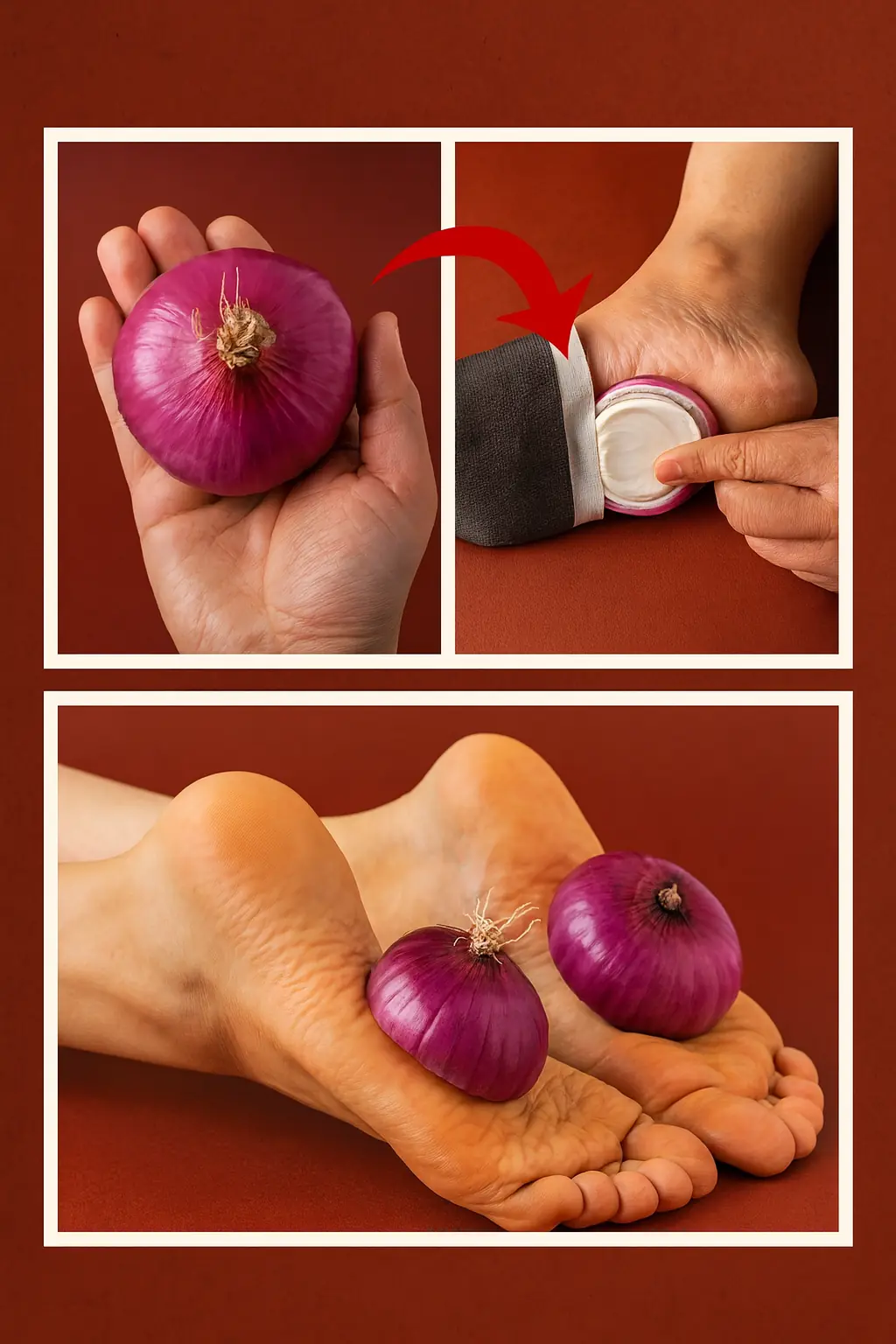
Sleeping with Onion Slices in Your Socks: A Curious Wellness Trend Explained
Health 15/12/2025 02:37

Have you noticed unusual sensations lately—such as tingling in your legs, thinning hair on your lower limbs, memory lapses, or even unexplained chest discomfort? Many people describe these symptoms as being caused by “clogged veins.” But what does that term actually mean, and is it medically accurate?
In this article, we’ll clarify the difference between veins and arteries, explain what truly causes circulation problems, and help you understand how reduced blood flow can affect your legs, feet, heart, and brain.
Veins, Arteries, and Lymphatic Vessels Serve Different Roles:
Arteries carry oxygen-rich blood from the heart to the body, veins return oxygen-poor blood back to the heart, and lymphatic vessels remove excess fluid from tissues.
“Clogged Veins” Usually Refer to Arterial Disease:
While veins can become blocked by clots, most circulation-related symptoms are caused by narrowed or blocked arteries.
Symptoms Depend on Location and Speed of Blockage:
Whether the problem affects an artery or vein—and whether it occurs suddenly or develops over time—determines how symptoms appear.
Sudden Arterial Blockages Are Medical Emergencies:
Acute blockages can result in severe pain, heart attack, stroke, or even limb loss and require immediate treatment.
Chronic Arterial Disease Develops Gradually:
Long-term narrowing of arteries leads to symptoms like numbness, cold limbs, cramping during activity, and muscle wasting.
Varicose Veins Are Not the Same as Blockages:
They result from faulty valves and blood pooling, not from clogged vessels.
Healthy Lifestyle Choices Are the Best Prevention:
Regular exercise, avoiding smoking, maintaining a healthy weight, and eating a balanced diet all support good circulation.
Your circulatory system is a highly organized network designed to transport blood, oxygen, nutrients, and fluids throughout your body. It includes arteries, veins, lymphatic vessels, and the heart, which functions as the central pump.
Arteries act like highways, delivering oxygenated blood from the heart to tissues and organs.
Veins carry blood back to the heart after oxygen has been used.
The lymphatic system helps manage fluid balance by draining excess fluid from tissues and returning it to the bloodstream.
When any part of this system becomes blocked or impaired, circulation suffers. However, in most cases, people who believe they have “clogged veins” are actually dealing with arterial disease.
Although less common, veins can become obstructed by blood clots—a condition known as thrombosis. The symptoms depend on where the clot forms.
A well-known example is deep vein thrombosis (DVT), which typically affects the deep veins of the legs. Risk factors include prolonged immobility, recent surgery, pregnancy, and certain medications such as birth control pills.
Symptoms of DVT may include:
Pain or tenderness in the calf or thigh
Swelling in one leg
Skin that appears red, pale, or warm
More visible or engorged surface veins
DVT is dangerous because the clot can dislodge and travel to the lungs, causing a pulmonary embolism, a life-threatening emergency. If you notice these signs, seek medical care immediately.
Arterial blockages are far more common and are typically caused by plaque buildup from cholesterol, inflammation, and smoking. These blockages can affect arteries in the heart, legs, brain, intestines, or kidneys.
The symptoms vary depending on whether the blockage develops suddenly or over many years.
An acute arterial blockage happens abruptly, often due to a blood clot forming on top of an existing plaque.
Examples include:
Heart attack: Sudden chest pain caused by blocked coronary arteries
Stroke: Blocked blood flow to the brain
Acute limb ischemia: Sudden loss of blood flow to a leg or arm
In the limbs, this can cause:
Intense pain
Coldness and bluish discoloration
Loss of pulse
Numbness or tingling (paresthesias)
These situations are medical emergencies. Delayed treatment can lead to permanent damage or loss of life.
Chronic blockages develop gradually and may not cause symptoms until the artery is more than 70% narrowed.
Common signs include:
Numbness or tingling in hands or feet
Cold extremities that may appear pale or bluish
Muscle cramps, especially during activity
Muscle atrophy, due to reduced nutrient and oxygen delivery
Intermittent claudication, where leg pain occurs after walking short distances and improves with rest
This pattern of pain is a hallmark sign of peripheral artery disease (PAD).
Chronic narrowing of heart arteries can lead to angina, a type of chest discomfort:
Stable angina occurs with physical activity and improves with rest.
Unstable angina can occur at rest and may signal an impending heart attack. This requires urgent medical attention.
When arteries supplying the brain (carotid arteries) are narrowed, symptoms may include:
Memory problems
Difficulty concentrating
Confusion or dizziness
Temporary vision or speech changes
Varicose veins are enlarged, twisted veins caused by weakened valves that allow blood to pool. While they can be uncomfortable or unsightly, they are not caused by blockages and usually do not pose the same risks as arterial disease.
Maintaining good circulation starts with healthy daily habits:
Exercise regularly: Walking, swimming, and cycling improve blood flow and strengthen the heart.
Elevate your legs: This helps reduce swelling and supports venous return.
Stop smoking: Smoking damages blood vessels and dramatically increases cardiovascular risk.
Maintain a healthy weight: Excess weight strains the heart and blood vessels.
Eat a balanced diet: Emphasize fruits, vegetables, whole grains, lean proteins, and healthy fats while limiting processed foods.