My best friend couldn't believe how easy this was. Only 3 ingredients for the most flavorful potatoes ever.
Garden Healthy 06/09/2026 00:12
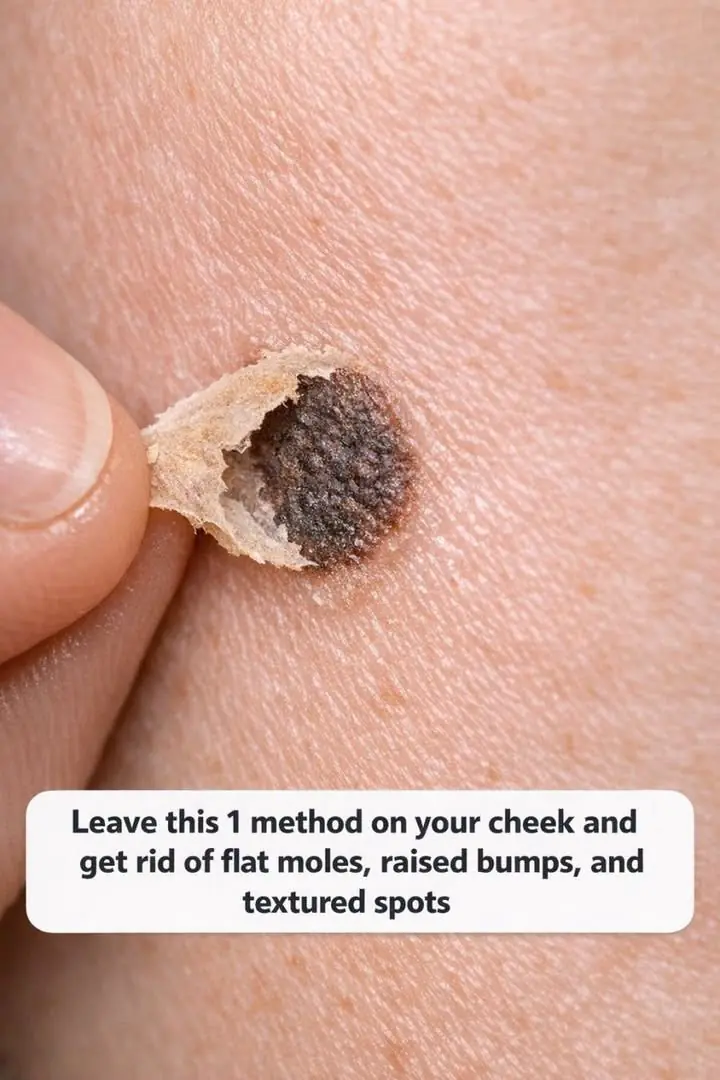
Finding a new spot on someone’s back can be unsettling, especially when it looks “stuck on,” feels waxy or crusty, and seems to be getting bigger little by little. I’ve had more than one family health moment happen on a weekend or when we were far from town, and I know how quickly your mind can jump to worst-case scenarios. The good news is that a brown, waxy, slightly raised patch with that pasted-on look often fits a very common, usually non-serious skin growth called a seborrheic keratosis.
That said, “often” is not the same as “always.” Since I can’t examine it, the safest approach is to know what features lean toward seborrheic keratosis, what warning signs need faster care, and what you can do tonight if urgent care is hours away. I’ll walk you through what this spot may be, when it can wait for a regular appointment, what changes matter, and how to keep an eye on it without panicking.
1. What seborrheic keratosis usually looks like
Seborrheic keratoses are very common benign skin growths, especially in adults over 40. They often appear tan, brown, gray-brown, or nearly black. Many people describe them exactly the way you did: crusty, waxy, rough, or like a dab of candle wax or clay that got pressed onto the skin.
They can be flat at first, sometimes only 2 to 4 millimeters wide, then slowly thicken and widen over months or years. Some stay pea-sized at around 5 to 8 millimeters. Others grow to 1 to 3 centimeters, and occasionally larger. The back, chest, shoulders, scalp, and sides of the face are classic places for them to show up.
2. The “stuck-on” appearance is an important clue
One of the strongest clues for seborrheic keratosis is that it looks pasted onto the skin instead of growing from deeper tissue. The edges may seem sharply outlined, almost like you could lift it off with a fingernail, though you should not try. The surface may look warty, crumbly, or greasy, and it may have tiny pits or little bumps that look like trapped keratin.
That “stuck-on” look is why so many clinicians recognize it quickly in person. When families describe a spot as “like a barnacle,” “like dried candle wax,” or “like someone glued a cornflake on the skin,” seborrheic keratosis is high on the list.
3. Slow growth usually points away from an emergency
If the patch has been enlarging gradually over many months or even years, that fits seborrheic keratosis better than a sudden emergency. These growths commonly enlarge little by little. A person may ignore one for 2 years and then suddenly notice it seems much bigger simply because it has become thicker and easier to feel.
Slow growth by itself is not usually an urgent-care reason, especially if the spot is not painful, not bleeding on its own, and not causing fever or severe redness around it. In most cases, a regular primary care or dermatology appointment within a few weeks to a couple of months is reasonable.
4. It is usually not serious, but it can be mistaken for other things
Seborrheic keratosis itself is benign, meaning not cancer. It does not “turn into” skin cancer in the usual sense. That is the reassuring part. The less reassuring part is that some skin cancers, especially melanoma or pigmented basal cell carcinoma, can sometimes resemble a seborrheic keratosis to the untrained eye.
That is why “probably harmless” should not become “ignore it forever.” If this patch is new, noticeably changing, very dark black in places, irregular in shape, or just does not fit the usual pattern, it deserves a professional look even if it is not an emergency tonight.
5. Red flags that mean he should get seen sooner
Try to arrange prompt evaluation, ideally within days rather than months, if the spot does any of the following: bleeds without being scratched, forms an open sore, becomes painful, grows rapidly over 2 to 8 weeks, or develops multiple colors such as tan, dark brown, black, red, and white all in one lesion.
Also move it up the priority list if the borders are very uneven, the shape is asymmetrical, the diameter is growing beyond about 6 millimeters and still changing, or the color is changing quickly. Significant itching alone is not always alarming, because seborrheic keratoses can itch, but itching combined with bleeding, crusting, and quick change deserves faster attention.
6. When “hours from urgent care” becomes a true same-day issue
Most suspected seborrheic keratoses do not need middle-of-the-night care. But same-day or emergency evaluation matters if there is heavy bleeding that does not stop after 10 to 15 minutes of firm pressure, rapidly spreading redness more than 1 to 2 inches around the spot, pus, fever over 100.4°F, or severe pain.
Go sooner, too, if he is on blood thinners and the lesion has been traumatized and keeps oozing, or if he is immunocompromised from chemotherapy, transplant medicines, or long-term high-dose steroids. Those situations raise the stakes for infection or difficult healing.
7. A simple at-home check you can do tonight
Use a bright light and look at the whole lesion, not just the center. If you have a ruler, measure the widest point in millimeters or centimeters. For example, write down “1.2 cm by 0.8 cm, oval, medium brown, waxy, slightly raised, on upper right back.” That kind of note is genuinely helpful later.
If you can do so comfortably, take 2 clear photos: one close-up and one from about 12 to 18 inches away so the location on the back is obvious. Place a coin or ruler next to it for scale. Do not scrub it, pick at it, or try to shave it down. Irritating it can make it inflamed and much harder to assess.
8. Common features that still fit seborrheic keratosis even if they look odd
These growths can be surprisingly ugly-looking and still be harmless. They may crack on top, shed flaky bits, catch on a shirt, itch in dry winter weather, or become red if rubbed by a backpack strap or bra line. Some even look almost black, especially on deeper skin tones or when the keratin on top thickens.
People often worry because the surface seems “dirty” or uneven. That rough, crumbly, almost cereal-like texture is actually classic. A spot can also be more than one color within the brown range and still be benign, though dramatic color variation always deserves more caution.
9. What not to do while you are waiting
Please do not try home removal with nail clippers, a razor, wart acid, tea tree oil, hydrogen peroxide burns, or freezing products meant for common warts. Those approaches can cause bleeding, infection, and scarring, and they can destroy the surface in a way that makes a later diagnosis harder.
Also do not repeatedly scratch at it to “see if it comes off.” Seborrheic keratoses can crumble when irritated, but that does not mean they are safe to remove at home. If it is catching on clothing, cover it lightly with a breathable gauze pad or a nonstick dressing until he can be seen.
10. How doctors usually confirm what it is
In clinic, many seborrheic keratoses are diagnosed just by looking. A clinician may use a dermatoscope, which is a small lighted magnifier, to check for patterns typical of seborrheic keratosis, such as milia-like cysts, comedo-like openings, and a cerebriform or brain-like surface.
If the lesion is inflamed, very dark, newly changing, or not textbook in appearance, the clinician may do a shave biopsy or another small skin sample. That usually takes only a few minutes after numbing the area with local anesthetic. If you are hours from care, that is still usually fine to schedule rather than rush, unless the warning signs I mentioned are present.
11. If it is seborrheic keratosis, treatment is often optional
Many people leave them alone once they know they are benign. Treatment is often done because the lesion snags, itches, gets irritated, or simply bothers the person cosmetically. Common office treatments include liquid nitrogen freezing, curettage where it is gently scraped off after numbing, light electrocautery, or shave removal.
Healing time depends on size and method. A small 5-millimeter lesion may heal in 1 to 2 weeks. A thicker 1.5-centimeter lesion on the back may take 2 to 4 weeks to fully settle. The back can heal a little slower than the face because of friction and less airflow.
12. Picky little details that make me less worried versus more worried
Less worrisome details include: clearly waxy texture, a wart-like or velvety top, a pasted-on look, years of slow enlargement, several similar spots elsewhere on the trunk, and irritation only where clothing rubs. That pattern is very common in ordinary family life, especially by midlife and beyond.
More worrisome details include: a brand-new solitary lesion that looks very different from every other mole or spot, one side that is unlike the other, a jagged edge, blue-black color, spontaneous bleeding on the bedsheets, or a change you can see over just a few weeks. Dermatologists sometimes call this the “ugly duckling” clue: it is the spot that does not match the others.
13. How soon to schedule care if there are no emergency signs
If it truly sounds like seborrheic keratosis and there is no active bleeding, severe pain, infection, or rapid change, a routine appointment is usually appropriate. In practical terms, that means calling primary care or dermatology within the next 1 to 2 weeks and taking the first available visit, even if that visit is 3 to 8 weeks away.
If you live rural like many folks around me do, ask whether the office offers photo triage through a patient portal. A clear photo with measurements and a short note about how long it has been there can sometimes help the clinic decide whether he should be seen sooner.
14. The bottom line for tonight
A crusty, waxy, brown patch on the back that looks stuck on and is slowly growing is often a seborrheic keratosis, which is usually benign and not an emergency. If he feels well overall and the spot is not bleeding on its own, not acutely painful, and not changing fast, it is probably reasonable to monitor tonight and arrange a non-urgent appointment.
Still, keep your eyes open for the red flags: rapid change, multiple colors, irregular shape, spontaneous bleeding, ulceration, infection, or severe pain. When in doubt, take a photo, measure it, and get it checked. I always tell my family that calm attention beats panic every time, and with skin spots, a good photo and a good timeline can be just as helpful as a long drive in the dark unless true warning signs are happening.