Tell Us What You See First To Reveal Your Worst Flaw
What if a single glance could uncover something you rarely admit — even to yourself?
Our minds process images in milliseconds, choosing what feels most important before we consciously think about it.
That first instinctive reaction isn’t random.
It reflects how you prioritize information, how you interpret the world, and sometimes, the hidden patterns that shape your behavior.
In this visual challenge, what you notice first may point to a subtle weakness — the flaw that quietly influences your decisions, relationships, and reactions.
Look carefully, trust your first impression, and be honest with yourself… because what you see first might reveal more than you expect.
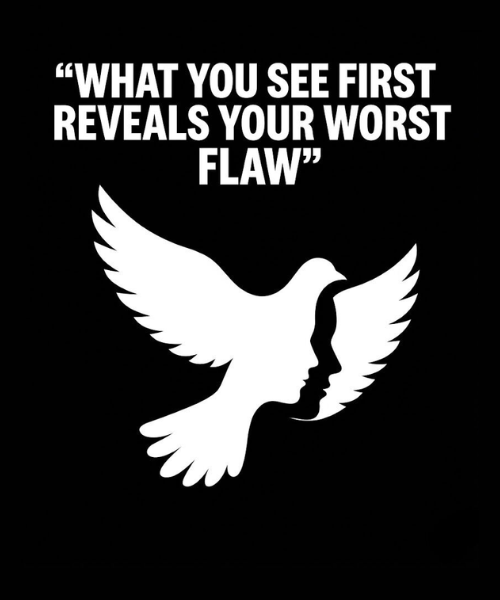
1. If You Saw the White Dove First
The white dove is commonly associated with peace, purity, hope, and innocence.
If your eyes were immediately drawn to the white dove, it suggests that you are highly sensitive to symbolism and emotional meaning.
Possible flaw: Avoidance of conflict or emotional naivety.
People who see the dove first often prioritize harmony.
You likely dislike tension and may go out of your way to maintain peace — even when confrontation is necessary.
While this makes you compassionate and calming to others, your weakness may lie in avoiding difficult conversations.
You might suppress your own needs to prevent conflict.
Why this interpretation?
The brain tends to notice emotionally loaded or symbolic imagery first when someone is emotionally oriented.
The dove represents idealism.
If that’s your first focus, you may unconsciously gravitate toward optimism — sometimes at the expense of realism.
In extreme cases, this could manifest as:
-
Ignoring red flags in relationships
-
Refusing to acknowledge uncomfortable truths
-
Staying silent when boundaries are crossed
Your challenge is learning that healthy conflict does not destroy peace — it strengthens it.
2. If You Saw the Words First
If the first thing you noticed was the sentence or text rather than the image, this suggests that your brain prioritizes language, logic, and structure.
Possible flaw: Overthinking and intellectual rigidity.
People who notice text first often analyze before they feel. You may have a strong logical mind, but your worst flaw could be overanalyzing situations or trying to “solve” emotions instead of experiencing them.
Why this interpretation?
Reading is a cognitive process that requires focus and control. If your brain instinctively went to the words, it suggests you seek clarity, explanation, and structure. This can lead to excessive rationalization.
Potential tendencies:
-
Difficulty relaxing
-
Needing control or certainty
-
Struggling with spontaneity
-
Judging emotional reactions as “illogical”
Your growth area may involve trusting intuition and allowing yourself to feel without dissecting every detail.
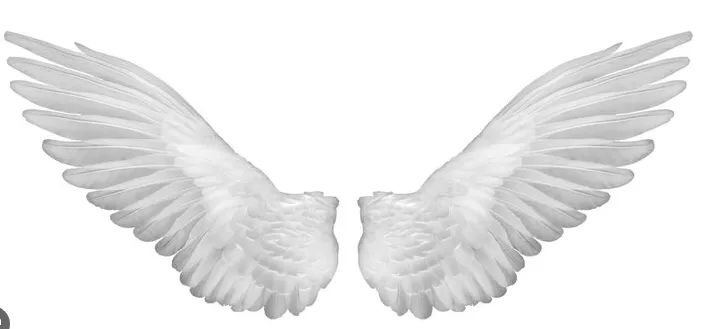
3. If You Saw the Wings First
Wings symbolize freedom, escape, elevation, and aspiration.
If the wings stood out before anything else, you likely have a visionary personality.
Possible flaw: Restlessness or dissatisfaction.
Seeing the wings first may suggest that you crave growth, movement, and change.
However, your weakness might be chronic dissatisfaction.
You may struggle to appreciate what you have because you are always looking toward the next opportunity.
Why this interpretation?
The brain is drawn to dynamic shapes when someone is future-focused.
Wings imply motion and transcendence. If that was your first impression, it may reflect a strong desire to rise above limitations — sometimes too quickly.
This could show up as:
-
Difficulty committing long-term
-
Fear of feeling “trapped”
-
Abandoning projects before completion
-
Constantly chasing something better
Your lesson may be learning that stability is not imprisonment — it can be grounding.
4. If You Saw the Bird (Not Specifically the Dove)
If you noticed a general bird shape rather than focusing on its symbolic whiteness or wings, this suggests practicality.
Possible flaw: Oversimplification.
You tend to see things as they are, without embellishment.
This is a strength.
However, your flaw may be missing deeper layers.
You might reduce complex emotional or symbolic situations into straightforward categories.
Why this interpretation?
Recognizing the overall structure first indicates holistic pattern recognition.
But sometimes holistic thinking overlooks nuance.
Possible patterns:
-
Impatience with abstract discussions
-
Preference for directness over subtlety
-
Missing emotional undertones
-
Dismissing symbolism as “unnecessary”
Your challenge may be slowing down and exploring depth rather than moving straight to conclusions.
5. If You Saw a Human Figure First
If the image appeared to you as a person rather than a bird, your mind likely prioritizes human shapes and emotional narratives.
Possible flaw: Projection or self-centered interpretation.
Seeing a human figure first often indicates that you interpret situations through personal experience.
You may instinctively relate everything back to people — including yourself.
Why this interpretation?
Humans are wired to detect faces and bodies quickly.
If that is your dominant perception, it may reflect heightened social awareness.
However, your flaw may be assuming that everything is personal.
This could manifest as:
-
Taking criticism too personally
-
Assuming hidden motives
-
Reading into neutral actions
-
Emotional hypersensitivity
The growth path here is recognizing that not everything revolves around interpersonal meaning.
6. If You Didn’t See Anything Clearly
If you felt confused or couldn’t immediately identify anything, that also says something important.
Possible flaw: Indecision or self-doubt.
You may struggle with certainty. When presented with ambiguity, your mind hesitates rather than committing to one interpretation.
Why this interpretation?
Perception often reflects confidence in interpretation.
If you hesitated or saw “nothing,” it may suggest difficulty trusting your own judgment.
Possible traits:
Your growth opportunity lies in building confidence in your instincts.
Not every perception has to be perfect to be valid.
Final Reflection
What you see first doesn’t truly “reveal your worst flaw” in a definitive sense.
Instead, it highlights where your attention naturally goes. Attention reflects values.
Values shape habits. Habits sometimes create blind spots.
Whether you saw a white dove, words, wings, a bird, a human figure, or nothing at all, each perception reflects a different cognitive style.
And every cognitive style has both strengths and weaknesses.
The real insight comes not from the image — but from what you choose to do with the awareness afterward.