The Way You Eat Corn Might Explain Why Your Relationships Never Work
Facts 26/05/2026 21:44
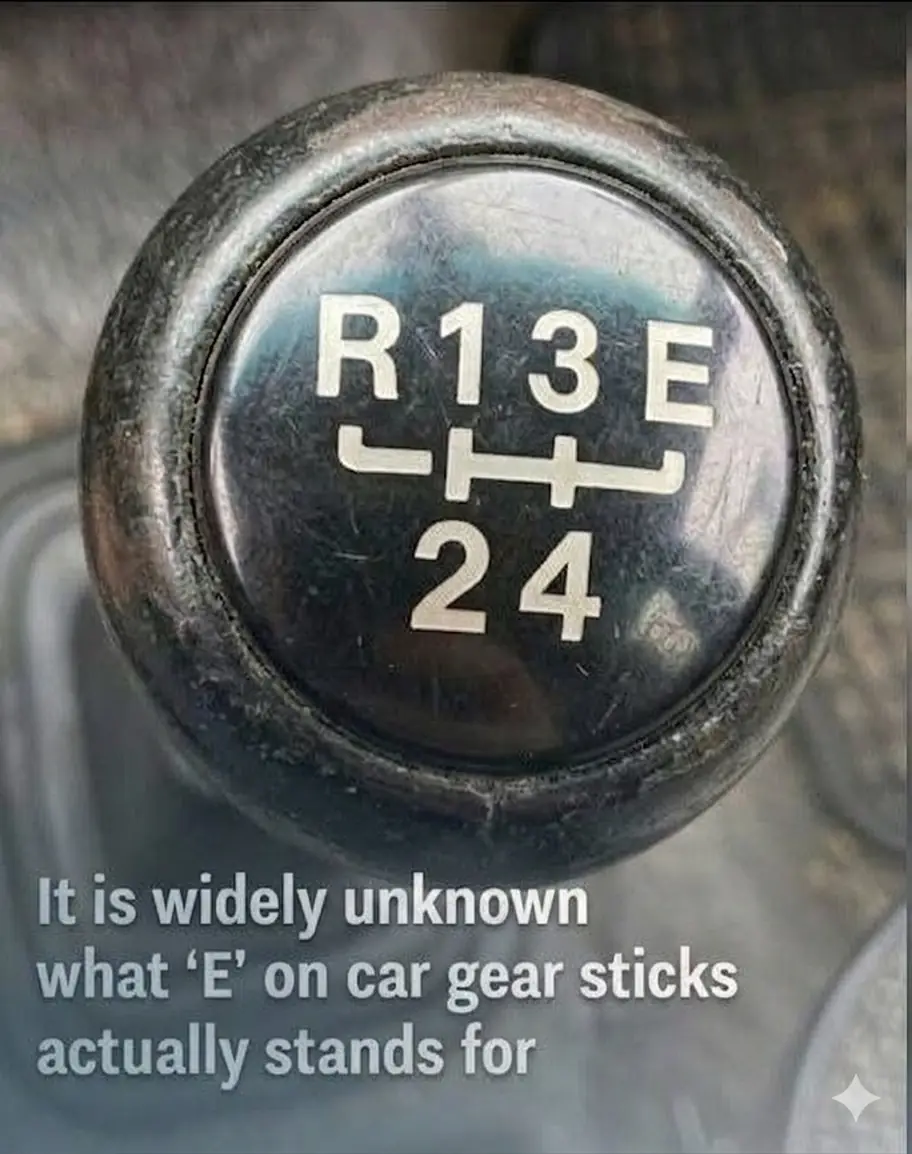
The Mystery of the “E” Gear …The Forgotten Car Feature That’s Confusing a New Generation
I’ll never forget the first time I noticed it.
A friend and I were cleaning out his late father’s garage when we uncovered an old 1980s sedan hidden beneath years of dust. The car looked like a time capsule — faded upholstery, an analog radio, chrome trim, and the unmistakable smell of old leather and gasoline.
But one thing caught my attention immediately.
Right there on the gear selector, alongside the familiar letters “P,” “R,” “N,” and “D,” sat a mysterious extra letter:
E.
I stared at it for a moment. “Electric?” I guessed. “Emergency mode?” my friend suggested. Neither of us had any idea.
After several minutes of confused debate, I finally searched it online — and the answer opened the door to a fascinating piece of automotive history that many younger drivers have never heard about.
The mysterious “E” stood for Economy Mode.
And once you understand why it existed, you’ll realize it was actually decades ahead of its time.
Back before cars had touchscreens, drive modes, and smart fuel-saving computers, automakers were already searching for ways to improve fuel efficiency.
The “E” gear was one of those early solutions.
When drivers selected “E” for Economy mode, the transmission changed how the car shifted gears. Instead of allowing the engine to rev high before shifting, the transmission shifted earlier at lower RPMs.
The result?
But there was a trade-off.
Cars in “E” mode often felt slower and less responsive. Acceleration became more sluggish because the car prioritized saving fuel over performance.
In many ways, it was the mechanical ancestor of today’s Eco Mode buttons found in modern vehicles.
To understand the “E” gear, you have to go back to the 1970s.
The oil crises of 1973 and 1979 changed the automotive world forever. Fuel prices skyrocketed, long gas station lines formed across the country, and suddenly fuel economy became one of the biggest concerns for drivers.
Automakers scrambled to make vehicles more efficient.
That’s when features like:
started appearing in cars across America and Japan.
Manufacturers like General Motors, Ford Motor Company, Honda, and Chrysler experimented with Economy modes in various models during the late 1970s and early 1980s.
For many drivers back then, saving even a little fuel mattered.
In normal “D” (Drive) mode, transmissions balanced fuel efficiency with performance. The engine would rev higher before shifting into the next gear.
But in “E” mode:
Some vehicles even connected Economy mode to overdrive systems, engaging higher gears more aggressively during cruising.
In certain cars, “E” appeared directly on the gear selector. In others, there was a separate “Economy” or “Econ” button on the dashboard.
It wasn’t fancy by modern standards — but at the time, it was innovative.
By the late 1980s, the mysterious “E” slowly vanished from most vehicles.
The reason was simple: technology improved.
Modern automatic transmissions became electronically controlled, allowing onboard computers to constantly adjust shifting patterns automatically. Drivers no longer needed to manually select Economy mode because the car could manage efficiency on its own.
At the same time:
Eventually, the old “E” gear became unnecessary.
Its job was quietly absorbed into the intelligent driving systems we use today.
Ironically, the idea behind the old “E” gear never disappeared.
Today, many modern vehicles still include:
The difference is that now everything happens digitally.
Pressing an “Eco” button in a modern car can adjust:
In some hybrid and electric vehicles, Eco modes can even extend driving range significantly.
The old mechanical “E” gear may be gone, but its philosophy lives on everywhere.
So why has the “E” gear become such a mystery online recently?
A few reasons explain it.
As used car prices rise, younger drivers are buying older vehicles more often — including classic cars from the 70s and 80s.
That means more people are encountering unfamiliar dashboard symbols and forgotten driving features for the first time.
Photos of unusual dashboards regularly go viral on platforms like TikTok, Reddit, and Instagram.
Someone posts a picture of a mysterious “E” on a gear selector, and suddenly thousands of people are trying to solve the mystery together.
YouTube channels and car enthusiasts have helped revive interest in vintage automotive technology.
Features that older generations considered normal now feel fascinating to younger audiences who grew up with touchscreens and fully digital cars.
If you happen to own an older car with an Economy setting, it can still be useful in certain situations.
For everyday city driving, most people preferred regular “D” mode because the car simply felt more responsive.
The “E” gear isn’t the only forgotten transmission symbol that confuses people today.
Older cars also featured:
Each letter tells a story about how automotive technology evolved over time.
What I love most about the old “E” gear is that it represents a forgotten chapter in automotive history.
It reminds us that every generation of cars reflects the concerns of its time. In the 1970s and 80s, fuel efficiency became a major priority, and engineers responded with creative solutions long before modern computers took over.
That tiny “E” on an old gear selector may seem insignificant today, but it was once considered smart technology.
And now, decades later, a whole new generation is rediscovering it with curiosity and surprise.
So the next time you see an old car with a mysterious “E” on the dashboard, you’ll know exactly what it means.
Not electric.
Not emergency.
Just Economy — a small mechanical attempt to save a little gas, one gear shift at a time.