$19,000 No neighbors, no noise. Price cut: $6K...See More
Facts 27/03/2026 17:12
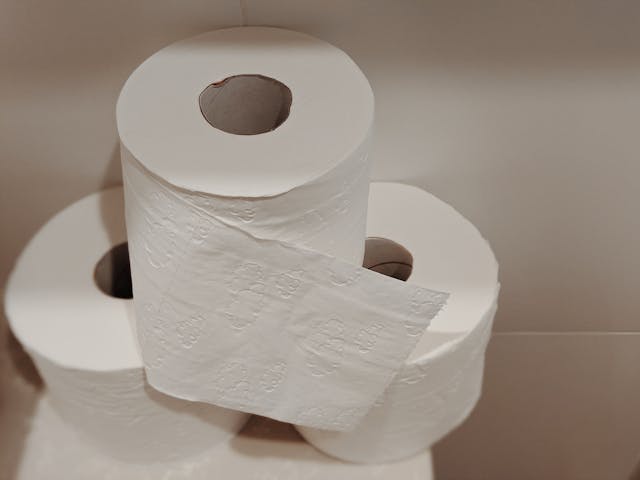 Research moved toilet paper into the PFAS conversation after scientists found fluorinated compounds in tissue samples and linked them to wastewater contamination. Image Credit: PexelsThe modern debate did not start with a shopping guide or a viral warning. It started with a wastewater study. Jake Thompson, Boting Chen, John Bowden, and Timothy Townsend analyzed commercially available toilet paper from North America, South and Central America, Africa, and Western Europe. They then matched those results against sewage sludge data. Their conclusion landed with unusual force. They identified toilet paper as a potentially major source of
PFAS entering wastewater systems. That finding grabbed attention because it pulled an ordinary paper product into a chemical problem more often linked to drinking water, industrial pollution, and food packaging. The researchers detected several PFAS compounds, but 6:2 diPAP clearly dominated the tissue samples. They also estimated that toilet paper accounted for about 4% of the 6:2 diPAP measured in sewage across the United States and Canada.
They estimated about 35% in Sweden and up to 89% in France. Those percentages do not mean toilet paper is the leading PFAS source everywhere. They do show that flushed tissue can make a measurable contribution, especially where other sources appear lower. That shifted the conversation in a serious way. Toilet paper stopped looking like a trivial paper good and started looking like part of a much larger chemical pathway. Researchers and outside commentators also offered a plausible explanation for how these compounds reach paper. PFAS may enter during pulp processing, through papermaking additives, or through contamination already present in recovered fiber streams. That means the issue may reflect supply-chain carryover as much as direct formulation. For consumers, that changes blame, but not consequence.
A roll does not need an intentional
PFAS
formula to become a PFAS source once it reaches the sewer. The study also clarified what it did not show, and that restraint matters. The authors did not publish a public list of retail brands from the global samples. Public reporting on the study noted that the brand names were not shared. The main message was narrower, yet still important. PFAS can be present in toilet paper, and when the paper is used and flushed, those compounds can move into wastewater systems. Later reporting on the same research noted that the dominant compounds were diPAPs, not the best-known legacy PFAS alone. Another useful detail emerged from follow-up coverage of the paper.
The investigators compared recycled and nonrecycled products and did not find a meaningful difference in diPAP concentration on that basis alone. They also did not assess every alternative fiber category in equal depth. Bamboo, recycled pulp, and virgin fiber, therefore, cannot be ranked from this paper alone. The strongest reading of the evidence is also the most disciplined one. Toilet paper is not the whole PFAS problem, yet it is clearly part of it. Wastewater appears to be the route that gives this finding its real weight. That remains the central lesson for shoppers and regulators alike. That is why this debate now extends beyond product safety to broader questions about source control, wastewater treatment limits, and the hidden chemistry of everyday consumer paper goods.
What the Exposure Risk Probably Looks LikeThe phrase
cancer-linked
PFAS needs careful use because PFAS are a large chemical family, not a single substance. The strongest cancer classifications today center on specific compounds, especially PFOA and PFOS. In 2023, the International Agency for Research on Cancer classified
PFOA
as carcinogenic to humans and PFOS as possibly carcinogenic to humans. The American Cancer Society explains that the human evidence for PFOA includes limited evidence for kidney and testicular cancer. It also notes that evidence for other cancers remains less settled. Those judgments help explain why the toilet paper study drew intense public interest. Once a familiar bathroom item is linked to the same chemical class that includes Group 1 and Group 2B carcinogens, concern rises quickly.
Yet the toilet paper itself did not report that consumers were receiving a known cancer dose from a few wipes. Its central claim involved environmental loading. The main compounds detected were largely fluorinated precursors, especially 6:2 diPAP. Part of the concern rests on what such compounds can become after release and persistence in the environment. That distinction is essential. Hazard is real, but route, dose, and frequency still shape actual risk. EPA also notes that many PFAS break down very slowly and can build up in people, animals, and the environment over time. That persistence is exactly why smaller sources now receive more attention than they once did. A single source may look minor in isolation. Repeated releases from thousands of products can still broaden contamination.
Toilet paper fits that pattern. It is used daily, discarded quickly, and almost never treated as part of a chemical exposure discussion. Context makes the risk clearer and the coverage more honest. Public health agencies currently point to a more limited direct exposure story from toilet paper use. The Agency for Toxic Substances and Disease Registry states that “
dermal absorption of PFAS is limited.” It also says dermal absorption
“does not appear to be a significant route of exposure for the general population.”
The American Academy of Pediatrics makes the same hierarchy plain. It says
“the most likely exposure route”
is ingestion of food and drinking water. Those statements do not prove that toilet paper contact is irrelevant.
The product touches sensitive skin and is used repeatedly over the years. They do show that current expert guidance does not place toilet paper near the top of the exposure list. That ranking still belongs to contaminated water, food, dust, and certain occupational settings. A balanced reading, therefore, reaches 2 conclusions at once. First, PFAS in toilet paper is a legitimate concern because no unnecessary exposure source is welcome. Second, the available evidence suggests the greater public health problem sits downstream in wastewater, sludge, and environmental circulation. It does not appear to be a large direct dose from brief bathroom contact. Consumers should take the issue seriously. They should not confuse a plausible exposure route with the main route that currently drives body burden in most people.
Flushed Chemicals Can Circle Back Through Water and SoilThe strongest case for concern begins after the paper leaves the hand. Once flushed, toilet paper enters wastewater streams that already receive PFAS from homes, industry, cosmetics, textiles, and food packaging. That mix then moves into treatment plants that were never designed to solve every modern fluorinated chemistry problem. The 2023 toilet paper study estimated that per-person toilet paper use could add meaningful amounts of 6:2 diPAP to sewage each year. On its own, that does not guarantee a dramatic rise in human exposure. What it does mean is that a daily disposable product can feed a persistent pollution loop. EPA’s 2025 fact sheet on sewage sludge makes the broader stakes plain. The agency wrote that there “
may be human health risks exceeding the EPA’s acceptable thresholds”
in some modeled sludge scenarios involving PFOA and PFOS.
The draft assessment does not model risk for the general public. It also does not accuse toilet paper alone of causing those risks. Still, the document shows how seriously regulators now take PFAS in biosolids, land application, and disposal pathways. Once chemicals move from the bathroom into sewage sludge, the question stops being about one household. It becomes a question about farms, water, soil, and long-term recirculation. That scale matters. Wastewater systems reveal what product labels often leave unsaid. This is also where older paper contamination stories become relevant again. EPA has warned that recycling thermal paper can carry bisphenol A into recycled paper products, including toilet paper. A 2011 study indexed by PubMed found BPA across many paper categories, including toilet paper.
EPA
says BPA in recycled toilet paper may become
“an additional source of release to the environment.” That matters because many shoppers assume that recycled automatically means cleaner. In climate terms, recycled fiber often does offer real environmental benefits, and that should not be dismissed. In contamination terms, however, recovered paper can bring along unwanted residues from earlier uses, especially when supply chains are poorly controlled. The same logic helps explain why PFAS contamination can persist even when brands are not deliberately adding it to the final roll. Contaminants can travel with recovered feedstock, with processing aids, or with packaging materials that touch the product before sale. The core issue is not only what was intended at the factory.
It is what survives the chain and enters the water after use. That is why the wastewater side of the story deserves more attention than the shock value of the bathroom headline. WHO’s fact sheet on dioxins offers a useful parallel. It notes that
chlorine
bleaching of paper pulp can generate persistent contaminants. It also emphasizes that most human exposure to dioxins comes through food after environmental spread. PFAS follow a different chemistry, yet the pattern is familiar. A chemical problem that begins in manufacturing can travel through waste systems and later return through water, soil, crops, animals, and then people again. That cycle makes toilet paper more than a bathroom issue, because a product used for seconds can still help sustain contamination pathways that persist through water, land, agriculture, and food.
6 Brands and Product Types That Deserve Extra Caution
Research moved toilet paper into the PFAS conversation after scientists found fluorinated compounds in tissue samples and linked them to wastewater contamination. Image Credit: PexelsThe modern debate did not start with a shopping guide or a viral warning. It started with a wastewater study. Jake Thompson, Boting Chen, John Bowden, and Timothy Townsend analyzed commercially available toilet paper from North America, South and Central America, Africa, and Western Europe. They then matched those results against sewage sludge data. Their conclusion landed with unusual force. They identified toilet paper as a potentially major source of
PFAS entering wastewater systems. That finding grabbed attention because it pulled an ordinary paper product into a chemical problem more often linked to drinking water, industrial pollution, and food packaging. The researchers detected several PFAS compounds, but 6:2 diPAP clearly dominated the tissue samples. They also estimated that toilet paper accounted for about 4% of the 6:2 diPAP measured in sewage across the United States and Canada.
They estimated about 35% in Sweden and up to 89% in France. Those percentages do not mean toilet paper is the leading PFAS source everywhere. They do show that flushed tissue can make a measurable contribution, especially where other sources appear lower. That shifted the conversation in a serious way. Toilet paper stopped looking like a trivial paper good and started looking like part of a much larger chemical pathway. Researchers and outside commentators also offered a plausible explanation for how these compounds reach paper. PFAS may enter during pulp processing, through papermaking additives, or through contamination already present in recovered fiber streams. That means the issue may reflect supply-chain carryover as much as direct formulation. For consumers, that changes blame, but not consequence.
A roll does not need an intentional
PFAS
formula to become a PFAS source once it reaches the sewer. The study also clarified what it did not show, and that restraint matters. The authors did not publish a public list of retail brands from the global samples. Public reporting on the study noted that the brand names were not shared. The main message was narrower, yet still important. PFAS can be present in toilet paper, and when the paper is used and flushed, those compounds can move into wastewater systems. Later reporting on the same research noted that the dominant compounds were diPAPs, not the best-known legacy PFAS alone. Another useful detail emerged from follow-up coverage of the paper.
The investigators compared recycled and nonrecycled products and did not find a meaningful difference in diPAP concentration on that basis alone. They also did not assess every alternative fiber category in equal depth. Bamboo, recycled pulp, and virgin fiber, therefore, cannot be ranked from this paper alone. The strongest reading of the evidence is also the most disciplined one. Toilet paper is not the whole PFAS problem, yet it is clearly part of it. Wastewater appears to be the route that gives this finding its real weight. That remains the central lesson for shoppers and regulators alike. That is why this debate now extends beyond product safety to broader questions about source control, wastewater treatment limits, and the hidden chemistry of everyday consumer paper goods.
What the Exposure Risk Probably Looks LikeThe phrase
cancer-linked
PFAS needs careful use because PFAS are a large chemical family, not a single substance. The strongest cancer classifications today center on specific compounds, especially PFOA and PFOS. In 2023, the International Agency for Research on Cancer classified
PFOA
as carcinogenic to humans and PFOS as possibly carcinogenic to humans. The American Cancer Society explains that the human evidence for PFOA includes limited evidence for kidney and testicular cancer. It also notes that evidence for other cancers remains less settled. Those judgments help explain why the toilet paper study drew intense public interest. Once a familiar bathroom item is linked to the same chemical class that includes Group 1 and Group 2B carcinogens, concern rises quickly.
Yet the toilet paper itself did not report that consumers were receiving a known cancer dose from a few wipes. Its central claim involved environmental loading. The main compounds detected were largely fluorinated precursors, especially 6:2 diPAP. Part of the concern rests on what such compounds can become after release and persistence in the environment. That distinction is essential. Hazard is real, but route, dose, and frequency still shape actual risk. EPA also notes that many PFAS break down very slowly and can build up in people, animals, and the environment over time. That persistence is exactly why smaller sources now receive more attention than they once did. A single source may look minor in isolation. Repeated releases from thousands of products can still broaden contamination.
Toilet paper fits that pattern. It is used daily, discarded quickly, and almost never treated as part of a chemical exposure discussion. Context makes the risk clearer and the coverage more honest. Public health agencies currently point to a more limited direct exposure story from toilet paper use. The Agency for Toxic Substances and Disease Registry states that “
dermal absorption of PFAS is limited.” It also says dermal absorption
“does not appear to be a significant route of exposure for the general population.”
The American Academy of Pediatrics makes the same hierarchy plain. It says
“the most likely exposure route”
is ingestion of food and drinking water. Those statements do not prove that toilet paper contact is irrelevant.
The product touches sensitive skin and is used repeatedly over the years. They do show that current expert guidance does not place toilet paper near the top of the exposure list. That ranking still belongs to contaminated water, food, dust, and certain occupational settings. A balanced reading, therefore, reaches 2 conclusions at once. First, PFAS in toilet paper is a legitimate concern because no unnecessary exposure source is welcome. Second, the available evidence suggests the greater public health problem sits downstream in wastewater, sludge, and environmental circulation. It does not appear to be a large direct dose from brief bathroom contact. Consumers should take the issue seriously. They should not confuse a plausible exposure route with the main route that currently drives body burden in most people.
Flushed Chemicals Can Circle Back Through Water and SoilThe strongest case for concern begins after the paper leaves the hand. Once flushed, toilet paper enters wastewater streams that already receive PFAS from homes, industry, cosmetics, textiles, and food packaging. That mix then moves into treatment plants that were never designed to solve every modern fluorinated chemistry problem. The 2023 toilet paper study estimated that per-person toilet paper use could add meaningful amounts of 6:2 diPAP to sewage each year. On its own, that does not guarantee a dramatic rise in human exposure. What it does mean is that a daily disposable product can feed a persistent pollution loop. EPA’s 2025 fact sheet on sewage sludge makes the broader stakes plain. The agency wrote that there “
may be human health risks exceeding the EPA’s acceptable thresholds”
in some modeled sludge scenarios involving PFOA and PFOS.
The draft assessment does not model risk for the general public. It also does not accuse toilet paper alone of causing those risks. Still, the document shows how seriously regulators now take PFAS in biosolids, land application, and disposal pathways. Once chemicals move from the bathroom into sewage sludge, the question stops being about one household. It becomes a question about farms, water, soil, and long-term recirculation. That scale matters. Wastewater systems reveal what product labels often leave unsaid. This is also where older paper contamination stories become relevant again. EPA has warned that recycling thermal paper can carry bisphenol A into recycled paper products, including toilet paper. A 2011 study indexed by PubMed found BPA across many paper categories, including toilet paper.
EPA
says BPA in recycled toilet paper may become
“an additional source of release to the environment.” That matters because many shoppers assume that recycled automatically means cleaner. In climate terms, recycled fiber often does offer real environmental benefits, and that should not be dismissed. In contamination terms, however, recovered paper can bring along unwanted residues from earlier uses, especially when supply chains are poorly controlled. The same logic helps explain why PFAS contamination can persist even when brands are not deliberately adding it to the final roll. Contaminants can travel with recovered feedstock, with processing aids, or with packaging materials that touch the product before sale. The core issue is not only what was intended at the factory.
It is what survives the chain and enters the water after use. That is why the wastewater side of the story deserves more attention than the shock value of the bathroom headline. WHO’s fact sheet on dioxins offers a useful parallel. It notes that
chlorine
bleaching of paper pulp can generate persistent contaminants. It also emphasizes that most human exposure to dioxins comes through food after environmental spread. PFAS follow a different chemistry, yet the pattern is familiar. A chemical problem that begins in manufacturing can travel through waste systems and later return through water, soil, crops, animals, and then people again. That cycle makes toilet paper more than a bathroom issue, because a product used for seconds can still help sustain contamination pathways that persist through water, land, agriculture, and food.
6 Brands and Product Types That Deserve Extra Caution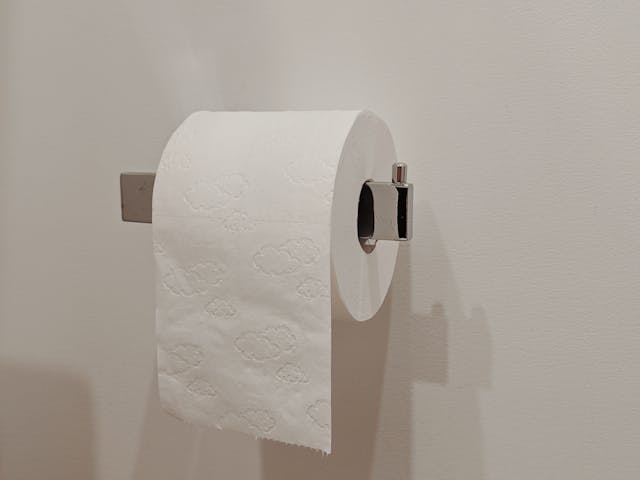 Limited consumer testing flagged several well-known and eco-marketed toilet paper products, while also showing that vague sourcing and extra additives deserve caution. Image Credit: PexelsThe peer-reviewed toilet paper study that sparked this debate did not name retail brands. The named products that later drew attention came from separate consumer testing reported by Environmental Health News and Mamavation. In that limited screen, 17 toilet paper products were sent to an EPA-certified laboratory for total fluorine testing. Total fluorine is a marker that can indicate PFAS contamination, but it is not the same as a full compound-by-compound PFAS profile. Environmental Health News summarized the
result
with an important caveat. It said, “
The levels indicate the chemicals are unlikely to be added on purpose.” Even so, 4 products showed detectable fluorine, ranging from 10 to 35 parts per million.
Those products were Charmin Ultra Soft Toilet Paper, Seventh Generation 100% Recycled Bath Tissue, Tushy Bamboo Toilet Paper, and Who Gives a Crap Bamboo Toilet Paper. That result does not prove that every roll, batch, or product line from those companies contains PFAS at the same level. It does mean those products appeared in a limited independent screen and therefore deserve caution until stronger public testing becomes common. Who Gives a Crap now says its own regular testing has found
“some trace amounts of organic fluorine.” Seventh Generation says contaminants from the recycling stream “may be found” in its bath tissue. Those disclosures do not settle the issue. They do show that contamination concerns are not purely hypothetical. Buyers should read such results cautiously, but not dismissively.
The brand chapter should therefore be read as a cautionary map, not as a courtroom verdict. Charmin sits here because limited fluorine screening raised questions. Seventh Generation sits here because recycled content can carry contamination forward. Tushy and Who Gives a Crap sit here because bamboo alone does not guarantee a cleaner chemistry profile. Fiber choice helps, but verified testing helps more. Two broader product categories also deserve caution, even when a single brand has not been singled out. The first is heavily fragranced or lotion-treated toilet paper. The second is a paper whose supply chain stays vague about recycled contamination controls, fluorine screening, or processing chemistry. Green Seal’s 2025 sanitary paper standard helps explain why those categories raise questions. The standard prohibits fragrances in certified sanitary paper. It also says products shall not contain PFAS in functional papermaking additives or known contaminants in those additives.
Recycled products require processed chlorine-free standards. For bamboo and agricultural residue products, it requires totally chlorine-free or elemental chlorine-free processing. Those rules do not prove that every uncertified roll is unsafe. They do show where safer-product benchmarks are moving. Chlorine processing is another area where nuance matters. WHO notes that dioxins can arise as unwanted by-products of chlorine bleaching of paper pulp. Current consumer exposure from modern toilet paper is less clearly quantified than the industrial pathway itself. That means the strongest practical advice remains simple. Treat fragrance-free, clearly disclosed, chlorine-free, or low-impact processed products as the safer end of the market. Treat vague claims, vague sourcing, and products with unnecessary extras as less reassuring choices.
Limited consumer testing flagged several well-known and eco-marketed toilet paper products, while also showing that vague sourcing and extra additives deserve caution. Image Credit: PexelsThe peer-reviewed toilet paper study that sparked this debate did not name retail brands. The named products that later drew attention came from separate consumer testing reported by Environmental Health News and Mamavation. In that limited screen, 17 toilet paper products were sent to an EPA-certified laboratory for total fluorine testing. Total fluorine is a marker that can indicate PFAS contamination, but it is not the same as a full compound-by-compound PFAS profile. Environmental Health News summarized the
result
with an important caveat. It said, “
The levels indicate the chemicals are unlikely to be added on purpose.” Even so, 4 products showed detectable fluorine, ranging from 10 to 35 parts per million.
Those products were Charmin Ultra Soft Toilet Paper, Seventh Generation 100% Recycled Bath Tissue, Tushy Bamboo Toilet Paper, and Who Gives a Crap Bamboo Toilet Paper. That result does not prove that every roll, batch, or product line from those companies contains PFAS at the same level. It does mean those products appeared in a limited independent screen and therefore deserve caution until stronger public testing becomes common. Who Gives a Crap now says its own regular testing has found
“some trace amounts of organic fluorine.” Seventh Generation says contaminants from the recycling stream “may be found” in its bath tissue. Those disclosures do not settle the issue. They do show that contamination concerns are not purely hypothetical. Buyers should read such results cautiously, but not dismissively.
The brand chapter should therefore be read as a cautionary map, not as a courtroom verdict. Charmin sits here because limited fluorine screening raised questions. Seventh Generation sits here because recycled content can carry contamination forward. Tushy and Who Gives a Crap sit here because bamboo alone does not guarantee a cleaner chemistry profile. Fiber choice helps, but verified testing helps more. Two broader product categories also deserve caution, even when a single brand has not been singled out. The first is heavily fragranced or lotion-treated toilet paper. The second is a paper whose supply chain stays vague about recycled contamination controls, fluorine screening, or processing chemistry. Green Seal’s 2025 sanitary paper standard helps explain why those categories raise questions. The standard prohibits fragrances in certified sanitary paper. It also says products shall not contain PFAS in functional papermaking additives or known contaminants in those additives.
Recycled products require processed chlorine-free standards. For bamboo and agricultural residue products, it requires totally chlorine-free or elemental chlorine-free processing. Those rules do not prove that every uncertified roll is unsafe. They do show where safer-product benchmarks are moving. Chlorine processing is another area where nuance matters. WHO notes that dioxins can arise as unwanted by-products of chlorine bleaching of paper pulp. Current consumer exposure from modern toilet paper is less clearly quantified than the industrial pathway itself. That means the strongest practical advice remains simple. Treat fragrance-free, clearly disclosed, chlorine-free, or low-impact processed products as the safer end of the market. Treat vague claims, vague sourcing, and products with unnecessary extras as less reassuring choices.