Why You Should Keep the Bathroom Light On When Sleeping in a Hotel
Facts 23/08/2026 19:14
English is full of fascinating quirks. Words that look like they should rhyme—such as come and home or through and cough—don’t. Other words, like tear and tear or wound and wound, are spelled the same but have completely different pronunciations depending on their meaning.
Then there are colorful expressions like “raining cats and dogs” or “going cold turkey,” which make perfect sense to native speakers but leave many language learners scratching their heads.
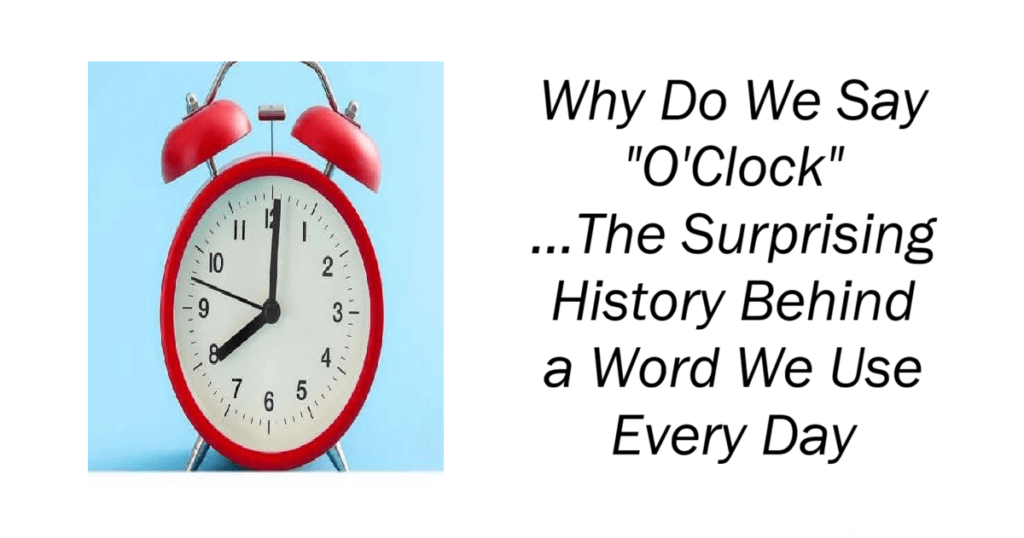
One everyday word that rarely gets a second thought is o’clock. We use it constantly when telling time, but have you ever wondered what the “O'” actually stands for?
The answer is rooted in centuries of English history.
The “O'” in o’clock is a contraction of “of the.”
So when you say:
It’s three o’clock.
You’re actually using a shortened version of the older phrase:
It’s three of the clock.
In other words, you’re saying the time is three according to the clock.
Today, that wording sounds unusual, but hundreds of years ago it was perfectly normal.
Before mechanical clocks became common, people relied on the sun to tell time.
They used:
As mechanical clocks spread across Europe during the late Middle Ages, people began distinguishing time shown by a clock from other ways of estimating the hour.
Saying “of the clock” simply meant the time being referred to was the one shown on the mechanical clock.
Languages naturally become more efficient over time.
Frequently used phrases often get shortened because people tend to drop words that aren’t heavily stressed in everyday conversation.
Instead of repeatedly saying:
Five of the clock
people gradually began saying:
Five o’clock
Eventually, the shortened version became the standard expression, while the original phrase disappeared from everyday speech.
This process isn’t unique to English—it’s something that happens in languages all over the world.
The apostrophe serves as a reminder that letters or words have been omitted.
In English, apostrophes have two primary jobs:
In o’clock, the apostrophe tells us that part of the original phrase—of the—has been shortened.
Although most speakers no longer think about those missing words, the apostrophe preserves a small piece of the phrase’s history.
O’clock isn’t the only English word formed this way.
Several older expressions still preserve this historical contraction.
Originally, Jack-o’-lantern meant Jack of the lantern.
Long before it referred to carved pumpkins, the expression described a man carrying a lantern or mysterious lights seen at night.
Today, the Halloween pumpkin is the meaning almost everyone recognizes.
Another classic example is will-o’-the-wisp, which comes from Will of the Wisp.
The name originally referred to mysterious lights sometimes seen over marshes and bogs, giving rise to legends about ghostly figures leading travelers astray.
The word ne’er is simply an old contraction of never.
A ne’er-do-well is literally someone who never does well, meaning an unreliable or irresponsible person.
English has evolved over centuries by borrowing words from Latin, French, Norse, Germanic languages, and many others. As pronunciation changed, spelling often stayed the same, leaving behind many of the inconsistencies we still encounter today.
That’s why English contains:
These quirks may seem confusing, but they’re also what make English such a fascinating language to explore.
The next time someone asks you the time and you reply, “It’s six o’clock,” you’ll know you’re using a phrase that’s more than 600 years old.
The little “O'” isn’t just a decorative apostrophe—it represents the words “of the,” a reminder of a time when people distinguished the hour shown by the clock from other methods of keeping time.
It’s a small detail most of us never notice, but it offers a glimpse into the remarkable way language evolves. Everyday words often carry centuries of history, quietly preserving the past every time we speak.