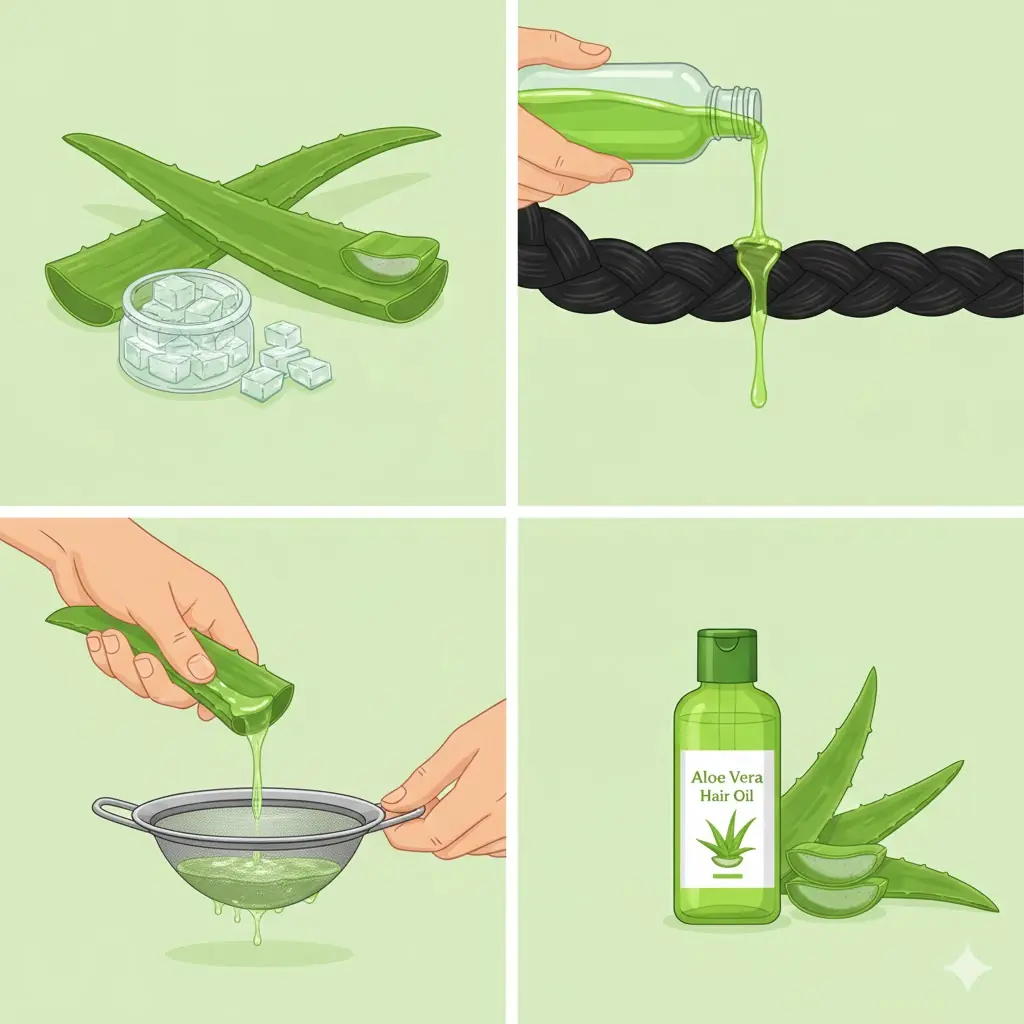
How to Make Aloe Vera Oil for Healthier, Stronger-Looking Hair
Health 26/02/2026 23:12

If you’ve ever shared a bathroom with a partner, you already know about the unofficial domestic standoff known as the Great Shower Temperature Debate.
One person steps out relaxed and glowing.
The other steps in seconds later and recoils in horror:
“How is this not lava?”
What seems like a minor disagreement has become a universal relationship trope. Recently, the conversation reignited online after a viral TikTok showed a man dramatically attempting to survive his wife’s “boiling” shower setting. The exaggerated reactions were funny — but the comment section revealed something more interesting.
Thousands of people related.
The discussion even caught the attention of NHS doctor Dr. Karan Rajan, who explained that this isn’t just about preference, exaggeration, or stubbornness.
It’s biology.
On average, women tend to have a slightly higher core body temperature than men. At first glance, that sounds like women should naturally feel warmer — but physiology doesn’t always work that simply.
Despite that marginally higher internal temperature, women often feel colder in everyday environments. This is partly due to differences in circulation and body composition. Women generally have less muscle mass than men, and muscle generates heat. With less natural heat production and different blood flow patterns, cooler surroundings can feel more uncomfortable more quickly.
So when stepping into a bathroom that feels even mildly chilly, a hotter shower becomes an efficient way to restore comfort.
That blast of heat isn’t indulgence.
It’s regulation.
Hormones play a significant role in how we experience temperature.
Oestrogen affects blood vessel dilation and circulation — particularly to extremities like:
Hands
Feet
Ears
When blood flow to these areas decreases, they can feel noticeably colder, even if the rest of the body seems fine. This creates a stronger desire for external warmth.
Hormonal fluctuations throughout the menstrual cycle can intensify this effect, particularly during:
Ovulation
The luteal phase
Hormonal birth control use
During these times, a hot shower doesn’t just feel pleasant — it can feel deeply comforting and physically necessary.
Another key factor is metabolic rate.
Men typically have a higher resting metabolic rate due to greater muscle mass. A higher metabolism means the body produces more heat even at rest.
Women, on average, generate slightly less internal heat throughout the day. That difference may be subtle, but it’s enough to influence comfort levels in cooler settings.
With less internally generated warmth, external heat sources — like hot showers, heated blankets, or cranked-up thermostats — naturally become more appealing.
It’s not dramatics.
It’s thermodynamics.
Women are also statistically more prone to cold sensitivity conditions like Raynaud’s phenomenon, where fingers and toes become especially cold due to temporary reduced blood flow.
Even without a diagnosed condition, many women report chronically cold hands and feet — especially in winter or air-conditioned spaces.
A hot shower provides rapid vasodilation, improving blood flow and warming those extremities quickly. That’s part of why the temperature may need to feel “extra hot” to achieve comfort.
After the viral TikTok sparked conversation, the internet chimed in with relatable confessions:
“Boiling showers are the only time I feel warm all day.”
“My husband says I’m cooking myself alive.”
“If the mirror isn’t fogged instantly, it’s not hot enough.”
Clearly, this isn’t a rare household disagreement. It’s practically cultural.
As satisfying as steaming-hot showers can be, there is a downside.
Dermatologists consistently warn that excessively hot water can:
Strip away natural oils
Disrupt the skin barrier
Cause dryness and itching
Trigger eczema flare-ups
Increase redness or sensitivity
This becomes even more important during colder months, when indoor heating already lowers humidity levels and dries out the skin.
Heat may feel comforting in the moment — but over time, it can compromise skin health.
If you love a hot shower but want to protect your skin, consider these dermatologist-approved strategies:
Keep showers to 10–15 minutes
Aim for warm rather than scalding water
Moisturize immediately after stepping out
Use gentle, hydrating cleansers
Avoid harsh exfoliants in hot water
That way, you can enjoy warmth without long-term dryness or irritation.
The honest answer?
Both of you.
Women’s preference for hotter showers isn’t exaggeration or stubbornness. It’s influenced by:
Circulation patterns
Hormonal fluctuations
Muscle mass differences
Metabolic rate
Sensitivity to cold
What feels unbearably hot to one person may feel perfectly comfortable — even necessary — to another.
Understanding this can ease tension in shared living spaces. Or at the very least, it can make thermostat arguments slightly more informed.
The next time someone accuses their partner of trying to “boil alive” in the shower, remember — there’s science behind it.
Our bodies regulate temperature differently. Biology shapes comfort more than we realize.
In the end, compromise might mean adjusting the dial a few degrees…
or simply accepting that sometimes, the hottest setting wins.
And if the bathroom mirror instantly fogs up?
That might just be physiology at work.