This plant has a distinctive aroma: It serves as both a spice and a 'miracle cure' for health.
Tips 10/08/2026 18:59
We’ve all heard the saying, “Don’t judge a book by its cover.” Yet the truth is, people do it all the time. In fact, most of us form opinions about others within seconds of meeting them.
Whether we realize it or not, our brains are constantly collecting clues and making assumptions about the people around us.
According to psychologists, this tendency isn’t necessarily about being unfair. It’s actually tied to how the human brain evolved.
AdvertisementMaking quick assessments helped our ancestors determine whether someone was trustworthy, dangerous, friendly, or a potential threat. While modern life looks very different, our brains still rely on many of the same shortcuts.
Kellie Zeigler, a certified applied positive psychology practitioner, explains that the brain naturally seeks stability and predictability. To create that sense of certainty, it often jumps to conclusions based on limited information. If someone appears rude, for example, your mind may immediately label them that way and encourage you to keep your distance in the future.
Psychotherapist Jacob Brown says social survival also plays a role. Humans have always lived in groups, and understanding our place within those groups has been important for survival. Just like animals in a pack, people constantly evaluate social dynamics, often without realizing it.
As a result, we tend to make judgments based on small details such as appearance, behavior, speech patterns, and even body language. Some of these assumptions may be accurate. Others can be completely wrong. Still, research shows that certain traits influence how people perceive us more than we might expect.
Here are seven surprisingly small things that can shape the way others judge your personality.

It might sound strange, but something as simple as having cold hands can affect how people see you.
Research published in Science found that physical warmth can influence social perception. Participants who held a warm drink were more likely to view others as generous and caring compared to those holding an iced beverage.
AdvertisementBecause of this unconscious association, people often connect warm hands with warmth of character. On the other hand, cold hands can sometimes lead others to perceive someone as distant or less approachable, even when that’s not true.
Of course, hand temperature has nothing to do with personality. But first impressions aren’t always based on logic. They’re often based on subtle signals our brains interpret automatically.

Believe it or not, your name can influence how people perceive you before they’ve even met you.
A study conducted by researchers at Syracuse University found that certain names are commonly associated with specific personality traits, age groups, and levels of competence.
Participants rated some names as warmer and friendlier, while others were viewed as more capable or authoritative. Names also carried age-related stereotypes. For instance, some names were consistently viewed as belonging to older individuals, while others were associated with younger generations.
AdvertisementThese judgments aren’t necessarily fair, but they highlight how strongly personal experiences shape perception. If someone has positive memories connected to a particular name, they may unconsciously view a new person with that name more favorably.

Eye contact says a lot, even when no words are being spoken.
Studies have found that people often associate steady eye contact with confidence, self-assurance, and trustworthiness. Someone who maintains comfortable eye contact during a conversation is frequently perceived as more confident and socially skilled.
On the other hand, people who regularly avoid eye contact may be seen as nervous, shy, or uncertain. That doesn’t mean those assumptions are correct. Many introverted individuals simply find prolonged eye contact uncomfortable, especially when meeting someone new.
AdvertisementStill, because eye contact plays such a major role in communication, people often use it as a shortcut when forming opinions about someone’s personality.

One of the quickest ways people judge your character is by listening to how you talk about others.
Whether you’re speaking about coworkers, friends, family members, or complete strangers, people tend to assume your comments reveal something about you.
Interestingly, research published in the Journal of Personality and Social Psychology found that individuals who describe others using positive traits are often viewed as happier, kinder, and emotionally stable themselves.
AdvertisementThe opposite is also true. Constant criticism, negativity, or gossip can lead others to believe those qualities reflect your own personality rather than the people you’re discussing.
In many cases, people learn more about you from your opinions than from the person you’re actually talking about.

Most people like to think they judge others based on actions, not appearances. In reality, our brains start forming opinions long before someone says a single word.
Researchers at New York University found that people often make split-second assumptions about personality simply by looking at a face. What’s interesting is that these judgments are usually influenced by past experiences rather than facts.
For example, someone with softer or more youthful facial features may be seen as friendly, trustworthy, or harmless. A person with a more serious expression might be viewed as intimidating or less approachable. Neither assumption is necessarily accurate, but our brains naturally rely on familiar patterns when processing new information.
Mental health counselor Tzlil Hertzberg explains that many of these judgments come from beliefs we’ve picked up throughout our lives. Family experiences, culture, media, and social environments all help shape how we interpret faces.
The problem is that these snap judgments can be completely wrong.
Someone who appears stern might actually be incredibly kind. Likewise, a person who looks friendly may not be as approachable as they seem. Yet first impressions happen so quickly that many people don’t even realize they’re making them.
That’s one reason experts encourage people to remain open-minded when meeting someone new. A face can tell a story, but it rarely tells the whole story.
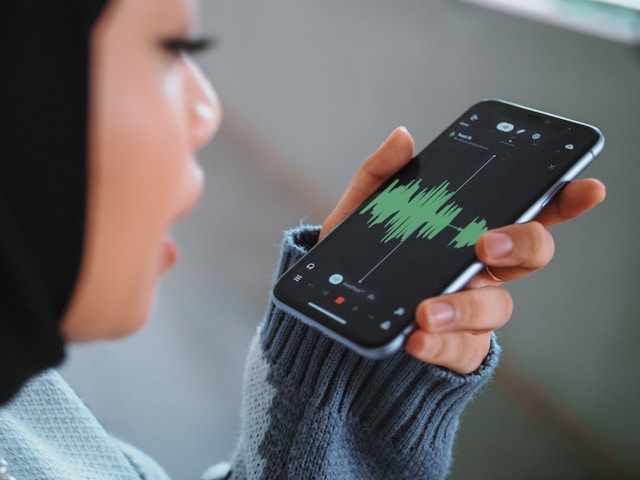
You don’t have to spend much time talking before people begin forming opinions about you.
Researchers from the Université Aix-Marseille and the University of Glasgow discovered that people can make surprisingly detailed judgments based solely on a person’s voice. In the study, participants listened to strangers say a single word, either “Hello” or “Hola,” and were then asked to describe them.
Even with such limited information, listeners confidently rated speakers on traits like confidence, trustworthiness, competence, and dominance.
Think about it for a moment. Most of us do this every day.
A calm, steady voice often creates the impression of confidence and reliability. A rushed or shaky voice may be interpreted as nervousness. A loud voice might be seen as assertive by one person and aggressive by another.
What’s fascinating is how quickly these impressions form. Sometimes it takes only a few seconds.
Of course, vocal characteristics don’t automatically reveal someone’s true personality. Stress, fatigue, excitement, and even illness can affect how a person sounds. But because the human voice carries so much emotional information, people naturally use it as a clue when evaluating others.
The next time you hear someone speak for the first time, pay attention to the assumptions your brain makes before you’ve actually gotten to know them.

Few topics generate more debate than appearance-based judgments. Most people agree that appearances shouldn’t define a person. Yet research consistently shows that they influence first impressions.
A study published in 2009 found that people could accurately predict certain personality traits simply by looking at photographs of strangers.
Participants viewed more than 100 photos of individuals they had never met. Some subjects were shown with neutral expressions and controlled poses. Others appeared more relaxed and natural, smiling or displaying genuine emotion.
The results were surprising.
Even when looking at neutral photos, participants were often able to make reasonably accurate assessments about some personality characteristics. However, when people appeared more natural and expressive, observers became significantly more accurate in their judgments.
Traits such as extraversion, openness, likability, and even loneliness were often identified with greater accuracy than researchers expected.
This doesn’t mean appearance tells the entire story. Far from it.
What it does suggest is that people pick up on countless subtle cues without consciously realizing it. Posture, facial expressions, grooming habits, clothing choices, and overall presentation all contribute to the impression someone leaves behind.
In many ways, appearance acts as a collection of small signals rather than a single defining factor.
Although it may feel unfair, judging others is a natural part of being human.
Every day, our brains process enormous amounts of information. To keep up, they rely on shortcuts. These mental shortcuts help us make decisions quickly, especially when meeting someone for the first time.
The downside is that first impressions aren’t always accurate.
Someone with cold hands might be caring and compassionate. A person who avoids eye contact could simply be shy. An individual with a serious face might have an incredible sense of humor once you get to know them.
The challenge is recognizing that first impressions are just starting points, not final verdicts.
Most people are far more complex than the assumptions we make about them in the first few moments of an interaction.
Whether it’s your voice, your name, your handshake, or the way you look across a room, people are constantly gathering clues about who they think you are.
Some of those judgments happen consciously. Most happen automatically.
The important thing to remember is that you can’t completely control how others perceive you. Everyone brings their own experiences, biases, and expectations into every interaction.
What you can control is how you treat people, how you communicate, and how you show up in the world.
At the end of the day, first impressions may open the door, but it’s your actions and character that determine what people think once they truly get to know you.