The Great Escape
Life stories 01/07/2026 22:59
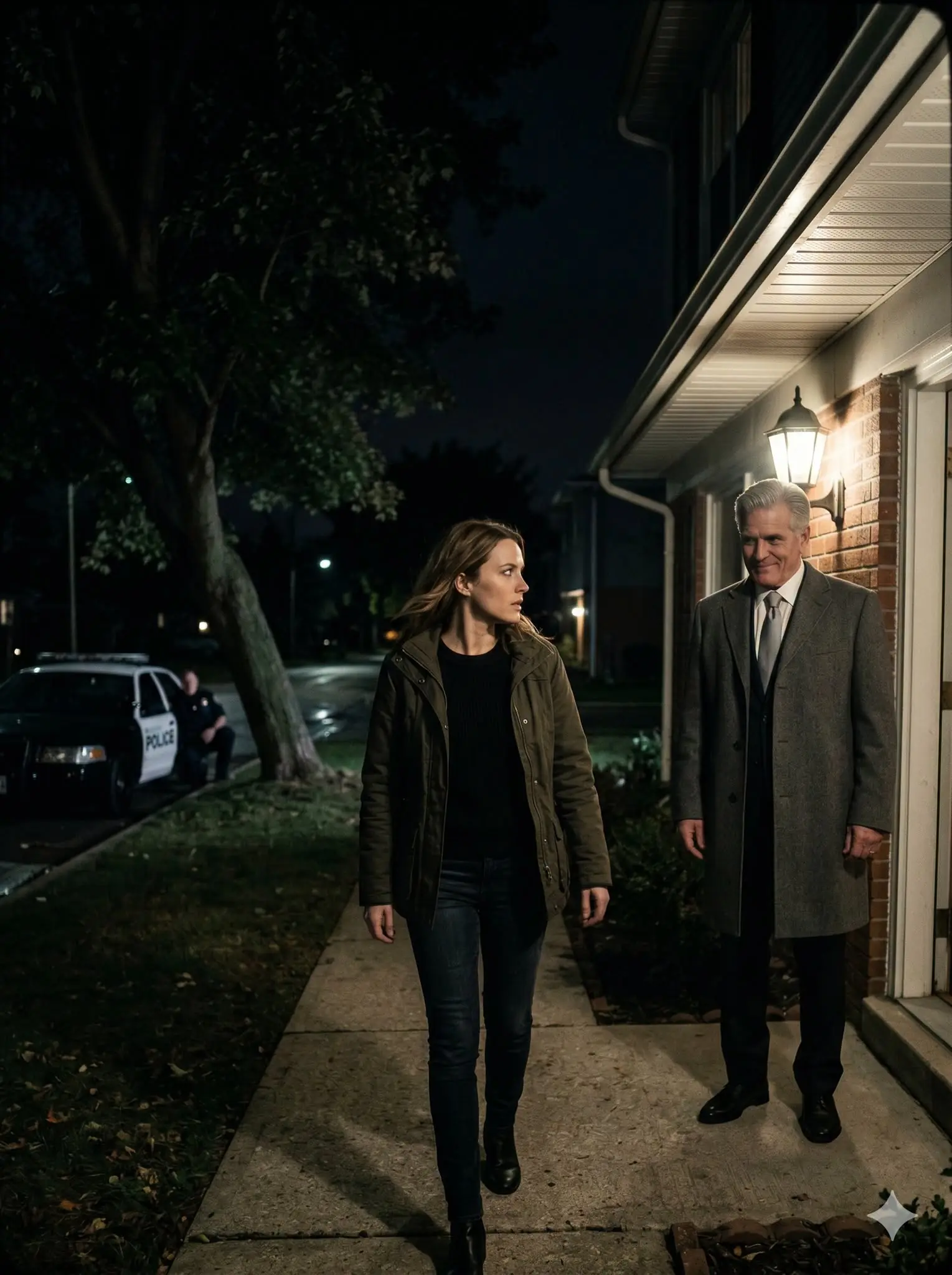
The man looked at her, and something inside his composed face broke.
“My name is Arthur Whitmore,” he said. “And I have been looking for you for forty-two years.”
The room shifted.
Whitmore.
Claire knew that name. Everyone in Chicago knew that name.
Whitmore Capital. Whitmore Hospitals. Whitmore Foundation. The Whitmore family owned half of what rich people pretended they had built themselves. Old money. Quiet money. Money that bought buildings through trusts and never appeared on magazine covers unless it wanted to.
Grant went pale.
“No,” he said.
Arthur opened the envelope and withdrew a folded document.
“This is a certified birth record from St. Anne’s Clinic in Lake Geneva,” he said. “A record that was hidden before it reached the public file. It names a baby girl born to Grace Bennett and Arthur Whitmore.”
Claire stopped breathing.
“My mother’s name was Grace Bennett.”
Arthur’s eyes filled.
“Yes.”
“No.” Claire shook her head. “No, my mother told me my father died. She said he died before I was born.”
“She told you what she had to tell you to keep you safe.”
Grant took a step forward. “This is absurd.”
Arthur ignored him.
“The child’s legal name,” he said, voice carrying across the ballroom, “was Claire Elise Whitmore.”
Lily looked up at her mother.
“Mom?”
Claire could not answer.
Arthur turned slightly, so the whole room heard the next sentence.
“The woman your husband just called nothing is my daughter. She is the sole surviving heir to my mother’s private trust, a trust larger than every asset Grant Hawthorne has ever touched.”
The silence that followed was not empty.
It was alive.
Grant’s face changed so quickly Claire almost missed it. Rage vanished. Calculation replaced it. Then fear. Then, most disgusting of all, tenderness.
“Claire,” he said softly. “Honey. This is a lot. You’re overwhelmed.”
She stared at him.
The same man who had just told her she was nothing now held out his hand like a loving husband.
“Come with me,” he said. “We’ll go upstairs. We’ll talk privately. We don’t need strangers filling your head.”
Claire looked at his hand.
For thirteen years, she had taken that hand when he offered it. At charity galas. On church steps. In front of photographers. At Lily’s school events. In hospital rooms. In front of judges and bankers and people he needed to impress.
That hand had guided her into a life where every door was beautiful and every room was a cage.
She stepped back.
Then she turned to Arthur.
Her voice shook, but it did not break.
“Can you take me and my daughter somewhere safe?”
Arthur’s chin trembled.
“Yes,” he said. “Yes, I can.”
Part 2
The cold October air hit Claire’s face as Arthur led her out through the side entrance of the Langford Hotel.
Behind them, the ballroom had erupted.
Reporters were not there yet, but panic had already arrived. Guests whispered into phones. Security guards pretended not to know which powerful person to obey. Vanessa Cole had tried to block Claire near the exit, but a silver-haired attorney named Evelyn Brooks stepped between them like a blade.
“Miss Cole,” Evelyn had said, not raising her voice, “take one more step toward my client and your name enters tomorrow’s emergency filing.”
Vanessa had stepped back.
Now Claire sat in the back of a black SUV with Lily curled against her side, Arthur beside them, and Evelyn in the front passenger seat already making calls.
“Freeze domestic corporate accounts,” Evelyn said into her phone. “Yes, tonight. I don’t care what judge you have to wake up. Hawthorne Group, Hawthorne Residential, the family trust, all marital holding companies. Also flag private aviation departures under Grant Hawthorne’s name, Vanessa Cole’s name, and any shell officers tied to them.”
Claire looked at Arthur.
“Why is she doing that?”
Arthur’s hand rested over the silver top of his cane.
“Because Grant is not finished.”
Claire laughed weakly. It came out like a sob.
“He just destroyed me in front of everyone.”
Arthur looked at her with a grief so deep she could not hold his gaze.
“No, Claire. He tried to destroy you before you could find out why he married you.”
The SUV moved north along Lake Shore Drive. The city lights stretched across the black water like broken gold.
Lily had not spoken since they left the hotel.
Claire kissed her hair.
“Baby, I’m sorry.”
Lily’s voice was muffled against her dress.
“I told you Dad was acting weird.”
“I know.”
“He scared me.”
Claire closed her eyes.
“He scared me too.”
Arthur leaned forward slightly.
“Claire, there is something you need to know before we reach the house.”
She lifted her head.
“What house?”
“My house,” he said. “Your house, if you want it to be. The home your mother should have been welcomed into.”
Claire swallowed.
“Please don’t say things like that yet. I can’t… I can’t understand them.”
“I know. But one thing cannot wait.” Arthur’s jaw tightened. “Grant knew who you were before he married you.”
The inside of the SUV seemed to tilt.
“No.”
“Yes.”
“No, he met me at the dress shop. I was nobody.”
Arthur’s eyes sharpened at the word.
“You were never nobody.”
Claire looked away.
Arthur continued carefully, as if each word might cut her.
“Thirteen years ago, a distant Whitmore cousin named Elliot Vance sold information to a young developer who was drowning in debt but very good at charm. The information was about a missing Whitmore daughter. My daughter. A woman raised under her mother’s name in a working-class town outside Chicago.”
Claire’s hand tightened around Lily’s shoulder.
“Grant.”
“Yes.”
“He knew?”
“He knew enough to suspect. He married you because he believed one day your identity would surface and he would be legally positioned beside you when it did.”
Claire pressed her fist to her mouth.
Every memory rearranged itself.
Grant walking into the dress shop in his tailored coat, pretending to be lost. Grant asking her to coffee. Grant telling her she was different from all the polished women he knew. Grant proposing after five months. Grant pushing papers across the kitchen table two days before the wedding.
Just routine, sweetheart. Sign here.
She had signed everything he gave her.
Because he had looked at her like a miracle.
Because no one rich had ever looked at her that way.
Because her mother had already been gone three years, and loneliness makes lies sound like music.
Evelyn ended one call and started another.
Arthur said, “He found out I was close to confirming you. Someone in his circle heard my investigator asking questions. He panicked.”
“So he humiliated me first.”
“Yes.”
“Why?”
Arthur’s expression darkened.
“Because a humiliated woman is easier to control. He wanted to break you publicly, then come to you privately as the only person who could repair the damage. By morning, he would have apologized. He would have offered reconciliation. He would have rushed you into signing a new marital agreement before your inheritance became active.”
Claire’s stomach twisted.
“And if I refused?”
Evelyn turned from the front seat.
“Then he had another plan.”
Claire looked at her.
“What plan?”
Evelyn’s face was calm, but her eyes were not.
“We’ve already found a petition drafted by his legal team. He planned to claim you suffered an emotional breakdown at the gala. If he could get witnesses to say you were unstable, he could request temporary emergency custody of Lily.”
Lily sat up.
“What?”
Claire wrapped both arms around her.
“No. No, he can’t.”
“He can try,” Evelyn said. “Which is why we are moving faster.”
The SUV turned through iron gates into a tree-lined estate in Lake Forest. Claire barely saw the stone house, the wide steps, the warm lights glowing in tall windows. She saw only Lily’s white face.
A woman in her seventies opened the front door before the car fully stopped.
She wore a navy cardigan over a nightgown and slippers, as if she had run from bed. The moment she saw Claire, she covered her mouth with both hands.
“Oh,” the woman whispered. “Oh, my dear girl.”
Arthur helped Claire out.
“This is Margaret Wells,” he said. “She has managed this house since before you were born.”
Margaret came down the steps with tears already falling.
“I kept your room,” she said.
Claire froze.
“My what?”
Margaret laughed and cried at the same time.
“Your room. Your father made me keep it. First it was a nursery. Then a little girl’s room. Then a young woman’s room. Every year, he said, ‘Make it right for the age she would be now.’ So I did.”
Claire could not speak.
Lily looked at Arthur.
“You made my mom a room every year?”
Arthur nodded once.
“I did.”
“Even when you didn’t know where she was?”
“Especially then.”
Something in Lily’s guarded little face softened.
Inside, the house smelled of cedar, lemon polish, and bread. Margaret led them upstairs to a room at the end of a long hallway. It was not a princess room. It was worse than that. It was real.
A reading chair by the window. Shelves full of books arranged by age, from picture books to novels. A soft quilt folded over the bed. A framed photograph on the dresser of a young woman with Claire’s eyes holding a newborn baby.
Claire walked to the photograph.
“Mom.”
Margaret stood behind her.
“Grace mailed that to me six months after she disappeared. No return address. Just a note asking me to keep it in case her daughter ever came home.”
Claire touched the frame.
“Is there a letter?”
Arthur stood in the doorway.
“Yes,” he said. “But not tonight.”
Claire turned.
“Tonight.”
He looked at her for a long moment, then nodded.
Lily fell asleep in the adjoining room under Margaret’s care, still wearing the blue ribbon from the gala. Claire went downstairs barefoot, her gown gathered in one hand, and found Arthur and Evelyn in a library full of open folders.
Arthur handed her a sealed envelope.
The paper was thin and yellowed.
Her mother’s handwriting looked exactly how Claire remembered it from grocery lists and birthday cards.
My dearest Claire,
If you are reading this, Arthur found you. That means I am gone, and you have learned that the story I told you was not the whole truth. Forgive me, baby. I did not lie because I was ashamed. I lied because I was afraid.
Your father loved me. Never doubt that. But his family was powerful in a way poor women learn to fear. His mother told me that if I gave birth to you, she would take you from my arms and raise you to believe I had abandoned you. So I ran.
Walter Hale helped me. He was the butler at the Whitmore lake house then. He gave me cash, a train ticket, and a new name. He saved us both.
I raised you with little money, but I tried to give you the one thing no rich person could steal. Dignity.
If a man ever makes you feel small so he can feel tall, run. If he corrects you in public and kisses you in private, run. If he tells you that you are nothing without him, baby, run faster. That man is not loving you. He is using you for something you do not yet understand.
I love you more than fear. More than hunger. More than the life I left behind.
Stand up straight.
Your mother,
Grace Bennett
Claire folded over the letter, pressing it to her heart.
“I did exactly what she warned me not to do.”
Arthur moved to her side.
“No,” he said. “You survived long enough to hear her.”
Before Claire could answer, Evelyn’s phone rang.
She listened, and her face hardened.
“Grant just filed a police report,” she said.
Claire stood.
“For what?”
“Parental kidnapping.”
The room went silent.
“He says you took Lily from the hotel in an unstable state and that he fears for her safety.”
Claire’s hands began to shake, but this time not from weakness.
From rage.
Clean, bright, holy rage.
“He used my daughter.”
Evelyn nodded.
“He did.”
Claire looked toward the stairs where Lily slept.
Then she turned back.
“What do we do?”
Evelyn slid three documents across the desk.
“First, revoke every power of attorney you signed during your marriage. Second, file for divorce based on fraud, coercive control, and financial misconduct. Third, accept your Whitmore inheritance under emergency recognition. Arthur’s DNA test is already in process. With a temporary court order, we can protect you before Grant’s judge moves.”
Claire picked up the pen.
Her hand shook once.
Then steadied.
She signed the first document.
Then the second.
Then the third.
At 9:17 that morning, Claire Hawthorne became Claire Bennett Whitmore again.
At 9:42, the video from the gala hit every major platform in America.
At 10:03, the headline appeared across national news.
Billionaire developer humiliates wife onstage before mystery guest reveals she may be a Whitmore heir.
By noon, Grant Hawthorne’s name was no longer a brand.
It was a scandal.
Part 3
The interview aired at five o’clock.
Claire had not wanted to do it.
She wanted to hide in Lily’s room, lock every door, and count her daughter’s breaths until the world forgot their faces. But Evelyn explained what would happen if she stayed silent.
“Grant is already telling people you are unstable,” she said. “If America hears him first, they will measure every tear you cry against his lie. Speak once. Calmly. Clearly. Then let the truth do the rest.”
The journalist they chose was Nora Blake, a respected investigative reporter known for refusing billionaire money and making senators sweat on live television. She arrived without a circus. One camera. One producer. No makeup team. No dramatic lighting.
Before the recording began, Nora sat across from Claire in Arthur’s library and said, “This is your story. Not mine. If you need to stop, we stop.”
Claire nodded.
The camera light turned red.
Nora looked into the lens.
“Last night, millions watched a video of Grant Hawthorne publicly humiliating his wife, Claire. This afternoon, Claire Bennett Whitmore has agreed to speak for the first time.”
Nora turned to her.
“What do you want people to know?”
Claire looked at the camera.
For a second, she saw the ballroom again. Grant’s hand crushing hers. Lily crying. The phones raised. The smiles. The silence of people who could have stopped it and did not.
Then she thought of her mother’s letter.
Stand up straight.
“I want people to know three things,” Claire said. “First, last night I fell to my knees because pain is heavy. This morning, I stood up because my daughter was watching.”
Nora’s eyes glistened.
“Second, my mother died believing she had left me nothing but hard lessons and a straight back. Today I know those were the greatest inheritance she could have given me.”
Claire inhaled.
“Third, to every woman watching who has been corrected in public, mocked in private, made to feel grateful for cruelty because it came inside a beautiful house, you are not nothing. You were never nothing. And the person who needs you small is not your savior. He is your cage.”
By the next morning, more than thirty million people had watched the interview.
Women posted their own stories.
Daughters posted about mothers.
Mothers posted about daughters.
Former employees of Hawthorne Group began sending documents to Evelyn Brooks.
And then the people Grant had stepped on for twenty years began crawling out from beneath the floorboards of his empire.
The first was his brother.
Claire had never known Grant had one.
Nathan Hawthorne arrived at the Whitmore estate that morning in an old brown coat, walking with a limp and carrying a banker’s box full of files. He had Grant’s sharp cheekbones, but none of his coldness. His eyes looked tired, not cruel.
“I’m Nathan,” he said. “Grant’s older brother.”
Claire stared.
“He told me he was an only child.”
Nathan smiled sadly.
“He told everyone that after he stole my shares and pushed me out of the company.”
Arthur’s jaw tightened.
Nathan placed the box on the coffee table.
“I’ve waited twelve years to give someone this. I wanted to go to the authorities, but Grant threatened your daughter before she was even born. He said if I spoke, he would make sure you and the baby disappeared into a custody fight you couldn’t win. I believed him.”
Claire sat slowly.
“What’s in the box?”
“Fraud. Shell companies. Forged signatures. The private investigator report he bought before he met you. Proof he knew you were Arthur Whitmore’s daughter.”
Claire stared at the files.
Her marriage was in that box.
Not love. Not chance. Not destiny.
A transaction.
The second person to arrive was Vanessa Cole.
Evelyn nearly had security remove her, but Claire said, “Let her speak.”
Vanessa looked different without the silver dress and diamond confidence. She looked younger. Scared. Human.
“I know you have no reason to listen to me,” Vanessa said. “But I need to tell you why I stayed near him.”
Claire said nothing.
“Ten years ago, I was a receptionist at one of Grant’s smaller offices. I spilled coffee on his tie. One drop. He made me stand in front of the staff while he told everyone people like me stayed poor because we were too stupid to hold a cup.”
Claire’s anger shifted, confused by recognition.
“He fired me that night,” Vanessa said. “No severance. No reference. Nothing. I swore I’d come back one day and watch him lose everything.”
“You became his partner for revenge?”
“I became useful,” Vanessa said. “I laughed at his jokes. I fed his ego. I let him think I admired him. Last night, when he humiliated you, I realized I had become too good at pretending. So I called Elliot Vance. He gave me the original sale records from when he sold Grant your information.”
She put a black folder on the table.
“Everything is here.”
Claire looked at the woman she had hated for years.
Then she saw not a mistress, not a rival, but another person Grant had broken and used.
She stood and crossed the room.
Vanessa flinched when Claire touched her hand.
“I won’t call you innocent,” Claire said quietly. “But I believe you can still choose who you become next.”
Vanessa began to cry.
The final piece came from Rose Miller, the wardrobe attendant from the Langford Hotel. She was the woman who had adjusted Claire’s hair before the gala and told her, “You deserve kindness tonight.”
Rose arrived with Walter Hale, the elderly hotel manager who had once been the Whitmore butler and had helped Grace Bennett escape forty-two years earlier.
Rose placed a small device on Evelyn’s desk.
“A recorder,” she said. “I pinned it inside Mrs. Whitmore’s hair clip before the gala. Walter warned me Grant was planning something. I couldn’t stop him, but I could make sure the world heard exactly what he said.”
Walter bowed his head.
“I should have found you sooner,” he told Claire. “I recognized your mother’s eyes the first time Grant brought you to the hotel as his fiancée. I called Arthur that same night. We watched. We gathered proof. But Grant had too many judges and too many friends. We were afraid moving too early would cost you Lily.”
Claire took the old man’s hands.
“You helped my mother live.”
Walter’s face crumpled.
“She was the bravest girl I ever knew.”
At 11:30 that morning, the DNA results came back.
Claire was Arthur Whitmore’s daughter.
The Whitmore trust activated immediately.
At 12:05, police arrested Grant Hawthorne at a private airfield in Indiana. He was carrying false identification, offshore banking documents, and a notarized draft petition accusing Claire of mental instability.
By sunset, he had been charged with financial fraud, forgery, coercive control, false reporting, and attempted custodial interference.
Claire did not go to the courthouse.
She went somewhere else.
Arthur took her and Lily to an old white cottage near Lake Geneva, behind a shuttered property once owned by the Whitmore family. It was where Grace Bennett had lived before she ran.
The cottage was small. The paint peeled. The porch sagged. But when Claire stepped inside, she felt something no mansion had ever given her.
A welcome.
In the back room stood an old sewing machine.
On the wall hung a faded photograph of Grace at twenty, laughing beside a maple tree. Arthur stood next to her in the picture, young and handsome, looking at her like she had hung the moon.
Claire touched the frame.
“You loved her.”
Arthur’s voice broke.
“Every day.”
Behind the cottage, beneath the maple tree, Walter showed them where Grace had buried a metal box the night before she fled.
Claire dug it up herself.
Inside were three things.
A pair of tiny knitted baby shoes.
A lock of Claire’s infant hair tied with red thread.
And a plain gold ring with a small cloudy stone.
Under the ring was a note.
My Claire,
This ring belonged to my mother. It is not expensive. It was worn by women who worked, prayed, survived, and kept their heads high when the world tried to bend them. Wear it the day you feel you belong to yourself.
Claire slid the ring onto her finger.
It fit perfectly.
Lily leaned against her side.
“Mom?”
“Yes, baby?”
“Are we safe now?”
Claire looked at Arthur. At Walter. At the little cottage. At the ring on her hand. At the daughter who had held on to her when the world watched her fall.
Then she knelt, not from shame this time, but so she could look Lily in the eyes.
“Yes,” she said. “We are safe. And we are never going back.”
Grant Hawthorne was sentenced months later.
The courtroom was full, but Claire was not there. She did not need to watch him fall. She had already learned that healing did not require an audience.
She used the Whitmore inheritance to build the Grace Bennett House, a bright brick shelter on the outskirts of Chicago for women and children leaving dangerous homes. It had legal offices, therapy rooms, emergency bedrooms, job training classrooms, and a kitchen that always smelled like coffee and fresh bread.
Vanessa Cole became its first operations director.
Nathan Hawthorne handled the financial oversight.
Evelyn Brooks ran the legal clinic.
Rose Miller greeted every new woman with warm tea and clean clothes.
Walter Hale tended the garden at the entrance. Whenever a frightened woman arrived, he opened the door and said, “Welcome home,” as if she were royalty.
Arthur spent his final years teaching Lily chess in the sunroom and telling Claire stories about Grace until the missing years no longer felt like a hole, but a bridge.
One year after the gala, Claire stood on a university stage in front of two thousand women.
She wore a simple cream dress.
On her right hand was the ring from the buried box.
On her left stood Lily, taller now, steadier now, her hand tucked firmly into her mother’s.
Claire leaned toward the microphone.
“A year ago,” she said, “I fell to my knees in front of three hundred people because a man told me I was nothing. For a few seconds, I believed him. That is what cruelty does. It borrows your own voice and uses it against you.”
The auditorium was silent.
“But then my daughter held my hand. A stranger turned out to be my father. An old friend of my mother opened a door. Women I thought were enemies brought me proof. And I learned something I want every person here to remember.”
She looked at Lily.
Then back at the crowd.
“No one becomes nothing because someone cruel says so. A woman is not made valuable by a husband, a house, a last name, a bank account, or a room full of people pretending not to see her pain. A woman has value because she was born with it. Because someone carried her. Because someone dreamed over her. Because somewhere inside her is a spine made from every woman before her who refused to disappear.”
Women in the audience began to cry.
Claire smiled through her own tears.
“The night I fell was the night I learned how many hands were waiting to help me rise. So if you are listening to this and you are still in a house where love feels like fear, hear me. You are not alone. Your life is not over. Your name is not whatever he calls you when he wants you small.”
Lily squeezed her hand.
Claire squeezed back.
“Stand up when you can. Reach for the hand that appears. And when you are strong enough, become that hand for someone else.”
The applause lasted nine minutes.
That night, back at the Whitmore house, Lily found Claire sitting at the edge of her bed, turning Grace’s ring around her finger.
“Mom,” Lily said softly, “do you think Grandma Grace can see us?”
Claire opened her arms.
Lily climbed in beside her the way she had when she was little.
“I think she does more than see us,” Claire said. “I think she lives in us. In the way I walk now. In the way you spoke up that night. In every woman who comes through the doors of Grace Bennett House and remembers how to breathe.”
Lily rested her head on her mother’s shoulder.
“Then I want to be like her,” she whispered. “And like you.”
Claire held her daughter close.
Outside, Lake Michigan was dark and endless under the stars. Inside, the house was quiet, warm, and full of the kind of peace that arrives only after truth has done its painful work.
A year earlier, Claire had fallen in a ballroom while strangers watched.
Now she understood the truth her mother had tried to leave her.
Dignity was never in the chandelier light, the designer gown, the diamond necklace, or the rich man’s last name.
Dignity was in standing up after the fall.
Dignity was in going home to yourself.
THE END