I had no clue about this
Tips 10/01/2026 23:06

Dried shiitake mushrooms are carefully dehydrated to preserve their deep umami flavor and allow for long-term storage. However, their wrinkled caps, filled with tiny grooves and ridges, easily trap dust and fine debris. If they are washed hastily or soaked improperly, the mushrooms may rehydrate unevenly, turn mushy, or lose much of their signature fragrance.
One of the most common mistakes many home cooks make is soaking dried shiitake mushrooms in water that is too hot. While hot water causes the mushrooms to expand quickly, it also forces their aromatic oils to evaporate. As a result, the flesh becomes soft, watery, and crumbly. On the other hand, soaking them in cold water takes far too long, leaving you waiting impatiently for the mushrooms to soften properly.
After years of cooking, I finally realized that the secret lies in water that is neither hot nor cold—but gently warm.
Fast – Clean – Full of Flavor
What makes this method special is one small, unexpected ingredient added during soaking. With this technique, the mushrooms soften faster, plump up beautifully, and retain their natural aroma. It takes less than five minutes, yet the difference is immediately noticeable.
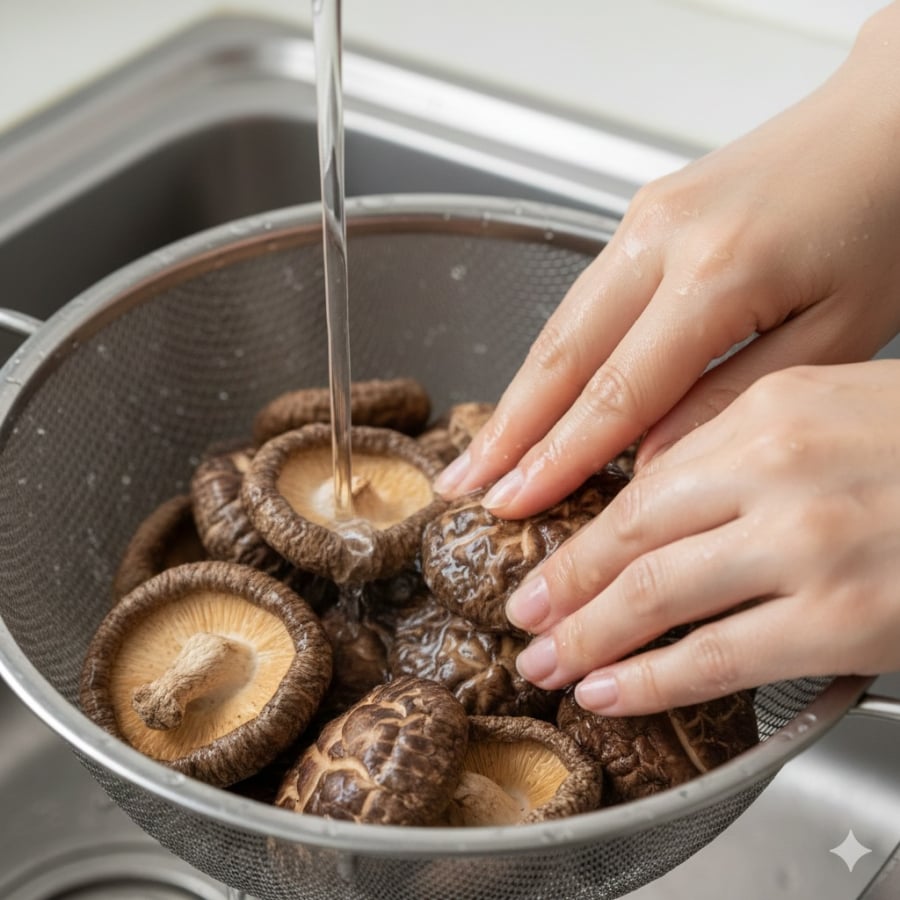
When I bring dried shiitake mushrooms home, I first place them in a colander and rinse them briefly under a gentle stream of running water. Instead of soaking right away, I rub each mushroom lightly with my fingers, paying special attention to the underside of the cap where dust tends to collect.
This step takes only a few seconds but removes most surface impurities. If the mushrooms are older or darker in color, you can soak them for one to two minutes to help loosen stubborn dirt, then rinse again. Avoid soaking for too long at this stage, as uneven water absorption can affect the texture later.
One important note: do not scrub too hard. Even when dry, shiitake mushrooms have delicate fibers. Rough handling can tear the caps, making them less attractive once cooked.
The ideal water temperature is around 30–40°C (86–104°F)—warm enough to soften the mushroom tissue without stripping away its aroma. Dissolve one teaspoon of sugar completely in the water before adding the mushrooms.
This may sound unusual, but sugar helps the mushrooms absorb water more efficiently while enhancing their natural sweetness. When cooked, the mushrooms will not taste sweet at all—only richer and more fragrant.
Shiitake mushrooms have a porous, sponge-like structure. Warm water gently opens their fibers, while the dissolved sugar penetrates lightly, helping the mushrooms rehydrate evenly and become plump without losing firmness.
Instead of simply letting the mushrooms sit and wait, cover the bowl tightly and shake it for one to two minutes. Each shake pushes water into the mushroom fibers while forcing trapped air out, dramatically speeding up the rehydration process.
It feels almost as if you are waking the mushrooms from a long hibernation—bringing them back to life, soft, moist, and fragrant.
Using this method, mushrooms that once took 20–30 minutes to soak are ready in just 3–4 minutes. They rehydrate evenly, remain slightly springy, and slice cleanly without crumbling.
Once the mushrooms have fully expanded, rinse them two to three times with clean water. At this point, the caps are soft enough to gently squeeze, allowing any remaining grit trapped in the grooves to wash away easily.
Now the mushrooms are clean, aromatic, and ready for soups, stir-fries, braised dishes, dumpling fillings, or savory sauces.
The first time I used this method, I stir-fried the mushrooms with fresh bamboo shoots. As soon as I lifted the lid, the aroma was noticeably stronger than when using cold water soaking. The mushrooms were plump and juicy, with a natural chewiness—no tough stems, no blandness from lost oils.
That simple bowl of warm water and a teaspoon of sugar transformed the dish. From that day on, this soaking method became a habit in my kitchen.
Dried shiitake mushrooms are a familiar ingredient, but how you prepare them before cooking makes all the difference. No complicated tools or techniques are needed—just warm water instead of hot or cold, a touch of sugar, and a quick shake.
Within minutes, dry, rigid mushrooms become fragrant, tender, and full of life.
Sometimes, the best cooking secrets aren’t learned through decades of experience, but discovered in a quiet moment when you try something small that no one ever mentioned. After thirty years in the kitchen, I realized that soaking shiitake mushrooms properly could be this simple.
Try it once, and you’ll taste the difference in today’s meal.