Can a Simple Face Oil Blend Soften Deep Smile Lines and Lower-Face Wrinkles?
Health 28/08/2026 23:13
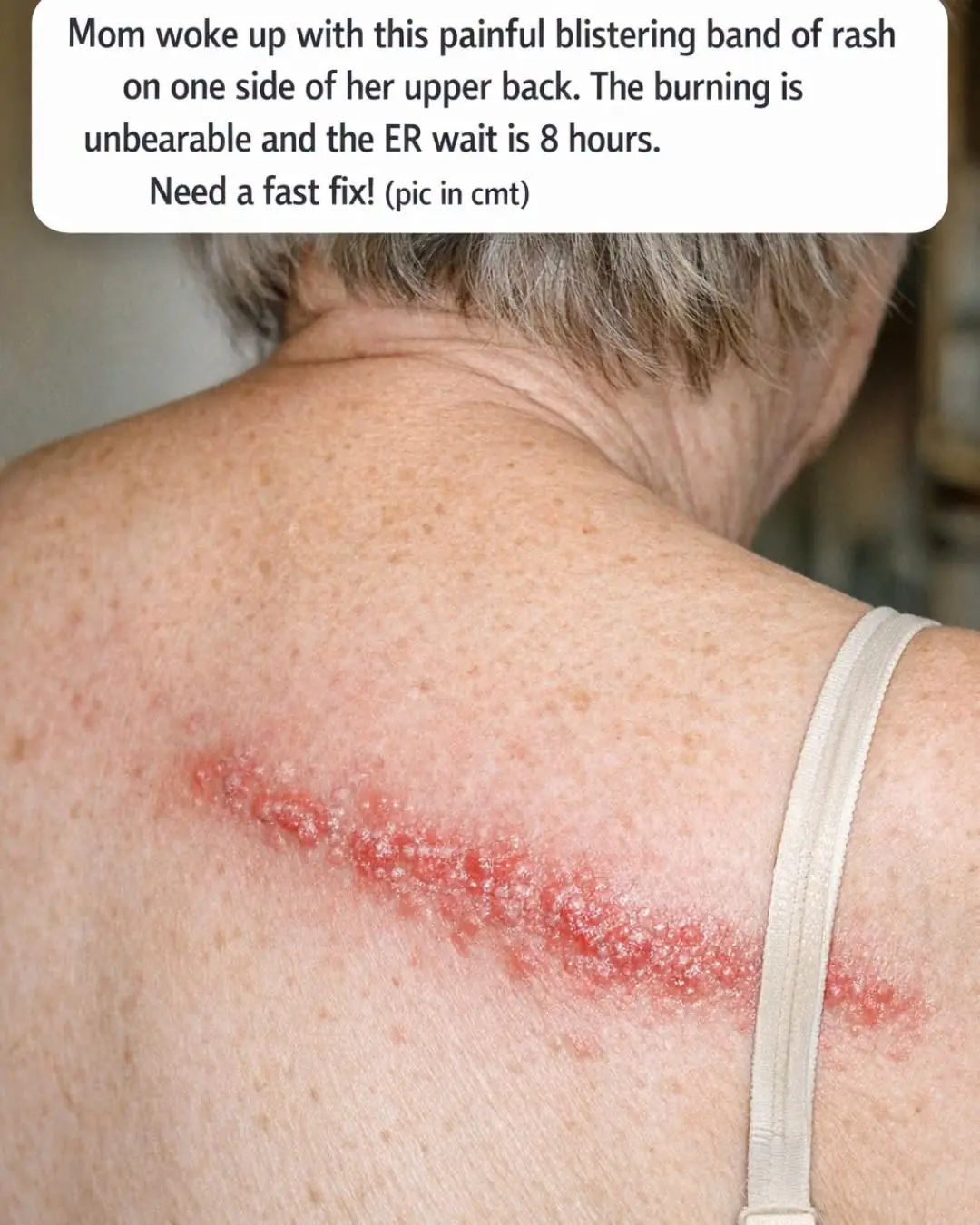
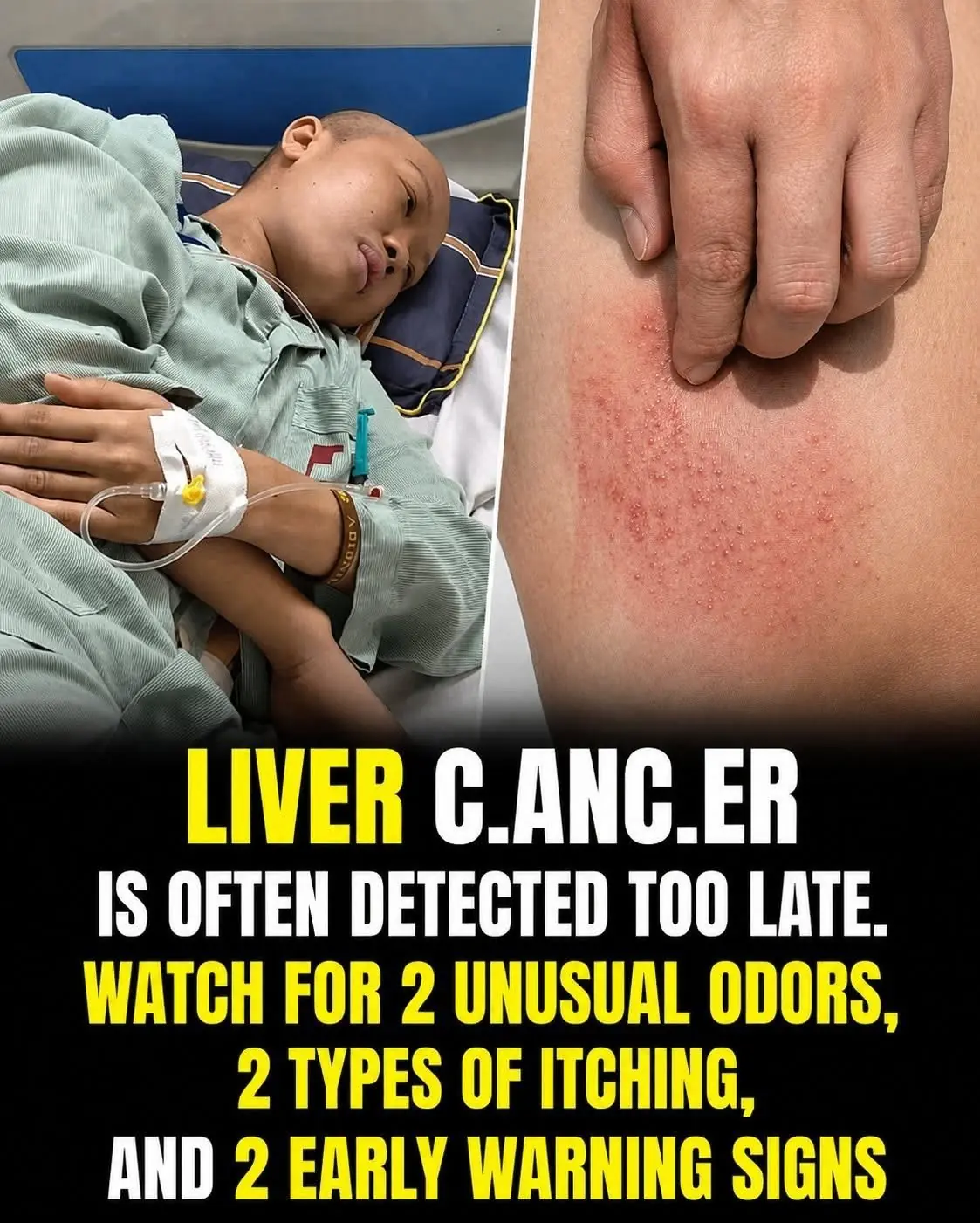
Imagine waking up with an intense burning sensation across one side of your upper back.
At first, the skin may simply feel unusually sensitive. Then small red bumps begin appearing. Within hours or a day, those bumps can develop into clusters of tiny fluid-filled blisters arranged almost like a stripe across the skin.
This unusual pattern should not automatically be dismissed as an allergic reaction, insect bites, or irritation from clothing.
One possible explanation is shingles, also known as herpes zoster.
Shingles often creates a painful band of blisters on only one side of the body, particularly around the chest, ribs, waist, or upper back. The pain can feel surprisingly severe compared with the appearance of the rash.
More importantly, this is one condition where seeking medical care early can make a meaningful difference.
Shingles is caused by the varicella-zoster virus, the same virus responsible for chickenpox.
After someone recovers from chickenpox, the virus does not completely disappear. Instead, it remains inactive inside nerve tissue.
Years or even decades later, the virus can become active again.
When that happens, it travels along a particular nerve pathway toward the skin. This is why the rash frequently appears in a narrow band following one specific area of the body rather than spreading randomly everywhere.
A typical shingles rash usually remains on either the left or right side and often does not cross the body's midline.
One of the confusing things about shingles is that discomfort frequently begins before the rash becomes obvious.
A person may notice:
Several days later, redness and small blisters may appear in the same location.
Mayo Clinic notes that pain is often the first symptom, and in some people it can be intense enough to resemble problems involving other organs depending on where it occurs.
That combination—pain followed by a one-sided band of blisters—is an important clue.
There is no instant home remedy that makes shingles disappear.
Prescription antiviral medicines such as acyclovir, valacyclovir, or famciclovir are commonly used to treat the infection.
These medicines work by slowing the reproduction of the virus. They may help the rash heal faster, shorten the illness, and reduce the severity of symptoms.
Timing matters.
Antiviral treatment is generally most useful when started early, particularly within roughly 72 hours after the rash appears. Early treatment may also reduce the risk of prolonged nerve pain after the rash has disappeared.
That means someone who develops a suspicious one-sided blistering rash should not simply wait several days hoping it disappears.
A same-day primary-care appointment, urgent-care visit, or appropriate telehealth consultation may be enough to begin evaluation and treatment when emergency symptoms are absent.
The visible rash is only part of the problem.
Shingles affects nerves beneath the skin.
When the virus becomes active, inflammation around those nerves may produce burning, stabbing, shooting, or electric-like pain.
This explains why a relatively small area of rash can feel extremely painful.
Some people even find that normal clothing or bedsheets touching the area becomes uncomfortable.
The nerve involvement also explains one of the most troublesome complications of shingles: postherpetic neuralgia.
For most people, shingles improves over several weeks.
But occasionally the nerve pain continues even after the skin has healed.
This condition is called postherpetic neuralgia, or PHN.
The pain may feel burning, stabbing, aching, or hypersensitive and can persist for months or sometimes much longer.
Older adults are more likely to develop this complication, particularly people over 60. Early antiviral treatment is associated with a lower risk of persistent nerve pain.
This is another reason not to delay evaluation when the symptoms strongly resemble shingles.
Home care can help make the symptoms more tolerable, but it should support medical treatment rather than replace it.
A cool, damp compress placed gently over the affected area may help calm burning and irritation.
Keep the rash clean and dry and wear loose, soft clothing that does not rub against the blisters.
Over-the-counter pain medicines such as acetaminophen or ibuprofen may be appropriate for some people when used according to their labels, although anyone with kidney disease, liver disease, stomach ulcers, blood-thinning medication, medication interactions, or other medical conditions should check with a healthcare professional or pharmacist first.
Avoid deliberately breaking the blisters.
CDC guidance for uncomplicated shingles also recommends keeping the rash clean, dry, and covered when practical.
A painful rash can make people willing to try almost anything.
Unfortunately, substances such as essential oils, rubbing alcohol, hydrogen peroxide, concentrated vinegar, or strongly fragranced creams may further irritate already inflamed skin.
They do not eliminate the virus causing shingles.
Prescription antiviral therapy—not a homemade topical mixture—is the main treatment aimed at the underlying viral infection.
A shingles rash on the back or torso can often be handled through normal urgent or same-day medical care.
Certain situations are different.
Seek prompt medical evaluation if the rash affects the eye, forehead, nose, face, or ear, because involvement of these nerves can threaten vision or hearing.
Medical attention is also particularly important when the person is older, has a weakened immune system, develops a widespread rash, or becomes seriously unwell. Mayo Clinic specifically advises contacting a healthcare professional promptly when shingles affects the eye area, when the patient is older, immunocompromised, or when the rash is widespread and painful.
Symptoms such as confusion, severe headache, significant weakness, difficulty walking, or rapidly worsening illness should not be managed solely at home.
You do not normally “catch shingles” directly from another person.
However, someone with an active shingles rash carries the varicella-zoster virus inside the blisters.
A person who has never had chickenpox or appropriate chickenpox vaccination may become infected after exposure and develop chickenpox, rather than shingles.
Until the blisters have crusted over, it is sensible to keep the rash covered, wash hands regularly, and avoid direct contact between the rash and people who may be especially vulnerable.
Extra caution is appropriate around newborn babies, pregnant people without immunity to chickenpox, and individuals with seriously weakened immune systems.
Not every blister or red rash is shingles.
Contact dermatitis, allergic reactions, insect bites, bacterial infections, herpes simplex, and other skin disorders can sometimes look similar.
The pattern can provide clues.
Shingles commonly combines three features:
pain or burning, clustered blisters, and a one-sided distribution following a narrow region of skin.
An allergic reaction tends to itch more prominently and may appear in multiple areas. Insect bites are usually individual bumps rather than a continuous nerve-like band.
But photographs alone cannot always confirm the diagnosis.
A healthcare professional may diagnose shingles based on the characteristic appearance and symptoms, and in uncertain cases additional testing may be considered.
The first stage may involve tingling, burning, or sensitivity.
Redness and blisters then develop.
Over time, the blisters usually begin drying and forming crusts.
Many uncomplicated cases improve substantially within several weeks, although discoloration or sensitivity may remain longer.
The unpredictable part is the nerve pain.
Some people feel much better once the rash disappears. Others continue experiencing sensitivity or burning after the skin has healed.
Persistent or worsening pain deserves follow-up rather than simply being ignored.
Vaccination has become an important part of shingles prevention.
Current U.S. recommendations include the recombinant shingles vaccine for adults 50 and older, as well as certain immunocompromised adults beginning at age 19. The standard schedule uses two doses.
The vaccine does not treat an active outbreak.
Its purpose is to reduce the risk of shingles and its complications in the future.
People who have previously had shingles may still be candidates for vaccination after the acute illness has resolved, depending on their circumstances and local medical guidance.
A painful stripe of fluid-filled blisters appearing on only one side of the back should not automatically be treated like an ordinary rash.
It may be shingles.
And with shingles, time matters.
Early medical evaluation provides the opportunity to begin antiviral treatment during the period when it is most likely to help.
While waiting for care, keep the area clean and dry, use gentle cool compresses, avoid irritating home remedies, protect the blisters from friction, and use appropriate pain relief when safe.
Most importantly, pay attention to where the rash appears and how the person feels overall.
A simple-looking band of blisters can involve far more than the surface of the skin—because shingles is ultimately an infection involving the nerves beneath it.





Is It Safe To Eat an Egg With a Crack In it?