The CEO who had not smiled in six years hired a new assistant, and she was the first woman brave enough to tell him he was wasting his life.
Life stories 29/06/2026 23:43
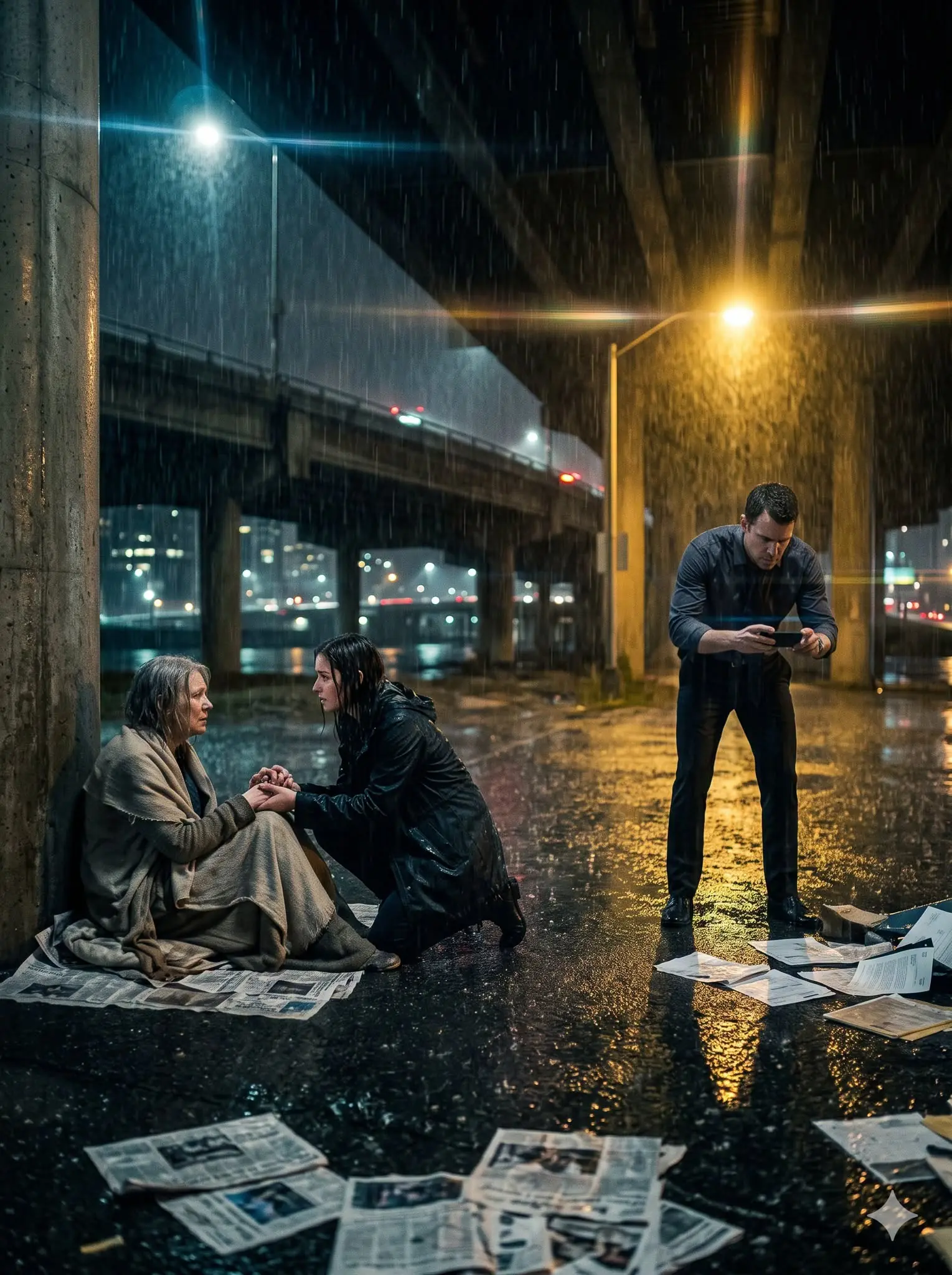
She was seventy-one now, smaller than Owen remembered, with silver hair tucked under a rain hood and both hands wrapped around a brown leather folder. But her eyes were clear. Steady. Full of something that had waited too long to be released.
Principal Voss stared at her like she had seen a ghost.
“Alice,” she said. “You shouldn’t be here.”Mrs. Rowan stepped into the cafeteria, her shoes squeaking softly against the polished floor.
“That is exactly what you told me three years ago,” she replied.
No one laughed now.The same mothers who had been giggling at Owen’s lipstick were silent. Their phones were still in their hands, but their expressions had changed. They were no longer filming a man to humiliate him. They were filming because they understood something bigger was happening, and none of them wanted to be the person who looked away.
Harper clung to her mother’s waist so tightly that Delaney almost stumbled.
Delaney bent down, touched Harper’s face, then pressed her forehead against her daughter’s.
“My baby,” she whispered. “My brave, brave girl.”
Harper sobbed so hard she could barely speak.“I thought you didn’t want to come back.”
Delaney closed her eyes.
“I wanted to come back every day.”
Owen stood a few feet away, still holding the crooked blonde wig in one hand. The lipstick remained smeared across his mouth, red and uneven, a ridiculous mark of cruelty that had become, somehow, proof of love. He looked at his wife, and all the years between them seemed to tighten into one breath.
Delaney looked up at him.“Owen,” she said.
He tried to answer, but no words came.
For three years, he had rehearsed what he would say if he saw her again. He had imagined anger. He had imagined relief. He had imagined asking why she didn’t trust him enough to stay.
But standing there, with the cafeteria full of parents, children, teachers, and detectives, all he could see was the woman who used to dance barefoot in their kitchen with Harper on her hip.
All he could say was, “You came.”
Delaney nodded through tears.
“You found me.”
One of the detectives stepped forward.
“Principal Voss,” he said, “we need you to come with us.”
Marla Voss straightened, gripping the edge of a cafeteria table.
“This is absurd,” she said. “You cannot walk into my school during an event and make accusations based on a child’s performance.”Mrs. Rowan lifted the leather folder.
“It isn’t based on a child,” she said. “It’s based on three years of documents, deleted emails, vendor invoices, forged signatures, and the original access logs you told me to destroy.”
The room seemed to inhale all at once.
Owen looked at Mrs. Rowan.
“You kept them?” he asked.
Mrs. Rowan’s face trembled.“I kept copies,” she said. “I should have spoken sooner.”
Principal Voss snapped, “Be careful, Alice.”
Mrs. Rowan turned to her.
“No, Marla. I was careful for three years. Today I am finished being afraid.”
A school board attorney, a woman in a dark green suit, moved beside the detectives.
“For everyone’s safety,” she said, “this event is now concluded. Teachers, please escort students to their classrooms.”
But the students did not move right away.
They watched Harper.
They watched her mother kneeling on the cafeteria floor, holding her like she was afraid the world might take her again.
They watched Owen Quinn wipe lipstick from his face with the back of his hand, then give up halfway because Harper reached for him too.
The three of them folded into each other right there beside the stage.
Father. Mother. Daughter.
Discover more E-commerce platform solutions Social media strategy Digital product creationNot perfect.
Not healed.
But together.
And for the first time in three years, Harper’s family was not a rumor whispered by adults.
It was real.
It was standing in the center of the room.
And the truth had a voice.
Two hours later, the cafeteria was empty.
The balloons still floated over the tables, but the pink decorations looked different now. Less cheerful. Almost guilty. A forgotten cupcake sat untouched near table six. The blonde wig lay in a trash can beside the stage.
Owen sat in a small conference room across from Delaney, Harper tucked between them.
The detectives had taken Principal Voss to a different office for questioning. Mrs. Rowan sat at the end of the table with a cup of water she had not touched.
The school board attorney introduced herself as Caroline Mercer.
“I know today was painful,” Caroline said gently. “But what happened in that room may have protected your case. Many people recorded Principal Voss attempting to silence Harper after the note was shown.”
Owen’s hand tightened around Harper’s.
“She’s eight,” he said. “She should have been reading a Mother’s Day card, not exposing a threat.”
“I know,” Caroline said. “And I’m sorry.”
Harper looked at her mother.
“Did you really not steal anything?”
Delaney flinched as if the question had been a hand across her cheek.
“No,” she said softly. “I didn’t.”
Harper looked down.
“People said you did.”
Delaney swallowed.
“I know.”
“They said you left because you were ashamed.”
“I was ashamed,” Delaney whispered. “But not because I did it. I was ashamed because I couldn’t prove I didn’t.”
Owen leaned forward.
“Delaney.”
She lifted a hand, stopping him gently.
“No. She deserves the truth.” Delaney turned fully toward Harper. “When the money disappeared, they said my password was used. They said my approval code was attached to the transfer. They said the vendor invoices had my digital signature. I told them I didn’t do it, but no one believed me.”
“I believed you,” Owen said.
Delaney’s eyes filled again.
“I know you did. But every time you defended me, they started looking at you too. Someone called your employer. Someone reported us to the bank. Someone left messages saying Harper would grow up known as the thief’s daughter.”
Harper’s lip trembled.
Delaney touched her cheek.
“I thought leaving would make the whispers stop.”
“It didn’t,” Harper said.
Those three words broke something in Delaney.
She covered her mouth and turned away.
Owen slid his chair closer, not touching her at first, because he did not know if he had the right anymore. Then Delaney reached for him, and he took her hand like he had been waiting in the dark for three years.
Mrs. Rowan cleared her throat.
“There is more,” she said.
Everyone turned.
She opened the leather folder with shaking fingers.
“I was the secretary who processed hardship fund requests. I knew the rhythm of that office. I knew who came in early, who stayed late, who asked for passwords they were not supposed to have. When the investigation began, Marla told me the school needed a clean ending. She said Delaney had become unstable and that dragging it out would hurt the children.”
Delaney stared at her.
“You knew I didn’t do it?”
Mrs. Rowan closed her eyes.
“I suspected. Then I knew.”
Owen’s voice hardened.
“And you stayed quiet?”
Mrs. Rowan nodded, tears slipping down the lines of her face.
“My husband had just had a stroke. Our insurance was tied to my position. Marla told me that if I contradicted the report, I would lose everything. Then she showed me a signed complaint saying I had mishandled student medical files. It was false, but it looked real. I was tired. I was scared. And I let a good woman be destroyed.”
Silence settled over the room.
Harper looked from Mrs. Rowan to her mother.
“Are you mad at her?”
Delaney took a long breath.
“Yes,” she said honestly. “But I also know what fear can do to people.”
Mrs. Rowan bowed her head.
“I don’t deserve forgiveness.”
“No,” Owen said quietly. “But you can still help fix what you helped hide.”
Mrs. Rowan pushed the folder forward.
“That’s why I came.”
Inside were printed emails, old calendar logs, screenshots of transaction records, handwritten notes, and one small flash drive taped to a sheet of paper.
Caroline Mercer examined the folder carefully.
“This is enough to reopen everything,” she said.
“It’s more than that,” Mrs. Rowan replied. “The vendor account was not just connected to the PTA. It was connected to Tessa Blanchard’s sister.”
Owen’s head lifted.
“Tessa?”
“The PTA president,” Mrs. Rowan said. “The woman who put the wig on you.”
Delaney’s face changed.
Not shock.
Recognition.
“Tessa was the first person who told everyone I was guilty,” she said.
Mrs. Rowan nodded. “Because she had to make sure no one looked at her.”
Down the hall, voices rose.
A moment later, the conference room door opened and another detective stepped in.
“We need to speak with Mrs. Blanchard,” he said.
Caroline looked through the glass wall.
Tessa Blanchard stood in the lobby, no longer smiling, her phone pressed to her ear. Her face had gone pale under her perfect makeup. Brielle Hart stood beside her, crying quietly.
Harper leaned closer to her father.
“Dad?”
“Yes, sweetheart?”
“Were they laughing because they were scared?”
Owen looked at Tessa through the glass.
Then he looked at his daughter.
“Sometimes people laugh because they think they’re powerful,” he said. “Sometimes they laugh because they’re hiding something. And sometimes they laugh because they don’t know how much they’re hurting someone.”
Harper thought about that.
Then she said, “I didn’t like it.”
Owen kissed the top of her head.
“Neither did I.”
By sunset, Maple Ridge Elementary had changed forever.
The school board placed Principal Voss on emergency leave. Tessa Blanchard was removed from the PTA pending investigation. The district sent a message to families calling the incident “deeply concerning,” which was the kind of careful phrase adults used when they were afraid of lawsuits.
But the parents already knew more than the district wanted to say.
Videos from the cafeteria had spread through private messages before dinner.
Not the mocking clips.
Those had mostly disappeared.
The video everyone shared was Harper at the microphone, her small voice shaking as she said, “My dad is bringing my mom back.”
By morning, the town that had whispered against Delaney Quinn began whispering in a different direction.
At the grocery store, people stared.
At the gas station, someone Owen had known for ten years took off his cap and said, “I’m sorry, man.”
At the bakery, the owner placed a box of cinnamon rolls on the counter and refused to take Delaney’s money.
But apologies are strange things when they arrive late.
They do not erase the nights Harper cried after school.
They do not return the birthdays Delaney missed.
They do not undo the humiliation of a father sitting under a cheap wig while grown women laughed.
So Owen did not celebrate.
He took Harper and Delaney home.
Their house looked smaller than Delaney remembered.
The porch light still flickered. The blue paint on the front steps had faded. Harper’s bicycle leaned near the garage. A small clay pot with dead lavender sat under the window where the threat had been left.
Delaney stopped in the driveway.
Owen noticed.
“You don’t have to come in yet,” he said.
Delaney shook her head.
“I want to.”
Harper grabbed her hand.
“I kept your mug,” she said.
Delaney looked confused.
“My mug?”
“The yellow one with the chip,” Harper said. “Dad said not to throw it away.”
Owen cleared his throat.
“It was your favorite.”
They went inside.
Everything hit Delaney at once.
The smell of laundry soap. The old couch. The family photos Owen had never taken down. Harper’s drawings taped to the refrigerator. A pair of tiny rain boots by the back door that Harper had outgrown years ago but Owen had not been able to donate.
Delaney walked to the hallway wall.
There was a photo from Harper’s fifth birthday.
In it, Delaney was laughing, Owen was holding a lopsided cake, and Harper had frosting on her nose.
Delaney touched the frame.
“I thought you’d take these down.”
Owen stood behind her.
“I tried once.”
“What happened?”
“Harper cried,” he said. Then, after a pause, “So did I.”
Delaney covered her face.
Harper looked between them.
“Are you staying tonight?”
The question was innocent.
It was also enormous.
Delaney knelt.
“I want to,” she said carefully. “But your dad and I need to talk about a lot of things.”
Harper’s face fell.
Owen crouched beside them.
“That doesn’t mean she’s leaving again tonight.”
Delaney took Harper’s hands.
“I’m not disappearing,” she said. “Never like that again. Even if things are hard, you will know where I am. You will have my number. You will hear my voice. I promise.”
Harper searched her mother’s face.
Then she nodded once, like a judge granting temporary mercy.
That night, Harper fell asleep on the couch between them during a movie she had chosen but did not finish.
Owen carried her to bed.
Delaney followed, stopping at the doorway.
Harper’s room was different and the same. New books. Bigger shoes. A nightlight shaped like a moon. But on the shelf beside her bed was a framed picture of Delaney holding Harper as a baby.
Delaney’s voice broke.
“She still had it.”
“She talked to it sometimes,” Owen said.
Delaney pressed a hand to her chest.
“I missed everything.”
Owen’s voice was quiet.
“You missed a lot.”
She turned to him, ready for anger.
But his face held something more complicated.
Pain, yes.
But also exhaustion.
And love he had tried to bury because it had nowhere safe to go.
“I don’t know how to do this,” he admitted.
“Neither do I,” Delaney said.
“I was angry at you.”
“I know.”
“I still am.”
“I know.”
“But I never stopped looking.”
Delaney looked at him through tears.
“I know that too.”
They stood in the hallway like strangers who had once known each other better than anyone.
Finally, Owen said, “The guest room is made up.”
Delaney nodded.
“Thank you.”
He almost walked away.
Then she said, “Owen?”
He stopped.
“I didn’t leave because I stopped loving you.”
His shoulders shifted.
For a moment, he did not turn around.
When he finally did, his eyes were wet.
“I wish love had made you stay.”
Delaney accepted that like she deserved it.
“So do I,” she whispered.
The investigation moved quickly after that.
Once Mrs. Rowan’s files were authenticated, the story became impossible for the district to bury. The vendor account had received money from the school hardship fund in six separate transfers. Each transfer had been approved using Delaney’s credentials after her access should have been frozen.
The login location pointed to the administrative office.
Security footage from the dates in question had been “accidentally overwritten,” but Mrs. Rowan had kept printed visitor logs. Tessa Blanchard had signed in on two of the afternoons. Principal Voss had stayed late on all six.
The vendor company was registered under the maiden name of Tessa’s sister, who had never done any work for Maple Ridge Elementary.
But the worst discovery came from the flash drive.
It contained an audio recording.
Mrs. Rowan had made it three years earlier after she began to suspect she was being used.
In the recording, Principal Voss said, “Delaney is emotional enough that people will believe it. Once the board sees her access code, it ends.”
Then Tessa’s voice said, “And the fund?”
Principal Voss replied, “Gone before anyone asks the right question.”
The first time Delaney heard it, she stood in the district attorney’s office and did not cry.
Owen reached for her hand.
She squeezed it once.
Then she said, “Play it again.”
The prosecutor looked surprised.
Delaney’s face was pale, but her voice was steady.
“I need to hear the exact moment my life was stolen.”
They played it again.
This time, Owen turned away.
Not because he couldn’t handle the truth.
Because he could not handle the calmness of it.
No shouting. No panic. No accident.
Just two women deciding that Delaney’s life was easier to ruin than their own reputations.
Charges followed.
Principal Voss resigned before the board could vote to terminate her. Tessa Blanchard tried to claim she had been manipulated, then blamed her sister, then blamed the school’s accounting system. None of it worked.
Brielle Hart, who had recorded Owen’s humiliation and laughed loudest behind Tessa, came forward with messages showing that Tessa had encouraged parents to “keep the Quinn family isolated” because “trouble spreads when people give it sympathy.”
Those messages did not send anyone to jail.
But they opened the town’s eyes.
Sometimes cruelty is not illegal.
Sometimes it is just permitted.
Sometimes it lives in group chats, fake smiles, school events, and polite little comments that teach children who deserves kindness and who does not.
Maple Ridge had permitted it.
And now Maple Ridge had to look at itself.
Three weeks after the Mother’s Day Tea, the school held an emergency assembly.
Owen did not want to go.
Delaney did not want to go.
Harper did.
“I want them to see us together,” she said.
So they went.
This time, no one laughed when Owen walked in.
The cafeteria looked different without balloons. Rows of chairs faced the stage. Teachers stood along the walls. Parents filled the back rows, whispering softly until the Quinn family entered.
Then the room went quiet.
Not like before.
Before, the silence had been cruel.
This silence was heavy with shame.
Caroline Mercer stood at the microphone.
“Thank you for coming,” she said. “Today is not about protecting the reputation of an institution. It is about telling the truth.”
Delaney sat between Owen and Harper.
Her hands shook in her lap.
Owen placed his hand over hers, not as a husband claiming a wife, but as a person saying, I am here.
Caroline continued.
“Three years ago, Mrs. Delaney Quinn was wrongfully accused of taking money from Maple Ridge Elementary’s hardship fund. That accusation damaged her career, her family, and her standing in this community. Based on newly reviewed evidence, the district formally retracts that accusation.”
A sound moved through the room.
A gasp.
A murmur.
A few quiet sobs.
Delaney closed her eyes.
Harper leaned into her.
Caroline looked directly at Delaney.
“Mrs. Quinn, on behalf of the district, I am deeply sorry.”
Everyone turned.
Delaney did not stand at first.
Owen whispered, “You don’t have to say anything.”
But Harper took her mother’s hand.
Delaney stood.
The walk to the microphone was only a few yards.
It looked much longer.
When Delaney reached the stage, she gripped the sides of the podium.
For a moment, she could not speak.
Then she looked at the parents.
“I used to teach in this building,” she said. “I used to believe schools were where children learned how to become better than the adults before them.”
No one moved.
“When I was accused, some of you believed it because it was easier than asking questions. Some of you repeated it because gossip feels harmless when it is not about your own child. Some of you watched my daughter sit alone for three years and called it unfortunate instead of wrong.”
A woman in the third row began to cry.
Delaney’s voice did not rise.
That made it stronger.
“I am grateful the truth came out. But I want you to understand something. My name being cleared does not give Harper back the nights she cried. It does not give my husband back the dignity you took when you laughed at him for showing up. It does not give me back the years I spent believing my presence hurt my family more than my absence.”
She looked down at Harper.
Then at Owen.
“But my daughter did what adults were too afraid to do. She told the truth with a shaking voice. And my husband did what many people mocked. He showed up.”
Owen looked at the floor.
Delaney smiled through tears.
“So if this school wants to teach one lesson from all of this, teach children that love is not embarrassing. A father sitting in a mother’s chair is not a joke. A child from a broken season is not a target. And silence is not kindness when someone is being destroyed.”
When she stepped back, the room remained still.
Then someone stood.
It was not a board member.
It was Mr. Ellis, the janitor, who had worked at Maple Ridge for twenty-two years.
He took off his cap and began clapping.
One teacher joined.
Then another.
Then the applause spread across the room, uneven at first, then full.
Harper stood on her chair and clapped with both hands.
Owen did not clap.
He covered his face and cried.
Because sometimes justice feels less like victory and more like finally setting down a weight you were never meant to carry.
After the assembly, parents approached the Quinn family one by one.
Some apologized well.
Some apologized badly.
Some said things like, “I always wondered if something was off,” which Owen did not appreciate because wondering had not helped Harper.
Tessa Blanchard was not there.
Principal Voss was not there.
But Brielle Hart came.
Her eyes were red.
“I’m sorry,” she said to Owen. “I was cruel.”
Owen looked at her for a long moment.
“Yes,” he said. “You were.”
Brielle flinched.
“I deleted the video.”
“That doesn’t fix it.”
“I know.”
Harper stepped slightly behind Delaney.
Brielle saw that and started crying again.
“I don’t expect forgiveness.”
Owen’s voice stayed calm.
“Then do something better than expecting it. Teach your children not to become people who laugh when someone is cornered.”
Brielle nodded.
“I will.”
Owen did not know if she meant it.
But for the first time, he did not feel responsible for making her feel better.
That evening, the Quinn family walked home instead of driving.
Maple Ridge was only six blocks from their house. The sun was low, turning the sidewalks gold. Harper walked between her parents, holding both their hands and swinging slightly with each step.
At the corner near the old library, Harper looked up.
“Are we a family again?”
Delaney inhaled carefully.
Owen looked at her.
Then he looked at Harper.
“We were always a family,” he said. “But now we have to learn how to be one in the same house again.”
Harper thought about that.
“Can we have pancakes tomorrow?”
Delaney laughed, surprised by the normalness of it.
“I remember how you like them.”
“No,” Harper said seriously. “I’m eight now. I like chocolate chips.”
Delaney placed a hand over her heart.
“Important update.”
Owen smiled for the first time that day.
A real smile.
Small, tired, but real.
The next morning, Delaney made pancakes in the kitchen.
She burned the first batch.
Harper declared them “emotionally crispy.”
Owen laughed so hard he had to sit down.
For a while, that was enough.
There were still hard days.
Delaney had to rebuild her career. Owen had to learn how to stop surviving and start trusting. Harper had to talk to a counselor about the note under her window, the whispers at school, and the fear that love could vanish without warning.
The town moved on faster than they did.
Towns often do.
People wanted a clean ending. They wanted the villain exposed, the mother returned, the father honored, the child safe, and the story wrapped in a bow.
But real healing does not move at social media speed.
Some nights Delaney woke up crying.
Some mornings Owen stood in the garage longer than necessary because he did not want Harper to see his anger return.
Sometimes Harper asked the same question in different ways.
“You’re picking me up today, right?”
“You’ll answer if I call?”
“You’re not leaving after dinner?”
And every time, Delaney answered.
“Yes.”
“Yes.”
“No, baby. I’m not leaving after dinner.”
Trust came back like grass through cracked pavement.
Slowly.
Stubbornly.
Alive.
Six months later, Maple Ridge Elementary renamed the hardship fund.
It became the Quinn Family Fund for Student Support.
Delaney objected at first.
“I don’t want our name on pain,” she told Owen.
But Harper saw it differently.
“It’s not pain,” she said. “It helps kids whose families need someone to show up.”
So Delaney agreed on one condition.
Every year, at the first school assembly, a speaker would talk to students about courage, rumors, and kindness.
Not the soft kind of kindness printed on posters.
The hard kind.
The kind that costs something.
That first year, Harper was asked to speak.
Owen said she didn’t have to.
Delaney said she could wait until she was older.
Harper said, “I’m the one who found the note.”
So they let her decide.
She wore a blue dress and white sneakers. Her hair was braided by Delaney, though Owen insisted he had improved since the old days. The auditorium was full of students, teachers, and parents.
Harper stepped up to the microphone.
For a second, Owen saw the cafeteria again.
The wig.
The lipstick.
The laughter.
His daughter’s shaking hands.
But Harper did not shake this time.
“My name is Harper Quinn,” she said. “Last year, I was scared to tell the truth because I thought adults always knew more than kids.”
A few parents smiled gently.
Harper continued.
“But sometimes kids know when something is wrong before adults admit it.”
The smiles faded into attention.
“My dad came to school for me when people made fun of him. My mom came back when the truth was finally safe enough to hold. But I learned that being brave doesn’t mean you aren’t scared. It means you say what is true even when your voice sounds small.”
Delaney wiped her eyes.
Owen reached for her hand.
Harper looked at the audience.
“So if you see someone being laughed at, don’t join in just because everyone else is doing it. If you hear a rumor, don’t feed it just because it tastes exciting. And if someone shows up for you, don’t be embarrassed by how love looks.”
She paused.
Then smiled.
“My dad looked terrible in that wig.”
The auditorium burst into laughter.
This time, Owen laughed too.
Harper grinned.
“But he looked like love.”
That was the line people remembered.
Not because it was polished.
Because it was true.
After the assembly, Harper ran into Owen’s arms.
“Was that okay?”
Owen hugged her tight.
“That was better than okay.”
Delaney kissed Harper’s forehead.
“You sounded like yourself.”
Harper beamed.
“That’s good. I practiced.”
As they walked out of the school, they passed the cafeteria.
Table six was gone, replaced by a new row of benches. The stage had been repainted. The walls displayed student art about courage.
Harper stopped at the doorway.
For a moment, Owen worried the memory had hurt her.
But she only looked around and said, “It feels smaller now.”
Delaney nodded.
“Some scary places do, once the truth gets bigger.”
Outside, the air smelled like rain and cut grass.
Owen unlocked the truck, but Harper didn’t climb in right away.
She looked at both of them.
“Can we go get cinnamon rolls?”
Delaney laughed.
“You and cinnamon rolls.”
“It’s a family tradition,” Harper said.
Owen raised an eyebrow.
“Since when?”
“Since after the worst day,” Harper said. “That makes it important.”
So they went.
The bakery owner still tried to give them free pastries.
Owen refused.
Delaney paid.
Harper added an extra chocolate milk because, as she explained, “public speaking takes energy.”
They sat by the window, the three of them shoulder to shoulder in a booth too small for all they had survived.
Across the street, a woman recognized Delaney and waved.
Delaney waved back.
No hiding.
No shame.
No lowered eyes.
Owen watched her, and something in him finally loosened.
Delaney noticed.
“What?” she asked.
He shook his head.
“Nothing.”
“No, tell me.”
He looked at Harper, who was busy peeling frosting off a cinnamon roll.
Then he looked back at his wife.
“I used to think bringing you back meant proving everyone wrong,” he said. “Finding the records. Clearing your name. Making them admit it.”
Delaney listened.
“But I think Harper was right before any of us were,” he continued. “Bringing you back wasn’t just getting you into town again. It was bringing back your laugh. Your place at the table. The part of us that got buried under what they said.”
Delaney’s eyes softened.
“And did you?”
Owen looked at Harper.
Then at the sunlight on the table.
Then at Delaney’s hand resting beside his.
“We’re getting there,” he said.
Delaney slid her fingers into his.
“Yes,” she whispered. “We are.”
Years later, people in Maple Ridge would still talk about the Mother’s Day Tea.
Some remembered it as the day a corrupt principal was exposed.
Some remembered it as the day a little girl saved her mother’s name.
Some remembered it as the day a father was mocked in front of an entire school and still chose dignity because his daughter was watching.
But Harper remembered it differently.
She remembered the wig.
She remembered the laughter.
She remembered her father’s red, crooked lipstick.
She remembered the microphone feeling too tall.
She remembered her mother appearing in the doorway like a sunrise after years of gray sky.
Most of all, she remembered what happened after the truth came out.
Her father did not become bitter.
Her mother did not stay broken.
And Harper did not let the worst thing adults had done become the only thing her childhood meant.
At sixteen, Harper wrote an essay for a scholarship.
The prompt was simple:
Describe a moment that changed how you see courage.
Harper wrote about a man in a cafeteria wearing a cheap blonde wig.
She wrote about how everyone thought he looked ridiculous, but he was the strongest person in the room.
She wrote about a mother who came home carrying shame that did not belong to her.
She wrote about a note under a window, a microphone, and the terrifying power of telling the truth before you know who will believe you.
At the end, she wrote:
Courage is not always loud. Sometimes courage is a father sitting still while people laugh, because he refuses to scare his child. Sometimes courage is a mother coming back to face a town that misunderstood her. Sometimes courage is a little girl saying one true sentence into a microphone and watching the world change shape around it.
She won the scholarship.
At graduation, Owen and Delaney sat in the front row.
Together.
When Harper’s name was called, they stood before anyone else.
Owen clapped with both hands over his head.
Delaney cried openly.
And Harper, walking across the stage, looked out at them and smiled.
Because her father had been right.
They had always been a family.
For a while, they had been wounded.
For a while, they had been separated by lies, fear, and other people’s cruelty.
But love had kept showing up.
In lunchboxes.
In badly braided hair.
In documents searched for after midnight.
In a mother’s return.
In a child’s voice.
And in a father who was willing to look foolish in front of everyone, as long as his daughter did not have to sit alone.
That was the part nobody could steal.
Not a principal.
Not a rumor.
Not a room full of laughter.
The truth came late.
But it came.
And when it did, Harper Quinn finally learned what her mother had been trying to tell her all along:
A family does not become whole because nothing ever breaks.
A family becomes whole when the people who love each other keep choosing to come back, keep choosing to repair, and keep choosing to stand together after the world has tried to pull them apart.
So yes, Owen brought Harper’s mother back.
But Harper brought back something too.
She brought back the truth.
And once the truth entered that room, no one could laugh it away again.