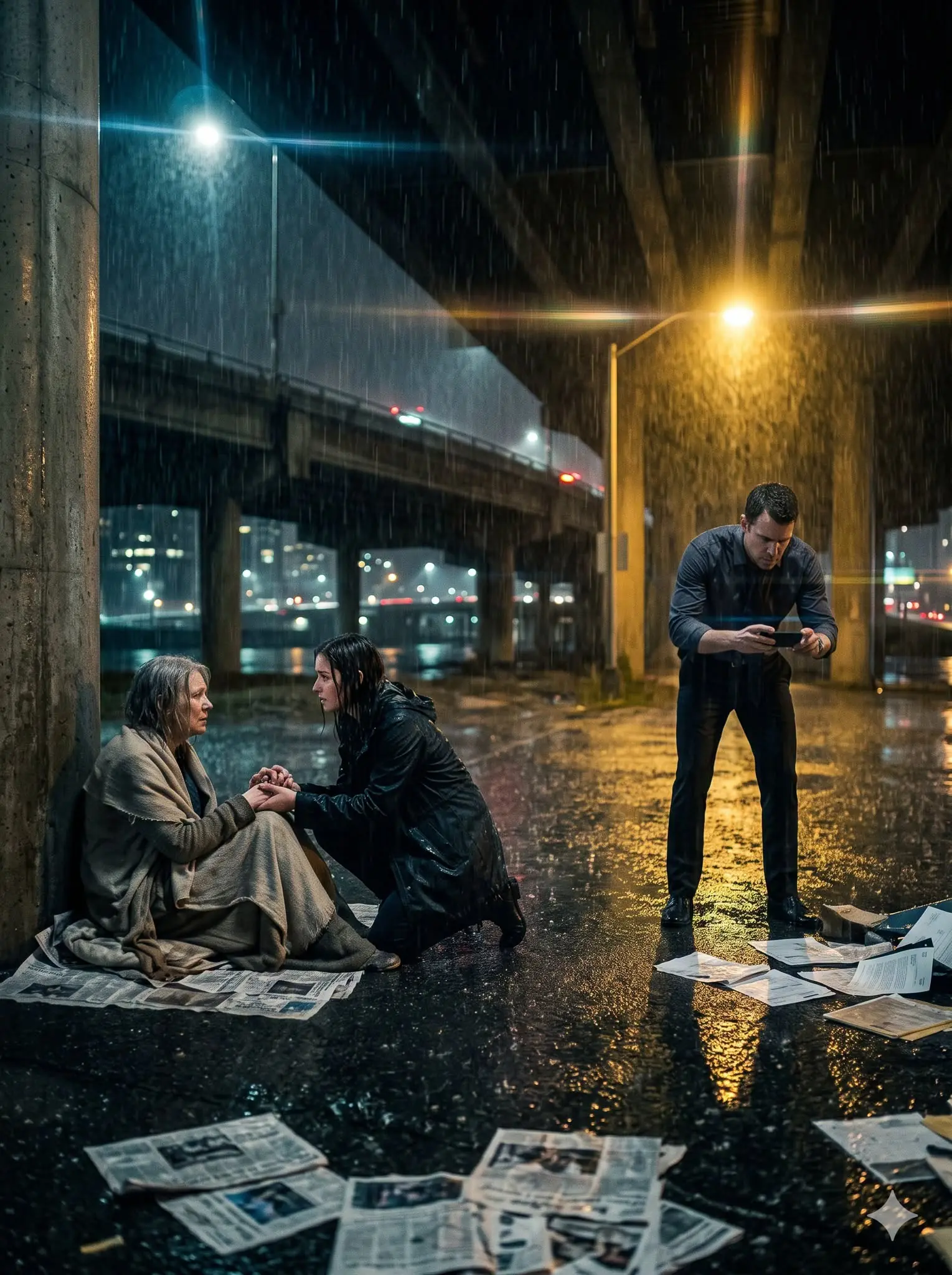
The CEO who had not smiled in six years hired a new assistant, and she was the first woman brave enough to tell him he was wasting his life.
Life stories 29/06/2026 23:43
Morning arrived pale and quiet, the kind of January morning that made Chicago look washed clean from a distance, even when the sidewalks still held yesterday’s dirty snow.
Hannah woke before Noah and forgot, for three merciful seconds, what had happened.
Then the hotel ceiling came into focus.
The eviction. The bus shelter. Daniel Whitmore.
Her stomach tightened.
She got out of bed carefully and checked her phone. Four percent battery. One new message from Daniel.
Good morning. I asked the desk to send breakfast, but only if you approve. No pressure. Also, I found a charger you can borrow.
Hannah almost smiled despite herself.
No pressure.
It was strange how powerful those words were when you had spent years being pressured, cornered, corrected, and blamed.
She typed, Breakfast is okay. Thank you.
Noah woke to pancakes, scrambled eggs, orange juice, and the kind of wonder usually reserved for Christmas morning.
“Is all this for us?”
“Yes,” Hannah said.
“Did Mr. Daniel send it?”
“Yes.”
Noah thought about that while pouring too much syrup on his pancakes. “He’s rich, right?”
Hannah sighed. “Probably.”
“Dad always said rich people are mean.”
“Your dad said a lot of things.”
“Mr. Daniel doesn’t seem mean.”
Hannah watched her son eat with both relief and guilt twisting inside her. He was hungry in a way she had tried not to see before. Slow hunger. Quiet hunger. The kind that came from smaller portions, skipped snacks, and a mother pretending she had already eaten at work.
After breakfast, she dressed him in the cleanest clothes left in the bag and pulled her hair into a tight knot. She looked at herself in the bathroom mirror and barely recognized the woman staring back. Dark circles. Chapped lips. A bruise-colored exhaustion under her skin.
But her eyes were still open.
That counted for something.
Daniel was waiting in the lobby when they came down. He had changed from his formal coat into dark jeans, a gray sweater, and a wool jacket. Somehow he looked less like a millionaire and more like a man who had not slept much.
He stood when he saw them.
“Good morning.”
Noah ran ahead. “Thank you for pancakes.”
Daniel smiled. “You’re welcome.”
Hannah stayed a careful distance away. “We can’t stay here another night.”
Daniel nodded as if he expected that. “Okay.”
That answer disarmed her. “Okay?”
“If you want to leave, I won’t stop you.”
“I need a job,” she said, because pride would not let her ask for a place to sleep before asking for work. “Not charity. Work.”
Daniel’s expression shifted, and she could see he respected the correction.
“What kind?”
“I worked retail. Children’s clothing mostly. I can handle inventory, registers, customers. I’ll clean floors, wash dishes, stock shelves, anything legal that pays.”
Noah looked up. “My mom is really good at folding tiny shirts.”
Daniel’s smile flickered. “That is a very specific skill.”
“She makes them look like presents.”
Hannah almost laughed. It hurt.
Daniel gestured toward a quiet corner table near the lobby window. “Can we sit for ten minutes? I’d like to explain something before I make any calls.”
Hannah hesitated.
Noah climbed into a chair before she answered.
“Fine,” she said.
Daniel sat across from her, not beside her.
“My wife’s name was Elise,” he began.
The name came out carefully, like something he carried in glass.
“She died four years ago. Breast cancer. It moved fast. Faster than anyone promised us it would.”
Hannah’s defensiveness softened against her will.
“I’m sorry.”
“Thank you.” He looked at his hands. “Elise grew up poor. Not movie poor. Real poor. Shelters. Motels. Nights in cars. Her mother worked two jobs and still lost apartments because one emergency could ruin everything. Elise used to say the cruelest thing about poverty wasn’t hunger. It was how invisible it made you.”
Hannah looked away.
Invisible.
Yes.
Daniel continued. “Before she got sick, she wanted to start a fund for families facing eviction. Not a big glamorous charity. Practical help. Emergency rooms. Legal aid. Job placement. Furniture storage. Things that keep a bad week from becoming a ruined life.”
“What happened?”
“She died before we launched it.” His voice lowered. “And I buried the plan with her because I was angry at the world and too selfish to do anything useful with grief.”
Noah stopped swinging his legs.
Daniel looked at Hannah.
“Last night, when I saw you and Noah, I heard Elise’s voice in my head so clearly it scared me. She would have stopped. She would have helped. She would have been furious if I walked by.”
Hannah did not know what to say.
“So this isn’t about saving you,” Daniel said. “And it isn’t about me being generous. Maybe it’s about me finally doing one decent thing I should have done years ago.”
Hannah folded her arms, but there was less steel in them now.
“One decent thing doesn’t fix my life.”
“No,” he said. “But it can buy enough time for you to fix it yourself.”
That sentence landed differently.
Not a rescue.
Time.
That was what she needed. Time to breathe. Time to find work. Time to stop Noah from sleeping on a sidewalk.
“What are you offering?” she asked.
“A week here. Paid. No conditions. During that week, I’ll connect you with a friend who owns a children’s boutique in Lincoln Park. She needs an assistant manager. I don’t know if she’ll hire you, but she’ll interview you today if you want. I can also connect you with a family attorney who owes me a favor.”
At the word attorney, Hannah stiffened.
“I can’t afford that.”
“I said he owes me a favor.”
“That’s still charity.”
“That’s a network,” Daniel said gently. “Men like Blake use networks all the time. They call it business. You use one once and call it shame.”
Hannah stared at him.
That was the first thing he said that sounded less kind than true.
Noah leaned toward Daniel. “Can the lawyer make Dad give my bed back?”
Hannah closed her eyes.
Daniel’s jaw tightened.
“He can try.”
The boutique owner’s name was Marissa Cole, and she had sharp glasses, silver curls, and the no-nonsense warmth of a woman who had survived enough to recognize panic in another person’s posture.
She interviewed Hannah that afternoon in a small office behind racks of baby sweaters and tiny winter coats.
Daniel did not come inside. He waited in the mall’s common area with Noah, buying him a pretzel and listening solemnly while Noah explained dinosaurs.
Marissa asked about experience, scheduling, customer service, inventory systems, conflict with difficult customers, and whether Hannah could work weekends.
Hannah answered honestly.
Then Marissa leaned back and said, “Daniel told me a little, but not everything. He said you deserved to tell your own story or not tell it at all.”
Hannah swallowed hard.
That was dignity.
Not pity.
She chose to tell enough.
“My ex got us evicted. I need work. I need stability. I don’t need special treatment, but I do need someone to let me prove I’m not what my current situation looks like.”
Marissa studied her for a long moment.
Then she smiled.
“You start tomorrow at ten. It’s probationary for thirty days. Fifteen dollars an hour to start, more if you handle assistant manager duties well. I can’t promise miracles, but I can promise a fair shot.”
Hannah pressed a hand to her mouth.
“I’m sorry,” she said quickly. “I’m not trying to cry.”
“Cry after you sign the paperwork,” Marissa said, pushing a folder toward her. “Ink runs.”
Hannah laughed through tears.
When she stepped out of the store, Noah ran to her.
“Did you get it?”
“I got it.”
He screamed so loudly three shoppers turned around.
Daniel stood more slowly, his face changing in a way Hannah could not name.
Pride, maybe.
But not ownership.
He did not look like a man pleased with himself.
He looked like a man witnessing someone rise.
“I knew you would,” he said.
For the next three days, Hannah worked.
Her feet ached. Her back hurt. Her hands dried out from steaming clothes, opening boxes, wiping counters. But every ache felt like proof that she was still capable. Every customer she helped reminded her she had not disappeared. Every paycheck form she completed felt like a brick in the foundation of a future.
Daniel did not hover.
He checked in once a day. He brought Noah coloring books. He arranged for the hotel to let Noah sit near the front desk when Hannah’s shifts overlapped with child care gaps. He introduced Hannah to an attorney named Peter Lowell, who listened without interrupting as she described Blake, the eviction, the unpaid support, the drained account.
Peter’s face grew darker with each detail.
“This was not just cruel,” he said. “Some of it may be illegal.”
Hannah stared at him.
“What do you mean?”
“I mean the lockout timeline is questionable, the debt assignment is questionable, and if he transferred marital funds to a girlfriend while leaving a minor child without housing, a judge will want to hear about it.”
For the first time since Blake began destroying her life, Hannah felt something other than fear.
She felt anger with a door attached to it.
A way through.
On the fourth night, she and Daniel took Noah to a small pizza place near the hotel to celebrate her first week almost completed. It was not expensive. The tables were scratched, the napkins were paper, and the cheese stretched so far Noah declared it “a world record.”
For an hour, Hannah forgot to be guarded.
Daniel asked Noah about school. Noah asked Daniel if millionaires had to brush their teeth. Daniel said especially millionaires, because dentists charged everyone.
Hannah laughed so suddenly she startled herself.
Daniel looked at her across the table, and something quiet passed between them.
Not romance. Not yet.
Recognition.
After dinner, they walked back under streetlights. Noah held Daniel’s hand on one side and Hannah’s on the other, swinging between them when the sidewalk cleared.
“Again,” he begged.
“Noah, Daniel’s arm is going to fall off,” Hannah said.
Daniel lifted him anyway.
Noah shrieked with joy.
Hannah watched her son laugh, really laugh, and had to look away before emotion swallowed her whole.
When they reached the hotel, Noah was half asleep. Hannah took him upstairs, tucked him in, then surprised herself by returning to the lobby.
Daniel was still there, sitting near the fireplace with his coat over one arm.
“You waited,” she said.
“I hoped you might come back down. If you didn’t, that would have been okay too.”
There it was again.
No pressure.
Hannah sat in the chair across from him.
“For years,” she said slowly, “Blake made every kindness feel like debt. If he bought groceries, I owed him silence. If he watched Noah for an hour, I owed him gratitude for a week. If he apologized, I owed him forgiveness immediately.”
Daniel listened.
“So when you helped us, all I could think was, when does the bill come?”
His eyes softened.
“There isn’t one.”
“I’m starting to believe that,” she whispered. “And it scares me more than not believing it.”
“Why?”
“Because if you’re actually good, then I have to admit I almost forgot good existed.”
Daniel looked toward the fire.
“I forgot too.”
They sat in silence, but it was not empty.
Finally, Hannah said, “Why haven’t you reopened Elise’s fund?”
He looked at her sharply.
She shrugged. “You said she wanted practical help. Rooms, lawyers, jobs. You just did all of that for us.”
“That was different.”
“Was it?”
He did not answer.
Hannah leaned forward. “Maybe you didn’t stop because you saw us. Maybe you stopped because some part of you was tired of being frozen.”
Daniel’s face changed.
For a moment she thought she had gone too far.
Then he said, “Elise used to say almost the same thing.”
“What did she say?”
“That I could survive anything except my own locked doors.”
Hannah smiled sadly. “She sounds smart.”
“She was.”
“Then maybe listen to her.”
Daniel stared at the fire for a long time.
“I don’t know if I can build what she wanted without her.”
Hannah’s voice softened. “Maybe you don’t build it without her. Maybe you build it because of her.”
His eyes shone, but no tears fell.
The elevator dinged.
A man stepped out wearing an expensive camel coat, his blond hair perfectly styled, his smile too familiar and too cruel.
Hannah stood so fast her chair scraped the floor.
Blake Harper looked around the lobby, spotted her, and laughed.
“Well,” he said. “Madison was right. You really did find yourself a rich stranger.”
Daniel rose slowly.
Hannah’s blood turned cold.
Blake walked closer, hands in his pockets, enjoying every second.
“You should have answered my calls, Hannah.”
“I blocked you.”
“Cute.” His eyes flicked to Daniel. “And you are?”
Daniel’s voice was calm. “Someone asking you to leave.”
Blake smiled wider. “That’s funny. See, my wife and my son are staying in a room I didn’t approve, paid for by a man I don’t know. A judge might find that interesting.”
“Ex-wife,” Hannah said. “Almost.”
“Not yet.” Blake leaned close enough that she could smell whiskey on his breath. “And until the papers are final, you don’t get to parade my kid around with your new boyfriend.”
Daniel moved one step, not touching Blake, not threatening him, simply placing himself between them.
Blake’s smile faltered.
“You don’t want to do that,” Daniel said.
Blake scoffed. “Do you know who I am?”
Daniel’s expression did not change.
“No,” he said. “But I’m about to.”
Part 3
Blake had always been most dangerous when he felt embarrassed.
Hannah saw it in the twitch of his jaw, the sharpness around his eyes, the way his charming public mask struggled to stay in place while rage pushed from underneath. In their apartment, that look had been enough to make her lower her voice. At parties, it had made her laugh at jokes that hurt. In court, it had made her doubt facts she knew were true.
But in the hotel lobby, something had changed.
Daniel did not shrink.
And more importantly, Hannah did not either.
“You need to leave,” she said.
Blake looked past Daniel and pointed at her. “You don’t get to talk to me like that.”
“Yes,” Hannah said, surprised by the steadiness of her own voice. “I do.”
His eyes narrowed.
Daniel glanced toward the front desk. “Call security.”
The young clerk picked up the phone.
Blake laughed once. “Security? For a family disagreement?”
“This is not a family disagreement,” Hannah said. “This is harassment.”
The word felt powerful. Accurate.
Blake stepped sideways to see her better.
“You think a free hotel room and a job folding baby clothes makes you brave?”
“No,” Hannah said. “My son does.”
For a second, nobody spoke.
Then Blake’s face hardened completely.
“You always were dramatic.”
“And you always counted on me being ashamed.”
Daniel’s phone buzzed in his hand. He looked down, read something, then looked back at Blake.
“Blake Harper,” he said. “Regional acquisitions consultant. Currently negotiating a contract with Northline Urban Development.”
Blake’s expression shifted so quickly Hannah almost missed it.
“How do you know that?”
Daniel placed his phone in his coat pocket.
“Because I own the controlling interest in Northline.”
The lobby went silent.
Hannah turned to him, stunned.
Blake’s mouth opened, closed, then opened again.
Daniel’s voice remained even. “You used your professional relationship with a contracted property management group to pressure an eviction on December 31 against a woman and minor child while concealing marital financial transfers. You then came to my hotel intoxicated and threatened her.”
Blake’s confidence cracked.
“You don’t know what you’re talking about.”
“I know enough to suspend your pending contract review tonight.”
Blake went pale beneath his winter tan.
“You can’t do that.”
“I already did.”
Hannah gripped the back of the chair beside her.
Daniel looked at her, and for the first time since she had met him, she saw something harder than grief in his face.
Justice.
Not revenge. Not violence. Not ego.
Justice.
Security arrived. Blake looked from one man to the other, calculating. Then he pointed at Hannah again.
“This isn’t over.”
Hannah stepped around Daniel.
Her hands shook, but she kept them at her sides.
“Yes, it is,” she said. “The part where you scare me is over.”
Blake stared at her as if she had become a stranger.
Maybe she had.
Security escorted him out into the cold.
The moment the door closed, Hannah’s knees almost gave. Daniel reached out but stopped before touching her.
“May I?” he asked.
That nearly undid her.
She nodded.
He steadied her with one hand at her elbow.
“I should have told you about Northline,” he said. “I didn’t know his connection until Peter started digging this afternoon. I wanted facts before I said anything.”
Hannah stared at him. “You found out today?”
“Yes.”
“And you didn’t tell me?”
“I was going to tomorrow. I didn’t want to overwhelm you after work.”
She pulled away, not angrily, but because she needed space to think.
“You can’t make decisions around me like I’m fragile.”
Daniel absorbed that.
“You’re right.”
“I need truth. Even ugly truth.”
“You’re right,” he said again.
The apology was so simple that it left no wall for her to push against.
Hannah rubbed her forehead. “I’m not mad that you looked into him. I’m mad that everyone keeps finding out pieces of my life before I do.”
Daniel nodded slowly.
“I’m sorry. It won’t happen again.”
She believed him, and that scared her.
The next two weeks moved like a storm finally breaking.
Peter filed emergency motions. The judge ordered temporary child support, froze several disputed transfers, and demanded an explanation for the eviction timeline. The property management company, suddenly eager to cooperate, admitted that Blake had made calls he should not have made. Hannah’s belongings were released from storage without fees. Noah’s bed came back, along with his books, his winter boots, and a stuffed bear Hannah had thought was gone forever.
Blake did not go to jail. Life was rarely that clean.
But he lost the Northline contract. He lost Madison when the money slowed. He lost the polished story he had told everyone about his unstable ex-wife. And in family court, under fluorescent lights with Hannah sitting straight-backed beside Peter, Blake lost the power to decide whether Noah deserved stability.
He was granted supervised visitation until he completed court-ordered counseling and parenting classes.
When the judge read the order, Hannah did not smile.
She simply breathed.
That was enough.
The bigger miracle was not legal.
It was ordinary.
Hannah kept working.
Marissa promoted her to full assistant manager after thirty days because Hannah knew how to calm frustrated mothers, how to arrange window displays that made people stop, and how to sell without making customers feel pushed. She found a small apartment in Oak Park with creaky floors, good sunlight, and a bedroom Noah called “mine” seventeen times on the first day.
Daniel offered to pay the deposit.
Hannah said no.
Then she looked at the numbers, swallowed her pride, and said, “I can pay half now and pay you back the other half in three months.”
Daniel smiled. “That sounds like a plan.”
“It is not a gift.”
“I know.”
“I’m serious.”
“So am I.”
She paid him back in two.
On move-in day, Daniel carried boxes up three flights of stairs until sweat darkened his shirt. Noah placed his dinosaur on the windowsill and announced the apartment officially safe. Hannah stood in the kitchen holding a chipped mug from her old life and cried because the cabinets were empty, the couch was secondhand, and everything was imperfectly, beautifully hers.
Daniel found her there.
“Bad tears?” he asked.
She shook her head.
“Mine tears.”
He understood.
Spring came slowly.
Elise’s fund reopened in March, not as a glossy charity with gala speeches, but as the Whitmore Lighthouse Project. Hannah refused to let Daniel name it after himself, and Daniel refused to argue when she said Elise’s dream deserved the light.
The project partnered with small hotels, legal clinics, employers, and child care providers. Its first office was a borrowed suite above a dentist. Its first client was a woman named Renee with two daughters and a landlord who had changed the locks illegally. Hannah sat with Renee through the intake paperwork and saw her own fear reflected back.
“I don’t want charity,” Renee whispered.
Hannah reached across the desk.
“Good,” she said. “Because this is a bridge. You still get to walk across it yourself.”
Daniel, standing in the doorway, heard that and looked away.
Later, he told Hannah Elise would have loved her.
Hannah did not know what to do with that kind of honor, so she kept working until the feeling became useful.
Months passed.
Noah started kindergarten in a classroom painted pale blue. He drew pictures of three people holding hands under a yellow sun. Sometimes four, when he added “Miss Elise in heaven,” which made Daniel go very quiet the first time he saw it.
Hannah and Daniel moved slowly, just as she had asked.
They had coffee after Noah went to sleep. They took walks by the lake. They argued once about Daniel trying to solve problems too quickly and Hannah refusing help too quickly. They learned each other’s wounds without treating them like instructions.
He never asked to replace anyone.
Not Noah’s father.
Not Hannah’s past.
Not Elise.
That was why there was room for him.
On the Fourth of July, they attended a neighborhood picnic in Oak Park. Noah ran through the grass with other children, his face sticky with watermelon, his laughter carrying across the park. Hannah sat on a blanket beside Daniel, watching the sky turn pink.
“I used to hate holidays,” she said.
Daniel looked at her. “Why?”
“Because they made loneliness louder.”
He nodded.
“And now?”
She watched Noah try to catch fireflies with a paper cup.
“Now they still make things louder,” she said. “But not loneliness.”
Daniel’s hand rested on the blanket between them, close but not demanding.
Hannah placed her hand over his.
A year after the night at the bus shelter, snow fell again on New Year’s Eve.
Hannah did not spend it on a sidewalk.
She spent it in the community room of a small hotel downtown, surrounded by volunteers, donated coats, trays of food, legal aid flyers, tired parents, sleepy children, and a banner Noah had drawn himself that read Welcome Inside.
The Whitmore Lighthouse Project had opened thirty emergency rooms that winter. Thirty families who would not sleep in cars. Thirty mothers and fathers who would not have to tell their children there was nowhere to go while the city celebrated without them.
Hannah wore a navy dress Marissa had helped her pick. Her hair was loose around her shoulders. She looked in the mirror before leaving and saw, not the destroyed woman from last year, but someone scarred and standing.
At 11:30, a young mother arrived carrying a baby and holding the hand of a boy about Noah’s age. Her coat was too thin. Her eyes were swollen. She looked ashamed to be seen.
Hannah crossed the room immediately.
“Hi,” she said gently. “I’m Hannah.”
The woman’s mouth trembled. “I’m sorry. They told me maybe you could— I don’t know. I don’t have anywhere tonight.”
Hannah felt the past rise up, sharp and cold.
Then she felt Daniel beside her, quiet, steady.
Noah appeared too, holding a cup of cocoa with both hands.
The woman looked as if she might collapse from the kindness of being noticed.
Hannah took the diaper bag from her shoulder.
“You’re inside now,” she said. “We’ll figure out tomorrow after you rest.”
The woman began to cry.
Her little boy looked scared.
Noah stepped forward and offered him the cocoa.
“My mom says bridges are for walking across,” he said. “You don’t have to sleep on them.”
The adults went silent.
Daniel covered his mouth and turned away.
Hannah knelt and hugged her son with one arm, then reached for the other child with the gentleness of someone who knew fear could bruise even when nobody touched you.
At midnight, fireworks burst over the city.
This time, Hannah stood near the window with Noah tucked against her side and Daniel’s hand warm around hers. The young mother and her children slept upstairs in a clean room with white sheets. Volunteers cleaned tables. Someone laughed in the hallway. Snow tapped softly against the glass.
Noah looked up.
“Mom?”
“Yes, baby?”
“Last year was the bad New Year.”
Hannah kissed the top of his head.
“Yes.”
“Is this the good one?”
She looked at Daniel, at the families safe inside, at the life that had not magically healed but had been rebuilt piece by piece with truth, work, courage, and help that asked for nothing but dignity in return.
“No,” she said softly. “This is the first one we built ourselves.”
Daniel squeezed her hand.
Noah thought about that, then smiled.
“Then next year we can build it bigger.”
Hannah laughed, and this time the sound did not break.
It rose.
Outside, the city celebrated.
Inside, Hannah Miller finally understood that a new year was not a promise that pain would vanish. It was proof that time could keep moving even after the worst day of your life. It was a door. It was a bridge. It was one stranger stopping on a cold sidewalk and one wounded mother choosing, despite every reason not to, to stand again.
She had once believed she had no New Year left.
Now she had a room full of them.
THE END