The CEO who had not smiled in six years hired a new assistant, and she was the first woman brave enough to tell him he was wasting his life.
Life stories 29/06/2026 23:43
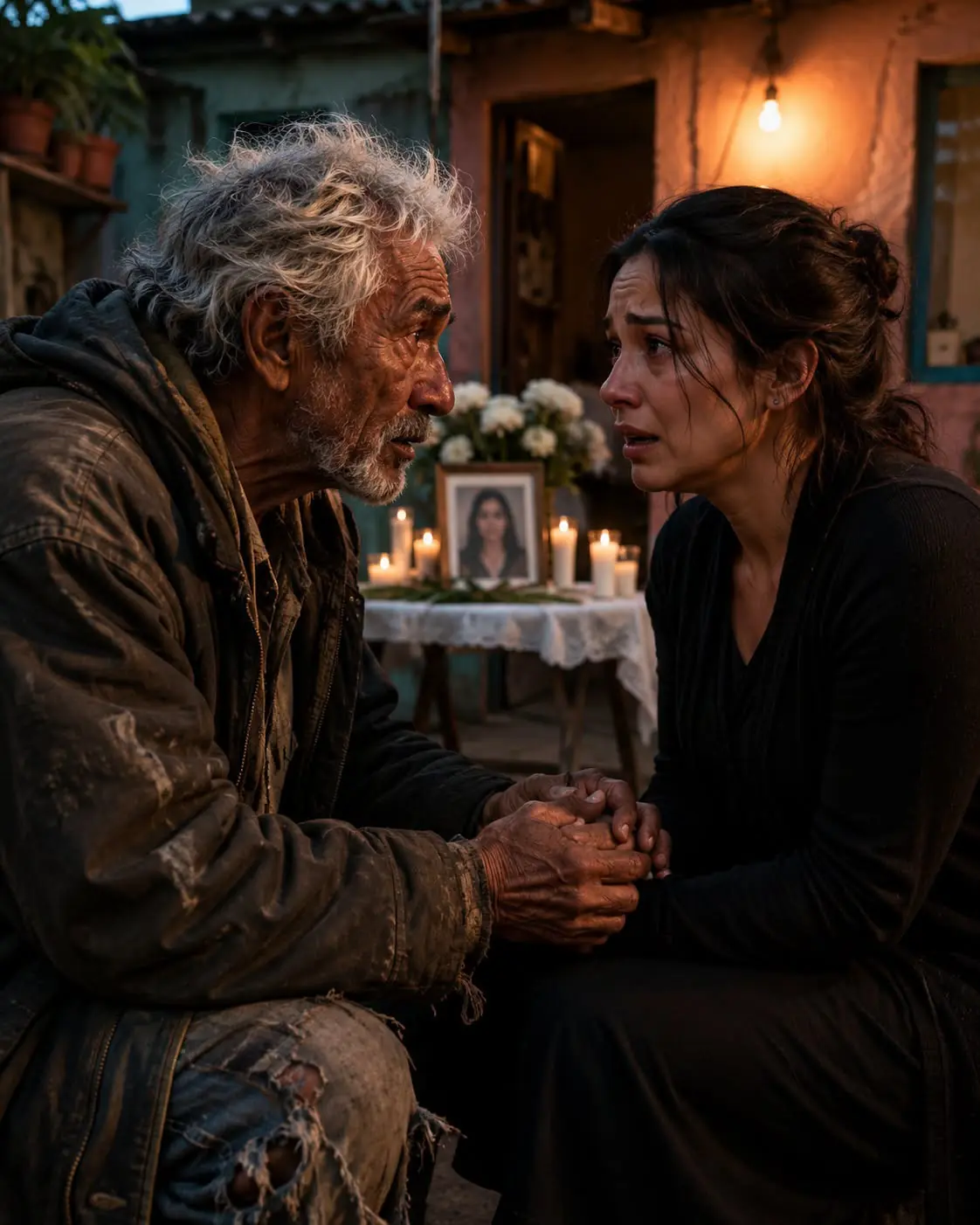
Doña Elvira did not scream when she saw Mariana on her porch.
She did something much more dangerous.
She went completely silent.
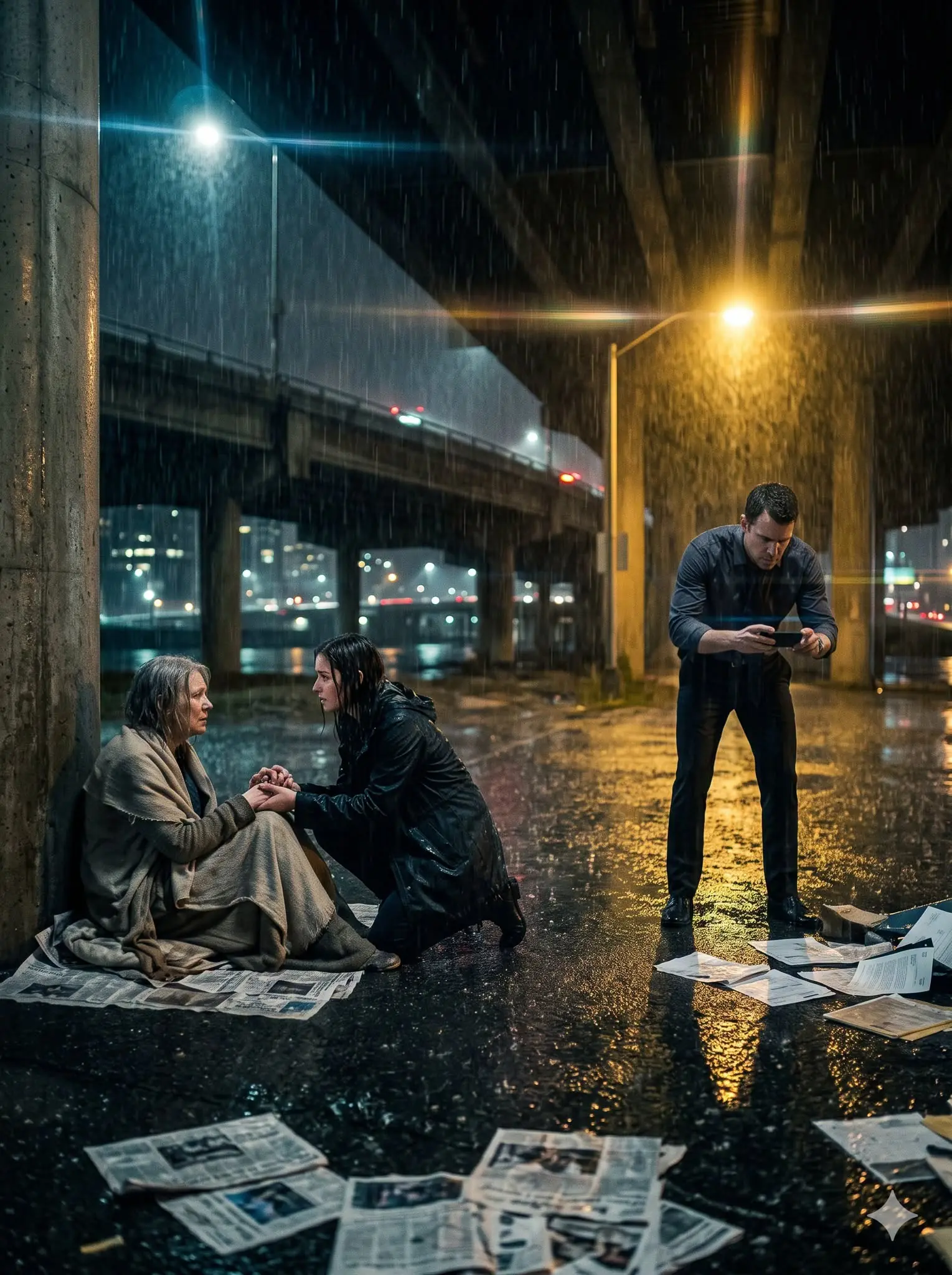
For one second, the old woman stared at the young wife lying in the rain, soaked, shaking, with one leg bent wrong and one hand pressed against the wet tile as if she was still trying to crawl farther.
Then doña Elvira stepped outside barefoot, grabbed Mariana under the arms, and whispered, “Mijita, don’t move. I’ve got you.”
Behind the fence, the kitchen curtain in Julián’s house moved again.
Mariana saw it.
Doña Elvira saw it too.
And something in the old woman’s face changed.
She was 68 years old, widowed, with thin wrists and silver hair pinned behind her ears, but in that moment, she looked harder than the iron gate between both houses.
She dragged a blanket from the sofa, covered Mariana’s body, and pulled her phone from the pocket of her cardigan.
“Emergency services,” she said, her voice steady. “My neighbor has been attacked. She has a severe leg injury. Send an ambulance. Send police too.”
Mariana’s eyes widened.
“No… police…” she breathed. “Julián…”
Doña Elvira knelt beside her and took her wet hand.
“Julián left you on a kitchen floor like trash,” she said softly. “Tonight we stop being polite.”
Before Mariana could answer, fists slammed against the front gate.
“Open up!” Julián shouted from outside. “Doña Elvira, open this gate right now!”
Mariana flinched so hard she nearly fainted.
Doña Elvira stood.
She walked to the front window, lifted the curtain just enough, and saw Julián under the porch light, drenched from the rain, with doña Teresa and don Rogelio behind him.
Teresa was still wearing her flour-stained apron.
The apron had a red smear near the hem.
“Open the door,” Julián said again. “My wife had an accident. I’ll take care of her.”
Doña Elvira opened the window but kept the iron bars locked.
“Funny,” she said. “When she was lying on your kitchen floor, you weren’t in such a hurry.”
Julián’s jaw tightened.
“She’s confused. She slipped. She gets dramatic when she’s upset.”
Doña Teresa stepped forward, her face sharp with rage.
“That woman has always been trouble. She threw herself on the floor to make us look bad.”
From behind the blanket, Mariana whispered, “She hit me.”
Doña Elvira looked down at her.
“Say it again, mijita.”
Mariana’s lips trembled.
“Teresa hit me with the rolling pin. Julián left me there.”
Doña Elvira did not tell Mariana to save her strength.
She pressed record on her phone.
Then she said, loud enough for the front gate to hear, “Mariana, who hurt you?”
Mariana swallowed a cry.
“My mother-in-law.”
“With what?”
“A rolling pin.”
“And your husband?”
“He told them to leave me there until morning.”
Julián slammed his palm against the gate.
“Enough! You old witch, you can’t record us!”
Doña Elvira’s eyes stayed cold.
“I’m not recording you, Julián. I’m recording her while she’s still alive enough to tell the truth.”
That sentence shut everyone up.
Even the rain seemed to pause.
Then the siren came.Blue and red light spilled across the wet street, turning the puddles into broken glass. The ambulance stopped first. A police patrol arrived behind it.
Julián changed his face before the paramedics reached the door.
It was almost impressive.
The anger disappeared. The husband appeared.
“My wife fell,” he said quickly. “She was cooking, she slipped, she panicked and crawled over here. She has anxiety. Please, she needs me.”
A paramedic looked past him.
“Then why is she at the neighbor’s house?”
Julián opened his mouth.
No answer came.
Doña Teresa pushed in.
“Because she likes attention.”
The second paramedic looked at her apron, then at the mud trail across doña Elvira’s porch, then at Mariana.
He did not argue.
He only said, “Ma’am, step back.”
They lifted Mariana onto a stretcher. The moment they touched her leg, the pain tore through her body so hard she finally screamed.
Julián reached for her hand.
She pulled away.
It was a small movement.
But everyone saw it.
Inside the ambulance, Mariana heard Julián arguing with the police outside.
“I’m her husband. I have the right to ride with her.”
The female officer answered, “Not if she says no.”
“She’s not thinking clearly.”
The officer leaned closer.
“Then let’s ask her.”
The ambulance door was open. Rain blew in. Mariana could barely see through her tears, but she saw Julián’s face at the edge of the light.
The officer asked, “Mariana, do you want your husband to ride with you?”
For 6 years, Mariana had answered questions by trying to survive the next hour.
This time, she looked at doña Elvira standing behind the police, wrapped in a shawl, still holding her phone.
Then Mariana said one word.
“No.”
The ambulance doors closed before Julián could speak.
At Hospital Santa Regina, the emergency room smelled like antiseptic, coffee, and fear.
Mariana had been there before for small things. A fever. A cut finger. A work physical.
But that night, every light felt too bright. Every voice sounded far away. Every face blurred except one.
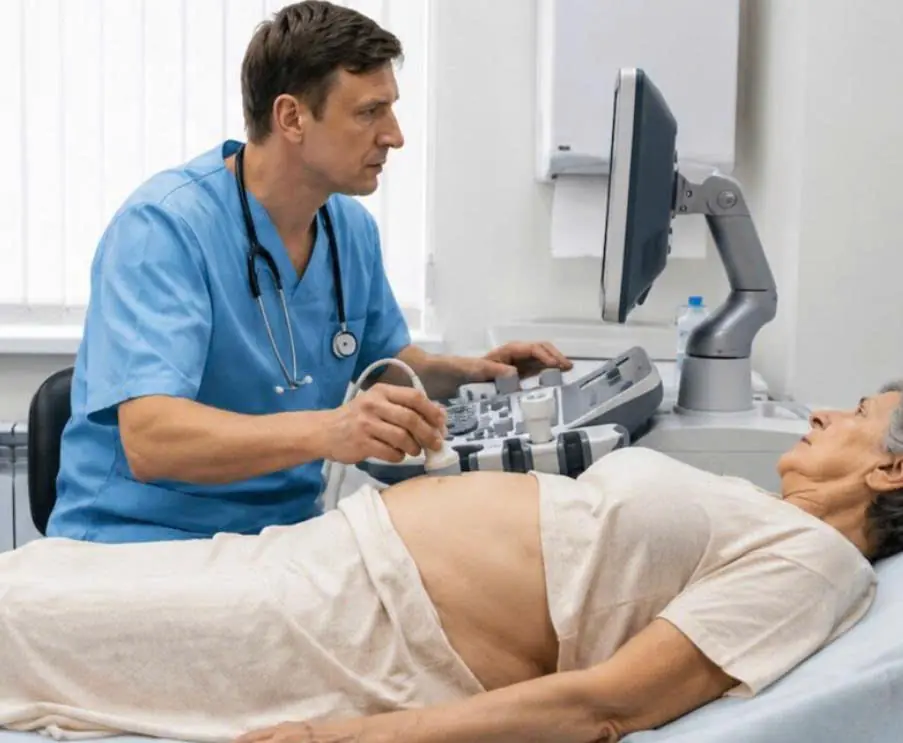
A doctor in blue scrubs leaned over her and said, “Mariana, my name is Dr. Camila Herrera. You are safe here.”
Safe.
The word almost made Mariana laugh.
Instead, she cried.
Dr. Herrera did not ask the usual careless question: What happened?
She asked it differently.
“Who hurt you?”
Mariana stared at her.
The doctor’s voice stayed calm.
“I need the truth because your injury does not look like a simple fall.”
Mariana’s throat closed.
“My mother-in-law hit me with a rolling pin.”
“Did your husband witness it?”
“He came after. He left me there.”
“Did anyone stop you from getting help?”
“They all did.”
The doctor looked at the nurse beside her.
The nurse nodded once and left.
Mariana did not know it then, but that nod changed everything.
Hospital Santa Regina had a protocol.
Not the kind families talked about.
Not the kind printed on friendly posters near elevators.
This one was quiet.
It had a color code, a locked file, a social worker on call, a security camera pulled up before sunrise, and a rule every emergency worker knew by heart:
When the injury tells one story and the family tells another, believe the injury first.
X-rays confirmed what Mariana already knew.
Her leg was broken.
Not cracked.
Not “maybe sprained.”
Broken in a way that made Dr. Herrera’s mouth tighten when she saw the scan.
“This kind of fracture usually needs force,” she said carefully. “A direct hit or a violent twist.”
Mariana stared at the ceiling.
“So I didn’t imagine it.”
Dr. Herrera touched her shoulder.
“No. You did not.”
That broke something open in Mariana.
Not her leg.
Something deeper.
For months, Julián had told her she exaggerated.
When Teresa opened Mariana’s mail, she was “too private.”
When Rogelio joked that her salary belonged to the family now, she was “too sensitive.”
When Julián asked for her bank passwords, he called it marriage.
When she refused, he called it disrespect.
And when Teresa lifted that rolling pin, Mariana had seen the truth too late.
They had not lost control.
They had been trying to take control all along.
A social worker named Lucía came into the room before midnight.
She was in her 40s, with tired eyes and a voice that did not waste words.
“Mariana, your husband is in the waiting area with his parents. He says he wants to take you home after treatment.”
Mariana’s heart jumped.
“No.”
Lucía nodded.
“He also says you are unstable and that you often hurt yourself during arguments.”
The room went cold.
Mariana turned her head slowly.
“He said that?”
“Yes.”
Dr. Herrera’s face hardened.
Mariana closed her eyes.
Of course.
The story had already started.
She was crazy.
She was dramatic.
She slipped.
She fell.
She invented everything.
Lucía pulled a chair beside the bed.
“Listen to me carefully. You are an adult. You are alert. You are oriented. Nobody can take you out of this hospital without your consent.”
Mariana opened her eyes.
“And if he says I’m lying?”
Lucía leaned closer.
“Then we let him talk.”
Mariana did not understand.
Lucía gave a small, humorless smile.
“People like Julián always think they are smarter than paperwork.”
In the waiting room, Julián was pacing like a man rehearsing grief.
Doña Teresa sat with her arms crossed, glaring at every nurse who passed. Don Rogelio had coffee in one hand and Mariana’s purse in the other.
He should not have had it.
But he did.
When Mariana had been loaded into the ambulance, Teresa had gone back into the kitchen and taken the purse from the chair.
Inside were Mariana’s wallet, her bank cards, her office ID, and the small notebook where she had once written emergency passwords before she learned better.
At 12:18 a.m., a nurse approached Julián.
“Mr. Salgado?”
“Yes.”
“We need to complete the admission report. Since there are conflicting details, hospital policy requires separate witness statements.”
Julián’s eyes flickered.
“Conflicting from who?”
“The neighbor mentioned one version. You mentioned another. We just need documentation for the medical file and insurance.”
Insurance.
That word relaxed him.
Money always did.
“Fine,” he said. “Let’s finish this fast.”
They took him into a small consultation room.
Not an interrogation room.
That was what made him careless.
It had beige walls, a water dispenser, a plastic plant, and a form on the table.
The nurse asked him to write what happened.
Julián wrote:
My wife slipped in the kitchen while cooking. She became emotional and crawled to the neighbor’s house before we could help her.
He signed it.
Then they brought in doña Teresa separately.
She wrote:
Mariana was shouting and throwing things. She lost balance and fell. I did not touch her.
She signed it too.
Then don Rogelio came in.
He had never been good at lies without Teresa beside him.
He wrote:
I was watching television. I heard a noise. She had fallen near the back door. Julián was not home yet.
He signed it.
Three statements.
Three stories.
Three signatures.
The trap had begun.
At 1:03 a.m., Lucía returned to Mariana’s room carrying a sealed plastic bag.
Inside was Mariana’s purse.
“Your neighbor told the officer your in-laws had this,” Lucía said. “Security retrieved it from your father-in-law in the waiting room.”
Mariana stared at the purse like it was a rescued animal.
“My cards…”
“They are here.”
“My phone?”
“Not in the purse.”
Mariana’s stomach dropped.
“Julián has it.”
Lucía’s face did not change, but her eyes sharpened.
“Do you know your banking passwords?”
“Yes.”
“Can you access your email from another device?”
“Yes.”
“Good.”
Lucía handed her a hospital tablet.
“Change everything now.”
Mariana looked at her broken leg, then at the tablet.
For the first time that night, fear turned into something useful.
She changed her bank password.
Then her email.
Then the password to the financial app where Julián had tried 4 times that week to add himself as an authorized user.
There were already alerts waiting.
Attempted login.
Attempted transfer.
Attempted password reset.
All from her phone.
All from the last hour.
Mariana’s hands began to shake again, but not from pain.
“They’re trying to empty my account.”
Lucía stepped out and returned with a hospital legal coordinator named Mateo Sánchez, a calm man in glasses who looked like he had ruined many arrogant people’s nights.
He reviewed the alerts, took screenshots with Mariana’s permission, and asked one question.
“Do you want to file a report?”
Mariana thought of the kitchen floor.
The rolling pin.
The television sounds.
Julián saying, “Tomorrow we’ll see if she really needs a hospital.”
Then she nodded.
“Yes.”
At 1:47 a.m., the second trap opened.
The hospital called Julián back to the consultation room.
This time, Dr. Herrera was there, along with Lucía and Mateo.
Julián entered with forced concern.
“How is my wife?”
“Stable,” Dr. Herrera said.
“Good. Then I’ll take her home.”
“No.”
His smile cracked.
“Excuse me?”
“She is being admitted. She needs surgery and protection from further harm.”
Julián laughed once, too loud.
“Protection? From who?”
Nobody answered.
That made him angry.
“My wife fell. I already explained this.”
Mateo opened a folder.
“You explained that she slipped while cooking.”
“Yes.”
“Your mother said she fell while throwing things.”
Julián blinked.
Mateo turned one page.
“Your father said you were not home yet.”
Silence.
It was beautiful in the ugliest way.
For the first time all night, Julián looked unsure.
“That’s… confusion. Everyone was stressed.”
Dr. Herrera placed the X-ray image on the light panel.
“This injury is not consistent with the three statements we received.”
Julián’s face hardened.
“With all respect, doctor, you treat bones. You don’t know my marriage.”
Dr. Herrera did not move.
“With all respect, Mr. Salgado, I know force trauma.”
Julián stepped closer to the table.
“You’re making a serious mistake.”
Mateo closed the folder.
“No. You made several.”
The door opened.
The female officer from earlier stepped inside with another officer behind her.
Julián’s mouth went dry.
“What is this?”
Lucía answered this time.
“This is what happens when a woman crawls through rain because her own house becomes dangerous.”
Julián turned toward the hallway.
“Mother!”
Doña Teresa rushed in before anyone could stop her.
“What are you doing to my son?”
The officer raised a hand.
“Ma’am, stay back.”
Teresa ignored her and pointed at Dr. Herrera.
“You people think you can destroy a family because of one spoiled girl?”
Mateo looked at her.
“One spoiled girl with a broken leg, a recorded statement, three contradictory witness reports, and banking alerts from a stolen phone.”
Teresa’s face changed.
Just a little.
But enough.
Julián turned slowly toward his mother.
“Banking alerts?”
Teresa snapped, “Don’t look at me like that.”
Rogelio appeared behind her, pale now, still holding his coffee.
The family had walked into the hospital together like a wall.
Now they were three loose bricks.
The officer asked, “Where is Mariana’s phone?”
Julián said nothing.
The second officer repeated, “Sir. The phone.”
Julián reached into his coat pocket.
The officer took it, placed it in an evidence bag, and said, “You’ll need to come with us.”
Doña Teresa exploded.
“For what? For a kitchen accident?”
Dr. Herrera looked at her apron.
“Then you won’t mind handing over the rolling pin.”
Teresa went still.
“What?”
“The object used in the assault,” the doctor said. “If it was an accident, there should be no issue.”
Rogelio’s coffee cup shook.
Julián saw it.
So did everyone else.
The hospital had not shouted.
It had not threatened.
It had simply made them speak, sign, contradict themselves, and reach for Mariana’s money while she lay in a hospital bed.
They had done the rest alone.
At 3:30 a.m., Mariana was moved to a private room under a protected patient protocol.
Her chart no longer listed Julián as emergency contact.
It listed doña Elvira.
When the nurse asked Mariana if that was okay, Mariana cried again.
Not because of the pain.
Because for the first time in years, someone had asked her permission before making a decision about her life.
By morning, the story Julián wanted to tell had already collapsed.
Doña Elvira’s phone recording was saved in 3 places.
The ambulance report noted mud, delay in care, and Mariana’s refusal to allow Julián inside.
The hospital file contained the statements.
Security footage showed Rogelio holding Mariana’s purse.
Bank records showed attempted access after the ambulance left.
And at 9:12 a.m., a police officer returned from the house in Coyoacán with a sealed evidence bag.
Inside was the rolling pin.
Washed.
But not well enough.
Doña Teresa had scrubbed it with dish soap and hidden it behind sacks of flour in the pantry.
That small detail did what Mariana’s tears never could.
It proved Teresa knew exactly what she had done.
Two days after surgery, Julián sent flowers.
White lilies.
The card said:
I know things got out of hand. Let’s fix this privately.
Mariana stared at the words for a long time.
Then she handed the card to Lucía.
“Add it to the file.”
Lucía smiled.
“Gladly.”
On the fifth day, Julián tried a different door.
He contacted Mariana’s boss.
Not to ask how she was.
To say she was unstable and would need extended leave.
He told them she had “a breakdown at home.”
He said he was “concerned about client data” because Mariana might act irrationally.
It was a clever attack.
At least, he thought it was.
What Julián forgot was that Mariana worked in risk analysis.
Her entire job was detecting patterns other people tried to hide.
And her company had rules too.
By noon, Mariana’s director, Claudia Reyes, arrived at the hospital in a black blazer, carrying a laptop and the kind of calm that makes guilty people sweat.
She hugged Mariana gently, then sat beside the bed.
“I saw the alerts,” Claudia said. “Your accounts are locked. Your work access is protected. HR knows only that you are recovering from a documented assault.”
Mariana looked away.
“I’m embarrassed.”
Claudia’s voice softened.
“Don’t you dare carry their shame for them.”
Mariana pressed her lips together.
“They’ll say I destroyed the family.”
“No,” Claudia said. “They destroyed the family. You just survived long enough for witnesses.”
Then Claudia opened her laptop.
“There’s something else.”
Mariana frowned.
“What?”
“Two months ago, Julián called our office pretending to verify your employment for a mortgage adjustment.”
Mariana’s blood went cold.
“I didn’t apply for anything.”
“I know. Compliance flagged it because he didn’t have authorization. We didn’t tell him anything.”
Mariana closed her eyes.
The house.
The half she had paid.
The papers he always said were “too complicated.”
The sudden pressure for her passwords.
The way Teresa kept saying a wife should not have money apart.
It was not only control.
It was preparation.
They had been building a cage and looking for the key.
Claudia touched her hand.
“Mariana, do you have copies of your house payments?”
“In my email. And a folder in my office drawer.”
“Good. We’re going to protect that too.”
That afternoon, Mariana filed the second report.
Not just for assault.
For financial coercion, attempted unauthorized access, and suspected fraud.
By then, Julián had stopped sending flowers.
Now he sent messages from unknown numbers.
You’re making a mistake.
My mother is old.
You’ll regret this.
No one will believe you in court.
Mariana read the last one twice.
Then she looked around the hospital room.
At the medical file.
At the police card.
At doña Elvira asleep in the chair with a rosary in her hand.
At Claudia typing quietly by the window.
At her leg held together by metal and stubbornness.
And for the first time, Mariana smiled.
“Actually,” she whispered, “they already do.”
Ten days later, Mariana returned to the house in Coyoacán.
Not alone.
She arrived in a police vehicle with Claudia, doña Elvira, a locksmith, and a court officer carrying temporary protection papers.
The street was full of neighbors pretending not to look.
Every curtain had eyes.
Julián opened the door like he still owned the world.
Then he saw the officer.
His face fell.
“You can’t just come here.”
The court officer handed him the papers.
“She can collect personal belongings. You are not to approach her.”
“This is my house.”
Mariana looked at him from her crutches.
“No, Julián. It’s the house I paid for while your mother called me a guest.”
Doña Teresa appeared behind him.
She looked smaller without the apron.
Meaner too.
“You’re really going to ruin your husband over one mistake?”
Mariana’s hands tightened on the crutches.
“One mistake was asking him to love me more than his pride. What you did was a crime.”
Teresa stepped forward.
The officer moved with her.
Teresa stopped.
That was the first satisfying moment.
The second came in the kitchen.
The tile had been scrubbed.
The broken plates were gone.
The mole stains had vanished.
But no amount of bleach could erase what Mariana remembered.
She stood at the doorway, breathing hard.
Doña Elvira came beside her.
“You don’t have to go in.”
Mariana looked at the spot where she had fallen.
Then she stepped inside.
One crutch.
Then the other.
Small movements.
Huge ones.
In the pantry, the police had already marked the shelf where the rolling pin had been hidden.
On the counter, a clean bowl of flour sat like nothing had happened.
Mariana almost laughed.
That was Teresa’s whole life.
Cover the stain.
Set the table.
Pretend the woman on the floor deserved it.
In the bedroom, Mariana packed her documents, clothes, laptop, jewelry box, and the framed photo of her father from before he passed.
She left the wedding album.
She left the silver serving tray Teresa had given her.
She left the robe Julián bought her after their worst fight because he never apologized with words when a gift could do the work cheaper.
Then she opened the lower drawer of Julián’s nightstand.
Inside was a folder.
Claudia saw her freeze.
“What is it?”
Mariana pulled it out.
Copies of her ID.
Old bank statements.
A printed form with her forged signature.
And a draft request to add Julián as co-owner of her investment account.
Mariana’s stomach twisted.
Claudia took one look and called the officer.
Julián shouted from the hallway, “That’s private!”
Mariana turned toward him.
“So was my purse. So was my phone. So was my money. You didn’t seem confused then.”
He tried to step closer.
The officer blocked him.
Julián’s mask cracked completely.
“You think those hospital people saved you?” he snapped. “They used you. They filled your head. You’ll come crawling back when you realize nobody wants a divorced woman with a broken leg.”
The house went silent.
Doña Elvira gasped.
Claudia’s eyes narrowed.
But Mariana only looked at him.
Really looked.
For years, she had waited for the man she married to return.
The one who brought her coffee when she worked late.
The one who danced with her in the kitchen of their first apartment.
The one who cried at their wedding and promised to be her shelter.
But standing there, with rage in his face and cruelty in his mouth, Mariana understood something that finally set her free.
That man had not disappeared.
He had simply been an act Julián stopped performing once he thought she belonged to him.
Mariana lifted the folder.
“You’re right about one thing,” she said. “The hospital did save me.”
Then she looked past him, toward the kitchen.
“But not from the broken leg.”
Julián swallowed.
“They saved me from going back to sleep.”
By the end of that week, Julián, Teresa, and Rogelio were no longer allowed near Mariana.
The investigation continued.
The forged documents became part of a separate case.
The attempted bank access became another.
The house became a legal battlefield, but this time Mariana was not alone in it.
She had records.
She had witnesses.
She had a neighbor who had recorded the truth while rain poured over the porch.
And she had a hospital team that had understood one thing her own husband never did:
A woman does not have to be loud to be telling the truth.
Sometimes she is whispering because she used all her strength to crawl.
Three months later, Mariana walked into Hospital Santa Regina again.
This time, she was not on a stretcher.
She wore a navy dress, flat shoes, and a brace under her skirt. Her steps were slow, but they were hers.
She carried a box of pastries for the emergency staff and a small envelope for Dr. Herrera.
The doctor opened it after her shift.
Inside was a handwritten note.
Thank you for asking who hurt me instead of asking why I made them angry.
Thank you for believing the injury before the lie.
Thank you for setting the trap.
Dr. Herrera smiled at the last line.
Lucía, standing beside her, laughed softly.
“We didn’t set a trap,” she said.
Dr. Herrera folded the note carefully.
“Yes, we did.”
Across the city, in a courthouse hallway, Julián sat between his parents, staring at the floor.
Doña Teresa’s hands were folded tightly in her lap.
No apron.
No rolling pin.
No kitchen to rule.
Only papers.
Only witnesses.
Only consequences.
When Mariana entered with Claudia and her lawyer, Julián looked up.
For a second, he seemed ready to speak.
Maybe apologize.
Maybe threaten.
Maybe beg.
But Mariana did not stop walking.
She passed him without lowering her eyes.
And that hurt him more than any argument could have.
Because men like Julián can survive hatred.
They feed on fear.
But what they cannot survive is becoming irrelevant to the woman they tried to break.
Inside the courtroom, Mariana sat down, placed her crutches beside her chair, and opened the folder Claudia had helped her prepare.
The judge looked over the file.
Then he looked at Mariana.
“Mrs. Salgado, are you ready to proceed?”
Mariana thought of the kitchen floor.
The rain.
The porch light.
The ambulance doors closing.
The hospital room where someone finally said, “You are safe here.”
Then she lifted her chin.
“Yes, Your Honor,” she said.
“I’m ready.”
And for the first time since the rolling pin hit the floor beside her, Mariana was not afraid of what came next.
She was waiting for it.
SAY “YES” IF YOU WANT TO READ THE FULL STORY!!