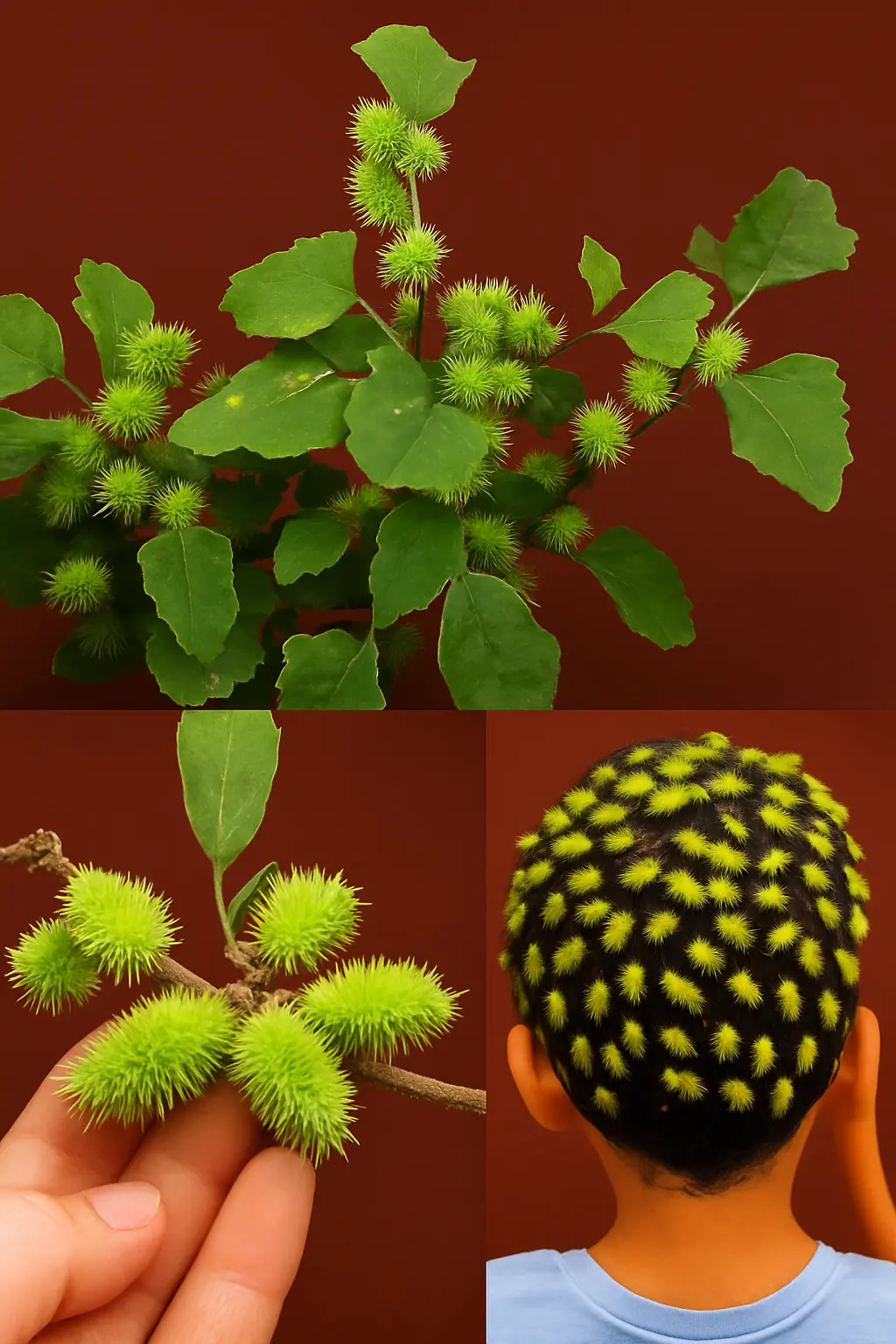
The Hidden Power of Xanthium strumarium (Cocklebur)
Garden Healthy 16/12/2025 01:19
Pokeweed (Phytolacca americana) is a striking perennial plant native to North America, easily found in fields, roadsides, wooded areas, and even home gardens. Its tall red-purple stems and clusters of deep purple berries give it an eye-catching, almost ornamental appearance. However, this beauty comes with a hidden danger: pokeweed is highly toxic to humans, pets, and livestock.
Whether you're new to gardening or simply enjoy exploring nature, recognizing this plant is essential for protecting yourself and your family.
Pokeweed can grow impressively large—often reaching 8–10 feet tall—and it has several unique characteristics that make identification easier:
Thick, smooth, and fleshy
Turn bright reddish-purple as they mature
Can resemble young tree shoots in size and strength
Large, simple, and arranged alternately along the stem
Usually 4–12 inches long
Soft in texture with prominent veins
Small, white or greenish-white
Grow in elongated clusters (racemes) that droop as they age
Shiny, purple-black berries resembling grapes
Grow in long drooping clusters
Very attractive to birds, which spread the seeds
Pokeweed commonly appears in disturbed soils, along fences, in pastures, and in gardens where birds deposit seeds.
Every part of pokeweed—root, stems, leaves, and berries—contains toxic compounds, especially phytolaccatoxin and phytolaccigenin. These toxins can severely affect the gastrointestinal tract, nervous system, and even the heart.
Root: The most poisonous part. Even a small amount can be deadly.
Leaves & Stems: Toxicity increases as the plant matures and stems turn red.
Berries: Particularly dangerous for children who may mistake them for edible wild fruits like blueberries or elderberries.
Even touching pokeweed’s sap can cause irritation, making it a plant that must be handled with great caution.
Signs of poisoning typically appear 2–6 hours after ingestion. Symptoms may include:
Severe nausea and vomiting
Diarrhea (sometimes bloody)
Abdominal cramps and sharp stomach pain
Weakness or dizziness
Difficulty breathing
Confusion or slowed response
Seizures or coma in severe cases
Because pokeweed poisoning can escalate quickly, seek medical attention immediately if ingestion is suspected.
Although some traditional Southern recipes use very young pokeweed leaves in a dish called “poke sallet,” eating pokeweed is extremely risky.
To make poke sallet safely, the leaves must be:
Harvested before the stems turn red
Boiled, drained, and re-boiled multiple times to reduce toxins
Cooked thoroughly and handled with great care
Even after these steps, dangerous toxins can remain. Because the line between "edible" and "poisonous" is extremely thin, health experts strongly advise against consuming pokeweed in any form.
Pokeweed sap can irritate the skin and eyes.
Always wear gloves when dealing with this plant.
Additional risks:
Do not burn pokeweed—its smoke can be toxic when inhaled.
Pets and livestock may get sick from chewing the roots or leaves.
Even dried pokeweed remains poisonous.
If pokeweed appears on your property, remove it as soon as possible.
Wear gloves, long sleeves, and protective eyewear.
Use a shovel to dig out the plant, removing the entire root—pokeweed easily regrows from root fragments.
Dispose of the plant in sealed bags.
Do not compost it, as toxins may persist in the compost.
Wash hands and tools thoroughly after handling.
Never eat pokeweed berries—not even one.
Teach children to avoid the berries and stems.
Keep pets away from infested areas.
Wash hands immediately after touching the plant.
If unsure about identification, consult a gardener or botanist.
Pokeweed is undeniably striking, but its beauty masks a serious threat. While it has a place in traditional herbal practices, the risks far outweigh any potential benefits. For both beginners and experienced gardeners, the safest approach is to admire pokeweed from a distance—and never bring it into your kitchen.
This article is for educational purposes only. Do not consume or use pokeweed for medicinal purposes without professional guidance. Improper use can cause severe health complications or death.
If this article helps you stay safe, feel free to share it with friends and fellow gardeners!