A Massive Spider Megacolony Thriving in a Sulfur-Fueled Cave Ecosystem
Facts 17/12/2025 05:41
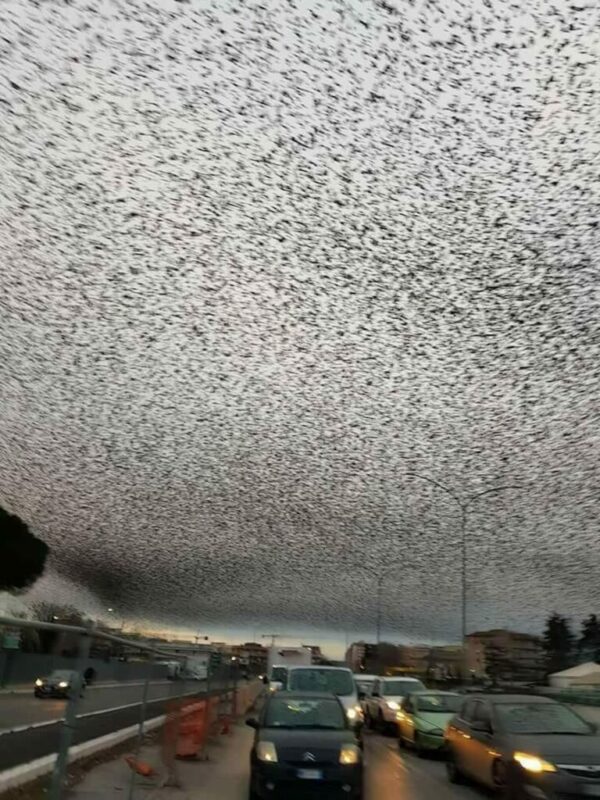
At first glance, the photograph looks like something pulled straight from a dystopian film. The sky above Rome appears smothered in a dense, grainy darkness, eerily similar to the visual noise of an untuned television screen. When the image began circulating widely on Reddit and other social platforms, many viewers described it as unsettling, surreal, and almost apocalyptic.
Yet this was not a technological failure or an ominous environmental warning. Instead, the scene captured one of nature’s most dramatic mass behaviors: a vast murmuration of starlings filling the Roman sky.
The image immediately evoked comparisons to the opening line of William Gibson’s Neuromancer: “The sky above the port was the color of television, tuned to a dead channel.” In the Rome photograph, even the fading glow of sunset struggles to pierce the shifting black cloud of birds, reinforcing the illusion that the city has slipped into an alternate reality.
In truth, what appears otherworldly is a seasonal ritual that has unfolded for centuries.
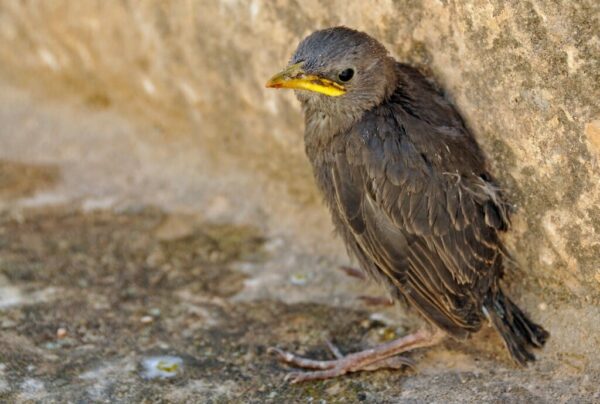
Every autumn, Rome becomes a temporary refuge for starlings migrating from colder regions of Eastern Europe and Scandinavia. As temperatures drop farther north, the birds travel south in search of warmer climates and reliable food sources. Italy’s capital, with its mild winters and abundance of trees and agricultural land, provides ideal conditions.
According to ornithologists and environmental reports, as many as 3 to 4 million starlings may pass through or overwinter in Rome during peak migration periods (BBC News; National Geographic). Their synchronized movements create massive aerial formations known as murmurations, where thousands of birds twist and ripple through the air as if acting as a single organism.
Scientists believe this behavior helps protect the birds from predators and improves navigation efficiency, though the precise mechanics are still being studied (Scientific American).
While visually stunning, the arrival of starlings presents significant challenges for the city and its residents.
The most persistent issue is droppings. Starlings feed heavily on olives from groves surrounding Rome, and their waste is especially oily and corrosive. Streets, monuments, cars, scooters, sidewalks, and park benches can become coated in slick layers of guano almost overnight. City officials have long warned that this not only creates sanitation problems but also poses slip hazards and damages historic stonework (The Guardian).
Despite the presence of natural predators like peregrine falcons, the sheer scale of the flocks overwhelms any ecological control. Urban environments, with artificial lighting and dense roosting areas, further complicate efforts to discourage the birds from settling.
Over the years, authorities and residents have experimented with a wide range of deterrents. Some neighborhoods aggressively prune trees where starlings prefer to roost. Others deploy loudspeakers that broadcast distress calls or predator sounds. In certain areas, trained falcons are flown through public squares to frighten the birds without harming them.
Still, none of these methods provide a lasting solution. Starlings quickly adapt, relocating rather than leaving the city entirely. In some cases, residents resort to more improvised tactics—banging pots and pans or using handheld noise devices—in a ritual that feels almost as old as the city itself (Reuters).
Environmental experts note that fully eliminating the phenomenon is neither realistic nor ecologically desirable. The birds play important roles in insect control and broader ecosystems, even as they create urban headaches.
What makes the viral Rome image so powerful is not just its scale, but the way it blurs the line between science fiction and reality. In an age dominated by digital anxiety, artificial intelligence, and climate fears, viewers were quick to interpret the scene as symbolic of technological collapse.
Instead, it serves as a reminder that nature can still overwhelm human spaces in ways that feel both ancient and unsettling.
The starlings of Rome transform a city shaped by millennia of human history into a stage for a spectacle that predates modern civilization. No algorithm, screen, or machine is responsible—only instinct, migration, and survival.
In that sense, the image is not a warning about the future, but a glimpse into a natural rhythm that continues to assert itself, no matter how advanced the world becomes.