Can You Spot Hidden Tiger In Jungle Photo
Facts 07/08/2026 20:22

We live in a digital age, and future generations won't have shoeboxes full of letters to sort through. They'll have texts and emails—functional, yes, but devoid of the physical imprint of a person. The pressure of their pen. The slant of their script. The way they dotted their i's or looped their g's.
Why it matters:
Handwriting is presence made visible. It's the closest thing to holding someone's hand after they've gone. Years from now, finding a single sentence written by your loved one will stop your heart and fill it simultaneously.
What to do instead:
Designate a single box or drawer for handwritten items
You don't need to organize them now—just save them
Consider scanning and digitizing for preservation, but keep the originals
One family's story: A woman whose mother had passed kept a small recipe box filled with index cards. For years, she rarely opened it. Then her daughter asked to learn how to make her grandmother's pierogi. In her mother's handwriting, step by step, were the instructions—and a tiny note at the bottom: "Add more love than salt."
The blurry ones. The ones where someone blinked. The awkward poses and unflattering angles. The duplicates. The ones with red eyes and crooked horizons.
Never throw away photographs.
We're often tempted to curate—to keep only the "good" photos, the flattering ones, the perfect moments. But perfection isn't what you'll miss. You'll miss the ordinary Tuesday. The messy hair. The expression no one else saw.
Why it matters:
Years later, the slightly-out-of-focus photo of your father laughing in the backyard will matter more than any professionally posed portrait. The imperfect shots are the real ones. They capture life, not performance.
What to do instead:
Keep everything. Box it. Label it loosely.
Don't feel pressured to organize or digitize immediately
If you must discard duplicates, offer them to other family members first
A gentle truth: The photos you think are "bad" today will be someone's treasured window into the past tomorrow. Future generations won't care about lighting or composition. They'll care about seeing their grandmother young, their grandfather smiling, their great-aunt in bell-bottoms.
This one surprises people. We're conditioned to think that once someone dies, their toothbrush, hairbrush, reading glasses, and worn slippers should be discarded. They're personal. They're used. Surely no one wants them.
Never throw away personal care items without pausing.
Why it matters:
There is something profoundly comforting about holding the glasses your loved one wore every day. About running your thumb over the worn spot on their hairbrush. About slipping your feet into shoes that still hold the shape of theirs.
These items carry touch memory. They were in daily contact with the person you loved. That matters.
What to do instead:
Keep one or two meaningful items—perhaps the reading glasses, a favorite scarf, well-worn slippers
A lock of hair is an ancient, cross-cultural tradition for good reason. If it feels right, take a small clipping.
Scent is one of our most powerful memory triggers. A worn sweater or pillowcase still carrying their particular smell can be a profound comfort in the early days.
What one daughter kept: Her mother's worn wooden-handled hairbrush. Years later, lifting it still brings the sensation of being seven years old, sitting on the bathroom floor while her mother hummed and brushed.
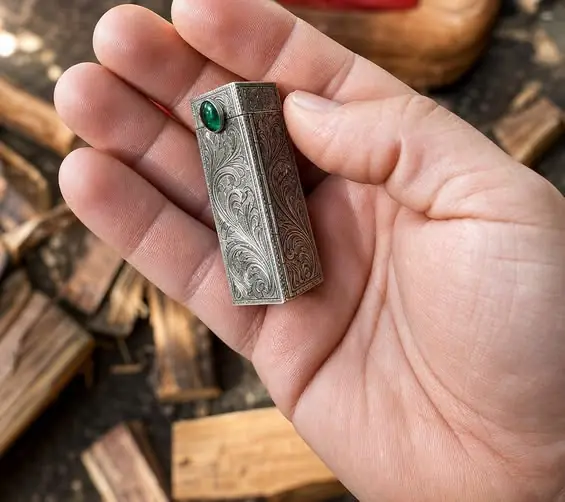
House keys. Car keys. Keys to unknown locks. Keys on a worn ring with a faded fob.
Never throw away keys.
Why it matters:
Keys are symbols. They opened doors, started engines, unlocked places that mattered. Even when you don't know what they open, they represent access—to home, to movement, to the private spaces of a life.
Sometimes, keys hold practical value. There may be a safety deposit box you didn't know about. A storage unit. A lockbox with important documents. But even when they open nothing tangible, they open memory.
What to do instead:
Set keys aside in a labeled envelope or small box
Ask other family members if they recognize unfamiliar keys
If months pass and no one knows their purpose, consider keeping one or two as keepsakes
A single key on a chain can become a quiet, personal memorial
One family's discovery: After their father's funeral, his children found a small key in his nightstand that matched nothing in his house. Months later, clearing his office, they found a locked drawer. Inside was a journal he'd kept for forty years—letters to his late wife he'd never sent.
Grief has no timeline and no correct path. Some people need to clear spaces immediately; others need to preserve everything exactly as it was. Neither is wrong. Neither is right. Both are just ways of surviving.
This isn't a guide to "correct" grieving. It's a reminder, offered gently, that some things cannot be un-thrown-away. In the fog of loss, it's hard to know what will matter later. When in doubt, pause. Put it in a box. Label it. Decide later.
You are not "holding on" or "unable to let go." You are honoring the weight of a life. You are leaving doors open for your future self—who may need, one day, to hold a key or read a letter or hear a voice.
That future self will thank you.








Cardiac Diet: Proven Heart Healthy Foods to Include in Your Diet