
Why You Naturally Sleep With One Foot Outside the Blanket – The Surprising Science Behind It
Health 11/04/2026 16:59
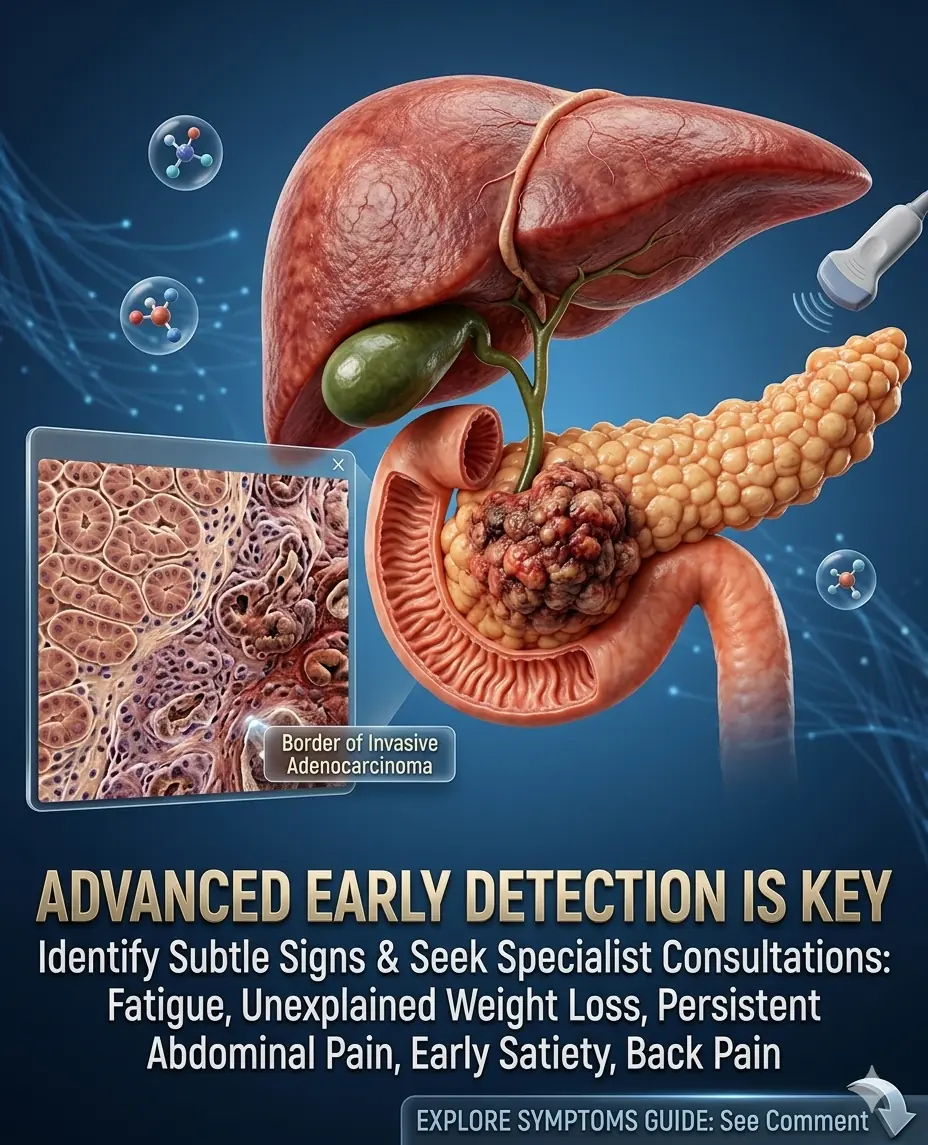
Pancreatic cancer is often called a “silent killer” — and for a dangerous reason. In its early stages, it rarely causes noticeable symptoms. By the time warning signs appear, the disease may already be advanced.
That’s why recognizing the subtle signals your body sends is crucial. Some of these symptoms may seem harmless at first, but ignoring them could delay life-saving diagnosis.
Here are the most important warning signs of pancreatic cancer you should never overlook.
One of the earliest and most noticeable signs is jaundice — a yellow tint in your skin or the whites of your eyes.
This happens when a tumor blocks the bile duct, causing a buildup of bilirubin in the body. It may also come with:
Jaundice is often painless, which makes it easy to ignore — but it’s one of the biggest red flags.
Losing weight without trying might sound appealing, but it can be a serious warning sign.
Pancreatic cancer affects digestion and nutrient absorption, causing rapid and unintended weight loss. Many patients also experience a sudden loss of appetite.
Pain in the upper abdomen that spreads to the back is a common symptom.
This happens when the tumor presses on nearby nerves or organs. The pain may:
Unfortunately, this symptom often appears later in the disease.
If your digestion suddenly changes, don’t ignore it.
Pancreatic cancer can interfere with enzyme production, leading to:
These symptoms are often mistaken for common stomach issues, which delays diagnosis.
Your stool can reveal more about your health than you think.
Watch out for:
These changes happen because fat is not properly digested.
Surprisingly, pancreatic cancer can cause diabetes.
If you suddenly develop diabetes — especially after age 50 — without clear risk factors, it could be linked to pancreatic dysfunction.
Feeling constantly tired, even after rest, is another warning sign.
This fatigue is not just normal tiredness — it’s persistent and often comes with a general feeling of weakness.
When a tumor presses against the stomach, it can block digestion.
This may lead to:
These symptoms can worsen over time if left untreated.
In some cases, the first sign of pancreatic cancer is a blood clot.
Symptoms include:
While blood clots have many causes, unexplained cases should always be checked.
A sudden lack of interest in food is another subtle but important sign.
This often goes hand in hand with weight loss and digestive issues, making it easy to overlook.
Pancreatic cancer is difficult to detect early because symptoms are often vague or mistaken for less serious conditions. Many people ignore these warning signs until the disease has progressed.
That’s why awareness is critical.
You should seek medical attention if you experience:
Early detection can significantly improve treatment outcomes.
Not every symptom listed above means you have pancreatic cancer. In fact, most of them are commonly caused by less serious conditions.
However, the key is not to ignore persistent or unusual changes in your body.
Listening to your body — and acting early — could save your life.