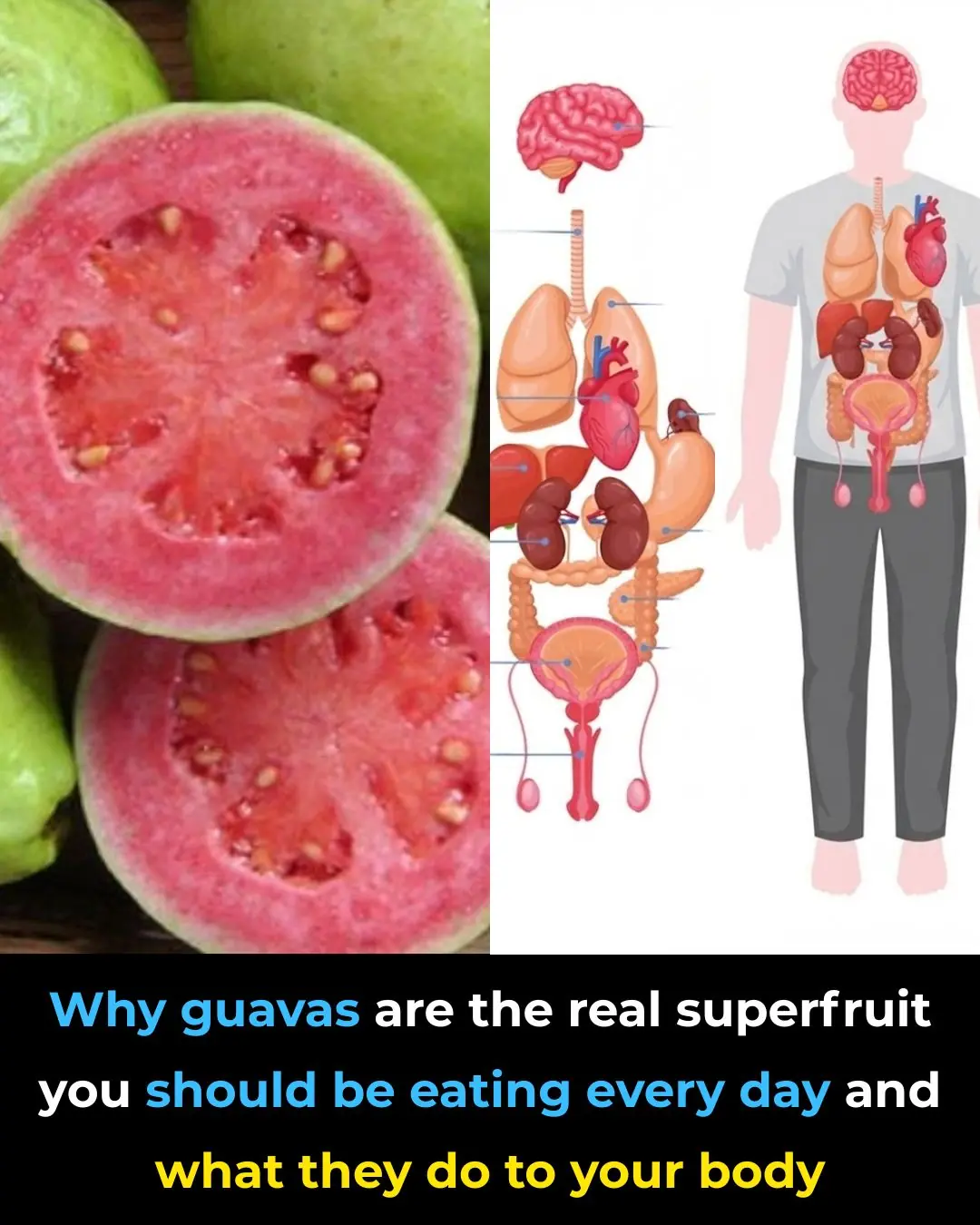
The Impressive Health Benefits of Guava Fruit and Leaves & How to Eat Guava (Evidence Based)
Health 08/01/2026 21:15
Most people are aware that donating blood can save the lives of accident victims, surgical patients, and individuals with chronic illnesses. Despite this knowledge, many still hesitate to donate due to busy schedules, fear, or simple lack of motivation. What far fewer people realize, however, is that donating blood may also provide significant health benefits to the donor, particularly by reducing the risk of serious cardiovascular events such as heart attack and stroke.
This lesser-known benefit could be a powerful incentive, especially for those concerned about long-term heart health.
In 1997, researchers from the University of Kansas published a study involving 3,855 participants, comparing blood donors and non-donors across several cardiovascular outcomes. These outcomes included heart attack, stroke, angioplasty, bypass surgery, and the use of nitroglycerin.
The results were striking. Only 9.77% of male blood donors experienced one or more of these vascular events, compared with 17.72% of non-donors. This means that men who did not donate blood were 81% more likely to suffer a cardiovascular event than those who did.¹
A year later, researchers analyzed data from the Kuopio Ischaemic Heart Disease Risk Factor Study, which followed 2,862 Finnish men aged 42 to 60 over nearly nine years.
After comparing heart attack rates between donors and non-donors, the researchers found that blood donors had an 88% lower risk of heart attack.² This result closely mirrored the findings of the Kansas study, further strengthening the link between blood donation and cardiovascular protection.
Interestingly, the protective effect was much more pronounced in men than in women. Female donors showed little difference in heart health compared to female non-donors, suggesting that biological differences play an important role.
Although researchers have not yet identified a single definitive mechanism, several well-supported theories help explain why regular blood donation may significantly reduce cardiovascular risk—especially in men.
One leading theory involves iron accumulation in the body.
Atherosclerosis is a condition in which fatty deposits build up on the inner walls of arteries, restricting blood flow and increasing the risk of heart attack and stroke. Medical researchers have long suspected that excess iron stored in the body promotes the oxidation of cholesterol, a process that contributes to plaque formation.
Studies have shown that individuals with high iron stores—even those with iron-rich diets—are at a greater risk of cardiovascular events.³ Unlike many other minerals, iron is stored rather than easily excreted, allowing it to accumulate over time.
Women naturally lose iron through monthly menstruation, which helps explain why premenopausal women are generally less susceptible to atherosclerosis than men.⁴ Blood donation mimics this natural iron loss in men, lowering iron levels and potentially reducing arterial plaque buildup.
Another important factor is blood thickness, also known as viscosity.
Thrombosis occurs when blood clots form within blood vessels. If these clots block arteries in the heart or brain, they can trigger a heart attack or stroke. Research has shown that regular blood donors tend to have thinner blood, which flows more easily and is less prone to clotting.⁵
Thicker blood requires the heart to work harder, contributing to high blood pressure and increasing strain on the cardiovascular system. In contrast, lower blood viscosity reduces both clot formation and cardiac workload.
The difference in blood viscosity may be explained by the age of red blood cells.
Older red blood cells are thicker, stickier, and more likely to clump together than newly formed cells.⁶ When a person donates blood, the body is stimulated to produce fresh red blood cells, resulting in smoother blood flow.
This process again mirrors what happens in women during menstruation, which helps explain their naturally lower risk of thrombosis.⁷ Men who donate blood regularly essentially encourage their bodies to replace older, less flexible blood cells with younger, healthier ones.
Before donating blood, individuals undergo basic health screenings, including checks for blood pressure, hemoglobin levels, and sometimes cholesterol indicators. These screenings can detect early warning signs of cardiovascular issues.
It is possible that blood donors appear healthier partly because they receive regular medical feedback, prompting them to seek medical care or adopt healthier habits. However, this explanation alone does not account for why the cardiovascular benefits are seen primarily in men.
Moreover, passing a screening does not guarantee that donors will follow up on potential health concerns, so while medical checks may contribute, they are unlikely to fully explain the dramatic reduction in risk.
An important question remains:
Does blood donation actually improve heart health, or are healthier people simply more likely to donate blood?
It is plausible that individuals with existing health problems avoid donating due to fear, fatigue, or medical restrictions. If so, blood donors may appear healthier not because of donation, but because healthier individuals self-select into donating.
However, the strong gender-specific findings—where men benefit significantly more than women—suggest a causal relationship, rather than simple correlation. If donation merely attracted healthier people, similar benefits would likely appear in women as well.
To clarify this issue, future research must ensure that donor groups accurately represent the general population and control for pre-existing health differences.
The growing body of research suggests that regular blood donation may significantly reduce the risk of heart attack and stroke in men, potentially through reduced iron stores, lower blood viscosity, and improved red blood cell quality.
While more research is needed to fully confirm causation, the evidence so far indicates that blood donation is not only a generous act that saves lives—but may also be a simple, natural way to support your own cardiovascular health.
In other words, donating blood may truly be a case where doing good for others also does good for yourself.