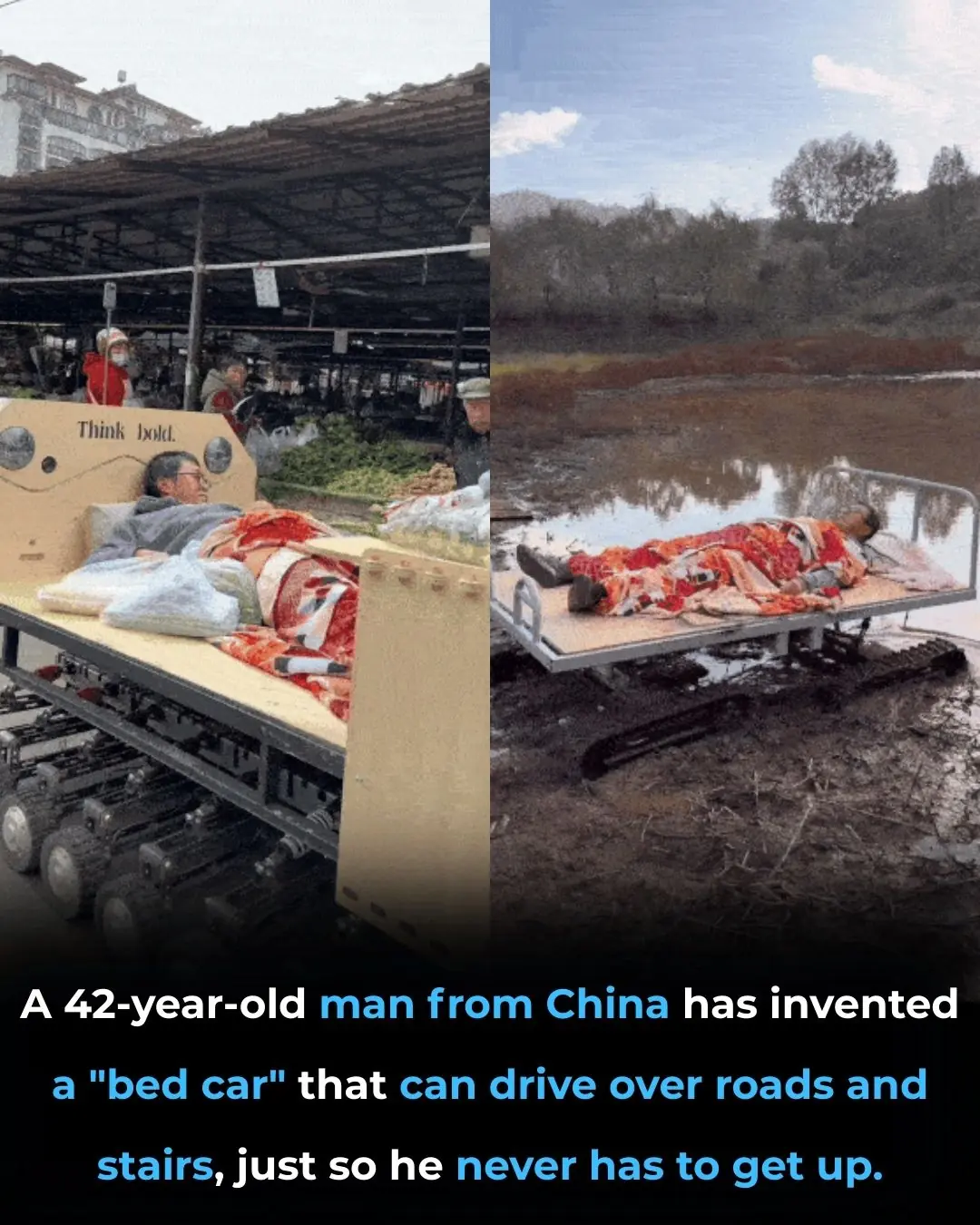
A Bed on Wheels: A Chinese Inventor’s Unusual Take on Personal Transportation
Facts 02/01/2026 12:02
In the quiet countryside of South Gloucestershire, England, a remarkable forest stands as a powerful testament to love, memory, and resilience. Farmer Winston Howes planted more than 6,000 oak trees in the shape of a heart to honor his late wife, Janet, transforming personal grief into a living memorial that will endure for generations.
Janet Howes passed away at the age of 50 after a sudden illness. She and Winston had been married for 33 years, sharing a life rooted in family, land, and deep companionship. In the aftermath of her passing, Winston sought a way to commemorate her life that went beyond traditional monuments. Rather than stone or sculpture, he chose nature—something that would grow, change, and survive long after he was gone.
On a six-acre field of his farm near the village of Wickwar, Winston carefully planted thousands of oak saplings. Each tree was positioned with intention, forming a vast heart-shaped woodland when viewed from above. At the very center of this forest lies a heart-shaped meadow, deliberately left open and pointing toward the village where Janet grew up. This subtle but deeply personal detail reflects Winston’s desire to keep her memory connected not only to their shared life, but also to her origins.
For many years, the forest’s true shape remained hidden. From the ground, it appeared to be an ordinary woodland, blending quietly into the surrounding landscape. Only with the advent of aerial photography and satellite imagery did the heart reveal itself fully, stunning viewers around the world with its scale and symbolism. Seen from the sky, the forest is not only a visual marvel but also an emotional one—a reminder of love made visible through patience and devotion.
Beyond its emotional significance, the memorial also carries environmental value. Oak trees are known for their longevity and ecological importance, supporting hundreds of species of insects, birds, and mammals. According to the Woodland Trust, oak woodlands are among the most biodiverse ecosystems in the UK, making Winston’s tribute both a personal and environmental legacy. Over time, the forest will continue to absorb carbon dioxide, contribute to biodiversity, and support the health of the local ecosystem.
Stories like Winston Howes’ resonate because they illustrate how grief can be transformed into creation. Psychologists note that meaningful acts of remembrance—especially those connected to nature—can help individuals process loss and foster long-term emotional healing. Living memorials, such as trees and gardens, are increasingly recognized for their therapeutic and communal value.
Today, the heart-shaped forest stands as a quiet yet profound symbol of enduring love. It reminds us that even in loss, humans have the capacity to create beauty, purpose, and hope. What began as one man’s private act of remembrance has become a universal story—proof that love, when rooted deeply, can grow far beyond a lifetime.
BBC News – Human interest stories and environmental features on living memorials
The Woodland Trust (UK) – Information on oak trees, biodiversity, and woodland conservation
National Geographic – Articles on nature-based memorials and emotional connections to landscapes
American Psychological Association (APA) – Research on grief, remembrance, and healing through meaningful rituals