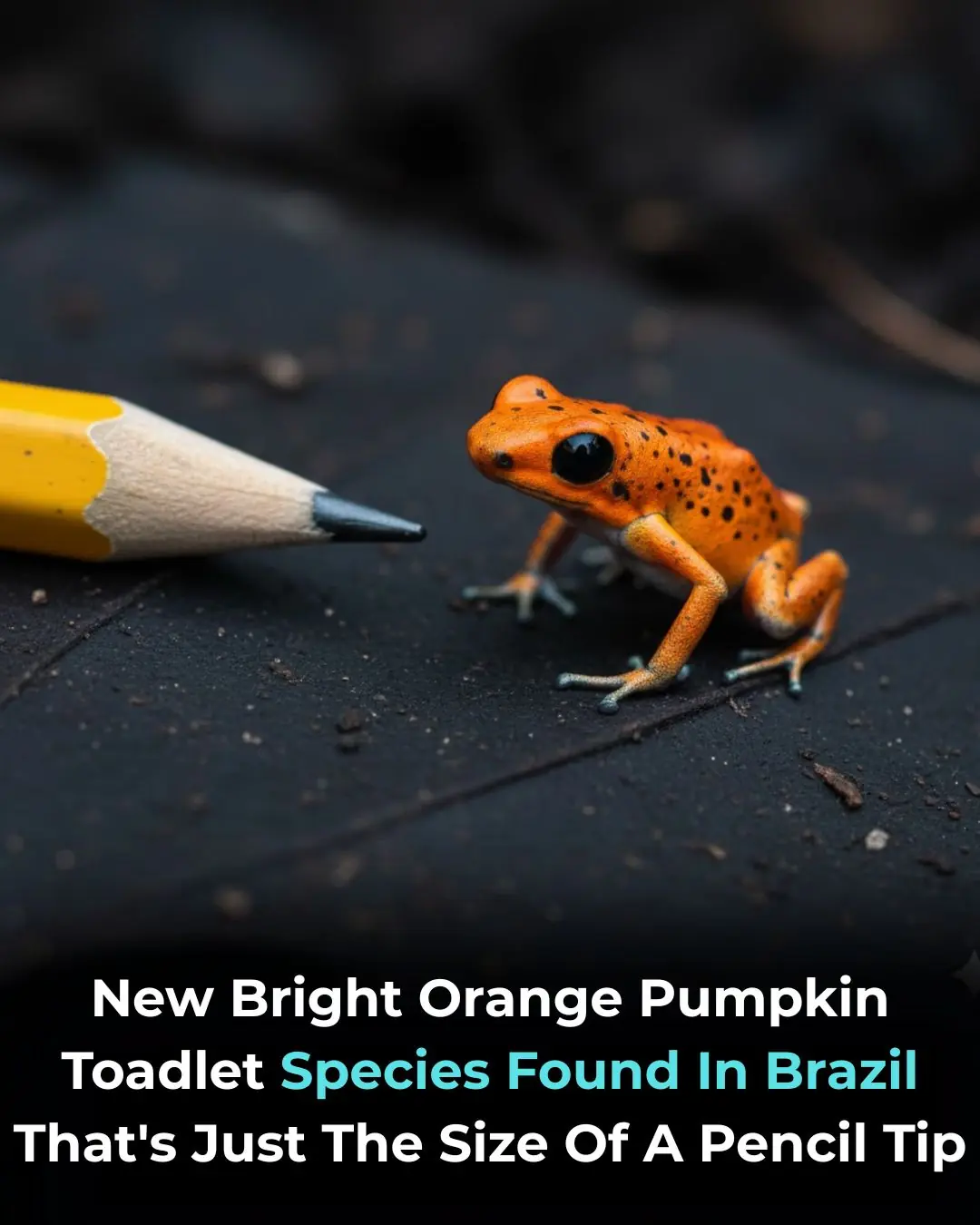
Tiny Pumpkin Toadlet Discovered in Brazil's Atlantic Forest: A New Species of Vibrantly Colored Frog
Facts 15/12/2025 22:21
For generations, elephants have been celebrated as the undisputed champions of memory in the animal kingdom. However, modern scientific research has revealed that extraordinary memory is not exclusive to mammals. Among birds, crows have emerged as some of the most cognitively advanced creatures on Earth, displaying not only intelligence and adaptability but also an astonishing ability to remember individuals who have harmed them. Even more remarkably, studies suggest that crows are capable of holding grudges for as long as seventeen years, recognizing and responding to specific humans long after the original encounter.
In 2006, Professor John Marzluff, an environmental scientist at the University of Washington, initiated a groundbreaking study aimed at understanding avian memory, facial recognition, and social learning. Driven by curiosity about how birds perceive threats, Marzluff devised an experiment that would eventually span nearly two decades.
Wearing a deliberately menacing mask, he and his team captured seven wild crows using a net. Each bird was carefully banded for identification and released unharmed. While the capture itself was brief and non-lethal, it was enough to create a negative experience in the birds’ memories—an experience that would prove unforgettable.
The mask used during the capture quickly became a powerful visual cue associated with threat. Over the years, Marzluff and his colleagues periodically wore the same mask while walking across campus, often while feeding crows, and carefully documented the birds’ reactions.
The results were striking. The crows responded immediately and aggressively, producing loud scolding calls and gathering in groups to harass the masked individual. On one occasion, Marzluff was reprimanded by 47 out of 53 crows in the area—far more than the original seven that had been captured. This dramatic response demonstrated that the memory of the threat had spread well beyond the initial victims.
Perhaps the most fascinating discovery was that many of the hostile crows had never encountered the masked researcher during the original experiment. This indicated that information about the “dangerous human” had been transmitted socially, likely through vocal warnings and group behavior.
Even more compelling was the evidence that this knowledge crossed generations. Young crows, born years after the initial capture, reacted aggressively to the mask despite having no direct experience with it. This suggests that crows are capable of cultural transmission—passing learned information from parents to offspring—ensuring that collective memory endures long after individual birds die.
The hostility toward the mask peaked approximately seven years after the experiment began. After that point, researchers noticed a slow decline in aggressive responses. By September 2023—seventeen years after the original capture—the masked figure was finally met with silence. For the first time since the study’s inception, no scolding calls were heard.
This moment marked a powerful conclusion: while crow grudges are extraordinarily long-lasting, they are not permanent. Memory, even in these remarkable birds, eventually fades when a threat no longer seems relevant.
To confirm that the crows were responding to specific negative associations rather than unfamiliar faces in general, researchers introduced a control mask. Modeled after former U.S. Vice President Dick Cheney, this neutral mask was worn only during positive interactions, such as feeding the birds.
As expected, individuals wearing the neutral mask were never targeted, even years later. This reinforced the conclusion that crows can distinguish between humans based on past behavior and selectively direct aggression only toward those associated with harm.
The study later expanded beyond the university campus. Students participated by wearing various masks while trapping crows in different neighborhoods around Seattle. Importantly, volunteers were unaware of which masks were considered “dangerous.”
The results remained consistent. Crows aggressively targeted individuals wearing masks associated with previous capture events, while ignoring those in neutral masks. This further demonstrated that crows not only recognize human faces but also remember the emotional context attached to them.
These scientific findings are echoed by real-world reports from urban environments. In areas such as Dulwich in south-east London, residents have described repeated crow attacks, including dive-bombing and persistent harassment. Some individuals have altered their daily routines or worn protective gear to avoid confrontations, illustrating how crow memory can directly affect human life.
Personal accounts tell similar stories. One Seattle resident who once threatened crows with a rake found himself relentlessly targeted for years afterward. The birds screamed outside his windows and attacked him during his commute. The harassment ended only when he moved away, emphasizing the remarkable persistence of crow retaliation.
Crows’ ability to recognize faces and remember emotional experiences is believed to be supported by a brain structure similar to the mammalian amygdala, which plays a critical role in emotion and memory processing. This neurological sophistication allows crows to associate specific individuals with danger and respond accordingly, even after many years.
Equally impressive is how crows share information. Through vocal signals and group behavior, they communicate the identity of threats to others. This form of cultural learning is rare in the animal kingdom and highlights the complexity of crow societies, which function less like loose flocks and more like intelligent social networks.
Grudge-holding is only one facet of crow intelligence. New Caledonian crows have been observed crafting tools from sticks, bending wires to retrieve food, and solving multi-step puzzles. They can also count up to four and demonstrate advanced problem-solving skills once thought to be limited to humans and primates.
These abilities place crows among the most intelligent non-human animals, rivaling dolphins, elephants, and great apes in cognitive sophistication.
The realization that crows can remember and retaliate against specific humans for nearly two decades challenges long-held assumptions about animal behavior. It underscores the importance of treating wildlife with respect, particularly species capable of memory, learning, and social communication.
In conclusion, long-term research has conclusively shown that crows can hold grudges for up to seventeen years. This extraordinary behavior is rooted in advanced memory, emotional processing, and social learning. Far from being simple birds, crows are intelligent, observant, and socially complex creatures whose memories shape their interactions with the world.
As scientific exploration of crow cognition continues, it is likely that even more surprising insights will emerge—deepening our understanding of these enigmatic birds and reminding us that intelligence in nature often appears where we least expect it.