One scoop a day heals your body from the inside out — watch what happens
Health 05/09/2026 02:40
Meta description: Pickle juice may help relieve certain muscle cramps and replace sodium after intense exercise, but drinking too much can raise sodium intake quickly. Learn when it may help, how much to try, and who should avoid it.
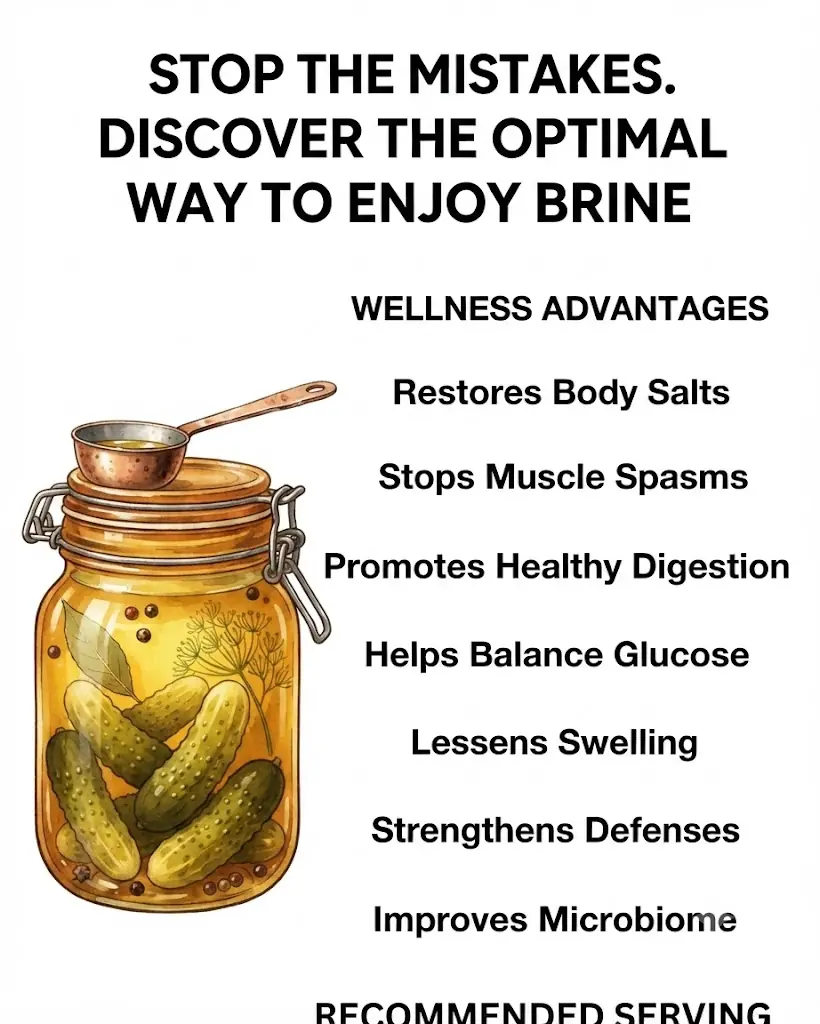
Pickle juice has moved far beyond the bottom of the pickle jar. Athletes drink it for muscle cramps, wellness enthusiasts promote it for digestion, and some people use it as a quick source of electrolytes after sweating.
There is some science behind its reputation, particularly for the rapid relief of exercise-associated muscle cramps.
However, pickle juice is not a complete hydration drink or a treatment for every type of cramping. It is also extremely high in sodium, and drinking large quantities can create more problems than benefits.
The “right” way to use pickle juice depends on why you are drinking it, how much sodium you already consume, and whether you have any medical conditions that make extra salt unsafe.
Pickle juice is the liquid used to preserve cucumbers and other vegetables.
Most commercially produced pickles are made with a brine containing:
Water
Salt
Vinegar
Herbs and spices
Garlic or dill
Preservatives in some products
Added sugar in sweet varieties
Artificial colors in certain brands
Traditionally fermented pickles are different from ordinary vinegar pickles. Fermented varieties are preserved through the activity of lactic-acid bacteria rather than vinegar alone.
This distinction matters because refrigerated, unpasteurized fermented pickle brine may contain live microorganisms. Most shelf-stable vinegar-based pickle juice does not provide meaningful probiotic benefits.
Pickle juice contains sodium, and some varieties also provide small amounts of potassium or other minerals.
Because sodium is lost in sweat, it may seem logical that drinking a salty liquid would immediately replace electrolytes and stop a muscle cramp.
Research suggests that pickle juice can shorten the duration of certain experimentally induced muscle cramps. Interestingly, the relief may occur too quickly to be explained by sodium entering the bloodstream.
The liquid must first pass through the stomach and intestines before its electrolytes can meaningfully affect the blood. That process takes much longer than the rapid relief sometimes observed.
Scientists therefore believe that the sharp, acidic taste may activate nerves in the mouth and throat. This signal may temporarily reduce overactivity in the motor neurons involved in the cramp.
In other words, pickle juice may sometimes interrupt a cramp through a nervous-system reflex rather than by instantly correcting dehydration or an electrolyte deficiency.
A small amount may help some people with sudden exercise-associated muscle cramps.
However, the available studies have generally involved small numbers of participants and artificially induced cramps. The results should not be interpreted as proof that pickle juice will treat every cramp in every person.
Muscle cramps have many possible causes, including:
Muscle fatigue
Unfamiliar exercise
Prolonged exertion
Dehydration
Heavy sweating
Certain medications
Pregnancy
Nerve problems
Circulation problems
Electrolyte disturbances
Kidney, liver, or thyroid conditions
Pickle juice may be reasonable to try for an occasional cramp during or after strenuous activity. It should not be used to conceal frequent, severe, or unexplained cramping.
Studies and sports practices have often used small servings of approximately 30 to 60 milliliters—about one to two fluid ounces.
This is much less than a full glass.
Because sodium content varies significantly between products, check the nutrition label before deciding how much to use. A quarter cup of some pickle juices can contain hundreds of milligrams of sodium and, in certain products, may approach 1,000 milligrams.
A sensible approach for a healthy adult who wants to try it for an exercise-related cramp is:
Start with a small amount rather than drinking directly from the jar.
Measure the serving so you know how much sodium you are consuming.
Sip or swallow it rather than continuously drinking large amounts.
Continue normal hydration with water or an appropriate sports drink.
Stop if it causes nausea, burning, reflux, or stomach pain.
There is no evidence that drinking an entire jar provides greater cramp relief.
Pickle juice is concentrated and salty. It does not contain enough water to serve as the primary drink after prolonged exercise.
Someone who has lost a large amount of fluid through sweat needs water in addition to electrolytes.
After ordinary exercise lasting less than an hour, water and a normal meal are often sufficient for recovery.
A balanced commercial electrolyte drink or an individualized sports-nutrition plan may be more suitable during long endurance events, extreme heat, or repeated high-intensity sessions.
Drinking pickle juice without enough water may worsen thirst and cause bloating.
It is also possible to drink too much plain water during prolonged endurance exercise. Excessive fluid consumption can dangerously dilute the sodium in the blood. Athletes participating in long events should use a hydration strategy appropriate for their sweat rate and conditions rather than relying on either water or pickle brine alone.
Pickle juice may be most relevant after a demanding activity that causes heavy sweating, particularly when:
The person loses a noticeable amount of salt in sweat
Clothing develops visible salt marks
Exercise lasts for an extended period
Conditions are hot and humid
Muscle cramps develop during or shortly after activity
The person has no medical reason to restrict sodium
Even in these circumstances, more pickle juice is not automatically better.
A small serving used alongside water and a balanced recovery meal is different from drinking it repeatedly throughout the day.
For most people performing ordinary workouts, pickle juice is optional rather than necessary.
Some athletes drink pickle juice before training because they believe it will prevent cramps.
Evidence for preventing cramps is less convincing than evidence for shortening certain cramps after they begin.
Exercise-associated cramping is often related to muscle fatigue and altered nerve activity, not simply a sodium shortage. Training appropriately, gradually increasing intensity, and allowing adequate recovery may be more useful preventive measures.
Drinking a large amount of salty, acidic brine immediately before exercise can also cause:
Stomach discomfort
Nausea
Bloating
Intense thirst
Acid reflux
Fluid retention
If someone chooses to experiment with pickle juice before exercise, it should first be tested during training—not for the first time on race day.
Only some types of pickle juice contain live probiotic microorganisms.
Vinegar-based pickles found on ordinary store shelves are usually not fermented with live cultures. Pasteurization and processing may also destroy bacteria that were initially present.
Fermented pickle brine may contain beneficial bacteria if it is:
Naturally fermented
Refrigerated
Unpasteurized
Labeled as containing live or active cultures
Even then, the exact number and types of microorganisms may vary.
Pickle juice should not be promoted as a treatment for digestive disease. A diverse diet containing vegetables, fruit, legumes, whole grains, and other sources of fiber is more important for long-term gut health.
People with irritable bowel syndrome, reflux, histamine intolerance, or a sensitive stomach may find that pickle brine worsens symptoms.
Vinegar contains acetic acid, which may modestly reduce the blood-glucose rise after certain carbohydrate-rich meals in some people.
This does not mean pickle juice treats diabetes.
The amount of vinegar varies between products, and sweet pickle brines may contain added sugar. Pickle juice is also not a substitute for prescribed medication, balanced meals, physical activity, or blood-glucose monitoring.
People taking insulin or glucose-lowering medication should not begin using large amounts of vinegar or pickle juice for blood sugar without discussing it with a healthcare professional.
A product containing sugar could have the opposite effect from what the person expects.
Pickle juice is sometimes promoted as a fat-burning drink because vinegar has been studied in relation to appetite and body weight.
Any effect found in research has generally been modest, and pickle juice has not been proven to produce significant or sustainable weight loss.
It does not compensate for an eating pattern consistently containing more energy than the body needs.
Some people may find that a strong sour flavor temporarily reduces cravings. Others may become thirstier, retain water, or experience stomach irritation.
Long-term weight management depends much more on overall diet, activity, sleep, health conditions, and sustainable habits than on a daily shot of brine.
Alcohol can contribute to fluid loss, poor sleep, stomach irritation, and changes in blood sugar. A salty liquid may sound like a quick way to restore electrolytes.
Pickle juice does not accelerate the removal of alcohol from the body or reverse alcohol-related impairment.
Its acidity may worsen nausea or reflux, and its high sodium content can increase thirst.
Water, rest, time, and appropriate food are more useful. Severe confusion, repeated vomiting, slow or irregular breathing, seizures, or difficulty waking after alcohol consumption requires emergency medical attention.
Never use pickle juice—or any home remedy—as a reason to delay treatment for suspected alcohol poisoning.
Sodium is essential for nerve function, muscle activity, and fluid balance, but most people already consume enough or more than enough.
Health guidance commonly recommends limiting adult sodium intake to approximately 2,300 milligrams per day, with individualized targets for people with certain medical conditions.
A relatively small serving of pickle juice can use up a substantial portion of that limit.
Excess sodium can contribute to:
Increased blood pressure
Fluid retention
Swollen hands or feet
Bloating
Increased thirst
Greater strain on the heart and kidneys in susceptible people
The exact sodium content should always be checked on the label rather than estimated from taste.
Pickle juice may not be appropriate for people with:
High blood pressure
Kidney disease
Heart failure
Liver disease with fluid retention
Significant swelling
A medically prescribed low-sodium diet
Acid reflux
Stomach ulcers or severe gastritis
Sensitivity to vinegar
Certain electrolyte disorders
People taking medications that affect fluid, sodium, or potassium balance should ask a healthcare professional before making pickle juice a regular habit.
Children generally do not need concentrated pickle brine as an electrolyte drink. Pediatric hydration needs should be managed with age-appropriate fluids and medical guidance.
Even in otherwise healthy adults, pickle juice can cause:
Nausea
Stomach pain
Diarrhea
Acid reflux
Bloating
Water retention
Headache
Intense thirst
A temporary rise in blood pressure
Its acidity may also contribute to dental enamel erosion if consumed frequently.
To reduce contact with the teeth, avoid swishing the brine around the mouth. Rinse with plain water afterward and wait before brushing, as brushing immediately after acidic drinks may damage softened enamel.
Do not use pickle juice as a mouth rinse.
If you decide to use pickle juice, read the label carefully.
Consider:
Compare products and choose a lower-sodium option when practical.
Remember that the listed serving size may be much smaller than the amount you intended to drink.
Sweet pickle brine can contain a meaningful amount of sugar. This may be unsuitable for someone using it for blood-glucose control.
These ingredients are not automatically harmful at permitted levels, but people who prefer a simpler product can choose one with water, vinegar, salt, cucumbers, and spices.
Choose refrigerated, unpasteurized brine labeled with live cultures if probiotics are the goal.
Vinegar-based juice may still be used for flavor or an occasional cramp, but it should not be described as probiotic unless the label confirms live microorganisms.
Do not drink from a jar that smells unusual, has visible mold, is leaking, has a bulging lid, or has been stored improperly.
Pour the juice into a clean cup instead of drinking directly from the container. This reduces contamination of the remaining pickles and brine.
For a healthy adult who wants to try pickle juice for occasional exercise-associated cramping:
Measure a small serving of approximately one to two ounces.
Check how much sodium that serving contains.
Use it when a cramp begins rather than drinking large quantities routinely.
Drink water separately according to thirst and exercise conditions.
Eat a balanced recovery meal afterward.
Monitor for stomach irritation or swelling.
Do not exceed your appropriate daily sodium intake.
This is an experiment for symptom relief—not a replacement for determining why cramps recur.
Because cramps often involve fatigue and nerve activity, prevention should address more than electrolytes.
Helpful measures may include:
Increasing training intensity gradually
Conditioning the muscles used in the activity
Allowing adequate recovery
Avoiding sudden unfamiliar workloads
Drinking according to thirst
Replacing fluids and electrolytes appropriately during prolonged exercise
Eating a balanced diet
Reviewing medications that may contribute to cramping
Working with a sports physician or dietitian when cramps are persistent
Stretching an actively cramped muscle gently may provide immediate relief.
Stop exercising if the pain is severe, the muscle remains hard and painful, or the cramp is accompanied by weakness, swelling, dark urine, confusion, or overheating.
Contact a healthcare professional if cramps:
Occur frequently
Are severe or prolonged
Develop without exercise
Repeatedly wake you from sleep
Affect only one limb along with swelling
Begin after starting a medication
Occur with muscle weakness or numbness
Are accompanied by significant swelling or redness
Do not improve with ordinary self-care
Seek urgent care for cramping with confusion, fainting, very high body temperature, severe weakness, chest pain, breathing difficulty, or dark cola-colored urine.
These symptoms may indicate a condition requiring more than fluids or pickle juice.
Pickle juice may shorten some exercise-associated muscle cramps, but the effect probably occurs through a rapid nerve reflex triggered by its strong acidic taste—not because the salt instantly enters the bloodstream.
A small measured serving may be reasonable for some healthy adults after strenuous exercise. Drinking a full glass or consuming it throughout the day is usually unnecessary and can add a large amount of sodium.
Pickle juice is not a complete hydration drink, a guaranteed cramp preventative, a diabetes treatment, or a weight-loss solution.
Choose the product carefully, check its sodium and sugar content, and avoid it if you have a condition requiring sodium restriction.
When used thoughtfully, pickle juice can be a specialized tool. When treated like an unlimited wellness drink, its high salt content may outweigh its possible benefits.