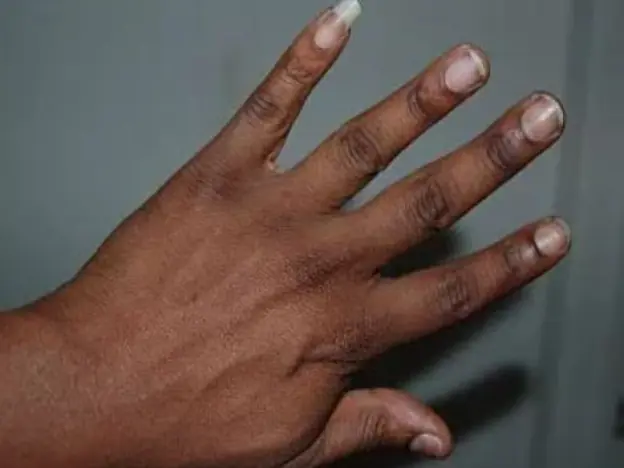
Why do some men grow this nail long?
Health 25/03/2026 19:02
Tonsilloliths, commonly referred to as tonsil stones, are a frequent yet often misunderstood condition affecting the palatine tonsils. While usually benign, they can cause significant localized discomfort and social anxiety due to persistent halitosis. Understanding the pathophysiology, diagnostic nuances, and the spectrum of therapeutic interventions is essential for both patients and clinicians.
To understand tonsilloliths, one must first examine the micro-anatomy of the palatine tonsils. These lymphoid tissues are characterized by deep, convoluted invaginations known as tonsillar crypts.
The primary function of these crypts is to increase the surface area for the immune system to sample pathogens entering the oral cavity. However, this structure also creates "pockets" where organic and inorganic materials can accumulate:
Cellular Debris: Desquamated epithelial cells from the lining of the crypts.
Microbial Biofilms: A complex ecosystem of aerobic and anaerobic bacteria (such as Actinomyces and Fusobacterium).
Food Particles: Microscopic remnants trapped during deglutition.
Calcification: Over time, inorganic salts—primarily calcium phosphate and magnesium carbonate—precipitate into these organic matrices, leading to the formation of hardened "stones."
Small tonsilloliths are often asymptomatic and are discovered incidentally during routine dental exams or imaging. However, larger or more numerous stones can present with a variety of symptoms:
This is the most hallmark symptom. The anaerobic bacteria within the stone produce Volatile Sulfur Compounds (VSCs) like hydrogen sulfide and methyl mercaptan, which emit a distinct, pungent odor that is often resistant to standard mouthwashes.
The presence of a foreign body in the crypts can trigger a localized inflammatory response, leading to swelling or a sensation of fullness in the back of the throat.
Large calcifications may interfere with the normal movement of the pharyngeal muscles, making swallowing uncomfortable or painful.
Because the tonsils share neural pathways (the glossopharyngeal nerve) with the ear, some patients experience "phantom" ear pain despite having no middle-ear pathology.
It is critical to differentiate tonsilloliths from other pharyngeal conditions to ensure appropriate treatment:
| Condition | Primary Indicators | Differentiation |
| Tonsillitis | Fever, sore throat, redness. | Usually bacterial or viral; requires antibiotics/rest. |
| Streptococcal Pharyngitis | High fever, white exudate (pus). | Exudate is liquid/creamy, unlike the solid nature of stones. |
| Tonsillar Malignancy | Asymmetrical swelling, weight loss. | Requires urgent biopsy if a lesion is fixed or ulcerated. |
Management of tonsilloliths depends on the severity of the symptoms and the frequency of recurrence.
For minor cases, mechanical removal and improved hygiene are often sufficient:
Low-Pressure Irrigation: Using a water flosser or a curved-tip syringe to gently flush the crypts.
Mechanical Expression: Using a cotton swab to apply gentle pressure around the crypt to dislodge the stone.
Saltwater Gargles: A solution of warm water and salt can help reduce inflammation and alter the pH of the oral environment to discourage bacterial growth.
If halitosis is the primary concern, clinicians may recommend:
Oxygenating Mouthwashes: Products containing chlorine dioxide or zinc can neutralize VSCs.
Topical Antibiotics: Occasionally used to reduce the bacterial load, though not a long-term solution.
When stones are chronic and severely impact quality of life, surgical intervention may be warranted:
Coblation Cryptolysis: This procedure uses radiofrequency energy to "smooth" the surface of the tonsil, effectively closing the deep crypts while leaving the tonsil tissue mostly intact.
Laser Tonsil Cryptolysis: A CO2 laser is used to vaporize the edges of the crypts, eliminating the pockets where stones form.
Tonsillectomy: The definitive "cure." By removing the tonsils entirely, the source of the crypts is eliminated. This is typically reserved for severe, recurrent cases due to the recovery time involved for adults.
Preventing the formation of tonsilloliths centers on disrupting the biofilm and keeping the crypts clear:
Meticulous Oral Hygiene: Brushing the tongue and the very back of the palate helps reduce the bacterial load.
Hydration: A dry mouth (xerostomia) allows bacteria to flourish. Consistent water intake promotes saliva production, which has natural antimicrobial properties.
Post-Prandial Gargling: Rinsing the mouth with water after meals can prevent food particles from settling into the tonsillar folds.
While tonsilloliths are rarely a medical emergency, they represent a significant nuisance for those who suffer from them. By understanding the underlying anatomy and the calcification process, patients can take proactive steps toward management. If conservative methods fail, modern medical technology offers minimally invasive options like cryptolysis to provide long-term relief without the necessity of a full tonsillectomy.