The Simple Onion Water Ritual: A Natural Way to Refresh Your Scalp and Improve Hair Feel Over Time
Health 29/03/2026 21:24

What Your Face May Be Telling You About Your Health
Your face does more than show emotions—it can also reveal clues about your overall health. Certain skin changes or marks may signal underlying conditions that deserve attention. Recognizing these signs early can help you seek proper care and prevent more serious issues.
Here are four facial signs that could indicate potential health concerns.
Xanthelasma appears as yellowish plaques on or around the eyelids, often near the inner corners of the eyes. These patches form when cholesterol deposits accumulate under the skin.
While the condition itself is harmless, it’s frequently associated with high cholesterol levels and other lipid disorders. In fact, about half of people with xanthelasma have elevated cholesterol, which can increase the risk of heart disease.
Angular cheilitis causes redness, cracks, and soreness at the corners of the mouth. It often occurs when saliva collects in these areas, allowing fungal or bacterial infections to develop.
It can also be linked to nutritional deficiencies, particularly low levels of B vitamins (such as B12 or riboflavin) and minerals like iron or zinc. Conditions like diabetes, poor oral hygiene, or ill-fitting dentures can also contribute.
Melasma causes dark, symmetrical patches on the face—commonly on the cheeks, forehead, nose, and upper lip. It occurs more often in women and is strongly linked to hormonal changes such as pregnancy or the use of birth control.
Sun exposure is another major trigger, which is why melasma is often called the “mask of pregnancy.”
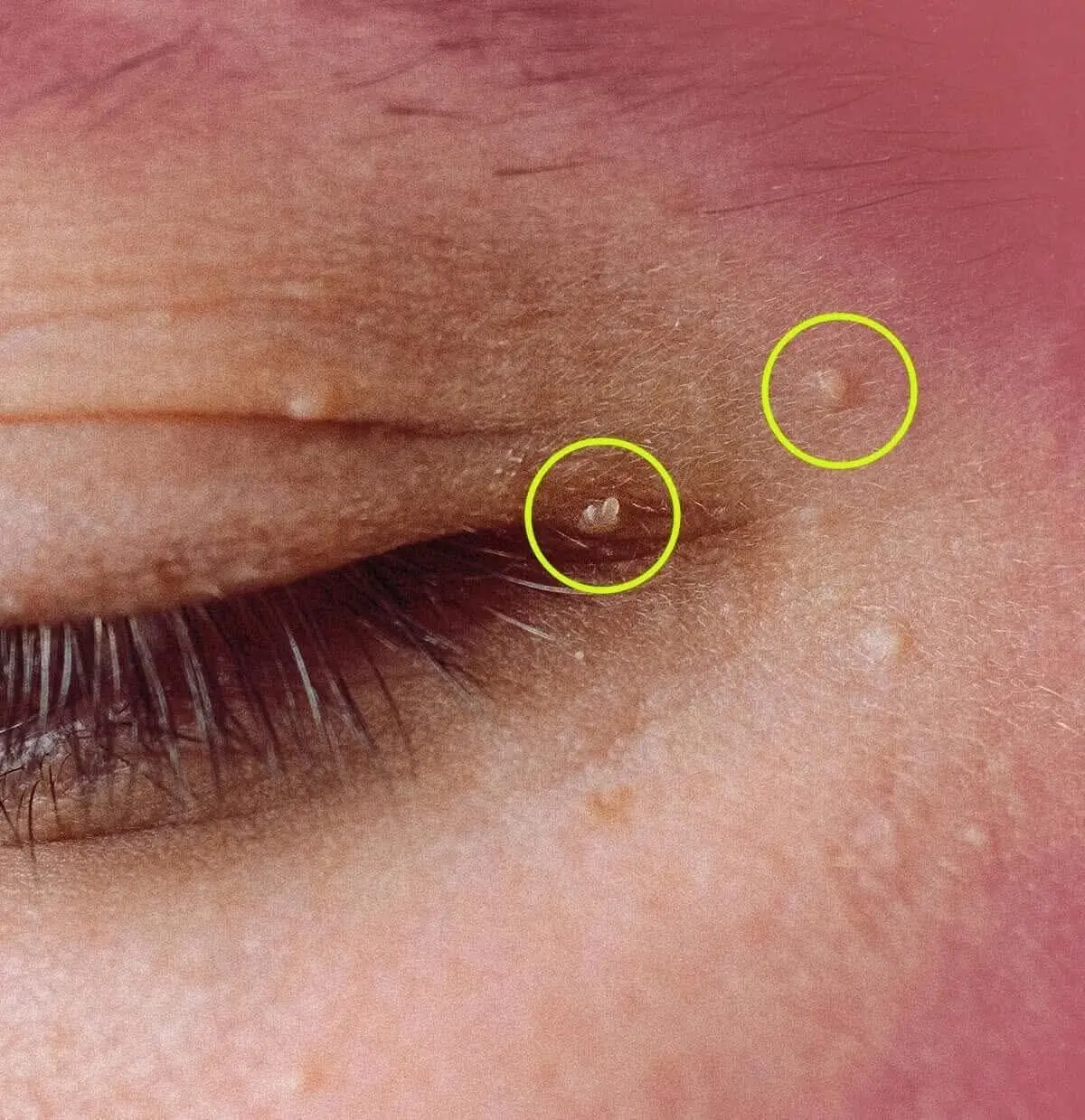
Milia are small white or yellowish cysts that often appear around the eyes, nose, or cheeks. They form when keratin becomes trapped beneath the skin.
Although harmless, milia can develop after skin damage, heavy creams, prolonged steroid use, or certain dermatological procedures.
Your face can sometimes offer early clues about internal health issues. Conditions like xanthelasma, angular cheilitis, melasma, and milia may appear minor but can occasionally signal deeper concerns such as cholesterol problems, nutritional deficiencies, or hormonal changes.
If you notice persistent or unusual facial changes, it’s best to consult a healthcare professional. Early diagnosis and proper care can protect both your health and your skin.