
Life stories 07/09/2026 22:40
China’s Mosque Crackdown: The Sinicization of Islam and the Changing Face of Muslim Life
Across parts of China, a quiet transformation has been taking place behind the country’s tightly controlled information environment.
Mosques are being closed.
Some are being demolished. Others are being merged with neighboring religious sites or converted to secular uses. In still other cases, the buildings remain standing, but their most recognizable Islamic architectural features — domes, crescents and minarets — are removed or redesigned in a distinctly Chinese architectural style.
The Chinese government describes its approach as part of a broader effort to manage religious affairs, prevent extremism and promote the “Sinicization” of religion.
Human rights organizations and independent researchers see something considerably more troubling: an attempt to reshape Islamic religious life so thoroughly that visible expressions of Muslim identity increasingly conform to the political and cultural expectations of the Chinese Communist Party.
The difference between those two interpretations is enormous.
And it is at the center of one of the most consequential religious-policy debates in modern China.
In 2023, Human Rights Watch reported that Chinese authorities were significantly reducing the number of mosques in Ningxia and Gansu under a policy it called “mosque consolidation.” These two provinces are home to some of China’s largest Muslim populations outside Xinjiang. According to HRW, government documents and satellite imagery indicated that authorities were closing, demolishing, merging or otherwise altering mosques.
The organization argued that the campaign was not simply about reducing redundant buildings.
It was part of a broader system of state control over religion.
That distinction is important.
China is not officially a country where Islam is illegal.
In fact, Islam is one of the five religions formally recognized by the Chinese state, alongside Buddhism, Catholicism, Protestantism and Taoism. Religious organizations, however, operate within a tightly regulated framework and are expected to work through state-controlled religious associations.
This means that the central issue is not simply whether Muslims are legally permitted to exist.
It is how much freedom Muslims have to practice, organize and express their religion independently of the state.
Under President Xi Jinping, that question has become increasingly important.
Xi has repeatedly promoted the concept of “Sinicization of religion” — the idea that religions practiced in China should adapt to Chinese society, culture and political realities.
The policy does not apply only to Muslims.
Christian communities, Tibetan Buddhists and other religious groups have also experienced increased state oversight.
But Islam has become one of the most visible targets of the campaign because of the government's concerns about separatism, terrorism, foreign influence and religious extremism, particularly in Xinjiang.
That distinction also helps explain why the experience of China's Muslim communities varies considerably.
The Uyghurs of Xinjiang have faced the most severe repression.
The Hui, a predominantly Muslim ethnic group found throughout China, have historically had considerably more room to practice Islam.
Yet in recent years, researchers have documented growing restrictions on Hui Muslim communities as well.
The mosque consolidation campaign in Ningxia and Gansu is one of the clearest examples.
Human Rights Watch reported that Chinese authorities have used a variety of methods: closing smaller mosques, merging communities, removing architectural features and, in some cases, demolishing buildings altogether.
The campaign has also affected the physical appearance of Islam.
That may sound superficial at first.
It is not.
For religious communities, architecture is part of identity.
A minaret is not merely a tower.
A dome is not merely a roof.
Arabic inscriptions, crescents, courtyards and other design elements can serve as visible markers of religious history and community belonging.
When those features disappear, the physical landscape changes with them.
One of the most striking examples occurred at the Grand Mosque of Shadian in Yunnan.
The mosque was one of China's most prominent examples of Arabic-inspired Islamic architecture. Its large green dome and minarets were highly recognizable symbols of the local Hui Muslim community.
In 2023 and 2024, those features were dramatically altered.
The dome was removed.
The minarets were shortened and redesigned.
Traditional Chinese-style architectural elements replaced features associated with the mosque's earlier Islamic design.
The Guardian reported that the changes were part of the wider campaign to “Sinicize” Islamic architecture, citing photographs, satellite imagery and witness accounts.
The symbolism was difficult to miss.
A building that had visually connected the community to the wider Islamic world was being transformed to look more traditionally Chinese.
To Chinese authorities, such a transformation can be presented as cultural integration.
To critics, it represents something closer to cultural erasure.
The Financial Times conducted one of the most extensive investigations into the phenomenon.
Using satellite imagery and other evidence, the newspaper examined more than 2,300 mosques with visible Islamic architectural features and reported that at least three-quarters had been modified or destroyed since 2018.
That does not mean every mosque in China is being destroyed.
Nor does it mean Muslims are universally prevented from praying.
The reality is more complicated.
Many mosques continue to operate.
Islam remains officially recognized.
And the Chinese government insists that lawful religious activity is protected.
But the physical transformation of religious sites is evidence of a much broader effort to determine what acceptable Islamic expression should look like.
That is the key issue.
The question is no longer simply whether a mosque can exist.
It is whether the mosque can retain an architectural, cultural and religious identity that is visibly connected to Islam — rather than one reshaped according to state expectations.
This is why the phrase “mosque consolidation” matters.
The term can sound administrative and almost harmless.
It suggests efficiency.
Perhaps there are too many small mosques.
Perhaps communities have become too dispersed.
Perhaps governments simply want to consolidate resources.
But the documented changes go beyond consolidation in many cases.
Buildings have been closed.
Structures have been demolished.
Islamic architectural elements have been removed.
And religious activity has increasingly been placed under tighter state supervision.
The result is a gradual transformation rather than one dramatic nationwide event.
There is no single day when China “banned Islam.”
Instead, the landscape changes mosque by mosque, province by province and regulation by regulation.
That gradual nature may be precisely what makes the campaign so difficult to understand from outside China.
A mosque disappears.
Another loses its dome.
A third is merged with another congregation.
A fourth remains open but operates under new restrictions.
Individually, each event can be explained as an administrative decision.
Together, they reveal a much larger pattern.
To understand China's policy toward Islam, it is necessary to look beyond the buildings.
The mosque campaign is only one component of a broader policy known as religious Sinicization.
The term can sound vague.
In practice, it refers to an effort to ensure that religious organizations and practices operate in accordance with Chinese national identity and the political direction of the Communist Party.
China officially recognizes five religions, including Islam.
But recognition does not mean religious independence.
The state maintains a system of officially sanctioned religious associations and exercises substantial control over religious organizations, clergy, educational institutions and places of worship. Pew Research Center has described China as one of the world's most restrictive countries regarding religious practice.
The U.S. Commission on International Religious Freedom similarly describes Sinicization as a coercive religious policy under which officially recognized religions are expected to align with the ideological and political objectives of the state.
That is why describing China as simply “anti-Islam” is too simplistic.
The Chinese government does not officially say that Islam itself is forbidden.
Instead, Beijing distinguishes between what it considers legitimate religious activity and activity it associates with extremism, separatism, foreign influence or threats to national unity.
This distinction becomes particularly important in Xinjiang.
The Uyghur population is predominantly Muslim, and Xinjiang has experienced an extraordinary level of state surveillance and repression.
Chinese authorities argue that harsh security measures are necessary to combat terrorism and extremism.
International governments, human rights organizations and researchers have documented mass detention, coercive assimilation, restrictions on religious practice and the destruction or alteration of Islamic cultural sites.
The United Nations human rights office concluded in 2022 that China's policies in Xinjiang may constitute serious human rights violations and said allegations of serious abuses required further investigation.
The Financial Times has also documented the transformation of Uyghur cultural and religious sites, including the destruction or alteration of large numbers of mosques.
But the development of mosque restrictions outside Xinjiang is particularly important because it demonstrates that the story is not limited to Uyghurs.
The Hui experience is different.
Hui Muslims have generally been viewed by Beijing as more integrated into Chinese society and less associated with separatism.
For decades, many Hui communities were able to maintain mosques with prominent Islamic architectural features.
That appears to have changed.
As the Sinicization campaign expanded, authorities increasingly argued that religious architecture should reflect Chinese cultural traditions.
The campaign therefore moved beyond religious practice and into aesthetics.
A mosque could remain a mosque — but it should look more Chinese.
An imam could continue preaching — but religious teaching should take place within an increasingly regulated framework.
A Muslim community could continue to exist — but its public identity was expected to fit within a broader national narrative.
This is where critics argue that the policy becomes cultural assimilation rather than ordinary religious regulation.
The distinction is not merely theoretical.
Religion is often inseparable from culture.
For many Muslim communities, language, dress, architecture, food, family traditions and religious practices overlap.
Changing one part can affect the others.
When a government removes Arabic signage or Islamic architectural features, it may not technically prohibit prayer.
But it can still alter the way a community understands and publicly expresses its identity.
That is why the transformation of mosques has attracted so much international attention.
The Grand Mosque of Shadian is particularly symbolic.
The mosque had been rebuilt after earlier destruction during China's Cultural Revolution and later expanded into a major center of Hui Muslim religious life.
Its Arabic-inspired architecture connected local Muslims to a much broader Islamic civilization.
When those elements were removed, critics saw the change as an attempt to sever that visual connection.
The Chinese government's argument is different.
Beijing has repeatedly said that religious freedom is protected under Chinese law and that its policies are intended to prevent extremism and ensure that religious activity is compatible with Chinese society.
That position should be acknowledged.
China's government does not describe the mosque campaign as an effort to eliminate Islam.
It describes religious Sinicization as necessary for social stability, national unity and the prevention of extremism.
This is why another viral claim deserves careful correction.
It is sometimes said online that “China officially considers Islam a mental illness.”
That statement is not accurate as a description of Chinese law or official religious policy.
China officially recognizes Islam as one of its five religions.
The phrase “Islam is a mental illness” comes instead from critical descriptions of the way Beijing has treated certain religious behaviors and beliefs as problems requiring ideological correction.
For example, commentators have argued that China's counter-extremism system effectively “pathologizes” some forms of Muslim identity.
That is a powerful criticism.
But it should not be turned into a false statement that the Chinese government has formally classified Islam as a psychiatric disorder.
Accuracy matters because the documented evidence is already serious enough.
There is no need to exaggerate it.
The same principle applies to another viral claim: that China is systematically turning closed mosques into chicken barns.
There have been documented cases of mosques being converted to secular uses.
Human Rights Watch specifically reported that authorities have closed, demolished and converted mosques for nonreligious purposes as part of mosque consolidation.
But there is not sufficient evidence to characterize “turning mosques into chicken barns” as a nationwide government policy.
A specific conversion may occur.
A building may be repurposed for agricultural or secular use.
But that is very different from saying Beijing has officially ordered mosques to become chicken farms.
The stronger and better-supported story is already remarkable:
China is reducing the number of some mosques, altering others, removing Islamic architectural features and increasing state control over Muslim religious life.
That is enough to demonstrate a significant transformation.
The broader political context also matters.
In March 2026, China passed a new law focused on promoting ethnic unity and progress. Reuters reported that the law emphasizes a shared national identity and greater integration of China's ethnic minority populations. It also requires religious groups and religious venues to follow the direction of religious Sinicization.
That development suggests that Sinicization is not disappearing.
It is becoming embedded more deeply into the country's legal and political framework.
The policy is therefore not merely an architectural project.
It is part of a broader vision of national identity.
Beijing wants citizens of different ethnicities and religions to identify first and foremost with a unified Chinese national identity.
Critics argue that this approach leaves little room for cultural identities that do not comfortably fit the dominant national model.
Supporters of the policy argue that it prevents separatism, reduces extremism and strengthens social cohesion.
That disagreement is unlikely to disappear soon.
But the physical evidence from mosques provides a concrete window into how the policy operates.
The architecture changes first.
Then the institutions.
Then the practices.
And eventually, the public expression of identity itself can change.
The most important question is not whether Islam will disappear from China.
It will not.
Millions of Chinese Muslims continue to practice their faith.
Islam remains officially recognized.
Mosques continue to operate.
Muslim communities remain an important part of China's religious and cultural landscape.
The more difficult question is what kind of Islam will be permitted to exist in the future.
That is where the concept of Sinicization becomes crucial.
Beijing appears to be moving toward a model in which religion can exist, but only within clearly defined political boundaries.
The state does not necessarily need to eliminate religion.
It can instead regulate it.
It can determine which organizations are legitimate.
It can supervise religious leaders.
It can regulate religious education.
It can control the construction and appearance of religious buildings.
It can limit foreign religious influence.
And it can promote an understanding of religion that emphasizes loyalty to the Chinese state and national identity.
This model is different from outright religious prohibition.
It is also different from liberal religious freedom.
It is a model of state-managed religion.
For Muslims, that model presents particularly difficult challenges because Islam is both a religion and, for many communities, an important component of ethnic and cultural identity.
The Hui and Uyghur experiences demonstrate this in different ways.
For Uyghurs, restrictions on religion have occurred alongside severe restrictions on language, culture, education, family life and political expression.
For Hui communities, the process has generally been less extreme, but mosque consolidation and architectural changes suggest that the boundaries of acceptable Islamic identity are also narrowing.
The disappearance of domes and minarets therefore carries symbolic importance.
A government does not have to destroy every mosque to reshape religious culture.
It can change what a mosque looks like.
It can determine where mosques are built.
It can decide how many exist.
It can regulate who is allowed to attend.
It can determine what religious education is permitted.
And it can place religious institutions within a political structure controlled by the state.
Over time, those decisions can change an entire community.
That is why the Financial Times investigation into China's mosques was so significant.
Its satellite analysis suggested that thousands of mosques had been altered or destroyed, with the changes extending across regions well beyond Xinjiang.
The scale matters
This is not simply one controversial renovation.
It is a pattern.
And the pattern has a direction.
Toward fewer independent-looking Islamic institutions.
Toward more standardized architecture.
Toward greater state supervision.
Toward a religious identity that is explicitly framed as Chinese.
The government argues that this is a form of cultural adaptation.
Critics argue that it is assimilation.
The difference depends partly on how one defines religious freedom.
If religious freedom means merely the ability to pray inside an approved building, China's system may appear relatively permissive compared with a total ban.
If religious freedom includes the right to organize independently, preserve religious architecture, educate children according to one's faith, maintain cultural traditions and participate in religious life without political interference, the picture looks very different.
International observers have consistently raised concerns about the latter.
Pew Research Center has classified China among the world's most restrictive governments on religion.
The U.S. Commission on International Religious Freedom has likewise criticized the Sinicization campaign as a mechanism for ideological control.
At the same time, China's government rejects many of these accusations.
Beijing argues that foreign governments and human rights organizations misunderstand China's approach and interfere in its domestic affairs.
Chinese officials maintain that religious freedom exists within the framework of Chinese law and that measures in regions such as Xinjiang are necessary to combat terrorism and extremism.
That disagreement is unlikely to be resolved simply through competing statements.
The physical transformation of mosques provides more tangible evidence.
Satellite images do not tell us everything about religious life.
But they can show whether a dome still exists.
They can show whether a minaret has been demolished.
They can show whether a mosque remains intact.
They can show whether a religious complex has been replaced or substantially altered.
And when those changes occur across hundreds or thousands of sites, they become difficult to dismiss as isolated incidents.
There is also a generational dimension.
Young Muslims growing up in these communities may experience a religious environment very different from that of their parents and grandparents.
A child who grows up seeing traditional Islamic architecture disappear may develop a different relationship with public religious identity.
A child who attends a more tightly regulated religious institution may have a different understanding of the relationship between faith and the state.
And a community whose religious buildings increasingly resemble ordinary Chinese public architecture may gradually lose some of the visual markers that once distinguished it.
This does not mean Islam disappears.
It means Islam becomes less publicly visible and more tightly integrated into the national framework defined by the state.
That may be precisely the objective of Sinicization.
The ultimate goal may not be to erase religious belief.
It may be to ensure that religious belief cannot develop into an independent source of identity or political loyalty.
That distinction helps explain why architecture matters.
A dome does not threaten the state.
A minaret does not threaten national security.
But symbols can reinforce a sense of belonging to a community that extends beyond national borders.
For a government deeply concerned about separatism and foreign influence, that symbolic connection can become politically sensitive.
This is particularly true in Xinjiang, where religious identity intersects with ethnic identity and a history of conflict between Uyghurs and the Chinese state.
But extending similar policies to Hui communities suggests that the government increasingly sees religious architecture and organization as part of the broader question of national identity.
China is therefore entering a new phase in its relationship with religion.
The old model — tolerate religion as long as it remains politically quiet — appears to be giving way to something more ambitious.
The state wants religion to actively reinforce its vision of Chinese national identity.
That is what makes the mosque campaign significant.
It is not merely about buildings.
It is about who gets to define what it means to be a Chinese Muslim.
Is a Chinese Muslim someone who practices Islam while maintaining a distinct cultural identity?
Or is a Chinese Muslim expected to practice a form of Islam that has been reshaped to fit the ideological and cultural priorities of the Chinese state?
That question remains unresolved.
But the direction of policy is becoming increasingly clear.
The evidence shows that China is not officially declaring Islam to be a mental illness.
It is not accurate to say that every mosque is being turned into a chicken barn.
Those claims go beyond the available evidence.
The documented reality is both more nuanced and more consequential.
China recognizes Islam as an official religion while simultaneously imposing increasingly strict controls over religious institutions.
Authorities have closed, merged, demolished and converted mosques.
Islamic architectural features have been removed from major religious sites.
Religious institutions are being required to follow the direction of Sinicization.
And China's broader legal framework continues to emphasize national unity and integration.
Taken together, these policies represent a profound transformation of Muslim religious life.
The question for the international community is therefore not simply whether China is “banning Islam.”
That question is too crude.
The more important question is whether a religion can remain genuinely free when the state determines what its institutions should look like, how they should operate and how closely they must conform to a prescribed national identity.
That is the debate surrounding China's mosques today.
And it is a debate that extends far beyond architecture.
It concerns cultural survival.
It concerns religious freedom.
It concerns the limits of state power.
And ultimately, it concerns whether diversity can survive when a government defines national unity in increasingly uniform terms.
The disappearance of a dome may seem like a small event.
The removal of a minaret may look like a renovation.
The closure of a small mosque may appear to be an administrative decision.
But when thousands of such changes occur across a country, the cumulative effect can reshape the identity of entire communities.
That is why the transformation of China's mosques deserves attention.
Not because every viral claim about it is true.
But because the verified story is already significant enough.
China is not officially declaring war on Islam.
It is doing something more systematic: bringing Islam increasingly under the political, cultural and institutional framework of the Chinese state.
And the future of Chinese Islam may depend on how far that process ultimately goes.
Tags:
News in the same category

Lindsay Clancy Trial Ends in Mistrial After 11–1 Jury Split: What Happened and What Comes Next
AOC–Jasmine Crockett 2028? The Democratic Ticket That Could Reshape American Politics

Disney’s New Era: Josh D’Amaro, 1,000 Job Cuts and the Return of a More Traditional Disney
Germany’s Political Earthquake: AfD Wins Historic Victory in Saxony-Anhalt

Woman caught having …See more

Woman at the Center of Animal Abuse Allegations Sparks Outrage

Woman caught having …See more

He Walked Away After the Pregnancy Test — But the Truth Changed Everything

My MIL Threw Away the Food I’d Ordered While I Was Sick

My Triplet Daughter Disappeared on a School Trip by the Lake—A Year Later, Her Sleeping Bag Revealed a Terrifying Secret

My Daughter Brought a Hungry Classmate Home — What We Found Changed Everything
Taylor Swift admits that she tested positive for… See more…

Lady flips an old cake stand upside down. This strange thrift flip is suddenly everywhere

Lady hangs 40 Dollar Store flowers upside down from a wooden hoop and wraps it with fairy lights. Everyone on my street is copying this porch idea
The moment Shakira leaves the stage after noticing that... See more
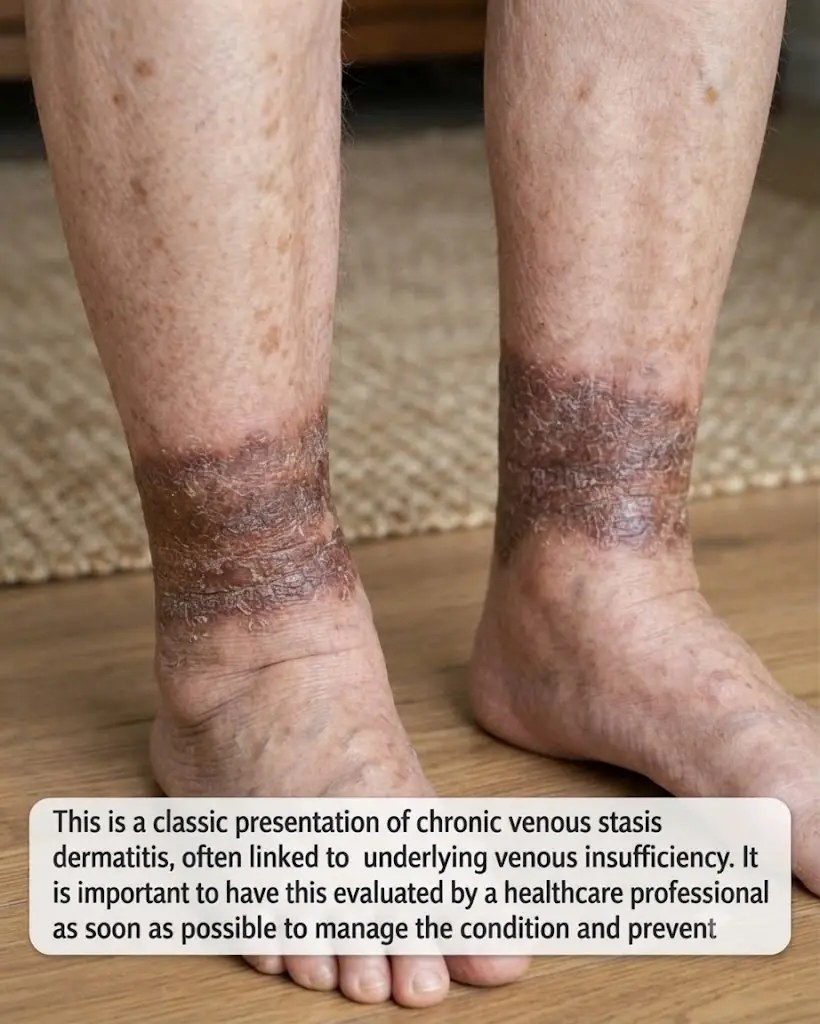
My grandmother keeps getting this rusty brown, scaly discoloration wrapping around her lower legs and ankles. The nurse line is busy. Is this serious?

Love Beyond Expectations: The Unusual Couple Challenging Society’s Assumptions

My Mother Was Humiliated at a Restaurant on Her Birthday
News Post

Blaire White’s Viral Lindsay Clancy Comment: A Real Quote, a Tragic Case, and a Much Bigger Mental Health Debate
News 08/09/2026 15:52

Did Hope Walz Really Say Trump Targeted Her Father? The Viral Quote, the Family Pressure, and How “Quote Laundering” Changes the Story
News 08/09/2026 15:46

I Found a Strange Pale Object on My Balcony
Facts 08/09/2026 15:22

Lindsay Clancy Trial Ends in Mistrial, Reigniting a Fierce Debate Over Justice
Lindsay Clancy Trial Ends in Mistrial, Reigniting a Fierce Debate Over Justice
News 08/09/2026 15:00

Thomas Massie Takes the Epstein Files Fight to the House Floor
Thomas Massie Takes the Epstein Files Fight to the House Floor
News 08/09/2026 14:56

Ohio Dad Posed as His 11-Year-Old Daughter on TikTok to Lure Her Alleged Assailant
Ohio Dad Posed as His 11-Year-Old Daughter on TikTok to Lure Her Alleged Assailant
News 08/09/2026 14:39

Miriam Rodríguez: The Mother Who Refused to Stop Searching for Her Daughter
Miriam Rodríguez: The Mother Who Refused to Stop Searching for Her Daughter
News 08/09/2026 14:28

The Scarface Actress Who Vanished Without a Trace: The Mystery of Tammy Lynn Leppert
News 08/09/2026 13:24

Herbert Ross Questioned Dolly Parton’s Acting—Her Brilliant Response Shut Him Down
News 08/09/2026 13:16

Ariana Richards: From Jurassic Park Child Star to Acclaimed Artist—and Her Unexpected Return to Acting
News 08/09/2026 13:09

Lyn May’s Tragic Transformation: The Cosmetic Procedure That Changed Her Life Forever
News 08/09/2026 13:02

He Dropped Out of College. Then He Built 5 Airlines.
News 08/09/2026 11:35

She Never Retired: The Extraordinary 67-Year Journey of Flight Attendant Bette Nash
News 08/09/2026 11:32

Blaire White’s Viral Lindsay Clancy Comment: A Real Quote, a Tragic Case, and a Much Bigger Mental Health Debate
News 08/09/2026 09:23

The Mechanics of Congressional Compensation and the Evolution of Shutdown Accountability
Facts 08/09/2026 02:25

The Anatomy of Viral Misinformation: How Fringe Claims Capture Public Attention
Facts 08/09/2026 02:13
Trump Signs Executive Order to Expand Ranchers’ Access to Meat Processing and Direct Markets
Life stories 07/09/2026 23:15
Lindsay Clancy Trial Ends in Mistrial After 11–1 Jury Split: What Happened and What Comes Next
Life stories 07/09/2026 23:05
AOC–Jasmine Crockett 2028? The Democratic Ticket That Could Reshape American Politics
Life stories 07/09/2026 22:47