Blaire White’s Viral Lindsay Clancy Comment: A Real Quote, a Tragic Case, and a Much Bigger Mental Health Debate
News 08/09/2026 15:52
There are countless stories about Dolly Parton’s charm, humor and ability to handle difficult situations without losing her composure.
But one incident from the making of Steel Magnolias has endured for decades because it captures something particularly revealing about her personality.
The story is often reduced to a single exchange.
Director Herbert Ross reportedly told Parton that she could not act.
Dolly, rather than becoming defensive, answered with the kind of quick, self-aware humor that had already become one of her trademarks.
Her response, as she later recalled it, was essentially this:
She was not pretending to be a great dramatic actress. She was Dolly Parton, a personality hired to be in the movie, and Ross—as the director—had the responsibility to make the performance work.
It was funny.
It was sharp.
And, most importantly, it refused to give someone else the power to make her feel ashamed of who she was.
The moment has since been transformed online into a story about Dolly instantly “destroying a bully.” The reality is a little more complicated.
Ross was unquestionably known for being an extremely demanding director, and several members of the Steel Magnolias cast later described his manner as harsh. Julia Roberts, still a relatively inexperienced actress at the time, appears to have received some of the toughest treatment.
But Parton herself also said that by the end of production, she and Ross had made peace and become friends.
That makes the story more interesting, not less.
It was not simply a celebrity delivering a clever comeback.
It was about an entertainer who understood exactly who she was, refused to be humiliated and was confident enough to turn criticism into a working relationship.
When Steel Magnolias arrived in theaters in 1989, audiences saw what appeared to be an effortless ensemble of remarkable women.
Sally Field played M’Lynn Eatenton.
Julia Roberts played her daughter, Shelby.
Shirley MacLaine became the hilariously irritable Ouiser Boudreaux.
Olympia Dukakis played Clairee Belcher.
Daryl Hannah portrayed Annelle Dupuy Desoto.
And Dolly Parton stepped into the role of Truvy Jones, the warm, endlessly talkative owner of the Louisiana beauty salon where much of the story unfolds.
The movie was adapted from Robert Harling’s stage play, which had been inspired by the death of his sister from complications related to diabetes.
Underneath the humor and Southern charm was a deeply emotional story about friendship, motherhood, grief and the ways women support one another during catastrophe.
That required the actors to move naturally between comedy and tragedy.
For Julia Roberts, the role became a breakthrough.
For Dolly Parton, it became one of the most memorable acting performances of her film career.
Yet according to the women involved, making the movie was not always as warm as the finished product suggested.
Much of the tension centered on director Herbert Ross.
Ross was not an inexperienced filmmaker.
Before Steel Magnolias, he had directed major films including The Goodbye Girl, The Turning Point and Footloose. His background in dance and choreography influenced the precision he expected from performers.
Paul Hirsch, the editor of Steel Magnolias, later described Ross as extremely demanding and said his style partly came from the blunt world of professional dance.
Hirsch also regarded him as an exceptional director of actors.
That duality is important.
Ross could extract strong performances.
But the method could be uncomfortable.
Turner Classic Movies, drawing on accounts from the cast and crew, notes that Ross was particularly hard on both Dolly Parton and Julia Roberts during production. Shirley MacLaine later recalled that he attempted to control aspects of Roberts’ appearance and diet and could be extremely critical.
Sally Field would later confirm that Roberts was singled out.
In a 2024 interview discussed by The Independent, Field said Ross was “very, very, very hard” on the young actress and that the older women in the cast tried to support her.
That detail matters because Roberts was nowhere near the global superstar she would become.
She had made only a small number of films.
Steel Magnolias would eventually earn her an Academy Award nomination and help establish her as one of Hollywood’s most important new stars.
But while filming it, she was still proving herself.
Ross apparently had doubts.
According to later accounts, he had originally wanted a different actress for Shelby, and Parton believed that contributed to his frustration with Roberts.
One of the most remarkable things about the production is that the actresses appear to have responded to the pressure by doing almost exactly what their characters did in the film.
They rallied around each other.
Shirley MacLaine later described Roberts coming to her for support during filming.
Stories from the production suggest that the veteran actresses increasingly pushed back when they believed Ross had gone too far.
At a 2013 event, MacLaine recalled that Ross could be extremely stern and said the women bonded after receiving his criticism. She also remembered telling him off directly when she believed his treatment of Roberts had become excessive.
Sally Field remembered the same dynamic.
Rather than allowing the youngest member of the group to face the pressure alone, the cast supported her.
Dolly Parton was part of that group.
But eventually, Ross turned his attention toward her.
And Dolly handled it in a distinctly Dolly Parton way.
Different versions of the exchange have circulated over the years.
The shortest version claims Ross asked Parton whether she could act at all.
She supposedly answered:
“No, but it’s your job to make me look like I can.”
That version appears in later movie-trivia accounts, but Parton herself gave a fuller and more revealing explanation.
In a 1989 Associated Press interview published shortly after the movie’s release, Parton said Ross had been “very hard” on her and had told her she could not act.
Her reaction was not outrage.
She essentially agreed.
Parton told him she already knew acting was not her primary discipline and reminded him that his role as director was to help her deliver the performance the movie needed.
She also pointed out that the filmmakers had hired her because they believed her presence would contribute commercially to the film.
Then came the final challenge:
Now he had to do his job.
Several years later, Parton told the story again.
A 1994 account reported by the Deseret News quotes Parton saying that Ross was particularly tough on her and Roberts.
According to Parton, he told her she could not act.
She answered that this was hardly news to her.
She had not been hired because she claimed to be a classically trained actress.
She had been hired because she was Dolly Parton—a personality.
If Ross was a good director, she told him, he should be able to make the performance work.
Parton also included the incident in her 1994 autobiography, Dolly: My Life and Other Unfinished Business.
Turner Classic Movies summarizes her account this way: Ross did not particularly like either Parton or Roberts at first and was extremely hard on them. When he told Dolly she could not act, she answered that she was not an actress but a personality hired for the movie, and that it was his responsibility as director to make her look convincing.
That is the origin of the famous exchange.
Parton’s answer was powerful because she did something psychologically unusual.
She refused the premise that Ross’s criticism had exposed some embarrassing secret.
He told her she was not a great actress.
She essentially said: correct.
Now what?
There was nothing for him to use against her.
She already knew where her strengths were.
That kind of self-awareness had been central to Parton’s career for decades.
She understood that people sometimes underestimated her because of the exaggerated blond hair, rhinestones, tight costumes, Southern accent and constant jokes.
Rather than abandon those things to appear more sophisticated, she turned them into part of her identity.
She has spent much of her career laughing along with jokes about herself while quietly demonstrating remarkable discipline as a songwriter, musician, businesswoman and entertainer.
The Steel Magnolias exchange followed the same pattern.
Ross attempted to define her through a weakness.
Parton acknowledged the weakness without surrendering her worth.
There is an enormous difference between saying, “I am not primarily an actress,” and saying, “I have no value here.”
Dolly understood that difference.
Parton’s self-deprecating description should also not be taken too literally.
By the time she made Steel Magnolias, she already had significant film experience.
Her movie debut in 9 to 5 alongside Jane Fonda and Lily Tomlin had been a major success in 1980.
She then appeared in The Best Little Whorehouse in Texas, Rhinestone with Sylvester Stallone and other productions.
Parton had never presented herself as Meryl Streep.
Indeed, a 1989 Associated Press profile joked about exactly that distinction.
But she understood how to perform on camera.
Her strength came from personality, comic timing, emotional warmth and an unusually natural ability to connect with audiences.
Truvy Jones was therefore an unusually appropriate role.
Parton did not have to disappear completely inside an unfamiliar character.
Truvy was outgoing.
Funny.
Warm.
Talkative.
Observant.
She listened to everyone’s problems and kept the salon moving with a mixture of jokes and compassion.
There was plenty of Dolly in Truvy.
That was not a defect in the casting.
It was part of why the casting worked.
Parton’s famous comeback can sometimes create the impression that she dismissed acting as unimportant.
She did not.
For Steel Magnolias, she took practical steps to make Truvy believable.
Parton and Daryl Hannah spent time studying professional hairdressers so they could handle salon scenes convincingly.
Turner Classic Movies notes that Parton actually practiced with local beauticians in Natchitoches, Louisiana, where the film was shot. Local volunteers even allowed her to work on their hair.
That is not the behavior of someone who simply showed up because she was famous.
She understood the role had craft behind it.
What she rejected was the idea that Ross could shame her for not being something she had never claimed to be.
There is an important distinction.
Humility does not require humiliation.
Dolly was comfortable admitting her limitations.
She was not comfortable being diminished by them.
Stories from the set suggest that Parton was enormously popular with her co-stars.
The 1989 Associated Press profile noted that she was highly regarded by the other women in the cast.
Julia Roberts also remembered Parton’s attitude during the brutal Louisiana heat.
Years later, Roberts recalled that Dolly was filming in heavy clothing and a wig yet refused to complain.
When Roberts encouraged her to acknowledge how miserable the heat was, Parton reportedly explained that she had dreamed of becoming famous and wealthy when she was young.
Now that both dreams had come true, she was not going to complain about the circumstances that came with them.
Whether dealing with heat, criticism or the pressures of a demanding director, the pattern appears consistent.
Parton knew what she had chosen.
She took responsibility for that choice.
And she refused to make herself miserable merely because circumstances were difficult.
Modern retellings sometimes end the story immediately after the comeback.
Ross insults Dolly.
Dolly destroys him verbally.
Everyone cheers.
The bully loses.
That version is satisfying.
It is also incomplete.
According to Parton herself, she and Ross eventually got along.
In the account reproduced by Turner Classic Movies, Dolly said that by the end of production everyone had “made peace and become friends.”
That detail changes the lesson.
Her response was not designed simply to humiliate Ross in return.
She established a boundary.
Then they continued making the movie.
That is arguably a stronger form of confidence.
Parton did not need lifelong hostility to prove she had stood up for herself.
She could tell someone when they had crossed a line and still work with them afterward.
It also suggests that Ross himself was more complicated than the simplified villain found in many social-media posts.
He could be harsh.
People who worked with him clearly sometimes found his methods painful.
But colleagues also regarded him as talented, and his films repeatedly produced acclaimed performances.
The finished Steel Magnolias is evidence of that complicated reality.
Julia Roberts, whom he reportedly pressured so intensely, earned an Academy Award nomination for Best Supporting Actress.
The ensemble became one of the most beloved groups of women in modern American cinema.
And Dolly Parton delivered one of her most memorable film performances.
The treatment of Roberts is one of the darker parts of the production history.
Accounts from Sally Field, Shirley MacLaine and Dolly Parton indicate that Ross was exceptionally hard on her.
Yet Roberts’ performance as Shelby became one of the emotional anchors of the movie.
She won the Golden Globe for Best Supporting Actress and received her first Academy Award nomination.
For an actress Ross apparently questioned during production, that result was remarkable.
It also demonstrates why the other women’s support mattered.
Creative environments can be demanding without becoming destructive.
A director may push an actor toward a stronger performance.
But when criticism becomes personal or psychologically destabilizing, colleagues can play an important role in restoring perspective.
The Steel Magnolias cast appears to have understood that instinctively.
Their solidarity behind the scenes mirrored the central message of the movie itself:
When one woman is struggling, the others do not simply stand aside.
They gather around her.
The exchange with Ross also illustrates something people sometimes miss about Parton’s humor.
Her jokes frequently function as a form of control.
She has spent decades making jokes about her appearance before anyone else can.
She exaggerates her own image.
She mocks her wigs.
She jokes about cosmetic procedures.
She makes self-deprecating comments about her body and her persona.
From the outside, that can look like simple humility.
But there is often strategy behind it.
When you can laugh at yourself without despising yourself, it becomes much harder for another person to weaponize those same things against you.
Parton seems to have understood that instinctively.
Ross could tell her she was not a serious actress.
But Dolly had already incorporated that idea into the way she discussed herself.
It therefore carried less power.
She could answer him without panic.
This is different from pretending criticism never hurts.
It is about having an identity that does not depend entirely on someone else’s assessment.
More than three decades after Steel Magnolias, the anecdote continues circulating because it functions almost like a parable.
Someone powerful tells a woman she is not good enough.
She refuses to crumble.
Instead of desperately proving him wrong, she accepts what is true and rejects what is unfair.
“I know who I am.”
That is the deeper message audiences hear in the story.
But the verified version is better than the exaggerated one.
Dolly did not claim to be the greatest actress alive.
She did not pretend Ross was wrong about every weakness in her performance.
She simply refused to accept the implication that lacking one particular skill made her worthless.
And then she kept working.
That balance between confidence and humility is difficult.
People often assume confidence requires insisting that you are excellent at everything.
Parton demonstrated the opposite.
A person can say:
“I am not the best at this.”
And still say:
“I deserve respect.”
Those statements can exist together.
Whatever tension existed during production, the movie endured.
Steel Magnolias became one of the defining ensemble dramas of its era.
Its combination of humor and grief gave the film a cultural life far beyond its initial theatrical run.
Quotes from the movie are still repeated decades later.
Its cemetery sequence remains one of Sally Field’s most celebrated dramatic scenes.
Julia Roberts’ performance helped launch her into superstardom.
And Dolly Parton’s Truvy remains one of the film’s most beloved characters.
That makes Ross’s original criticism somewhat ironic.
Parton may never have considered herself a traditional dramatic actress.
But audiences believed Truvy.
They laughed with her.
They trusted her.
And when the story became painful, she belonged emotionally within that group of women.
Whatever process was required to achieve that result, it worked.
Perhaps Dolly had been right.
The director’s job was to make the performance work.
Together, somehow, they did.
The temptation with celebrity anecdotes is always to sharpen them.
Turn a disagreement into a feud.
Turn criticism into abuse.
Turn a witty answer into a total humiliation.
Turn every human interaction into a winner and a loser.
But the Steel Magnolias story does not need that treatment.
The documented version already tells us something valuable about Dolly Parton.
Her own recollections consistently support the central event: Herbert Ross told her she could not act.
She answered with humor, self-awareness and confidence.
Multiple cast members also remembered Ross as a difficult, demanding director, particularly toward Julia Roberts.
What should be treated more cautiously is the idea that Dolly “destroyed a bully” and ended the conflict forever with one sentence.
Real relationships are rarely that simple.
Parton herself said they eventually made peace.
And that final detail may be the clearest demonstration of her strength.
She defended herself without allowing resentment to define the rest of the experience.
Dolly Parton’s reputation has never depended solely on her voice.
She became one of the most enduring figures in entertainment because audiences sensed a remarkable combination of ambition and accessibility.
She wanted success.
She worked relentlessly for it.
She understood image and publicity.
She was an exceptional songwriter and an astute businesswoman.
But she rarely acted as though success required pretending to be superior to everyone around her.
The Herbert Ross exchange reveals that quality perfectly.
She knew what she could do.
She knew what she could not do.
She knew why she had been hired.
And she knew that being criticized by a powerful director did not suddenly erase everything else she had accomplished.
That kind of self-worth does not come from believing you have no weaknesses.
It comes from knowing your weaknesses without allowing someone else to convince you that they are the whole story.
When Herbert Ross told Dolly Parton she could not act, he may have expected defensiveness.
Instead, she gave him something much harder to attack:
self-awareness.
She did not say she was the greatest actress in Hollywood.
She effectively told him:
You already know who I am.
I know who I am.
Now let’s make the movie.
And perhaps that is why the story has survived for so long.
Not because Dolly Parton won an argument.
But because she demonstrated how a person can remain grounded when someone else tries to make them feel small.
She answered criticism without surrendering her dignity.
She supported colleagues who were experiencing their own pressures.
She continued doing the work.
And eventually, she and the difficult director she had challenged reportedly found a way to move forward.
That is far more meaningful than a perfect comeback.
It is confidence without cruelty.
Humility without submission.
And, in a way that seems uniquely Dolly Parton, it is strength delivered with a smile.

Lindsay Clancy Trial Ends in Mistrial, Reigniting a Fierce Debate Over Justice

Thomas Massie Takes the Epstein Files Fight to the House Floor
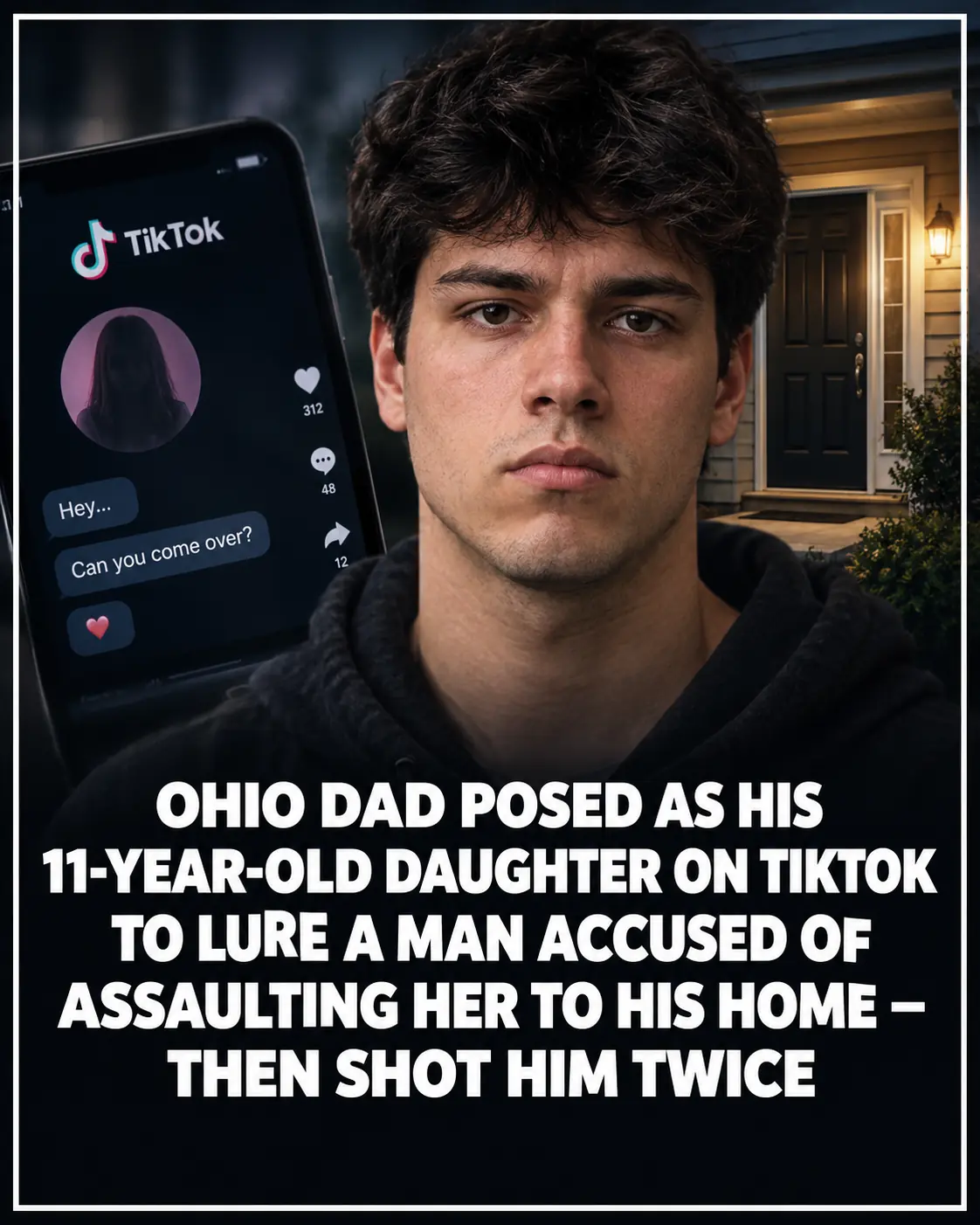
Ohio Dad Posed as His 11-Year-Old Daughter on TikTok to Lure Her Alleged Assailant
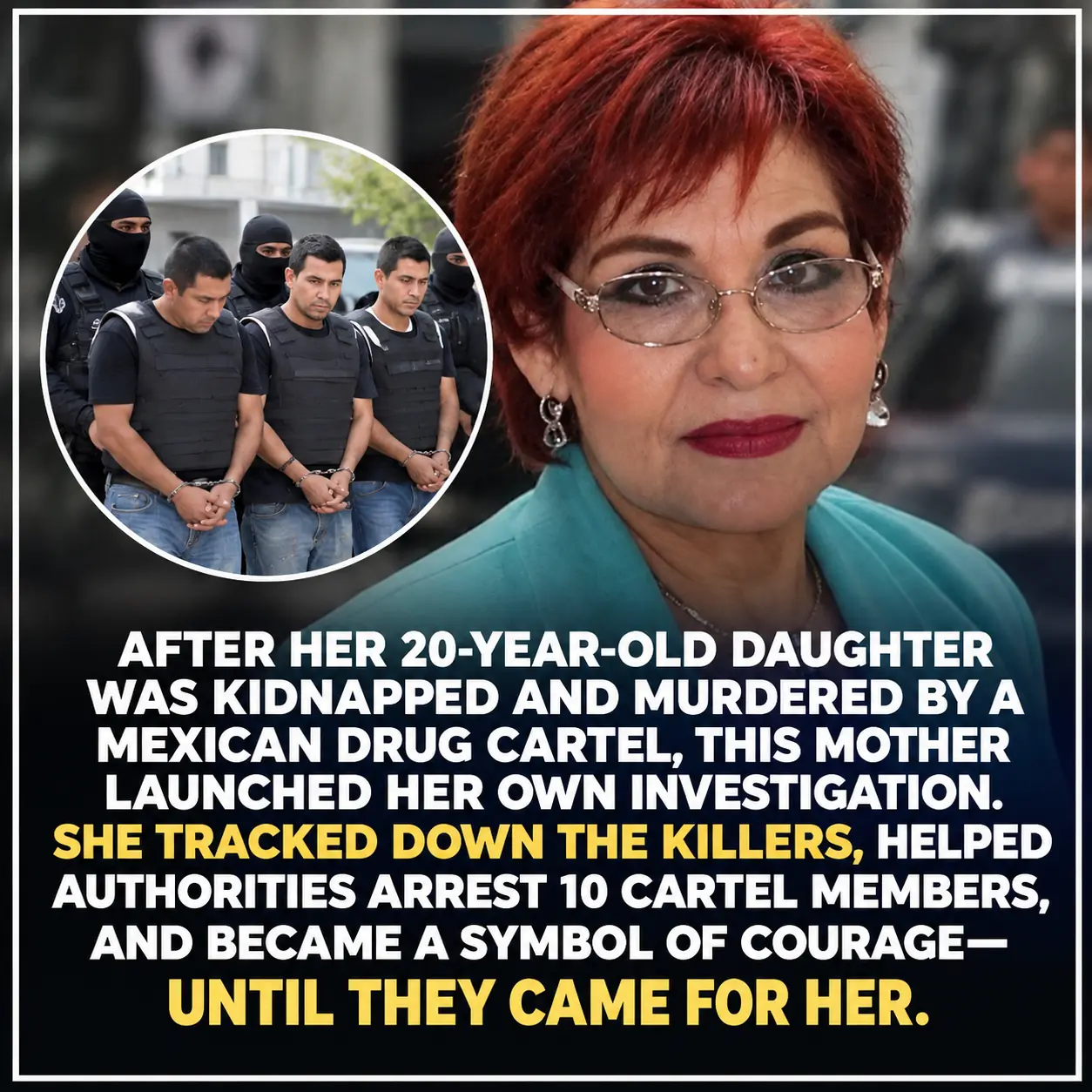
Miriam Rodríguez: The Mother Who Refused to Stop Searching for Her Daughter






Lindsay Clancy Trial Ends in Mistrial, Reigniting a Fierce Debate Over Justice
Thomas Massie Takes the Epstein Files Fight to the House Floor
Ohio Dad Posed as His 11-Year-Old Daughter on TikTok to Lure Her Alleged Assailant
Miriam Rodríguez: The Mother Who Refused to Stop Searching for Her Daughter