Blaire White’s Viral Lindsay Clancy Comment: A Real Quote, a Tragic Case, and a Much Bigger Mental Health Debate
News 08/09/2026 15:52
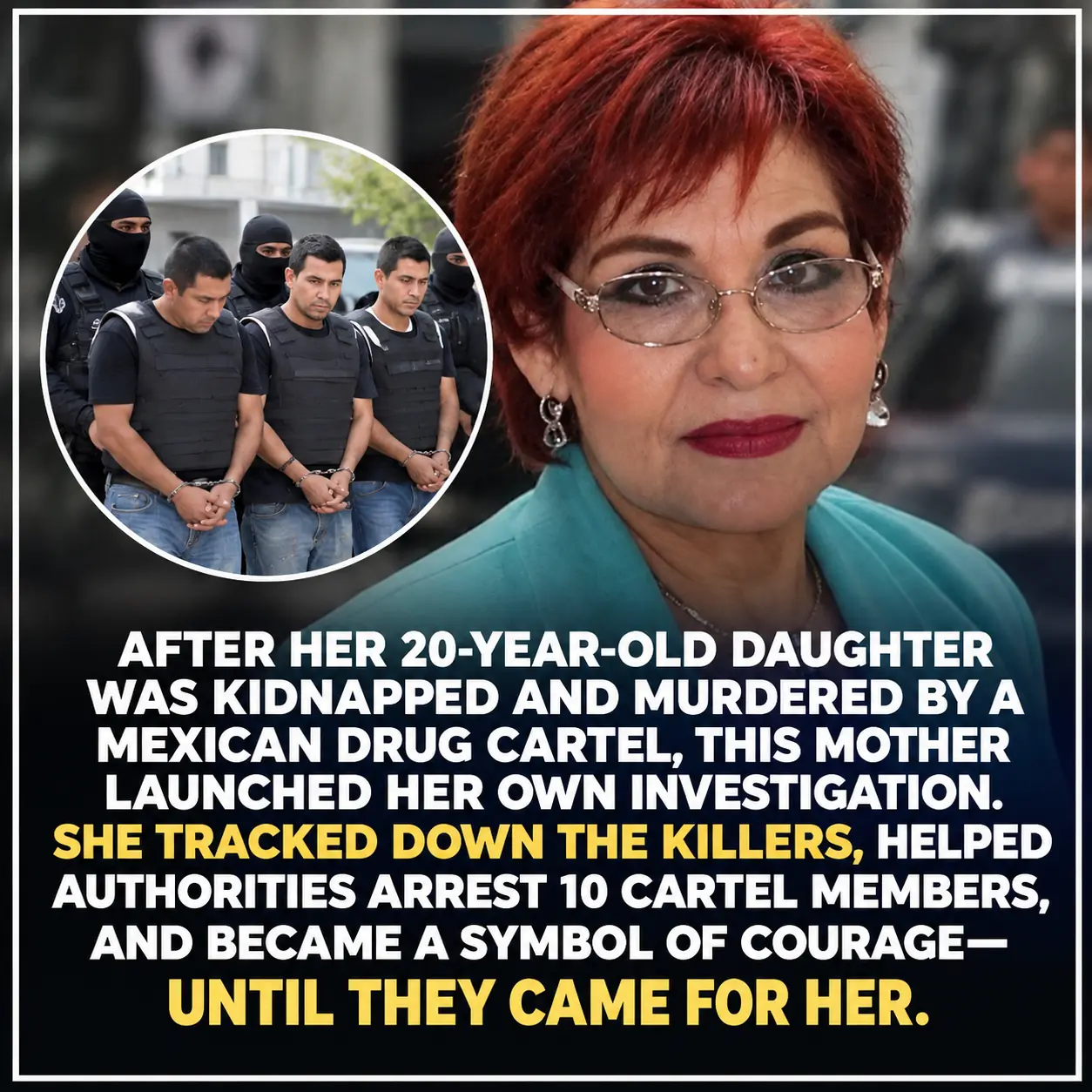
The story of Miriam Rodríguez Martínez is one of the most extraordinary and tragic accounts to emerge from Mexico’s long struggle with organized crime and the disappearance of thousands of people. After her daughter, Karen Alejandra Salinas Rodríguez, was kidnapped, Miriam found herself confronting a reality familiar to many families in Tamaulipas: fear, silence, bureaucracy and an investigation that seemed unable to deliver answers.
Rather than accepting that her daughter’s disappearance would become another unsolved case, Miriam began searching on her own. She followed leads, collected information, studied the people connected to the kidnapping and adopted disguises to get closer to suspects. Her efforts eventually helped authorities identify and arrest around ten people connected to the criminal group involved in Karen’s kidnapping and murder. (GDPR Support)
Her story became even more remarkable because Miriam did not simply disappear from public life after finding answers about her daughter. She went on to become an advocate for other families of missing people. But her determination also placed her directly in the path of the criminals she had spent years pursuing.
On May 10, 2017—Mother’s Day in Mexico—Miriam Rodríguez was shot and killed in San Fernando, Tamaulipas.
Her life has since become a powerful symbol of the courage of families searching for missing loved ones, while also raising painful questions about impunity, institutional failure and the dangers faced by those who challenge organized crime.
Miriam Rodríguez lived in San Fernando, a municipality in the northern Mexican state of Tamaulipas. The region sits relatively close to the United States border and has long been affected by conflicts between organized-crime groups competing for territory and lucrative smuggling routes.
For Miriam, however, organized crime was not initially an abstract national-security problem. It became painfully personal when her daughter Karen disappeared.
According to reporting and human-rights documentation, Karen Alejandra Salinas Rodríguez was kidnapped in 2012. The Inter-American Commission on Human Rights later described Karen as having been disappeared by a criminal group that year. The Guardian likewise reported that Karen was abducted in 2012. (Refworld)
Some later popular accounts give different dates for the kidnapping, which is one reason versions of Miriam's story circulating online do not always agree on the chronology. What is consistent across the more substantial reporting is that Karen was a young woman, that her family received demands for ransom, and that she was ultimately killed.
The kidnapping initially placed Miriam in the position that many families of missing people find themselves in: desperately trying to obtain information while dealing with authorities who appear unable—or unwilling—to provide meaningful answers.
The family paid money in an attempt to secure Karen’s release, but she did not come home. Miriam eventually discovered that the kidnapping had ended in murder rather than ransom and release. Her daughter's remains were later found in a clandestine grave. (Wikipedia)
For Miriam, finding Karen’s remains did not bring the kind of closure people might imagine.
Instead, it created another question.
Who had done this to her daughter—and why had they been allowed to get away with it?
The answer would lead Miriam into an increasingly dangerous confrontation with one of Mexico’s most notorious criminal organizations: Los Zetas.
Los Zetas had emerged from a group of former Mexican special-forces soldiers who became associated with the Gulf Cartel before eventually becoming a powerful criminal organization in their own right. The group became notorious for extreme violence, kidnappings and territorial control.
The Guardian reported that Miriam’s investigation eventually uncovered information implicating members of Los Zetas in Karen’s disappearance and murder. (The Guardian)
But Miriam was not satisfied with simply knowing that a cartel was involved.
She wanted names.
She wanted locations.
She wanted the people responsible to face justice.
And when she believed the official investigation was not moving quickly enough, she decided to begin investigating herself.
Miriam Rodríguez had no formal background as a police detective or intelligence officer.
What she had was something far more personal: knowledge of her daughter, determination, patience and an unwillingness to accept that the case would disappear into a pile of unsolved files.
She began reconstructing the chain of people involved in Karen’s kidnapping.
That meant learning everything she could about the suspects—not only their names, but also their relatives, friends, former occupations, habits and movements.
A detailed New York Times investigation by journalist Azam Ahmed later reconstructed Miriam’s pursuit and described how she followed suspects across Mexico. According to the reporting, she searched online, questioned people connected to the criminal network and even developed relationships with relatives who could provide information about the suspects’ whereabouts. (GDPR Support)
Her approach was painstaking rather than impulsive.
One suspect, for example, had once sold flowers. Miriam spent months looking for him and eventually learned that he had returned to that occupation. She followed the lead until she was able to identify his whereabouts near the border. (GDPR Support)
This was not a conventional investigation.
Miriam was operating in an environment where simply asking the wrong questions could attract dangerous attention. She therefore understood that her appearance and identity could become obstacles.
She changed them.
Reports about her investigation describe Miriam altering her appearance and adopting different identities to gather information. She reportedly posed as people such as a survey worker, a health worker or an election-related official while attempting to obtain names, addresses and other information. (Grupo Milenio)
She also used fake identification and disguises.
The details can sound almost like scenes from a crime thriller, but the reality was far less glamorous.
There was no movie crew.
No guaranteed backup.
No team of detectives waiting around the corner.
Miriam was a mother searching for people who had already demonstrated that they were willing to kidnap and kill.
Her investigation required her to get close enough to people connected to the suspects without revealing what she was really doing.
According to New America’s summary of Ahmed’s book Fear Is Just a Word, Miriam even dyed her hair red as part of a disguise while pursuing one of the men she believed was involved in her daughter’s murder. She watched him, waited for an opportunity and ultimately helped orchestrate his arrest. (New America)
The image of Miriam carrying out these investigations has contributed to the legend surrounding her.
But one important distinction should not be lost in the retelling.
Miriam did not personally arrest ten cartel members.
Rather, she gathered information, identified suspects and passed information to authorities, contributing to arrests. The New York Times described her as instrumental in bringing ten people into custody, while human-rights documentation states that her investigations led to the detention of ten people implicated in her daughter's disappearance. (GDPR Support)
That distinction matters because social-media versions of her story sometimes turn a complicated investigation into a simple revenge narrative.
The reality was more complicated—and, in many ways, more courageous.
Miriam was not a fictional action hero hunting criminals for entertainment.
She was a grieving mother attempting to navigate a criminal network and a justice system that she believed had failed her family.
Over a period of several years, Miriam's investigation produced results.
She helped authorities identify people connected to Karen’s kidnapping and murder. Around ten individuals were eventually arrested in connection with the case. The New York Times later described Miriam as having helped bring down ten people, while other accounts similarly report that ten members or associates of the kidnapping group were captured. (GDPR Support)
For many people, that might have been the end of the story.
For Miriam, it was not.
Her experience had shown her that Karen’s case was not an isolated tragedy.
Across Tamaulipas and other parts of Mexico, families were living through similar nightmares. Relatives disappeared. Investigations stalled. Families searched clandestine locations. Parents and spouses were forced to become investigators because they feared that nobody else would search hard enough.
Miriam therefore became an advocate for other families of missing people.
She helped establish the Collective of Missing Persons in San Fernando, bringing together families who were searching for their own missing relatives. The Guardian reported that the organization represented around 600 families. (The Guardian)
Her personal tragedy had turned into a broader mission.
She was no longer searching only for Karen.
She was fighting for the right of other families to know what had happened to their loved ones.
This part of Miriam’s story is particularly important because it reveals something beyond the dramatic stories about disguises and tracking suspects.
Her legacy was not simply about revenge.
It was also about advocacy.
The Inter-American Commission on Human Rights recognized Miriam as a human-rights defender and condemned her killing in 2017. Its statement noted that after her daughter disappeared, Miriam dedicated herself to searching for her and helped establish the Collective of Missing Persons in San Fernando. (Refworld)
That broader context changes the way her story should be understood.
Mexico’s crisis of disappearances created an environment in which families themselves became an essential part of the search for missing people. The Guardian noted that relatives of disappeared people had often played important roles in discovering clandestine graves and searching for victims of organized crime. (The Guardian)
Miriam became one of the most recognizable examples of that phenomenon.
Yet the success of her investigation also made her increasingly vulnerable.
The people she helped identify had families.
They had associates.
And some of those suspects were connected to an organization capable of retaliating against people who challenged it.
Miriam knew this.
She reportedly requested protection from the authorities because she feared for her life.
Her concerns became even more urgent after several prisoners connected to the case escaped from a prison in Ciudad Victoria in March 2017. Human-rights documentation records that Miriam reported receiving death threats afterward and sought protection from the Tamaulipas authorities. (Movimiento por Nuestros Desaparecidos)
According to El Universal, official documents showed that she sought federal protection in April 2017, only weeks before she was killed. The newspaper reported that the request had not been fully implemented before her death. (El Universal)
The warning signs were there.
Miriam knew she was exposed.
The authorities knew she was exposed.
And yet the protection she requested did not arrive in time.
On May 10, 2017, Mexico celebrated Mother's Day.
For many families, it was a day of flowers, phone calls, gifts and family gatherings.
For Miriam Rodríguez, it became the day her own life ended.
She was attacked and shot in San Fernando, Tamaulipas.
The Guardian reported that armed men shot her 12 times. She died after the attack. (The Guardian)
The symbolism of the date made the murder even more devastating.
Miriam had spent years searching for her daughter.
She had confronted a criminal network.
She had helped bring suspects before the authorities.
She had become an advocate for hundreds of other families.
And on Mother's Day, she was killed.
The circumstances also raised immediate concerns that her murder was connected to her activism and her pursuit of the people involved in Karen’s case.
Authorities later identified two alleged material perpetrators of Miriam’s murder. According to La Jornada, the state prosecutor said those suspects were believed to have links to the group involved in Karen’s killing. Investigators considered Miriam’s efforts to bring Karen’s killers to justice one of the strongest lines of inquiry into her own murder. (Jornada)
The exact chain of responsibility for her assassination is more complicated than the viral version of the story often suggests.
It is tempting to write that “the cartel killed her because she hunted them down,” but a responsible account should distinguish between what investigators established and what remains uncertain.
What is clear is that Miriam had received threats, had sought protection and was killed after years of pursuing people connected to her daughter's kidnapping.
The Inter-American Commission on Human Rights strongly condemned her assassination and highlighted the vulnerability of families searching for disappeared relatives. (Refworld)
The case also became a symbol of the broader security crisis in Tamaulipas.
Miriam's murder was not simply the killing of one woman.
It demonstrated the extraordinary danger faced by ordinary citizens who attempted to challenge powerful criminal organizations in areas where the rule of law was weak.
Her death also raised questions about whether the authorities had done enough to protect someone who had explicitly warned them that she was in danger.
El Universal reported that official documents showed Miriam had formally sought protection shortly before her murder, but the process had not been completed by the time she was killed. (El Universal)
That detail is one of the most painful parts of her story.
Miriam had spent years asking authorities to act on behalf of her daughter.
Then, when she herself needed protection, the system again moved too slowly.
Years after Miriam Rodríguez's death, her story has continued to attract international attention.
Her life has been documented by major news organizations and later became the subject of Azam Ahmed’s deeply researched book Fear Is Just a Word: A Missing Daughter, a Violent Cartel, and a Mother’s Quest for Vengeance. Ahmed, an investigative journalist who worked for The New York Times, conducted extensive interviews and research into Miriam's story. (Muck Rack)
The New York Times article on which the book was based described Miriam's pursuit of her daughter's killers across Mexico and showed how she gradually reconstructed the network surrounding Karen's kidnapping. The reporting also emphasized the personal cost of her investigation. (GDPR Support)
Her story was eventually adapted into the film La Civil, which drew international attention to the experience of a mother searching for her kidnapped daughter amid Mexico's cartel violence. (El Tiempo)
But perhaps the most important part of Miriam's legacy is not the disguises, the fake IDs or the dramatic pursuit of suspects.
It is the question her life leaves behind:
What happens when a family has to become its own investigator because the system cannot provide answers?
Miriam's story illustrates the terrible consequences of a society in which disappearance can become normalized.
For families of missing people, uncertainty can be its own form of suffering. They do not know whether their loved one is alive. They do not know where to search. They may not know whom to trust. And when investigations stall, they can feel as though the world has moved on while they remain trapped in the same unanswered question.
Miriam refused to move on.
She searched.
She followed leads.
She changed her appearance.
She learned about suspects and their families.
She gathered information.
She helped authorities arrest people connected to her daughter's kidnapping.
And then she used the experience to help other families.
That is why reducing her story to “a mother who hunted down ten cartel members” misses something essential.
The real story is more complicated.
She did not simply hunt criminals.
She became an investigator because she was searching for her daughter.
She became an activist because she realized other families were experiencing the same pain.
And she became a symbol because her determination exposed the enormous gap between the courage of victims' families and the protection available to them.
Her story is also a warning against turning real human tragedies into simplistic internet legends.
Some viral versions claim that Miriam personally killed her daughter's kidnappers. There is no reliable evidence supporting that characterization. Her documented role was to investigate, gather intelligence and help authorities identify suspects. (GDPR Support)
Likewise, saying that every person she pursued was simply “either dead or in prison” oversimplifies what happened. The available reporting describes arrests and imprisonment of people connected to the kidnapping, but the fate of individual suspects varied. Some prisoners were later able to escape, and Miriam was killed only weeks after such an escape heightened the danger surrounding her. (El Universal)
The facts are powerful enough without exaggeration.
Miriam Rodríguez lost her daughter to kidnapping and murder.
She refused to let the case disappear.
She conducted an extraordinary personal investigation in a dangerous environment.
She helped authorities bring approximately ten people connected to the crime into custody.
She became an advocate for hundreds of other families.
She warned authorities that she was in danger.
And on May 10, 2017, she was murdered.
Her story therefore belongs not only to the world of true crime, but also to the history of human-rights activism in Mexico.
It is a story about grief becoming determination.
About fear being overcome by purpose.
And about the terrible price that can sometimes be paid by people who refuse to accept silence as an answer.
Miriam Rodríguez did not bring her daughter back.
Nothing could.
But she ensured that Karen's disappearance would not simply become another forgotten case.
And in doing so, she left behind a legacy that continues to remind the world of the extraordinary lengths a mother may go to when the person she loves most disappears—and of how dangerous that search can become when justice fails to arrive in time.
The New York Times — “Mother stalked her daughter’s killers across Mexico, one by one” — detailed investigative account by Azam Ahmed.
The Guardian — “Mexican woman who uncovered cartel murder of daughter shot dead” — contemporary reporting on Miriam’s murder, activism and the circumstances surrounding her death.
Inter-American Commission on Human Rights — statement condemning the murder of Miriam Rodríguez — human-rights documentation concerning her activism and the disappearance of her daughter.
New America — “Fear Is Just a Word” — background on Azam Ahmed’s book and the extensive investigation behind it.
El Universal — investigation into the protection Miriam requested before her death — useful documentation concerning the official response to her security concerns.
La Jornada — investigation into the suspected perpetrators of Miriam’s assassination — contemporary reporting on the official investigation.
Note: I deliberately corrected several viralized details from the original version you provided. In particular, Miriam is better described as helping authorities identify and arrest ten people, rather than personally “capturing” them, and the evidence does not support saying that she personally killed the people she pursued. The date of Karen’s kidnapping is also inconsistently reported in later retellings; major human-rights and contemporary reporting place it in 2012. (Refworld)


Lindsay Clancy Trial Ends in Mistrial, Reigniting a Fierce Debate Over Justice

Thomas Massie Takes the Epstein Files Fight to the House Floor
Ohio Dad Posed as His 11-Year-Old Daughter on TikTok to Lure Her Alleged Assailant












Lindsay Clancy Trial Ends in Mistrial, Reigniting a Fierce Debate Over Justice
Thomas Massie Takes the Epstein Files Fight to the House Floor
Ohio Dad Posed as His 11-Year-Old Daughter on TikTok to Lure Her Alleged Assailant