Blaire White’s Viral Lindsay Clancy Comment: A Real Quote, a Tragic Case, and a Much Bigger Mental Health Debate
News 08/09/2026 15:52
When a political quote arrives on social media inside a polished graphic, it often feels complete. There is a recognizable face, a dramatic sentence in quotation marks, and a name beneath it. The design itself seems to promise that someone checked the words before publishing them.
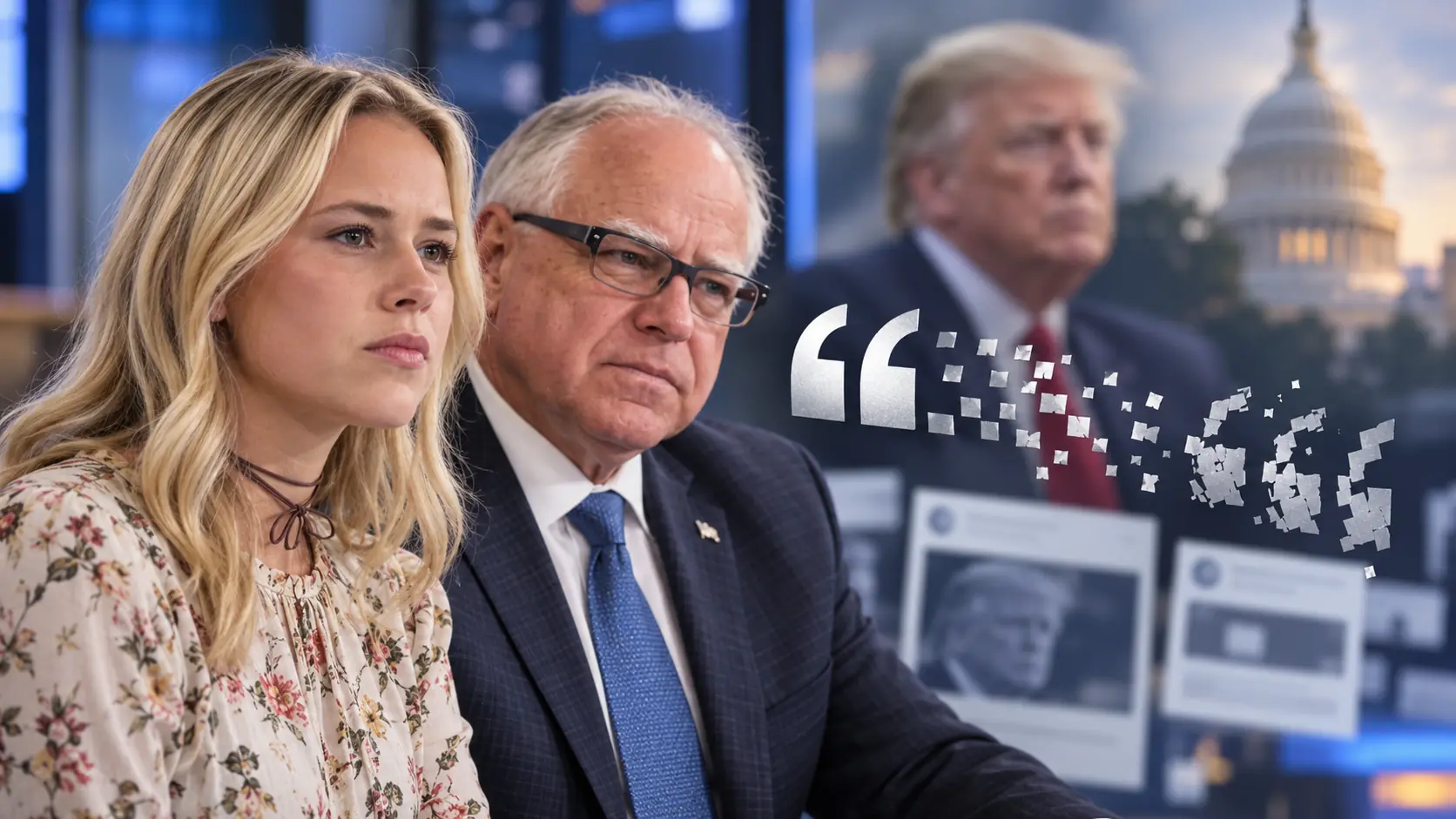
That appearance of certainty is what made a recent image featuring Minnesota Gov. Tim Walz, his daughter Hope Walz, and President Donald Trump so shareable. The graphic attributed the following statement to Hope:
“Trump went after my dad because he’s the man Trump will never be.”
The sentence is sharp, personal, and perfectly suited to the combative language of online politics. It also resembles something Hope Walz genuinely said. But it is not an exact quotation.
In a January 2026 interview, Hope said:
“Trump just hates him for some reason. I think it’s because he’s everything Trump will never be.”
Those two versions communicate a broadly similar opinion, yet they are not interchangeable. The viral graphic changes the wording, removes the uncertainty expressed by “I think,” introduces the more active allegation that Trump “went after” her father, and then presents the result as if it were a verbatim statement.
This makes the post more complicated than a simple true-or-false verdict. The underlying remark is real. The photograph appears to show Hope with her father. The political conflict surrounding the Walz family is also real. But the quotation marks give invented wording the authority of a direct quote.
That process can be described as “quote laundering”: a paraphrase travels through websites and social accounts until its origin becomes difficult to see, while polished graphics transform it into something that looks like documentary evidence.
The case also raises a larger question about the human cost of political attention. When a politician becomes a national target, how much of that pressure should the politician’s family be expected to absorb?
The source of the controversy was a long-form interview on One Hour Detours, hosted by John O’Sullivan and released on January 5, 2026. Hope appeared on the program shortly after Tim Walz announced that he would not seek another term as governor of Minnesota.
The conversation lasted approximately 72 minutes and covered much more than Donald Trump. Hope discussed growing up in a political family, receiving threats, living temporarily under Secret Service protection during the 2024 presidential campaign, losing that protection afterward, and trying to build a public identity of her own.
She also described how the Walz family approached her father’s decision about reelection. According to Hope, her parents treated running for office as a decision involving the whole family rather than Tim Walz alone. She indicated that she would have supported either choice but acknowledged that another campaign would have made life more difficult for everyone around him.
During that discussion, Hope suggested that her father believed leaving the race might reduce the national political attention directed at Minnesota. She said his national profile had made him an easy target and added:
“Trump just hates him for some reason. I think it’s because he’s everything Trump will never be.”
The sentence was unmistakably critical of Trump. There is no need to soften its meaning. Hope contrasted her father’s character with Trump’s and clearly believed that the hostility toward Tim Walz was personal as well as political.
But accuracy requires preserving what she actually said.
She did not use the specific sentence printed on the viral image. In particular, the phrase “went after my dad because” converts her opinion about Trump’s hostility into a cleaner statement of motive and causation.
The phrase “the man Trump will never be” is also rhetorically smoother than “everything Trump will never be,” which may explain why it was attractive to social media publishers. It sounds written because, in all likelihood, it was rewritten.
Contemporary reports provide useful confirmation. Minnesota outlet Bring Me The News reproduced the relevant portion of Hope’s remarks in its coverage of the interview. Other publications, including Fox News, the New York Post, and the Washington Examiner, reported the same underlying line. Their political framing differed, but the central wording remained consistent.
The responsible conclusion is therefore precise: Hope Walz made a real and strongly worded criticism of Trump, but the sentence in the graphic should be treated as a paraphrase, not a direct quote.
Hope’s statement did not emerge from an isolated family disagreement. It came after an unusually intense period for Tim Walz and Minnesota politics.
Walz, a Democrat, had served as a member of Congress before becoming governor in 2019. His national profile increased dramatically when Vice President Kamala Harris selected him as her running mate in the 2024 presidential election.
Although the ticket lost, Walz remained a nationally recognizable Democratic figure and a frequent target for Trump and Republican commentators.
By late 2025 and early 2026, his administration was facing renewed scrutiny over fraud involving Minnesota social-service programs. The long-running Feeding Our Future case had already produced numerous federal charges and convictions connected with the misuse of funds intended to provide meals to children during the COVID-19 pandemic.
Further allegations involving other programs intensified questions about government oversight.
Republicans argued that the Walz administration had failed to identify or stop large-scale abuse. Walz and his allies maintained that Minnesota authorities had cooperated with investigations while accusing political opponents of exaggerating or exploiting the problem.
The underlying fraud cases were real, but arguments about Walz’s personal responsibility became deeply partisan.
Hope did not deny that the controversy contained legitimate issues. In the interview, she acknowledged that there was substance behind at least some of the fraud criticism. Her argument was that the story had been amplified and transformed into a broader political campaign against her father, Minnesota, and eventually members of her family.
This distinction matters.
The viral graphic reduces the dispute to a daughter defending her father’s masculinity or moral character. The full interview presents something more complicated: a family discussing whether the cost of another campaign had become too high amid policy criticism, national attention, online harassment, and concerns about personal safety.
Tim Walz announced in early January 2026 that he would not pursue a third term. Later that month, Reuters reported that he had ruled out seeking elected office again, describing himself as a political “lightning rod.”
Regardless of how voters evaluate his record, his withdrawal showed that the pressure was no longer merely theoretical. It had become part of a decision that affected both his career and his family.
Public officials voluntarily enter a world of scrutiny. Their policies, judgment, public statements, and use of government power deserve examination. Democracy depends on the freedom to criticize leaders vigorously, sometimes harshly.
Their relatives occupy a less clearly defined position.
An adult child who campaigns, gives interviews, or develops a large social media following becomes a public participant to some extent. Hope Walz is not entirely private: she speaks publicly about politics and has defended her father in her own name.
Her claims can be questioned, and her rhetoric can be criticized.
Yet participation does not erase every boundary. Political accountability is not the same as sending threats, targeting a family home, attacking a relative’s disability, or flooding personal accounts with abusive messages.
The distinction becomes especially important when spouses and children did not make the government decisions that provoked the controversy.
Hope said that members of her family had received threatening and vulgar communications. She also described abusive attention directed toward her younger brother Gus, who has a nonverbal learning disorder, ADHD, and anxiety.
In December 2025, Hope responded publicly after Trump used a derogatory disability-related slur against her father and online users allegedly repeated similar language toward the family.
Her response was angry and profane. Critics were entitled to disapprove of its tone. But the episode demonstrated how easily a conflict nominally involving a governor’s performance can expand to encompass siblings, private messages, and a family’s sense of security.
This pattern is not unique to the Walzes or to one political party.
Families of presidents, governors, and candidates have repeatedly been turned into symbols of whatever supporters admire or opponents despise about the politician. A spouse’s clothing, a child’s expression, an old photograph, or an awkward sentence can become a proxy battlefield.
Algorithms do not recognize the difference between scrutinizing power and humiliating someone adjacent to power. They recognize only attention.
A reasonable standard must allow scrutiny proportional to a relative’s actual public role. When Hope gives a political interview, her words are legitimately newsworthy. That makes it more important—not less—to quote her accurately.
“Quote laundering” is a useful descriptive term rather than a single, universally defined category in journalism. It refers to the process by which altered, reconstructed, or paraphrased language acquires the appearance of a verified direct quotation as it passes through successive publishers.
The process often begins innocently.
A reporter summarizes a speaker’s point in ordinary prose. A second account shortens that summary for a headline. A third transforms the headline into first-person language. A graphic designer adds quotation marks and a photograph.
Thousands of shares later, users encounter the finished image without any link to the recording or article from which it originated.
Each step removes evidence of editorial intervention.
Consider the progression in this case:
Hope says Trump “just hates” her father and offers her belief that Tim Walz is “everything Trump will never be.”
A publisher summarizes this as Trump targeting Walz because of the kind of man Walz is.
The summary becomes: “Trump went after my dad because he’s the man Trump will never be.”
Quotation marks and Hope’s name convert the reconstructed line into apparent testimony.
Quotation marks make a specific promise. They tell readers that the enclosed words reproduce what the person said, subject only to transparent and limited editing.
If a publisher wants to convey the general meaning, it can write a paraphrase without quotation marks:
Hope Walz argued that Trump targeted her father because he represented qualities Trump lacked.
That sentence may fairly summarize her position. It simply should not be presented as a transcript.
It is tempting to dismiss the difference as pedantic. If the paraphrase captures the speaker’s general sentiment, does the wording really matter?
In political reporting, it does.
The authentic line contains a hedge: “I think.” Hope was giving her interpretation of Trump’s motives. The viral version removes that hedge and states the motive as fact.
Her phrase “Trump just hates him” describes hostility. “Trump went after my dad” implies an active campaign and may cause readers to imagine a particular incident.
Neither change is enormous, but together they create a more definite accusation.
The edited ending also reshapes the emotional register. “Everything Trump will never be” is broad and spontaneous. “The man Trump will never be” frames the comparison around manhood and character.
That formulation is more polished, more provocative, and more likely to trigger arguments about masculinity—all useful qualities for an engagement-driven post.
Words determine what must be proven. If Hope says she thinks Trump hates her father, she is plainly expressing an opinion. If a graphic says Trump attacked her father for a specific reason, it appears to claim knowledge about intent.
A paraphrase can therefore move a statement along the spectrum from interpretation toward allegation.
Political quote cards borrow visual conventions from legitimate journalism. A portrait, a border, a publication-style logo, and large white lettering resemble the graphics used by news organizations to highlight verified excerpts.
On a crowded feed, visual confidence often substitutes for provenance.
Most users do not stop to locate a full interview. They react to the message in front of them, especially when it confirms an existing opinion.
Supporters share it because it delivers a satisfying rebuke. Opponents share it to ridicule the speaker. Both groups extend its reach.
The design also removes ambiguity. A 72-minute conversation includes pauses, qualifications, and competing thoughts. A quote card needs a single emotional conclusion.
Social platforms reward precisely the qualities that careful reporting tends to resist: speed, certainty, conflict, and moral clarity.
Researchers sometimes use the term “contextomy” for quotations removed from context in a way that distorts a speaker’s intent. Quote laundering can involve contextomy, but it can go further: the words themselves may be rebuilt.
In Hope’s case, the viral version largely preserves her hostile assessment of Trump, so the principal problem is not a complete reversal of meaning. It is false precision.
That difference is important. A quotation does not need to express the opposite of someone’s position before it becomes misleading. Presenting words a person never used as an exact statement is already enough to compromise the record.
Readers can apply a straightforward test before sharing a dramatic quotation.
First, search a distinctive sequence of six to ten words inside quotation marks. Exact matches may reveal whether the sentence appears in established coverage or only on copied social posts.
Second, look for the earliest available source. A video, audio recording, official transcript, or complete social media post is stronger evidence than a page that does not explain where the statement came from.
Third, compare the wording word for word. Similar meaning does not establish an exact quotation. Pay particular attention to verbs, hedges such as “I think” or “maybe,” and transitions that might have been removed.
Fourth, examine the surrounding question and answer. A speaker may be describing another person’s claim, making a joke, rejecting a proposition, or speculating rather than asserting a fact.
Fifth, evaluate the publisher. A logo is not a citation. Does the post link to a source? Does it identify the date and setting? Has the account previously published reconstructed quotations?
Applied here, those steps lead to a balanced result.
The speaker and political dispute are genuine. The source interview is available. The authentic remark is close in sentiment to the viral sentence. But the sentence on the image is not supported as an exact quote.
The publisher of a political graphic may consider a rewritten quotation harmless because it fits the speaker’s known position. That standard is dangerous.
Once editors permit themselves to improve quotations for dramatic effect, accuracy depends on their subjective interpretation of what a person “really meant.”
The correct alternatives are simple. Use the original wording. Remove the quotation marks and label the sentence as a summary. Or place a short authentic excerpt on the image and explain the context in the caption.
Readers also carry some responsibility, although it should not be equal to that of publishers.
People cannot investigate every post they see. The person or company creating content has more time, control, and potential financial incentive than the audience scrolling past it.
Still, pausing before sharing material that provokes immediate anger can prevent misinformation from spreading.
Political identity makes that pause difficult. People apply tougher verification standards to claims they dislike and lower standards to claims that flatter their side.
The Hope Walz graphic can attract engagement from both directions precisely because it gives each camp what it needs: admirers see a loyal daughter defending her father, while critics see an entitled political relative praising him extravagantly.
The factual correction should not depend on which interpretation a reader prefers. Hope’s real words were already forceful.
Quoting them accurately neither protects her from criticism nor weakens her argument. It simply preserves the record.
The viral image should not be classified as a wholly invented story.
Hope Walz did publicly suggest that Trump hated her father because Tim Walz embodied qualities Trump lacked. The statement arose during a documented interview about her father’s decision to leave the 2026 governor’s race and the pressure surrounding their family.
At the same time, the graphic’s use of quotation marks is unjustified.
“Trump went after my dad because he’s the man Trump will never be” is a polished reconstruction, not the documented wording. It strengthens the causal claim, removes uncertainty, and changes the emotional emphasis.
The distinction is worth defending because quotation marks are part of the evidence architecture of public life.
Citizens rarely witness political events firsthand. They depend on recordings, transcripts, and reporters to know what was said. If paraphrases can quietly become quotations whenever the meaning seems close enough, public debate loses one of its simplest standards of accountability.
The story also reveals why political misinformation is not only about politicians.
Tim Walz chose public office, but his family experienced some of the consequences of his national profile. Hope chose to speak publicly, which makes her words open to scrutiny. It does not make those words available for rewriting.
Political families will continue to appear in campaigns because they help voters see candidates as human beings. They will also continue to face criticism when they enter public disputes.
A healthy political culture must be capable of doing both things at once: examining their claims honestly while rejecting threats, disability-based abuse, and invented quotations.
The most accurate verdict on the image is therefore neither “true” nor “completely fake.” It is based on a real remark but presented in a misleading form.
That may sound less dramatic than the quote card itself, but it is the conclusion the evidence supports.
The episode offers a useful rule for the next viral quotation: if the words have been improved, condensed, or reconstructed, they may still function as commentary—but they no longer belong inside quotation marks.
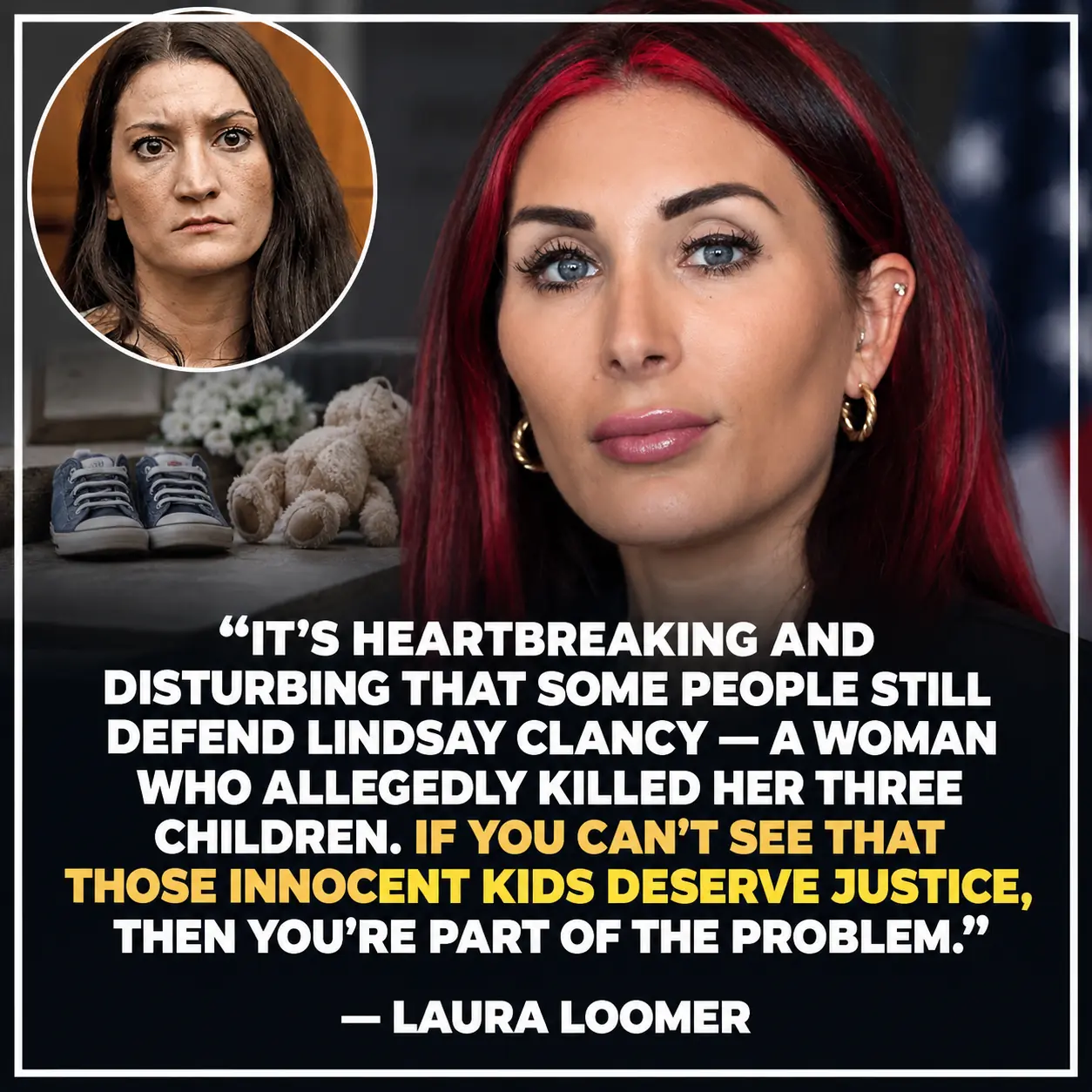
Lindsay Clancy Trial Ends in Mistrial, Reigniting a Fierce Debate Over Justice
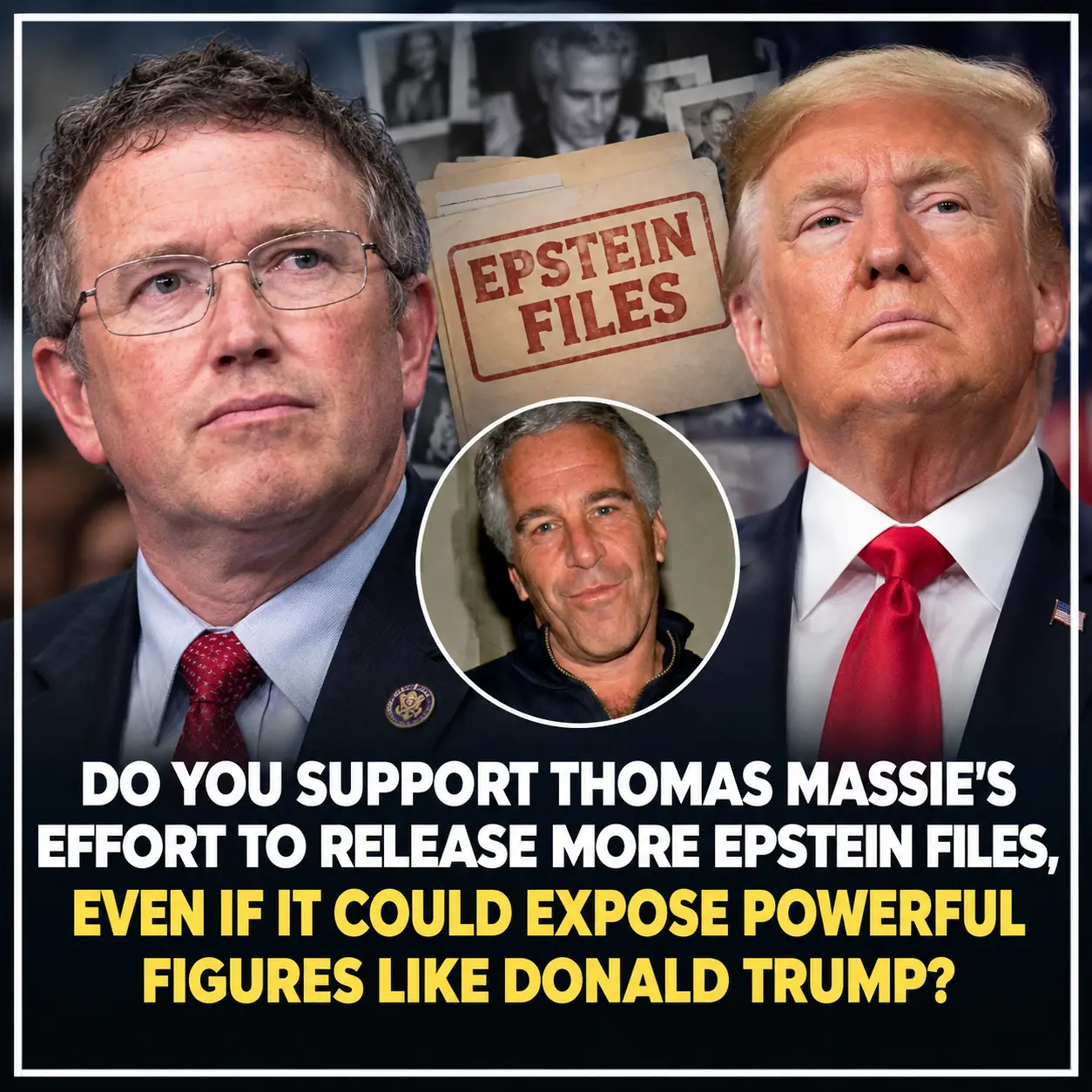
Thomas Massie Takes the Epstein Files Fight to the House Floor
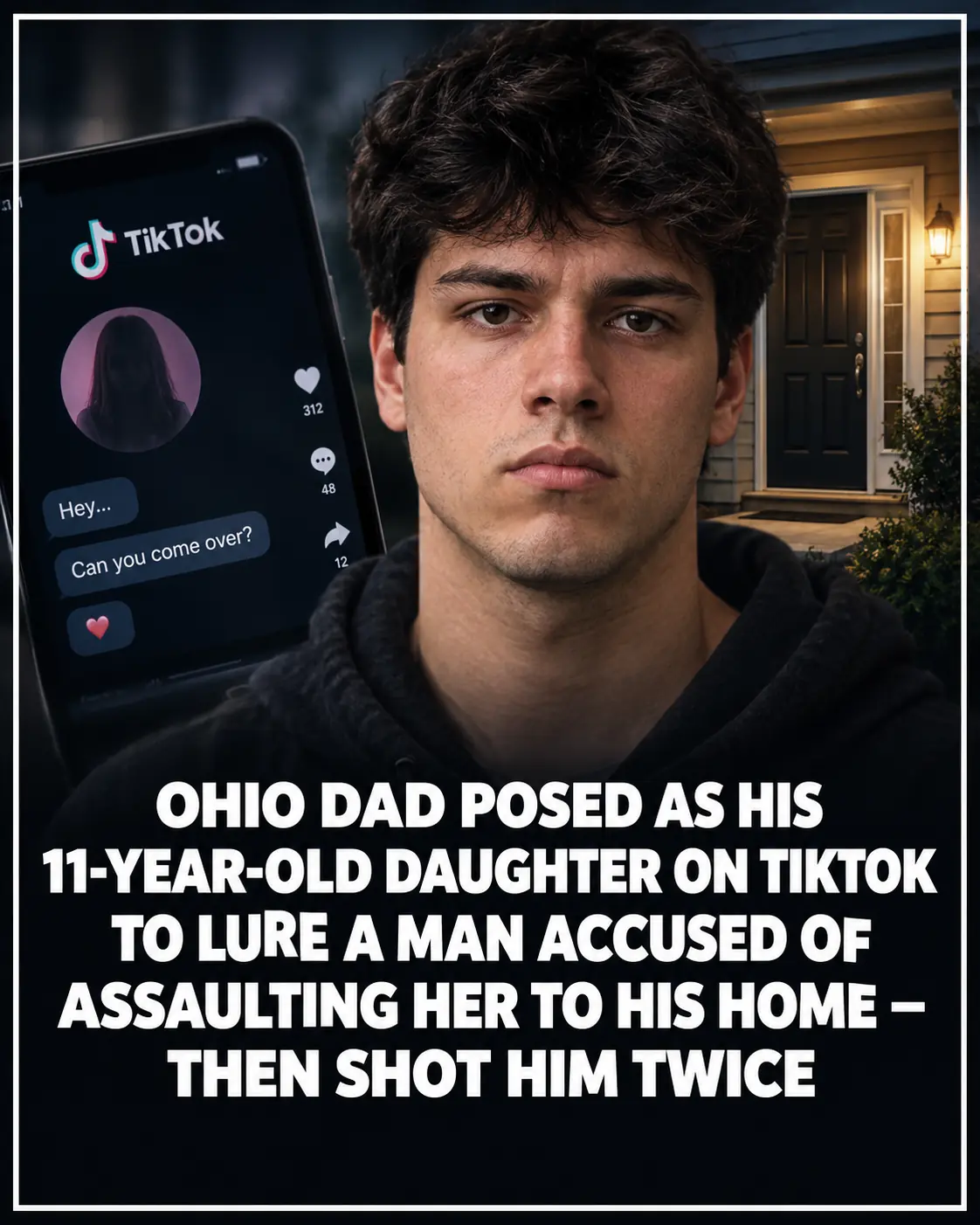
Ohio Dad Posed as His 11-Year-Old Daughter on TikTok to Lure Her Alleged Assailant
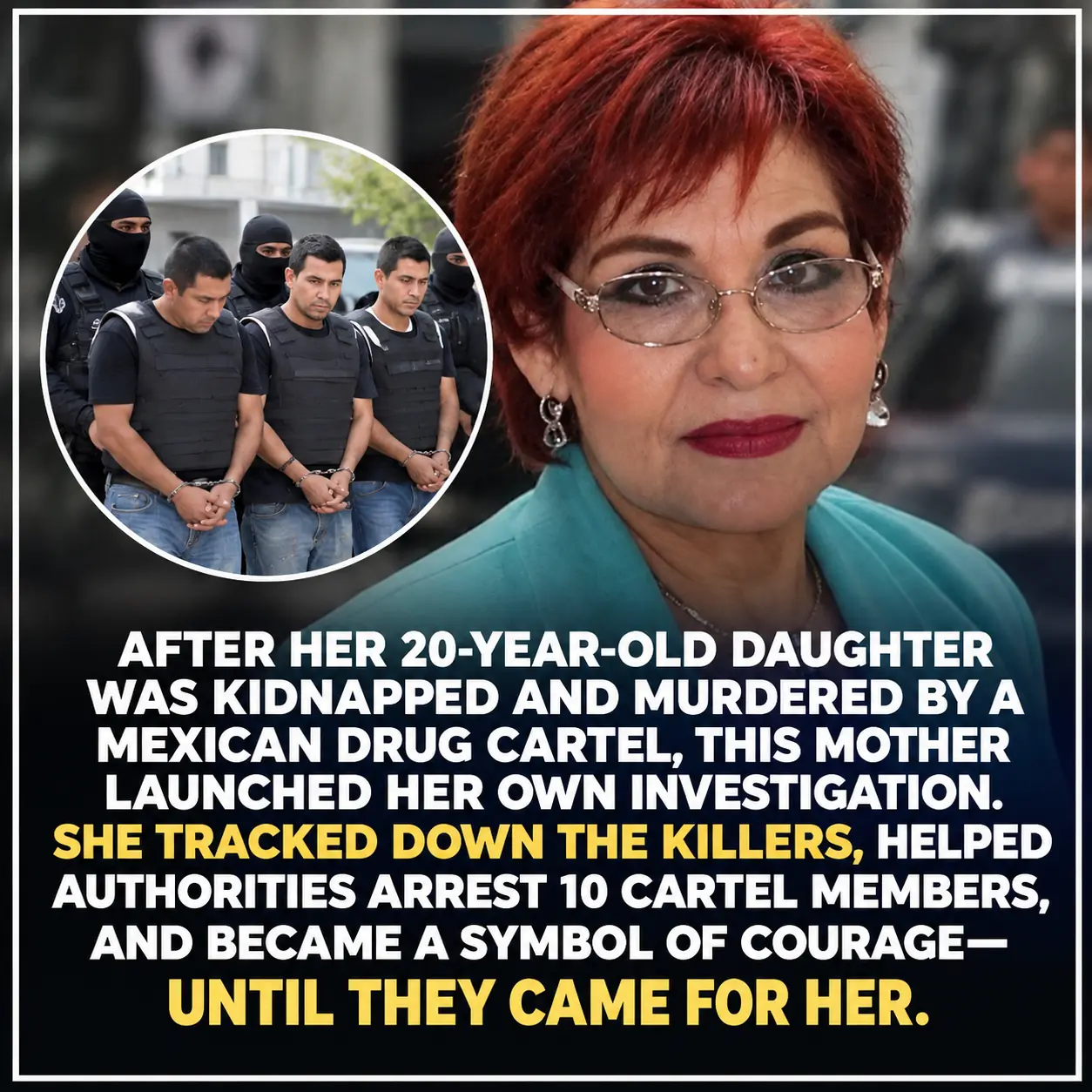
Miriam Rodríguez: The Mother Who Refused to Stop Searching for Her Daughter





Lindsay Clancy Trial Ends in Mistrial, Reigniting a Fierce Debate Over Justice
Thomas Massie Takes the Epstein Files Fight to the House Floor
Ohio Dad Posed as His 11-Year-Old Daughter on TikTok to Lure Her Alleged Assailant
Miriam Rodríguez: The Mother Who Refused to Stop Searching for Her Daughter