
Debate: Asking Babies for Consent Before Changing Their Diapers
Debate: Asking Babies for Consent Before Changing Their Diapers
News 12/06/2026 14:55
Both the US and Iran have imposed blockades on the Strait of Hormuz, using different methods, nearly strangling this vital shipping lane.
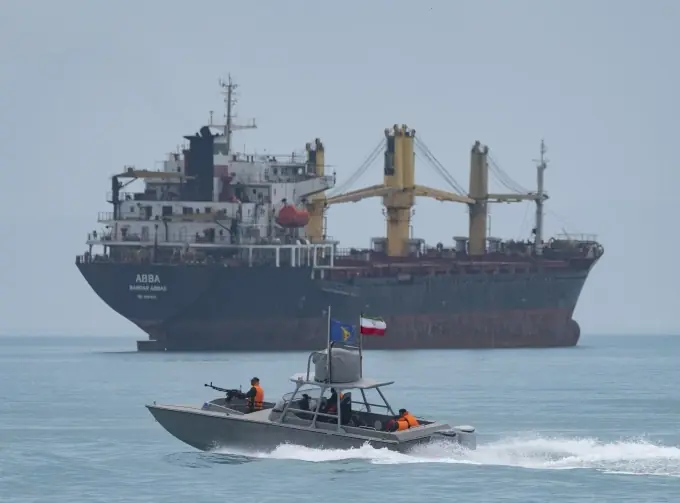
The Strait of Hormuz has been the focal point of the nearly two-month conflict between the US-Israel and Iran. In peacetime, it's a sea route that carries 20% of the world's oil supply from the Gulf. However, as soon as hostilities broke out, Iran almost completely blockaded Hormuz, allowing only ships from a few "friendly" nations to pass through.
Maritime tracking data shows that shipping traffic subsequently dropped by 95%, from around 130 ships per day before the conflict to an average of only 8 ships per day. Hundreds of ships were left stranded in the Persian Gulf, fearing attacks from the IRGC.
To pass through Hormuz, shipping companies had to rely on intermediaries who could contact the IRGC and provide complete information about their vessels. If the vessel passes the inspection process, the IRGC will issue an approval code and specific instructions on the route the vessel must take.

A US Army AH-64 helicopter patrols the Strait of Hormuz on April 17. Photo: AFP
Data from the shipping platform Lloyd's List Intelligence shows that more ships with ties to Iran are transiting the Strait of Hormuz than those without any such ties.
Iran also continues to send its fleet to export oil through the Strait of Hormuz, averaging 1.7 million to 1.8 million barrels from March 15 to April 14, generating approximately $5 billion in revenue, according to trade data firm Kpler. Before the conflict erupted, Iran was earning only $115 million per day in February from crude oil exports, equivalent to $3.45 billion per month.
However, the situation changed when U.S. President Donald Trump announced on April 13th a blockade of Iranian ports, aiming to cut off revenue from oil exports and increase economic pressure on Tehran.
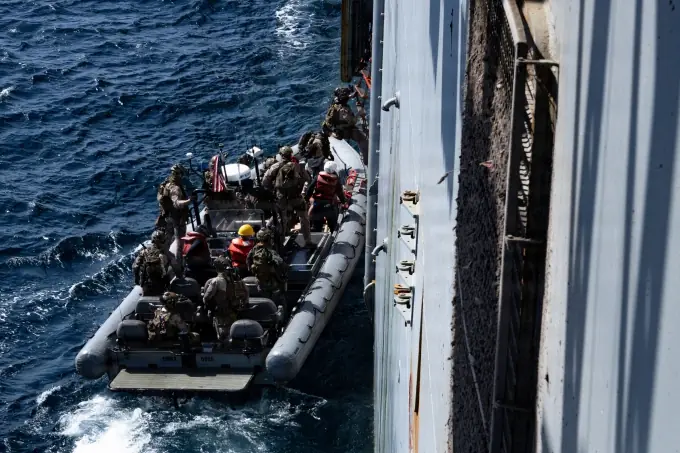
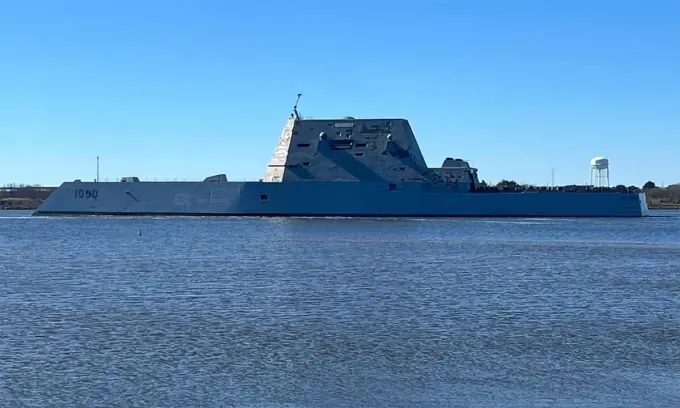
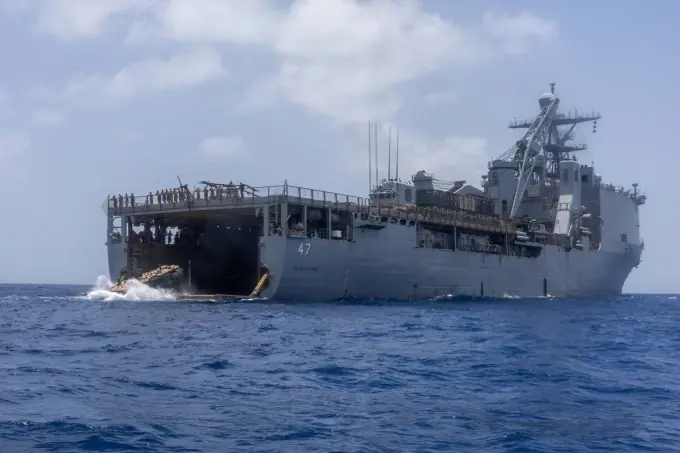
Under this order, U.S. destroyers stationed in the area more than 600 km from the Strait of Hormuz would block cargo ships traveling to or from Iran, while vessels traveling to or from ports in other countries were still allowed to pass through the strait.
"We are deploying AH-64 Apache helicopters in and around the Strait of Hormuz to create a clear presence and deterrence, while promoting the smooth flow of trade," said U.S. Central Command (CENTCOM) Commander Brad Cooper.
CENTCOM later stated that the blockade had "completely halted" Iran's maritime trade. Numerous oil tankers and cargo ships were forced to turn back to Iranian ports due to the U.S. blockade, causing Tehran to face increasingly significant economic losses.
According to estimates by Miad Maleki, an analyst at the Foundation for Defense of Democracy in the US, Iran could lose approximately $435 million per day due to the blockade, including $276 million in exports, primarily crude oil and petrochemical products.
On April 17, Iran unexpectedly announced the lifting of the blockade on the Strait of Hormuz in response to a ceasefire agreement reached between Israel and Hezbollah. Many ships began moving toward the Strait of Hormuz intending to pass through. But less than 24 hours later, Iran reversed its decision, as the US had not yet ended its blockade of Tehran's ports.
"In that brief period, many ships were in position to leave," said Michelle Wiese Bockmann, an expert at the maritime analysis firm Windward. "But information emerged about two ships being attacked while passing through Hormuz, and tracking data showed that 33 ships abandoned their initial intentions."
According to Ms. Bockmann, 12 ships with no clear connection to Iran managed to pass through the strait. These ships also had to seek permission from Iran, and Tehran required them to use the route near its coast, instead of the two main channels in the middle of the strait as before the conflict.
"There is no longer freedom of navigation through the Strait of Hormuz," Ms. Bockmann said.
Tensions in the Strait of Hormuz subsequently escalated significantly, as commercial ships faced a "double blockade." Only ships that had obtained permission or paid a fee to Iran were allowed to pass through the Strait of Hormuz, but once in the Gulf of Oman, they faced the risk of being intercepted by the US Navy.
On April 19, the US military seized an Iranian oil tanker attempting to break through the blockade. CENTCOM reported on April 22 that the US military had forced 29 ships to turn back since the blockade was imposed.
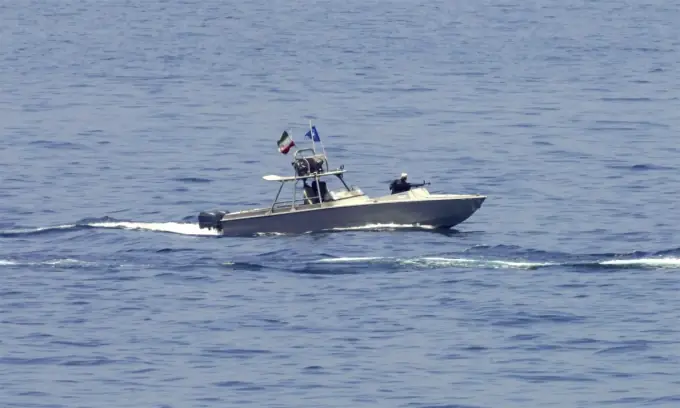
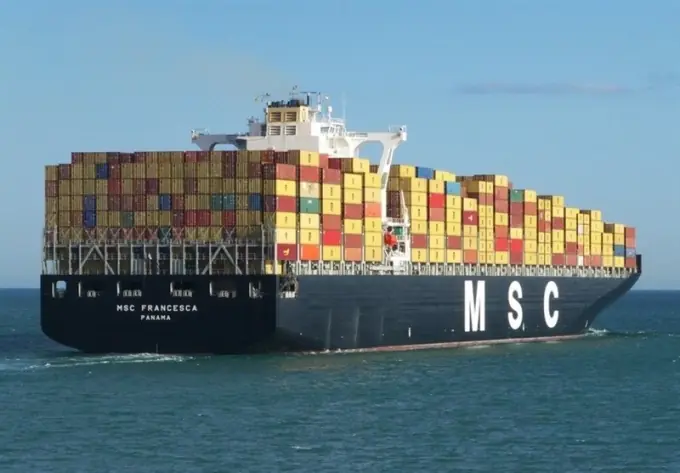
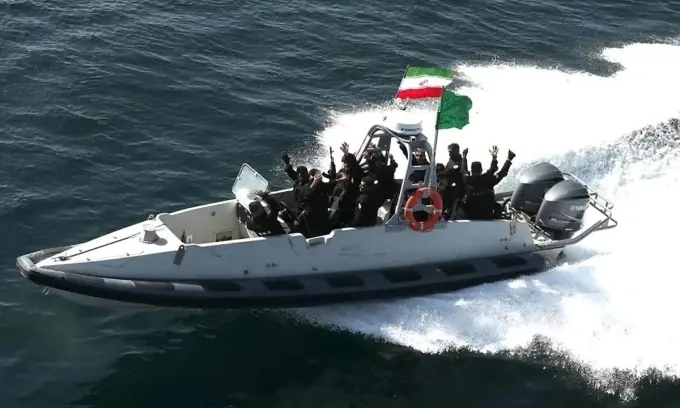
Iran retaliated by increasing its targeting of cargo ships transiting the Strait of Hormuz. At least three container ships were targeted by Iranian armed boats while transiting the Strait of Hormuz on April 22, according to the UK Maritime Trade Coordinator (UKMTO). The IRGC subsequently announced the seizure of two cargo ships, MSC Francesca and Epaminondas, on charges of "operating without the necessary permits".

Location of the Strait of Hormuz. Graphic: Guardian
Developments show that Tehran still controls the Strait of Hormuz, a "trump card" that could give Iran an advantage in any negotiations with the US to end the war.
"Iran is reminding the US that its threats to attack ships are real, and that alone is enough to reduce traffic through Hormuz," said Rosemary Kelanic, director of the foreign affairs research organization Defense Priorities.
A European diplomat in the Middle East told the Washington Post that this is Iran's way of sending the message "don't challenge us, we mean what we say," adding that Tehran believes it is in a more advantageous position and has decided not to participate in a second round of talks with the US.
According to some analysts, the absence of a large-scale US naval presence in Hormuz shows that Iran still exerts significant pressure in the strait.
"No one feels comfortable resuming shipping through Hormuz if even the U.S. Navy doesn't want to operate there," Kelanic stated.
"As long as Iran continues to attack, shipping companies are likely to continue avoiding the area," said Anders Boenaes, senior executive at the German shipping group Hapag-Lloyd. "The lack of prior warning is making the situation even more unpredictable."
Debate: Asking Babies for Consent Before Changing Their Diapers













Narcissistic Personality Disorder Signs
Debate: Asking Babies for Consent Before Changing Their Diapers

Study identifies possible connection to autism development

Check your personality based on the word that comes to your mind first