
Blaire White’s Viral Lindsay Clancy Comment: A Real Quote, a Tragic Case, and a Much Bigger Mental Health Debate
News 08/09/2026 15:52
For most performers, a million-dollar concert sounds like the kind of event that would involve thousands of screaming fans, enormous security teams, packed grandstands and months of preparation.
For Akon, one of the strangest high-paying performances of his career reportedly involved an audience small enough to fit around a dinner table.
According to a story the Senegalese-American singer recently recounted, a wealthy family somewhere in the Middle East paid him $1 million for a private performance.
Everything about the production suggested that Akon was preparing for an enormous event.
There was a huge hall. A professional stage had been constructed. Giant LED screens illuminated the space. Lasers and concert lighting were ready. His touring personnel were there, and the organizers had apparently fulfilled the requirements on his performance rider.
Yet when it was finally time for the audience to arrive, Akon says he discovered something almost impossible to believe.
There were only three people.
A mother.
Her son.
And her daughter.
Even stranger, the daughter—apparently the reason the family had arranged the performance—was a devoted Akon fan who had one song she desperately wanted to hear.
“Lonely.”
Akon performed it.
Then she wanted it again.
So he performed it again.
And again.
According to Akon, the process continued until his elaborate private concert had effectively turned into an hour-long performance of the same song.
It is an extraordinary story about celebrity, extreme wealth and the unusual world of private entertainment.
But there is also an important distinction: the most dramatic details come from Akon’s own recollection. The family has not been publicly identified, and independent documentation confirming the fee and production costs has not surfaced publicly.
Here is what Akon says happened—and why the song at the center of the story was such a fitting choice.
Akon has performed for huge audiences during a career spanning more than two decades.
By the mid-2000s, songs including “Locked Up,” “Lonely,” “Smack That” and “Don’t Matter” had made him an internationally recognizable artist.
So being offered a lucrative private performance would not necessarily have been unusual.
Private concerts operate very differently from ordinary public shows. Instead of selling thousands of individual tickets, a wealthy individual, family, corporation or event organizer can pay an artist directly for an exclusive appearance.
In Akon’s case, however, the circumstances were exceptional even by celebrity standards.
While appearing on the Flagrant podcast, Akon recalled being approached about an event in the Middle East. He declined to reveal the identity of the family, but said the organizers told him that their daughter was a huge fan.
According to his account, the family agreed to pay $1 million for the booking.
That figure alone suggested something spectacular.
Then came the production.
Akon said the organizers accommodated his professional rider and prepared the sort of infrastructure normally associated with a major concert.
He had a proper dressing room. His team was present. Sound and lighting personnel were involved.
Most dramatically, an enormous stage had been constructed inside a huge hall, complete with LED screens, lasers and professional lighting.
Nothing about the preparation looked small or intimate.
From the artist’s perspective, everything suggested that a substantial audience was coming.
But as the performance approached, Akon noticed something strange.
The building was enormous, yet he could not hear the noise normally associated with a large gathering.
There was no obvious roar from an excited crowd.
No overwhelming sense that hundreds or thousands of guests were waiting on the other side.
Then he was taken toward the performance area.
The stage was there.
The lights were there.
The screens were there.
The lasers were there.
But in front of this massive production, Akon noticed something that completely changed his expectations.
There were just three chairs.
Eventually, according to his account, three members of the family entered the room: a daughter, a son and their mother.
That was the audience.
Not 30 people.
Not 300.
Not 3,000.
Three.
A setup capable of supporting an elaborate concert had apparently been created for an audience smaller than many musical acts have on stage with them.
For Akon and his crew, the contrast must have been surreal.
But for the young fan sitting in the room, audience size apparently did not matter at all.
This was her private Akon concert.
Akon began performing.
He had arrived prepared to deliver a show, and despite the extraordinarily small audience, that was what he started doing.
Then the daughter interrupted.
She wanted to hear a particular song.
“Lonely.”
Akon agreed.
The request was hardly surprising. “Lonely” remains one of the songs most closely associated with the singer’s rise to international fame.
So he performed it.
The song ended.
And then came another request.
Again.
Akon performed “Lonely” a second time.
When it finished, she wanted it again.
And then again.
According to Akon’s account, this continued for the remainder of the hour. The elaborate set list essentially disappeared, replaced by repeated performances of one song for three people.
The image is almost cinematic.
A huge room.
An expensive stage.
Lasers.
LED screens.
A full professional team.
Three chairs.
And Akon singing “Lonely” over and over.
The contrast is part of what makes the story so memorable.
A production designed to create spectacle had become one fan’s personal singalong.
To understand why the young fan might have been so obsessed with “Lonely,” it helps to remember how enormous the song became.
“Lonely” emerged during the early period of Akon’s international career and appeared on his debut album, Trouble.
The track became a major crossover success in 2005.
On the U.S. Billboard Hot 100, it climbed to No. 4. Contemporary chart records show the song holding that position for multiple weeks during the spring of 2005.
Its performance outside the United States was even stronger.
The UK’s Official Charts Company records “Lonely” as reaching No. 1 on the UK Singles Chart, where it spent two weeks at the top.
The song therefore was not merely another track in Akon’s catalog.
For millions of listeners, it was one of the defining songs of his early career.
Its instantly recognizable vocal hook and emotional theme made it particularly memorable, helping “Lonely” cross between hip-hop, R&B and mainstream pop audiences.
Years later, a fan paying for access to Akon might have dozens of songs to request.
But choosing “Lonely” makes perfect sense.
For someone whose attachment to the artist began during that period, hearing the song directly from Akon could have been the centerpiece of the entire experience.
Apparently, hearing it once was not enough.
This is also where the economics of the story become interesting.
At a conventional arena show, the artist performs for the collective audience.
The set list must satisfy thousands of people with different favorite songs. The performance has a predetermined structure. Lighting cues, backing tracks, musicians, choreography and visual effects may all be synchronized around that structure.
An artist cannot normally stop an arena concert because one fan wants the same song six times.
A private event changes the relationship.
There may be no ticket-buying public to satisfy.
There may be only one client.
And if that client has paid an extraordinary sum for an exclusive performance, the event can become intensely personalized.
A wealthy family hiring Akon privately is not simply purchasing access to music that can already be streamed at home.
They are purchasing exclusivity and access to Akon himself.
That distinction helps explain the apparent absurdity of spending so much money on a show for three people.
Measured in cost per audience member, the economics make little sense.
But that is not necessarily what the client is buying.
The value lies in being able to say that Akon is performing directly in front of you—and, in this case, apparently performing your favorite song whenever you ask.
Akon added another remarkable detail while telling the story.
He estimated that the overall event could have represented roughly a $5 million budget, considering the production around it. That number should be treated as Akon’s own estimate rather than a documented accounting of the event.
That distinction is important.
Some viral retellings can easily turn “Akon estimated the setup at around $5 million” into “the family definitely spent $5 million.”
Those are not the same claim.
No independently verified invoice has been made public.
What can reasonably be reported is that Akon described the setup as exceptionally expensive and believed millions may have been spent creating it.
He also said his entire team had been there because they believed they were preparing for something comparable to a major show.
From a production perspective, it was almost comically excessive for what eventually happened.
If the evening was ultimately going to involve three people listening to “Lonely” repeatedly, most of that infrastructure was unnecessary.
And Akon knew it.
Looking back at the experience, Akon joked about what he would have done differently had the family simply explained what they really wanted.
Forget the giant stage.
Forget the massive production.
Forget the elaborate concert environment.
He suggested he could have gone into the family’s living room and essentially sung karaoke with the daughter for an hour.
It is easy to understand his point.
The most important part of the evening was not the lasers or LED screens.
It was not the stage.
It was not the size of the room.
It was the interaction between an artist and a fan.
Everything else was expensive decoration.
That is what gives the story an unexpectedly human dimension.
A family apparently had enough resources to create a private arena-scale experience.
But the daughter’s actual wish was incredibly simple.
She wanted Akon to sing her favorite song.
Again.
And again.
And again.
At first, the story sounds like nothing more than amusing celebrity trivia.
A famous singer gets paid an enormous amount of money.
He expects a major audience.
Three people arrive.
One fan asks him to sing the same song repeatedly.
Everyone goes home.
But the episode also illustrates something fundamental about celebrity economics.
At the highest levels of fame, the product is not always the performance itself.
Sometimes the product is access.
Anyone can listen to “Lonely.”
The song has been commercially available for more than two decades.
Anyone with an internet connection or music-streaming subscription can hear Akon sing it almost instantly.
What most people cannot do is sit in a nearly empty room and ask Akon himself to perform it again.
That exclusivity is where the value lies.
For the family Akon described, the question apparently was not whether the performance was financially efficient.
The point was to create an experience unavailable to almost everyone else.
Akon’s time became the scarce commodity.
Artists are usually evaluated using enormous numbers.
Ticket sales.
Streaming totals.
Chart positions.
Social-media followers.
Venue capacity.
The music business constantly quantifies popularity.
Yet the Akon story reverses that logic.
This was reportedly one of the most lucrative individual performances of his career, yet the audience could be counted on one hand.
The daughter did not need to share the moment with 20,000 other Akon fans.
For that hour, the superstar was effectively performing for her.
There is something almost absurdly appropriate about the song involved.
A nearly empty hall.
Three chairs.
One of the world's most recognizable singers standing on an enormous stage.
And the song being performed?
“Lonely.”
The irony almost sounds too perfect to have been scripted.
There is, however, another important lesson in how celebrity stories spread online.
Akon himself is the primary source for the extraordinary details of this event.
He has not publicly identified the family.
The exact location has not been disclosed.
There is no publicly available contract establishing the $1 million fee.
There is no independently released production budget confirming his rough $5 million estimate.
And the family has not publicly provided its own account of what happened.
That does not mean Akon’s story is false.
It means it should be attributed properly.
The responsible formulation is:
Akon says a wealthy Middle Eastern family paid him $1 million for a private performance attended by three family members.
That is different from presenting every detail as an independently established historical fact.
This distinction becomes especially important because viral versions of stories tend to evolve.
One retelling says one hour.
Another may say two hours.
One version identifies three attendees as the daughter, son and mother, while social-media retellings can alter the family members involved.
The version reported from Akon’s Flagrant account describes the daughter, son and wife/mother as the three attendees and says “Lonely” effectively became the performance for the hour.
Keeping the attribution attached prevents a fascinating celebrity anecdote from gradually turning into misinformation.
There is another reason the story resonates so strongly.
The song at its center was already more than 20 years old by the time Akon publicly recounted the anecdote.
Yet “Lonely” remained immediately recognizable.
Official UK chart records demonstrate just how successful it was at its peak: it entered the UK Singles Chart at No. 1 in May 2005 and spent two weeks there, ultimately remaining in the Top 100 for an extended run.
In the United States, Billboard-based chart archives place it at No. 4 on the Hot 100.
That longevity is valuable for an artist.
A hit song can outlive the cultural moment that created it.
New generations discover it.
Existing fans attach memories to it.
And for some listeners, a particular song becomes so closely connected to a period of their lives that hearing it decades later can still produce a powerful emotional reaction.
The daughter in Akon’s story appears to have had exactly that kind of connection.
She did not ask for an elaborate medley.
She apparently did not care about hearing every major hit.
She wanted one.
Perhaps the funniest part of the story is that Akon himself ultimately recognized how unnecessary the spectacle had been.
If he had known that the entire purpose of the booking was essentially to let one devoted fan hear “Lonely” repeatedly, there was no need to recreate the infrastructure of a major concert.
No enormous hall was necessary.
No giant LED wall was necessary.
No arena-style stage was necessary.
He could, as he joked, have simply sat with the family and sung with them.
In that sense, the most expensive parts of the evening may also have been the least important.
The stage created spectacle.
The money purchased access.
But the memory came from the song.
Imagine the scene from Akon’s perspective one final time.
You are an internationally famous artist.
A wealthy family contacts your representatives.
They offer a reported $1 million for a private concert.
You arrive and discover that the organizers have taken the request extremely seriously.
There is a huge venue.
Your dressing-room requirements have been handled.
Your professional crew is ready.
Lighting equipment surrounds the stage.
Lasers are installed.
LED screens glow behind you.
Everything suggests that you are about to perform one of the biggest private shows imaginable.
Then you look into the room.
Three chairs.
Three people.
And one extremely excited fan.
You begin your show.
She stops you.
She asks for “Lonely.”
You sing it.
She loves it.
“Again.”
You perform it again.
“Again.”
Eventually, the carefully prepared concert becomes something completely different: a superstar repeatedly singing one of his most famous songs to a tiny family audience.
And somewhere behind him sits a giant production designed for a spectacle that nobody actually needed.
That is why Akon’s story has traveled so widely.
It combines numbers and images that seem almost impossible to put together:
$1 million.
Three audience members.
One superstar.
One song.
One hour.
And an enormous stage that could apparently have been replaced by a living room.
There is no public evidence allowing outsiders to independently verify every financial and logistical detail, so the story is best understood exactly as it was presented: an extraordinary episode from Akon’s own recollection of life as a global entertainer.
But the independently verifiable part helps explain why the anecdote is believable on an emotional level.
“Lonely” really was one of Akon’s defining international hits. It reached No. 4 in the United States and No. 1 in Britain.
Twenty years later, a devoted fan apparently still loved it enough that one performance was not enough.
Or two.
Or three.
For most fans, putting the song on repeat means pressing a button.
For one extraordinarily privileged fan, according to Akon, it meant having Akon himself on repeat.
And that may be one of the strangest private concerts he has ever performed.
The central account comes from Akon’s retelling on the Flagrant podcast; reporting that transcribed the interview records the $1 million booking, three-person audience, large stage with LED screens and lasers, repeated performances of “Lonely,” and Akon’s joke about simply performing in the living room instead.
For independently verifiable context about the song, the Official Charts Company confirms that “Lonely” reached No. 1 on the UK Singles Chart in 2005. Contemporary Billboard Hot 100 chart records place the song at No. 4 in the United States.
Because Akon did not publicly identify the family and no contract, invoice or independent production accounting has been made public in the sources reviewed, the $1 million payment and estimated multimillion-dollar production should be treated as Akon’s account, rather than independently verified financial facts.


Lindsay Clancy Trial Ends in Mistrial, Reigniting a Fierce Debate Over Justice

Thomas Massie Takes the Epstein Files Fight to the House Floor
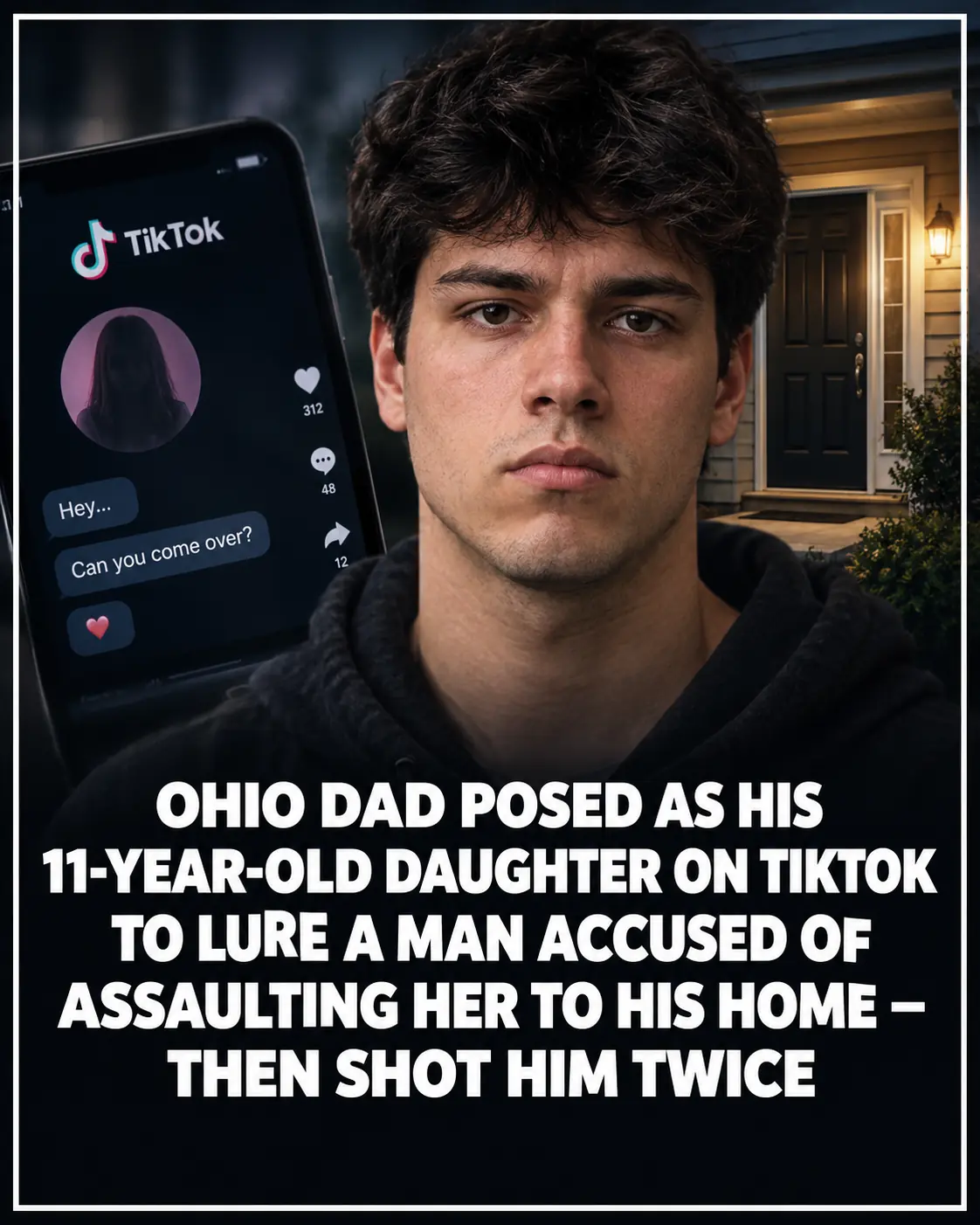
Ohio Dad Posed as His 11-Year-Old Daughter on TikTok to Lure Her Alleged Assailant

Miriam Rodríguez: The Mother Who Refused to Stop Searching for Her Daughter












Lindsay Clancy Trial Ends in Mistrial, Reigniting a Fierce Debate Over Justice
Thomas Massie Takes the Epstein Files Fight to the House Floor
Ohio Dad Posed as His 11-Year-Old Daughter on TikTok to Lure Her Alleged Assailant
Miriam Rodríguez: The Mother Who Refused to Stop Searching for Her Daughter