How to Remove Dental Plaque Naturally (Evidence Based)
Tips 29/08/2026 15:11
When a rusty brown, dry-looking rash starts creeping around the lower legs and ankles, it can look alarming fast, especially on an older adult. I’ve had enough family phone calls about “strange leg discoloration” to know how unsettling it feels when you can’t get a nurse line to pick up. The pattern you’re describing often fits stasis dermatitis, a skin problem linked to poor blood flow in the leg veins, but the important part is this: while it is common and often treatable, it should not be brushed off, because it can worsen, crack open, get infected, or be mistaken for something more urgent.
I want to walk through what stasis dermatitis usually looks like, why it happens, when it can wait for a routine appointment, and when it deserves same-day or emergency care. I’ll also cover what you can do at home in the meantime, what not to put on the skin, and what a clinician may recommend once your grandmother is seen. Think of this as a practical roadmap, not a diagnosis over the internet.
1. What stasis dermatitis usually looks like
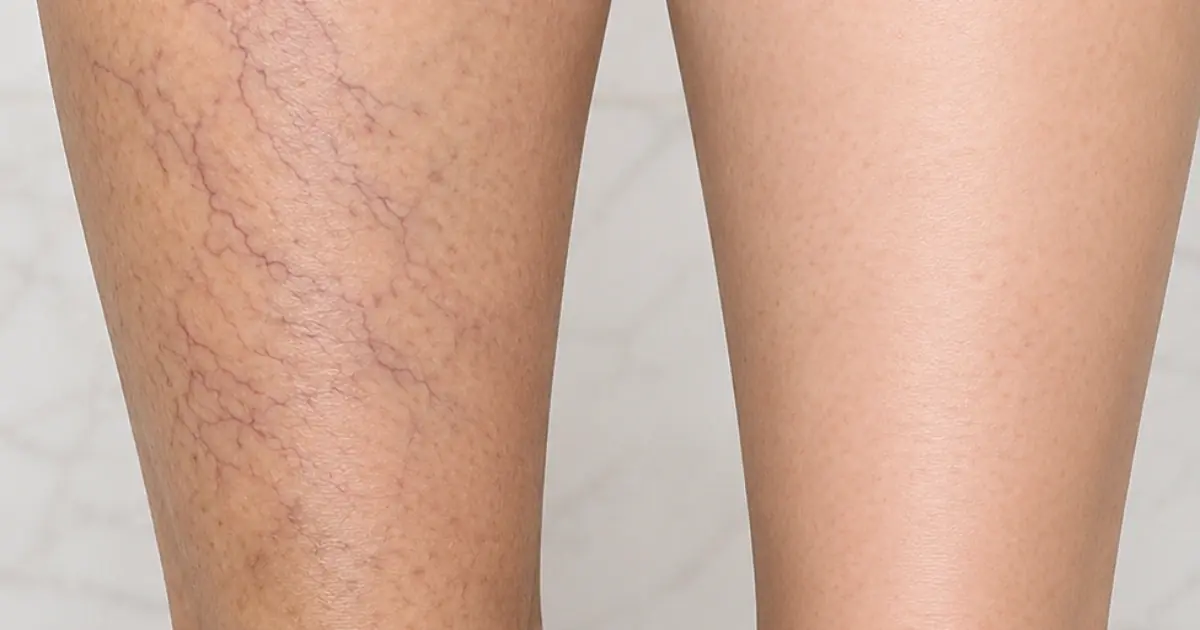
Stasis dermatitis most often shows up on the lower legs, especially around the ankles and shins, where gravity puts the most pressure on the veins. The skin may look rusty brown, reddish-brown, or tea-stained, and the color often wraps partly or fully around the lower leg rather than appearing as a neat round patch. The surface can be dry, flaky, itchy, or scaly, and over time the skin may become thicker, firmer, or shiny.
In many people, both legs are involved, though one side can be worse. The discoloration may cover an area as small as 2 to 3 inches across at first, then gradually spread over months. You may also notice mild swelling by evening, sock marks that stay for a while, or skin that feels tight after standing. Those details matter because stasis dermatitis is tied not just to the skin, but to circulation underneath it.
2. Why the skin turns brown and scaly
The root problem is usually chronic venous insufficiency. That means the veins in the legs are not pushing blood back toward the heart as efficiently as they should. Tiny one-way valves inside the veins can weaken over time, so blood pools in the lower legs. Pressure builds up in the small vessels, and fluid leaks into nearby tissue.
That leak sets off inflammation. Red blood cells can also escape into the skin, and when they break down, they leave behind iron pigment called hemosiderin. That is what often creates the rusty brown staining. The scaly, irritated surface happens because the skin is being chronically inflamed and stretched by swelling. It is a bit like what happens when wallpaper keeps getting damp: at first it just looks discolored, and later it starts to peel and break down.
3. Who gets it most often
Stasis dermatitis is most common in older adults, especially people over 60, and it is more likely in anyone with leg swelling, varicose veins, a history of blood clots, limited mobility, obesity, heart failure, or prior leg injury. Standing or sitting for long stretches can make it worse. I’ve seen this pattern in relatives who spent years on their feet at work and later developed “heavy legs” by the end of the day.
It also becomes more likely after deep vein thrombosis, vein surgery, or repeated pregnancies. Diabetes does not directly cause stasis dermatitis, but if someone has diabetes too, any skin breakdown on the legs deserves extra caution because healing can be slower.
4. Signs that make stasis dermatitis more likely than a simple dry-skin rash
A few clues point strongly toward stasis dermatitis: swelling that worsens later in the day, discoloration around the ankles, visible varicose veins, itching, and skin that looks both scaly and stained brown. Some people describe the skin as “leathery” or “crepey.” Others say the ankles look normal in the morning but puffy by dinner.
The rash is often not sharply outlined the way ringworm can be. It may come with tenderness, but usually not severe sudden pain. If the skin has been affected for a long time, the lower leg can start to narrow just above the ankle while the calf remains fuller, creating an upside-down bowling-pin shape. That shape suggests long-standing venous disease and should be evaluated.
5. When it might be something more urgent instead
Not every brown or red rash on the legs is stasis dermatitis. Cellulitis, a bacterial skin infection, can look somewhat similar at first but usually causes more warmth, more tenderness, and faster change over 24 to 48 hours. A blood clot in a deep vein can cause one leg to swell more than the other, often with new pain, firmness, and calf tenderness.
There are also other look-alikes: contact dermatitis from a cream or bandage, eczema, fungal infection, vasculitis, and less commonly arterial circulation problems. If the skin suddenly turns dusky, pale, or blue, or if the foot becomes cold compared with the other side, that is not a “wait and see” issue.
6. Red flags that mean same-day care or emergency help
Please seek urgent medical attention if your grandmother has any of the following: fever of 100.4°F (38°C) or higher, rapidly spreading redness over hours, significant warmth, new severe pain, pus or drainage, a foul odor, open sores, or skin that is cracking deeply enough to bleed. Those features raise concern for infection or ulceration.
Also get prompt care if one leg is suddenly much more swollen than the other, especially if the difference is obvious at the calf or ankle, or if she has chest pain, shortness of breath, or sudden dizziness. Those symptoms can point to a blood clot and are emergency-level issues. If she cannot walk normally because of pain, or if the foot looks pale, blue, or unusually cold, do not wait for the nurse line.
7. If it seems stable, how soon should she be seen?
If the discoloration has been gradual, both legs are affected, there is mild to moderate swelling, and she feels otherwise well, this is usually appropriate for a primary care visit within a few days to 2 weeks rather than an emergency room visit. Still, it should not be ignored for months. Early treatment helps prevent skin thickening, ulcers, and infection.
If itching is intense, sleep is being disturbed, or the skin is starting to crack, I would try to arrange an appointment sooner, ideally within a few days. A photo taken in good daylight can help track whether the area is spreading from, say, 3 inches wide to 5 inches wide over a week.
8. What you can do safely at home while waiting
The most helpful immediate step is leg elevation. Aim to raise the legs so the ankles are above heart level for 15 to 30 minutes, 3 or 4 times a day if possible. That means more than a footstool. Pillows on a couch often are not high enough; lying back with the legs propped on 2 firm pillows usually works better.
Use a bland, fragrance-free moisturizer at least twice daily, especially within 3 minutes after bathing. Thick creams or ointments tend to work better than thin lotions. Plain petroleum jelly or a ceramide cream can help reduce dryness and scaling. Keep baths and showers lukewarm, around 5 to 10 minutes, not long hot soaks, which can worsen itching.
If she scratches at night, cotton socks over moisturized lower legs can help protect the skin, provided they are not tight at the top. Encourage gentle walking if she is able, because calf-muscle movement helps push venous blood upward.
9. Compression stockings can help, but there is one big caution
Compression is a cornerstone treatment for venous stasis, but it is not something I recommend starting blindly in every older adult. Many people do benefit from knee-high compression stockings in the 15 to 20 mmHg or 20 to 30 mmHg range, especially if swelling is a regular issue. They are usually put on in the morning, before the legs swell, and removed at bedtime.
However, compression should be used carefully or delayed until a clinician weighs in if there is concern for poor arterial circulation. People with significant peripheral artery disease can be harmed by strong compression. Clues include foot pain while walking, a cold foot, weak pulses, or ulcers on the toes. In clinic, a clinician may check an ankle-brachial index before recommending tighter stockings. So if you are not sure, elevation and moisturizer are safer first steps than grabbing the strongest compression socks off a drugstore shelf.
10. What not to do
Do not use antibiotic ointment “just in case” unless a clinician recommends it. Products such as neomycin can trigger allergic contact dermatitis and make the area look even angrier. Avoid hydrogen peroxide, rubbing alcohol, strongly scented lotions, mentholated creams, and very hot water. These all tend to dry out already fragile skin.
It is also best not to wrap the legs tightly with elastic bandages unless you know the proper technique. Uneven wrapping can create pressure points. And please do not assume a brown rash is just “old age skin” if it is spreading, itching, swelling, or cracking.
11. How doctors usually diagnose it
Diagnosis is often made by examining the legs and hearing the history: how long it has been there, whether both legs are involved, whether swelling worsens by evening, and whether there is a history of varicose veins, blood clots, or heart disease. Clinicians also look for signs of infection, ulcers, and poor arterial flow.
Sometimes additional testing is needed. A venous ultrasound may be ordered if there is concern for a clot or to evaluate venous insufficiency. If pulses are hard to feel or arterial disease is suspected, an ankle-brachial index may be done. If the rash is unusual, a dermatologist may be consulted to rule out eczema, contact allergy, or other inflammatory skin diseases.
12. Common treatments a clinician may prescribe
Beyond compression and leg elevation, treatment often includes a topical steroid to calm inflammation and itching. For example, a medium-potency steroid cream may be used once or twice daily for 1 to 2 weeks on inflamed areas, then stopped or tapered. This is one reason it helps to get the diagnosis right: steroid cream can help stasis dermatitis, but it is not the right answer for every rash.
If the skin is weepy or crusting, special dressings may be used. If there is a venous ulcer, wound care becomes important, sometimes with weekly dressing changes. If infection is present, oral antibiotics may be needed. In some cases, patients are referred to a vein specialist for procedures that address underlying venous reflux, especially when symptoms keep recurring.
13. Why it matters to take it seriously, even if it is not an emergency
Untreated stasis dermatitis can progress. The skin can become permanently discolored, thickened, and fragile. Small cracks can turn into shallow wounds, and shallow wounds can become venous ulcers, especially near the inner ankle. Those ulcers can linger for weeks or months and can be quite difficult to heal.
I’ve learned over the years that leg skin issues are easier to calm early than to reverse later. Once swelling becomes chronic and the skin starts changing texture, management is more involved. So “not usually an ER problem” does not mean “not important.”
14. A practical checklist for your grandmother today
If she is otherwise feeling fine, start with these steps today: look at both legs in good light, compare the amount of swelling, check whether the area is warm or very tender, note whether there are any open spots, and take clear photos from the front and sides. Measure the widest part of each ankle and calf with a soft tape if you have one. Even a 1 to 2 centimeter difference can be useful information for the clinician.
Then elevate the legs for 20 minutes, moisturize with a bland cream or ointment, and avoid scratching. Try to arrange a medical appointment within the next several days, sooner if the skin is worsening. If new redness spreads quickly, one leg balloons more than the other, or she develops fever, pain, shortness of breath, or drainage, escalate to urgent care or the ER.
15. The short answer: is it serious?
Potentially, yes, in the sense that it deserves medical attention and can lead to complications if ignored. But if the change has been gradual, is centered around the lower legs and ankles, and comes with chronic swelling and scaling rather than sudden severe pain or fever, stasis dermatitis is a very plausible explanation and is often manageable.
If this were my own family member, I would not panic, but I also would not let it slide. I’d start supportive care today, document what the legs look like, and arrange a prompt evaluation. With the right combination of skin treatment, swelling control, and attention to circulation, many people improve noticeably.