People with heart problems should avoid these 4 things to reduce stimulation to the heart
Health 16/12/2025 19:18
Abdominal pain, chronic diarrhea, fatigue—these symptoms are often grouped under one name: Inflammatory Bowel Disease (IBD). But IBD actually includes two distinct conditions with important differences: Ulcerative Colitis and Crohn’s Disease.
Although they share overlapping symptoms, these diseases affect different parts of the digestive tract, behave differently over time, and require tailored treatment strategies. Understanding which one you’re dealing with can significantly improve long-term outcomes.
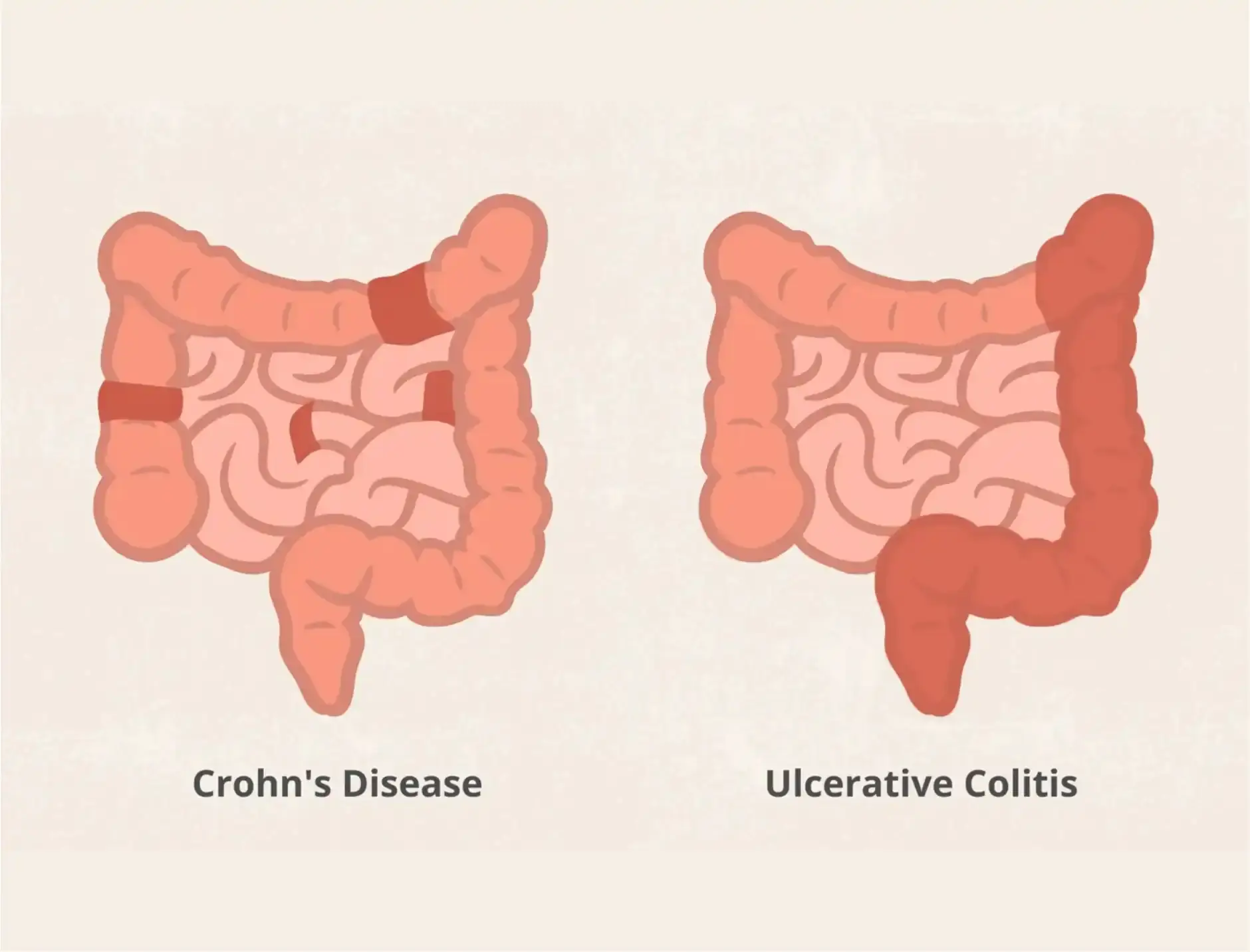
Inflammatory Bowel Disease is an umbrella term for chronic inflammatory disorders of the digestive tract caused by an abnormal immune response.
The two main types are:
Ulcerative Colitis
Crohn’s Disease
Ulcerative colitis (UC) affects only the large intestine (colon and rectum) and causes continuous inflammation along the inner lining.
Starts in the rectum
Spreads upward through the colon
Never affects the small intestine
Inflammation is continuous
Affects only the mucosal (inner) layer
Leads to ulcers and bleeding
Bloody diarrhea
Urgent bowel movements
Rectal pain
Abdominal cramping
Fatigue and anemia
Crohn’s disease is more unpredictable and can affect any part of the digestive tract, from mouth to anus.
Most commonly the end of the small intestine (ileum)
Can skip healthy areas between inflamed sections (“skip lesions”)
Inflammation is patchy
Affects all layers of the bowel wall
Can cause fistulas, strictures, and abscesses
Chronic diarrhea (sometimes without blood)
Abdominal pain, often in the lower right abdomen
Weight loss
Malnutrition
Fever
| Feature | Ulcerative Colitis | Crohn’s Disease |
|---|---|---|
| Location | Colon & rectum only | Anywhere in GI tract |
| Pattern | Continuous inflammation | Patchy inflammation |
| Depth | Inner lining only | All bowel layers |
| Bloody stools | Common | Less common |
| Surgery outcome | Can be curative | Not curative |
Neither condition is “better” or “worse”—they’re different.
UC carries a higher risk of colon cancer over time.
Crohn’s causes more structural complications like bowel obstruction.
Crohn’s is harder to treat surgically due to recurrence.
Severity depends on disease extent, flare frequency, and response to treatment.
Genetic predisposition
Overactive immune response
Environmental triggers
Gut microbiome imbalance
Smoking (worsens Crohn’s, may reduce UC symptoms)
Diagnosis may include:
Colonoscopy with biopsy
Imaging (CT or MRI enterography)
Blood tests for inflammation
Stool markers (calprotectin)
Accurate diagnosis is critical—treatments are not interchangeable.
Anti-inflammatory drugs (5-ASA)
Corticosteroids for flares
Immunosuppressants
Biologic therapies
Ulcerative colitis: Removing the colon can cure the disease
Crohn’s disease: Surgery treats complications but disease often returns
While diet doesn’t cause IBD, it strongly affects symptoms.
Helpful strategies:
Smaller, frequent meals
Low-residue diet during flares
Avoid trigger foods (fatty, spicy, dairy if sensitive)
Stress management and adequate sleep
Persistent bloody stools
Severe abdominal pain
Unexplained weight loss
Fever with digestive symptoms
Signs of dehydration or anemia
Early treatment can prevent irreversible bowel damage.
Ulcerative colitis and Crohn’s disease may look similar on the surface—but their behavior, risks, and management are very different. A precise diagnosis empowers better decisions, fewer complications, and a higher quality of life.
If your symptoms don’t fit neatly into one category, keep asking questions. In IBD, clarity is power.